Why Dublin Hotels Need a Dedicated Treatment System in 2026
Dublin hotels face a 2–3× swing in daily wastewater flow between peak summer and quiet winter months, driven by occupancy rates that run 85–95% in July and August against 30–40% in February for the same property. A 137-room property such as Wren Urban Nest in Dublin 2 is now the benchmark for new-build sustainability ambition in the city, but even smaller guesthouse operations must demonstrate that their on-site treatment can absorb that seasonal shock without breaching discharge consents (per Irish Times, 2024-09).
Inside the M50 ring, Irish Water sewer connection is generally available, but a central Dublin hotel discharging trade effluent to that sewer still needs a trade effluent licence and must pre-treat FOG and food solids to Irish Water's acceptance limits. Outside the M50 — in coastal villages from Skerries to Brittas Bay, or in rural Wicklow fringe properties — the local network often does not have capacity, and the property must install a packaged biological plant with its own discharge point. The Greater Dublin Drainage Project (Irish Water, 2024) has confirmed that the regional network will not relieve coastal discharge pressure before 2030, so on-site package sewage treatment remains the default for any new hotel outside the urban core.
Irish and EU Compliance Rules That Govern Hotel Discharge
Compliance starts with S.I. No. 254/2001 — the Urban Waste Water Treatment Regulations — which transposes EU Directive 91/271/EEC into Irish law. The regulations set BOD, TSS, and COD limits for agglomerations above 2,000 PE; almost no individual hotel crosses that threshold, but the EPA still applies equivalent standards via the wastewater discharge licensing regime whenever a hotel discharges more than 5 m³/day to waters (per EPA Water Licence Guidance, 2024).
Three instruments a Dublin hotel will actually deal with: (1) an Irish Water trade effluent licence for any discharge to sewer above the de minimis threshold, (2) an EPA Wastewater Discharge Licence for direct discharge to surface or groundwater, and (3) the EU Bathing Water Directive 2006/7/EC for any property near a designated bathing water such as Brittas Bay, Skerries South, or Killiney. The 2006/7/EC directive holds microbiological quality to Escherichia coli ≤ 100 cfu/100 mL (95th percentile) for "good" status — a bar that disinfection equipment must clear before any coastal discharge.
| Regulation | Scope | Key Threshold for a Hotel |
|---|---|---|
| S.I. No. 254/2001 (transposes 91/271/EEC) | Urban waste water >2,000 PE | BOD 25 mg/L, TSS 35 mg/L, COD 125 mg/L after biological treatment |
| EPA Wastewater Discharge Licence | Discharge to waters >5 m³/day | Site-specific limits; typically BOD <25 mg/L, TSS <35 mg/L, total nitrogen <15 mg/L |
| Irish Water Trade Effluent Licence | Discharge to public sewer | Temperature ≤ 38 °C, pH 6–10, oil & grease ≤ 50 mg/L, no flammables |
| EU Bathing Water Directive 2006/7/EC | Designated bathing waters | E. coli ≤ 100 cfu/100 mL (95th percentile); intestinal enterococci ≤ 200 cfu/100 mL |
Drinking-water references also matter where the hotel produces or augments its own supply: WHO drinking-water guidance aligns with the EU Drinking Water Directive 98/83/EC and sets the benchmark for any on-site reuse system (per WHO Guidelines for Drinking-water Quality, 4th ed.).
The 2026 Process Train: From Kitchen Wastewater to Compliant Discharge
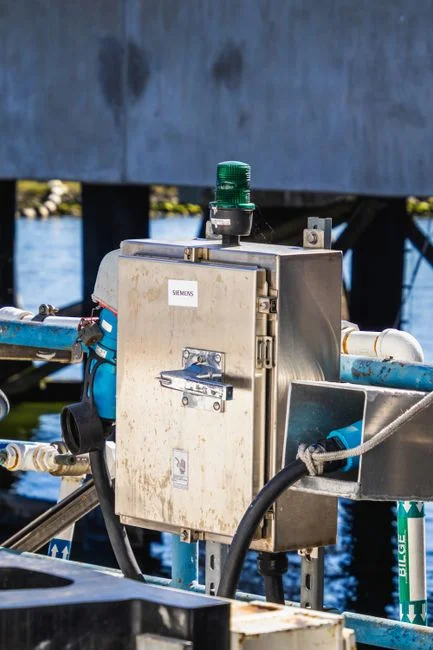
A reference process train for a 100–200-key Dublin hotel in 2026 runs in four stages, with optional reuse polishing at the end. The exact equipment is selected after a flow survey, but the sequence is fixed by engineering logic: protect the membranes first, remove the FOG, treat the dissolved load, then disinfect.
- Stage 1 — Coarse screening. A rotary mechanical bar screen with 3–6 mm aperture removes rags, plastics, and food solids before they reach downstream biological or membrane stages. Bar screens cost the operator membrane replacement if skipped.
- Stage 2 — FOG removal. A DAF system (4–300 m³/h, 13 model sizes) treats kitchen flows that typically carry 1,000–3,000 mg/L oil & grease, lifting recovery to 90–95% and protecting biological kinetics. Small guesthouse operations can substitute a passive grease trap sized at 100 L per kitchen cover.
- Stage 3 — Biological treatment. Either a buried WSZ underground A/O package plant (1–80 m³/h, fully automated, unattended) for budget-driven sites, or an MBR membrane bioreactor system (10–2,000 m³/day, PVDF hollow-fibre or flat-sheet membranes) for tighter effluent or reuse targets.
- Stage 4 — Disinfection. UV or chlorine dioxide (50–20,000 g/h) to hit the bathing-water or discharge microbiological limits. ClO₂ is preferred where biofilm control in downstream pipework matters, because its residual persists 5–10× longer than chlorine at equivalent CT.
| Stage | Equipment | Typical Performance | Operating Parameter |
|---|---|---|---|
| 1. Screening | Rotary bar screen, 3–6 mm | >90% solids capture | Headloss 0.2–0.5 m |
| 2. FOG removal | DAF or grease trap | <50 mg/L O&G in effluent | Hydraulic residence 20–30 min |
| 3. Biological | WSZ A/O or MBR | BOD 5–30 mg/L, TSS 1–30 mg/L | MLSS 8,000–12,000 mg/L (MBR) |
| 4. Disinfection | UV or ClO₂ | E. coli <10 cfu/100 mL | UV 40 mJ/cm²; ClO₂ 0.5–1.0 mg/L residual |
Optional reuse (toilet flush, landscape irrigation) sits after Stage 4 and depends on local EPA acceptance — typically requiring MBR + UV or ClO₂ polishing plus a documented risk assessment under WHO sanitary inspection guidance.
MBR vs WSZ Package Plant: How to Choose for a Dublin Property
The decision is not about which technology is "better" but which constraint dominates the site. MBR delivers sub-1 μm effluent quality (typically BOD <5 mg/L, TSS <1 mg/L) from a footprint 60% smaller than an equivalent activated-sludge package, and the permeate can be reused for toilet flushing or grounds irrigation without further polishing. That makes MBR the default where footprint is constrained, where the discharge is to a sensitive coastal water, or where the hotel wants to talk about water reuse in its sustainability report.
WSZ is the default where budget and simplicity dominate. A buried A/O package plant with no operator requirement, no visible above-ground equipment, and CAPEX roughly half that of an MBR at the same daily flow is hard to beat on a land-rich rural Dublin site. The trade-off is effluent quality: 20–30 mg/L BOD and 20–30 mg/L TSS is fine for discharge to a non-sensitive drain or to sewer under an Irish Water trade effluent licence, but not for direct discharge to a bathing-water area. Inside the MBR, DF flat-sheet MBR modules in the 32–135 m³/day range (80–225 m² membrane area) are the typical building block for a mid-size hotel.
| Parameter | MBR System | WSZ A/O Package Plant |
|---|---|---|
| Effluent BOD | <5 mg/L | 20–30 mg/L |
| Effluent TSS | <1 mg/L | 20–30 mg/L |
| Surface footprint (50 m³/day) | ~30–40 m² | Manhole covers only (buried) |
| CAPEX band, 50 m³/day (excl. civils) | €120,000–€250,000 | €60,000–€120,000 |
| Operator requirement | Periodic (membrane CIP) | None (automated) |
| Reuse-ready | Yes, with UV or ClO₂ | No, unless tertiary added |
| Best fit | Coastal, urban, reuse-driven | Rural, budget-driven, land-rich |
For an honest view of what running an MBR looks like in practice — fouling, CIP cycles, and the realities of membrane life — the MBR troubleshooting guide is the document to read before signing a purchase order. Comparable Dublin-adjacent decision logic for Mediterranean seasonality is in the Athens hotel wastewater guide.
Sizing a Hotel System: Flow, Load, and the Seasonal Swing
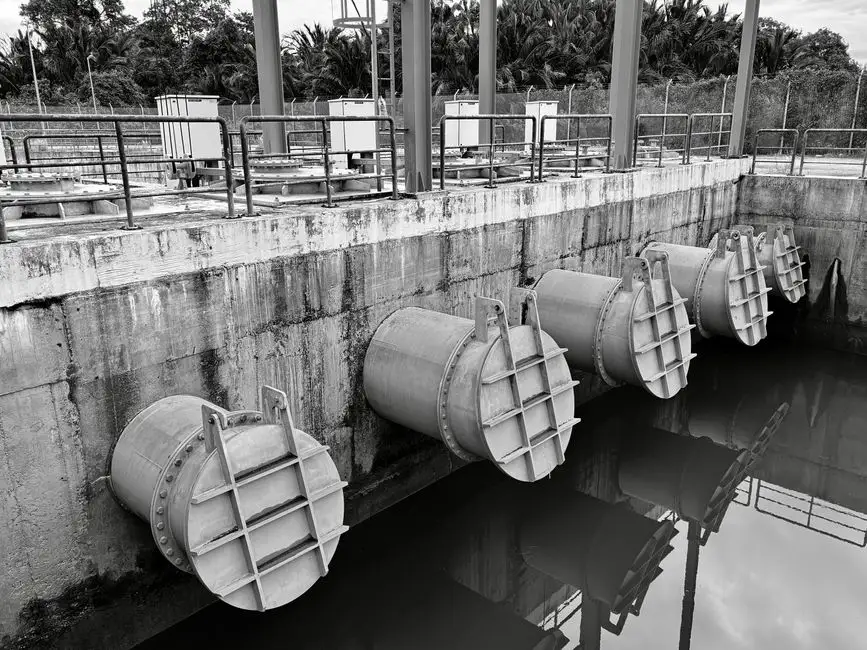
The sizing rule of thumb for an Irish hotel is 200–400 L per guest-night, plus 50–100 L per restaurant cover per day, plus 50–80 L per laundry cycle equivalent. This is an industry rule of thumb, not a regulation, and the upper end applies when the property runs a leisure centre, spa, or 24-hour food service. Typical hotel sewage strength runs 250–400 mg/L BOD and 200–300 mg/L TSS; add 20% if the on-site laundry and restaurant are heavy.
Peaking is where most undersized plants fail. A peaking factor of 2.5–3.0× the annual average is realistic for a Dublin hotel with summer 90% occupancy against a winter 35% average. Worked example for a 120-room property at 70% average occupancy, 250 L per guest-night, 80 covers/day restaurant, no laundry: 120 × 0.70 × 250 = 21 m³/day average; 6 m³/day restaurant; total ≈ 27 m³/day average. With a 2.5× peak factor, the design flow is 50–60 m³/day in July, so the engineer selects a 50 m³/day MBR module or a 25 m³/h WSZ unit with 1.5× hydraulic headroom. This is an engineering example, not a manufacturer rating — confirm with on-site flow sampling before procurement.
2026 Cost, Footprint, and Installation Reality in Dublin
Indicative 2026 EU supply CAPEX for a 10–50 m³/day hotel system, excluding civils: WSZ package plant roughly €40,000–€120,000; MBR system roughly €80,000–€250,000. OPEX is the opposite story — WSZ has the lowest, MBR carries membrane replacement every 8–12 years at €15,000–€40,000 per swap, plus ClO₂ chemical cost in the order of €0.30–€0.60 per m³ treated if ClO₂ polishing is used (HydropureWater field data, 2026).
Footprint on the surface for a buried WSZ is just the manhole covers and a control kiosk; an MBR skid plus aeration tank typically occupies 1.5–2× that surface area at the same capacity. Civils and installation frequently equal or exceed the equipment cost on Dublin sites because of basalt rock excavation, restricted site access in Georgian cores, traffic management for tanker deliveries, and listed-building constraints on plant-room visual impact. A coastal site adds monitoring boreholes, which run €8,000–€15,000 each. Always commission a ground-penetrating-radar or borehole survey before finalising layout, and obtain an Irish Water connection confirmation letter before committing to a packaged plant — a refused tie-in after equipment delivery is a common and expensive project failure.
Frequently Asked Questions
Do all Dublin hotels need their own treatment plant?
No. A hotel connected to an Irish Water public sewer only needs a trade effluent licence and pre-treatment (grease trap, bar screen) to meet Irish Water's discharge limits. An on-site biological plant becomes mandatory when the property is outside the sewer network, the local sewer has no capacity, or the discharge goes directly to waters under an EPA Wastewater Discharge Licence.
What is the smallest viable system for a 20-room guesthouse?
A 5–10 m³/day WSZ A/O package plant with a 1,000 L grease trap, 3 mm rotary bar screen, and UV disinfection will meet Irish Water trade effluent or EPA discharge conditions for most rural Dublin and coastal sites at this scale.
Can treated hotel wastewater be reused for toilet flushing?
Yes. An MBR followed by UV or chlorine dioxide polishing produces reuse-quality water suitable for toilet flush and landscape irrigation, subject to a documented risk assessment and EPA acceptance. WSZ effluent is generally not reuse-ready without additional tertiary treatment.
How often does an MBR membrane need cleaning?
Relaxation cleaning every 3–6 months and chemical CIP (clean-in-place) every 6–12 months is normal. Full membrane replacement is typically required every 8–12 years depending on feedwater quality, FOG load upstream, and operator discipline. See the MBR troubleshooting guide for the operating realities.
Which Dublin sites are most sensitive to discharge?
Properties discharging to Dublin Bay, the Liffey or Tolka estuaries, or any designated Bathing Water under the EU Bathing Water Directive 2006/7/EC — including Skerries, Portrane, Malahide, Killiney, Dún Laoghaire, and Brittas Bay — face the tightest microbiological and nutrient limits and should default to an MBR + UV or ClO₂ polishing train.