Why a BMW Factory Acquisition Demands a Sector-Specific ETP Diligence Checklist
An automotive OEM ETP is not a chemical-plant ETP. Paint-shop effluent runs COD of 1,500–6,000 mg/L with paint solids, solvents, and resin residues; pretreatment line wastewater carries zinc, phosphate, and nickel at concentrations that hit EU IED BAT-AEL thresholds; plating lines add hexavalent chromium and copper; and oily condensate from compressor rooms and parts-washer streams loads the front of the biological stage. A 47-question audit tuned to this fingerprint — not to a generic chemical buyer's checklist — is the difference between a defensible reserve and a 6× overrun.
The 2024 mid-market chemicals case is the benchmark, not the outlier: a $1.5M reserve against a $9M actual retrofit, 18% equity write-down at month 14, 22-month consent decree (per 2026 PE due-diligence data). Undisclosed ETP non-compliance routinely inflates deal reserves by $2M–$18M and triggers 18–36 month remediation timelines. Two regulatory drivers make 2026 a harder year than 2024: the EU Industrial Emissions Directive recast, with revised BAT-AELs for waste treatment and chemicals sectors running compliance milestones through 2027, and China GB 8978-2025, which tightened COD, ammonia nitrogen, and total phosphorus limits for integrated electroplating wastewater — both applicable to automotive parts plants grandfathered under older permits. In India, CPCB Consent-to-Operate transfer requires a 90–180 day pre-signing application that must be flagged against exclusivity or long-stop dates.
One more contamination vector is invisible to a standard scope: ASTM E1527-21 explicitly excludes PFAS from the definition of a hazardous substance. Historical PFAS testing must be requested separately, not relied on as a Phase I deliverable. For a 1990s-vintage automotive plant, that means fluorinated coating legacy and AFFF fire-suppression reservoir residues never appear in the CIM — a known concern in older plants and a known carve-out that BMW's deal team needs to close before signing.
Pre-LOI Permit Transferability Audit: Eight Items That Block Closing
A current permit is not an assignable permit. PE buyers must verify eight specific items before LOI, because consent-to-operate transfer failure is a frequent deal-closing blocker that forces an 18–24 month reapplication cycle. The deal team needs to confirm the current permit or consent number, issuing authority, expiry date, and renewal status; compare permitted daily flow against actual operating flow for the last 12 months; reconcile the permitted parameter list against current effluent characterization — especially after any production-mix changes post-permit issuance (a paint-shop line conversion from solvent-borne to water-borne changes the permit picture more than the seller will admit); review renewal history for refused or contested renewals; read the transferability trigger language, since most permits require pre-signing application to the regulator; confirm name-change provisions for the new operating entity; and pull any open Notice of Violation or pending administrative consent order.
In India, CPCB Consent-to-Operate transfer typically requires a 90–180 day pre-signing application with a successful site inspection by the State Pollution Control Board — that window must be flagged against the exclusivity period or the long-stop date has to be extended. In Germany, BMW's home framework of WHG/AbwV requires a new Wasserrechtliche Genehmigung for any change of Inhaber (operator) on an industrial discharge — effectively a re-permit at scale if process wastewater characterization changes under the new operating entity. Treat permit transferability as a closing condition, not a post-closing workstream.
| Audit item | Document to request | Closing-blocker risk |
|---|---|---|
| Current permit number, expiry, issuing authority | Signed consent / Genehmigung | High if expiry < 12 months from signing |
| Permitted vs actual flow (m³/day) | 12-month flow log | High if actual > 110% of permitted |
| Permitted vs actual parameter list | Self-monitoring reports (SMR) | High if new pollutants post-permit issuance |
| Renewal history | Regulator correspondence file | Critical if any contested renewal |
| Transferability trigger language | Permit text, jurisdiction-specific | Critical — pre-signing application required |
| Name-change provision | Permit / corporate schedule | Moderate — often requires fresh application |
| Open NOV or consent order | Regulator enforcement file | Critical — may survive closing |
| EU IED recast / GB 8978-2025 grandfather status | Regulatory applicability memo | High if site is non-compliant with new BAT-AEL |
For context on how a comparable plant meets pretreatment discharge limits when discharge limits tighten mid-cycle, the Carson petroleum pretreatment case provides a working reference for parameter-by-parameter compliance benchmarking.
Asset Condition Audit: Nine Questions to Separate a Functional ETP from a Time Bomb
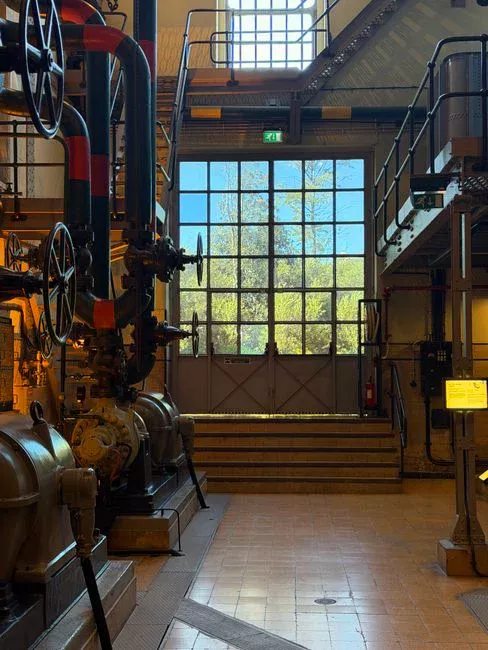
The asset walk-down sizes the hidden capex that does not appear in the seller's maintenance budget. Run nine questions, in this order: design versus actual hydraulic loading in m³/day; design versus actual organic loading in kg BOD/day — overruns past 110% indicate the plant is running beyond design margins and the reserve must reflect it. Then document age and last refurbishment date of major units — clarifier, aeration tank, MBR cassette, RO train — and note the last membrane replacement date, MBR cassette supplier model, blower and pump operating hours versus nameplate service life, structural condition of concrete tanks (cracking, rebar exposure, coating failure), and PLC vintage.
Two asset-life rules of thumb set the floor on capex exposure: MBR cassette service life runs 5–8 years under normal operating conditions, so a target with cassettes older than 7 years carries a near-term replacement liability (per MBR engineering guides, 2025); PLC obsolescence windows for major OEMs run 7–10 years, meaning any ETP commissioned pre-2018 may already be on unsupported hardware — anything pre-2010 is functionally obsolete. SCADA data retention is the deal-team shortcut: 90 days is unusable for trend analysis, 3+ years is the standard a serious operator maintains. DAF micro-bubble nozzles and skimmer wear are a common hidden replacement line, typically $15K–$60K per DAF unit recurring every 3–5 years depending on influent oil and grease loading, and rarely itemized separately in O&M contracts. The EPC contractor warranty period (typically 12–24 months from mechanical completion) is almost always expired at closing — every dollar of capex identified in the asset review is the buyer's problem, not the seller's.
| Unit / system | Service-life benchmark | Reserve trigger if exceeded |
|---|---|---|
| MBR cassette | 5–8 years | Age > 7 years = near-term replacement |
| PLC / DCS hardware | 7–10 years | Pre-2018 vintage on unsupported firmware |
| Concrete tank structure | 25–40 years | Visible rebar exposure, active cracking |
| DAF nozzle / skimmer | 3–5 years | $15K–$60K per DAF unit recurring |
| RO membrane | 3–5 years | Flux decline > 15% baseline |
| Blower / pump | 10–15 years (nameplate) | Operating hours > 80% nameplate |
Where a near-term MBR replacement is flagged, size it with an integrated MBR system for ETP retrofit specification rather than a like-for-like cassette swap — the upgrade often unlocks the hydraulic capacity the seller is currently overtaxing.
Hidden Liability Surface: Seven Items That Rarely Appear in the CIM
These items are the long-tail exposures that consume post-closing IRR. First, confirm Phase I ESA availability and date per ASTM E1527-21, and require a Phase II ESA whenever a recognized environmental condition (REC) is identified — mandatory when PE financing requires quantified exposure for purchase price adjustment. Second, quantify on-site sludge lagoon volume, age, and characterization; an undocumented lagoon equals 200–2,000 tonnes of working-capital exposure at 2026 hazardous sludge disposal rates of $80–$450/tonne (HydropureWater field data). Third, pull hazardous-waste manifests for the last 5 years and PFAS/hexavalent chromium testing history (not covered by Phase I ESA under ASTM E1527-21). Fourth, review the buried tank and underground piping registry. Fifth, audit the off-site disposal contractor trail including license verification. Sixth, pull historic operator non-compliance records from state pollution control board or EPA enforcement databases. Seventh, run a permit non-conformity review — defined here as any effluent parameter exceedance recorded in a self-monitoring report that has not been formally resolved with the regulator.
For heavy-metal exposure, the 2026 PCB hybrid ZLD case study at 99.8% copper recovery is the benchmark. It demonstrates that a well-designed ZLD retrofit can produce byproduct credits that offset capex — a real number to challenge seller overestimation and a defensible reference for sizing the reserve on plating-line targets.
For the working-capital side of sludge exposure, plan dewatering around a plate and frame filter press for hazardous sludge dewatering rather than relying on lagoon decant — the volume reduction alone usually pays back the capex line within the first disposal campaign.
Third-Party Contract Audit: Six Items That Assign Liability Day One
Third-party contracts can move hidden liability to the target the day after closing. Review the O&M contractor scope, liability cap, and indemnification scope — most O&M contracts carry 30–90 day termination clauses, and the institutional knowledge embedded in the incumbent operations team is itself a deal risk. A transition period of 6–12 months should be priced into the operating model, with the operations manager's employment contract separately negotiated as part of the deal. Verify the sludge hauler EPA generator number and most recent audit letter, and the lab/self-monitoring contract assignability and consent requirements. Check the chemical supplier REACH and TSCA compliance documentation and any indemnity for off-spec chemicals causing permit exceedances — this language is the buyer's best defense against a parameter exceedance caused by a chemistry change, and it should be retained, not negotiated away. Confirm EPC warranty status (almost always expired at closing) and identify any consent decrees, third-party environmental indemnity letters, or settlement agreements still in force.
EU REACH and EPA RCRA compliance is a 2026 contract checkpoint: chemical supply contracts often include indemnity for permit exceedances caused by off-spec product. The dosing side of the audit should size the existing reagent inventory and pumping capacity against the new operating entity's flow — a automatic chemical dosing system sized for the post-LOI flow envelope is often the simplest way to close a contract gap and a parameter exceedance risk at the same time.
Defensible Retrofit Cost Benchmarks and the Reserve Sizing Formula
Use the table below as the deal team's starting position, then adjust for site-specific factors — region, contamination profile, regulator posture, and discharge destination. The basic ETP upgrade for capacity/parameter compliance runs $280–$620 per m³/day treated (civil + electromechanical, no major process change), with MBR cassette replacement and DAF pre-treatment sized as ancillary balance-of-plant. A full ZLD retrofit runs $5M–$15M in 2026 depending on influent characterization, discharge destination, and recoverable byproduct value — the 2026 PCB hybrid ZLD case at 99.8% copper recovery is the heavy-metal benchmark. Hazardous sludge removal and disposal is sized by characterization and transporter class, with Phase II ESA findings driving remediation approach selection. RO and evaporation/crystallizer sizing is site-specific; for a head-to-head on the pre-treatment side, the DAF vs lamella clarifier capex comparison is the right reference.
| Retrofit tier | Scope | 2026 cost range |
|---|---|---|
| Basic ETP upgrade (capacity / parameter compliance) | Civil + electromechanical, no major process change | $280 – $620 per m³/day treated |
| MBR cassette replacement + ancillary BOP | Cassette swap, blower / pump refurbish | $400K – $1.2M per train |
| DAF pre-treatment (oil & grease, paint solids) | New DAF unit + chemical dosing | $150K – $650K per unit |
| Heavy-metal precipitation + sludge handling | Lamella, clarifier, filter press | $800K – $3.5M |
| Full ZLD retrofit | RO + evaporation / crystallizer, site-specific | $5M – $15M |
| Hazardous sludge removal & disposal | By characterization, transporter class | $80 – $450 per tonne |
Convert these ranges into a deal reserve using a simple formula: 80th percentile of the cost range × probability of exceedance × years of historical non-compliance. The result feeds an Asset Retirement Obligation (ARO) study under ASC 410-20 that is a non-negotiable DD deliverable; the resulting liability must be booked at closing and will flow through purchase price adjustment. PE firms should provision 2–8% of enterprise value as the environmental reserve for any manufacturing target with an on-site ETP — the upper end applies to heavy-metal, chemical, and pharmaceutical exposures with documented permit-history issues.
For the pre-treatment side, a DAF pre-treatment unit for oily automotive wastewater typically pays back inside 18 months by reducing biological-stage loading and shrinking the MBR cassette replacement interval. For ZLD scoping, the RO train sized for ZLD retrofit cost benchmarking is the right reference point when the discharge destination is a sensitive watershed or a zero-discharge regulator.
SPA Contract Language: Seven Items That Actually Protect the Fund

Translate environmental findings into the contract language that survives negotiation. Push counsel on seven SPA-level items: (1) environmental representation and warranty survival period — 5+ years for ETP-heavy targets, well beyond the standard 12–18 months; (2) specific indemnity for pre-closing non-compliance rather than reliance on the general indemnity basket; (3) escrow percentage — 10–15% of purchase price for high-risk ETP targets, held 24–36 months; (4) permit-transfer cooperation covenant with seller obligations through the transfer date; (5) regulatory change cost-sharing clause (e.g., post-closing EU IED recast-driven upgrades); (6) Phase II ESA bring-down condition as a closing condition; (7) no Material Adverse Effect carve-out language for environmental findings identified pre-signing.
The 2026 trend is specific environmental indemnities displacing basket-and-cap general indemnities for industrial targets, because the basket-and-cap approach exposes the buyer to the seller's insurance limits and deductible erosion from non-environmental claims. Carve-out language on the MAE definition is a frequent flashpoint: sellers argue any pre-signing non-compliance is known and priced; buyers argue undisclosed findings are not. A 90-day post-signing Environmental Insurance (EIL) feasibility study is worth commissioning — EIL is materially cheaper than escrow for ETP-heavy targets and covers the long-tail remediation risk that 5-year R&W survival may not reach.
For a parallel reference on how EV-battery and adjacent-mobility M&A teams are structuring ETP clauses, the parallel EV-battery M&A ETP due diligence checklist tracks the same seven-item SPA framework and is a useful precedent for the BMW deal team to anchor against.
Frequently Asked Questions
How long does ETP permit transfer typically take in India under CPCB, and what is the German WHG/AbwV parallel?
Consent-to-Operate transfer under CPCB typically requires a 90–180 day pre-signing application and a successful site inspection by the State Pollution Control Board (per 2026 CPCB guidance). The German WHG/AbwV parallel is comparable: a new Wasserrechtliche Genehmigung is required for any change of Inhaber (operator) on an industrial discharge, and BMW's deal team should plan a 120–240 day window for the German-side application and Erörterung hearing when the target is a German plant.
What percentage of enterprise value should PE firms provision for ETP environmental reserves?
Reserve 2–8% of enterprise value for manufacturing targets with an on-site ETP, with the upper end (6–8%) applying to heavy-metal, chemical, or pharmaceutical exposures with documented permit-history issues (per 2026 PE due-diligence data). Targets with active consent decrees or open NOVs should sit at the top of the range, not the middle.
When is a Phase II ESA mandatory rather than just a Phase I?
A Phase II ESA is mandatory whenever the Phase I identifies a recognized environmental condition and PE financing requires quantified exposure for purchase price adjustment or escrow sizing. Note that ASTM E1527-21 explicitly excludes PFAS from the definition of a hazardous substance — historical PFAS testing must be requested separately.
What is the 2026 cost range for a full ZLD retrofit in industrial wastewater?
Full ZLD retrofits run $5M–$15M in 2026, depending on influent characterization, discharge destination, and the value of recoverable byproducts (per 2026 ZLD case data). The 2026 PCB hybrid ZLD case at 99.8% copper recovery demonstrates that byproduct credits can offset a meaningful share of capex.
Why are specific environmental indemnities displacing basket-and-cap structures in 2026 SPA practice?
Specific environmental indemnities sit outside the general basket and cap, preserving the buyer's recovery against the full indemnity limit rather than the eroded balance after non-environmental claims. For ETP-heavy targets with long remediation tails, this structural difference is the single largest protection lever in the SPA.