What MABR Is and Why Distilleries Are Considering It
MABR (membrane aerated biofilm reactor) treats distillery wastewater as a post-anaerobic polishing stage: oxygen diffuses passively through hollow-fiber membranes to a fixed nitrifying biofilm on the wastewater side, while denitrification occurs in the anoxic bulk liquid (Fluence, MABR product literature, 2026). Placed downstream of a UASB reactor like the Biothane system at Buffalo Trace (1.2 MGD), MABR delivers simultaneous carbon and nitrogen removal with up to 90% aeration energy savings versus conventional activated sludge, which is well suited to high-COD molasses and spent-wash effluents.
Three aerated biofilm technologies are routinely evaluated for distillery trains, and the differences are not cosmetic. MABR uses bubble-less passive diffusion through hollow fibers at 5–15 g O₂/m²/day (typical Fluence operating range). MBBR uses plastic carrier media suspended in a coarse-bubble aerated tank (the AnoxKaldnes configuration at Buffalo Trace, per Veolia case study, 2026). Conventional activated sludge keeps biomass in suspension with diffuse aeration, requires return-activated-sludge pumping, and remains the legacy baseline for distillery effluent.
The distillery loading envelope drives the architecture: raw spent wash can exceed 35,000 mg/L COD and arrives at 50–90 °C with dark melanoidin color, putting it well outside the working range of any aerobic biofilm system on its own. The conclusion follows directly: MABR is a polishing step, not a primary digester for raw distillery effluent. It belongs downstream of a high-rate anaerobic stage such as a Biothane UASB, never as the first biological unit.
Characterizing Distillery Wastewater: Why MABR Is Positioned After the UASB
Distillery effluent is a blend of streams with very different strengths, and the post-UASB window of 2,000–6,000 mg/L COD is exactly where biofilm-based nitrification outperforms suspended growth. A typical distillery emits spent wash (post-fermentation, 35,000–100,000 mg/L COD), fermenter and bottle rinses (500–3,000 mg/L COD), cooling-tower blowdown (50–200 mg/L COD), and dry-house condensate. Without segregation, the combined stream overwhelms any aerobic stage on its own.
The Veolia Buffalo Trace reference train (1.2 MGD, 2026 case data) handles this problem with front-end segregation: a rotary bar screen for distillery headworks removes solids, cooling brings the stream to biological temperature, equalization dampens COD shocks from batch fermentation, and chemical addition stabilizes pH before the Biothane UASB digests the bulk organics and produces biogas. Solids drop out, COD drops by an order of magnitude, and the effluent then becomes tractable for an aerobic polishing stage.
Post-UASB, distillery effluent typically carries 2,000–6,000 mg/L COD, 100–400 mg/L NH₃-N, and 30–40 °C temperature, which is the operating envelope for biofilm nitrification. In 2026, water-scarce distillery regions (Speyside in Scotland, the Indian molasses belt, Jalisco in Mexico) face tightening reuse and ZLD pressure, and that regulatory tailwind is pushing operators toward tighter biological polishing than the legacy activated-sludge baseline can deliver. Starch Wastewater Recycling System: 2026 Engineering & Buyer's Guide covers the parallel case in the upstream starch industry, which faces the same reuse pressure and has begun adopting biofilm polishing for the same reason.
MABR Design Parameters for Post-Anaerobic Distillery Polishing
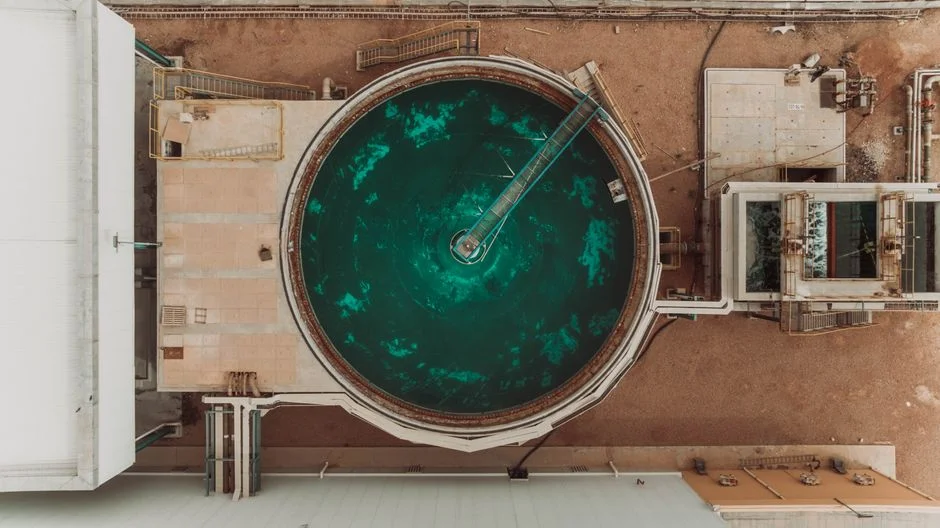
The realistic design envelope for MABR as a post-UASB polishing step on distillery effluent is influent COD 2,000–6,000 mg/L, HRT 6–12 h, and effluent COD below 250 mg/L (or below 50 mg/L with downstream RO). These figures are the working range cited in Fluence's 2026 product literature for SUBRE and Aspiral installations and are consistent with biofilm kinetics for simultaneous nitrification–denitrification on warm industrial wastewater.
Biofilm stratification is what makes the MABR step compact. Nitrifiers colonize the membrane surface where dissolved oxygen is at its highest, while heterotrophs dominate the outer biofilm layer where oxygen has dropped off. The bulk liquid stays anoxic because no bubbles strip oxygen into it, so nitrate produced at the membrane diffuses outward and is denitrified in the same reactor using the residual COD. The result is single-tank COD and ammonia removal with no internal recycle pumping.
| Parameter | Typical Range (Post-UASB MABR) | Notes |
|---|---|---|
| Influent COD | 2,000–6,000 mg/L | Post-Biothane UASB; raw spent wash out of range |
| Influent NH₃-N | 100–400 mg/L | High — favors MABR over activated sludge |
| HRT | 6–12 h | Lower than CAS (18–36 h) |
| Temperature | 10–35 °C | Post-UASB often 30–40 °C; consider cooling or sidestream |
| Membrane O₂ flux | 5–15 g O₂/m²/day | Passive diffusion; no bubbles (Fluence data, 2026) |
| Biofilm thickness | 50–200 µm | Self-regulating; nitrifier-dominated inner layer |
| Effluent COD target | <250 mg/L (RO: <50 mg/L) | DAF + RO needed for reuse grade |
| Effluent NH₃-N target | <5 mg/L | Achievable with biofilm stratification |
| Basin depth fit | 1.5–6 m | SUBRE modules retrofit into existing chambers |
Two practical consequences follow for distillery retrofits. First, post-UASB streams at 30–40 °C sit at the upper edge of the 10–35 °C comfort range, so either a trim cooler, a sidestream configuration, or a diluted blending line is usually needed to keep biofilm activity stable. Second, SUBRE MABR modules install directly into existing basins of 1.5–6 m depth, which means a distillery doubling capacity (Buffalo Trace-style) can upgrade the aerobic stage without new civil works, sidestepping the concrete and earthwork that often dominate distillery CAPEX.
MABR vs MBBR vs Conventional Activated Sludge: Which Wins for Distilleries?
For a distillery polishing step downstream of a UASB, MABR wins on energy and nitrogen removal, MBBR wins on shock-load robustness, and conventional activated sludge is the legacy baseline only. The table below summarizes the head-to-head for a design review.
| Criterion | MABR (SUBRE/Aspiral) | MBBR (AnoxKaldnes-type) | Conventional Activated Sludge |
|---|---|---|---|
| Aeration energy | Up to 90% lower than CAS (Fluence, 2026) | 30–50% lower than CAS | Baseline (highest) |
| Footprint | Smallest — biofilm on membrane, no clarifier | Moderate — carrier media + clarifier | Largest — aeration basin + clarifier + RAS |
| Simultaneous nitrification/denitrification | Yes, in one reactor (biofilm stratification) | Partial; usually needs separate anoxic zone | Requires anoxic zone + internal recycle |
| Effluent NH₃-N | <5 mg/L at design loading | 2–8 mg/L | 2–10 mg/L; bulking risk on high-COD distillery feed |
| Effluent COD | <250 mg/L (post-UASB) | <300 mg/L (post-UASB) | <350 mg/L (post-UASB) |
| Load shock sensitivity | Moderate — biofilm protected on membrane | High robustness to swings | High — bulking, washout, recovery time |
| Retrofit ease | Submerge modules in 1.5–6 m basins | Media addition + new blowers | New basin construction typically required |
| CAPEX | Higher membrane cost; lower civil | Moderate | Lowest CAPEX; highest civil footprint |
| OPEX | Lowest energy, low sludge yield | Mid-range energy, moderate sludge | Highest energy and sludge handling |
The verdict line is sharp: MABR wins for energy and nitrogen polishing in retrofits and new builds, MBBR wins where shock loads dominate and operational simplicity is the priority, and conventional activated sludge remains the legacy baseline that most distilleries are trying to escape. The 2026 retrofit economics (next section) increasingly tip the balance toward MABR wherever energy is a line-item concern.
Integrating MABR Into a Full Distillery Treatment Train
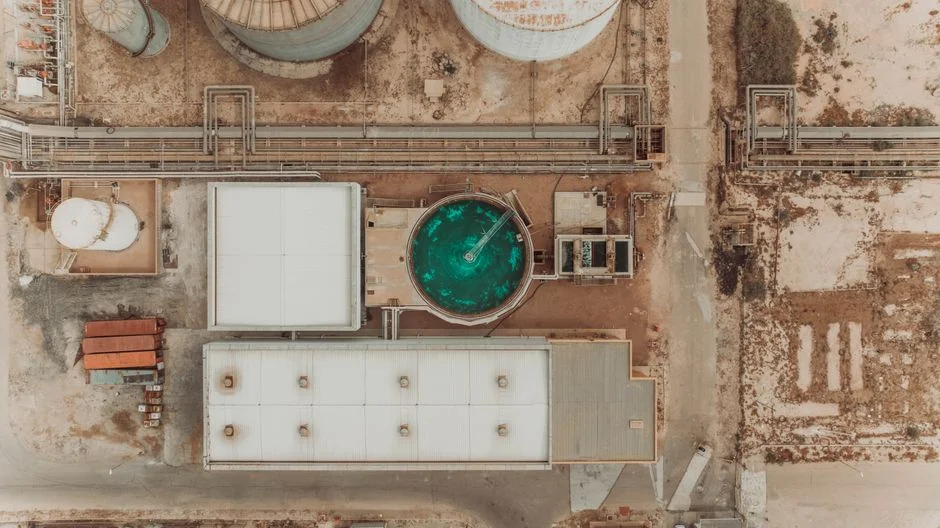
The MABR stage slots in directly after the UASB and before DAF/UV/RO, replacing the MBBR position used in the Buffalo Trace reference train without changing the rest of the flow. A representative 2026 distillery train runs: screening → cooling → equalization → chemical addition and pH control → Biothane (or equivalent) UASB → MABR (SUBRE modules or Aspiral packaged units) → DAF → Hydrotech discfilter → UV → discharge or RO for reuse. Solids from the DAF float are dewatered, and the biogas from the UASB is captured for boiler or CHP use.
Where the MABR stage is dropped in, the headworks and downstream polishing typically remain unchanged. Upstream, an automatic chemical dosing system for pH and nutrient balancing feeds the equalization basin and supports the UASB influent. Downstream, a HydropureWater DAF system for post-MABR solids and FOG removal takes the MABR effluent and strips carryover biomass and any FOG that survives the anaerobic stage before discfiltration and RO. Melanoidin color, if not biologically degraded in the MABR stage, should be tackled by ozone, Fenton, or activated carbon polishing downstream of the MABR rather than pushed back into the anaerobic reactor, which loses capacity to color shocks.
For distilleries considering a similar architecture in yeast or fermentation side-streams, the parallel design logic is covered in SBR for Yeast Wastewater: 2026 Engineering Design & Process Guide, and downstream solids-handling economics are detailed in Filter Press Spare Parts & Consumables Cost in 2026.
2026 Retrofit Economics: When an MABR Upgrade Pays for Itself
An MABR retrofit at a 1,000 m³/day distillery typically pays back in 2–4 years through aeration energy, blower downsizing, and reduced sludge handling. Fluence's 2026 SUBRE data shows up to 30% whole-plant energy reduction within one to three weeks of commissioning, with no basin enlargement. At 1,000 m³/day and an aeration baseline of 0.4–0.6 kWh/m³ for conventional activated sludge, that translates to roughly 35,000–55,000 kWh/year saved, or about $4,000–$7,000/year at typical 2026 industrial electricity tariffs in the U.S. and EU.
Civil-cost avoidance is the second lever and often the larger one. A new 1,000 m³/day activated-sludge basin with clarifier can run $400,000–$900,000 in distillery EPC pricing depending on geotechnical conditions, while SUBRE modules install into existing chambers at 1.5–6 m depth with no new concrete. For craft and mid-sized distilleries, Fluence's Aspiral packaged MABR starts at 20 m³/day and scales in tandem, so a craft distillery processing 50–200 m³/day can deploy a packaged unit without basin construction at all. Membrane cost is offset by blower downsizing (smaller blowers running at lower pressure because MABR is bubble-less) and lower waste-activated-sludge yield, with payback falling inside a typical 2–4 year window based on Fluence case data, 2026.
Frequently Asked Questions
Can MABR treat raw distillery spent wash without a UASB upstream?
No. MABR is sized for influent COD below roughly 6,000 mg/L. Raw distillery spent wash at 35,000–100,000 mg/L COD and 50–90 °C will overload the biofilm and strip performance; a high-rate anaerobic stage such as a Biothane UASB must come first to drop COD by an order of magnitude and reduce temperature.
What effluent COD and ammonia can MABR achieve post-UASB?
Typically <250 mg/L COD and <5 mg/L NH₃-N at 6–12 h HRT on post-UASB distillery effluent. With a downstream DAF and RO polishing train, reuse-grade effluent below 50 mg/L COD is achievable for cooling-tower makeup or boiler feed.
How much energy does MABR save compared to conventional activated sludge?
Up to 90% on the aeration stage itself, because oxygen is supplied by passive diffusion through hollow fibers with no blower-driven bubbles. Whole-plant energy reductions of approximately 30% have been measured in SUBRE retrofits within 1–3 weeks of start-up (Fluence, 2026).
Is MABR suitable for retrofitting an existing distillery wastewater plant?
Yes. SUBRE modules submerge into existing 1.5–6 m basins at plant capacities from 2,000 to 100,000 m³/day (0.5–22 MGD), typically without civil expansion. The retrofit is done one basin at a time with minimal interruption, and the anoxic zone of the existing train is usually the target location.
What is the smallest MABR system for a craft distillery?
Packaged Aspiral Smart Packaged MABR units start at 20 m³/day, and several containers can be coupled in tandem for larger flows. For craft distilleries in the 50–200 m³/day range, a packaged configuration is usually deployed without any new basin construction, which is the most capital-efficient 2026 option for the booming craft-spirits segment.