Why Pharmaceutical Wastewater in Bangladesh Needs Its Own Treatment Logic
Bangladesh's pharmaceutical industry supplies roughly 2% of the global generics market by volume, second only to India among developing-country exporters, and is concentrated in clusters around Dhaka, Gazipur, and Narayanganj (per Bangladesh Pharmaceutical Society industry data, 2025). That scale has a wastewater consequence: API manufacturers in Tongi and formulation plants in Tejgaon together generate an estimated 60,000–80,000 m³/day of process effluent that municipal sewerage cannot legally accept. The legal basis for discharge is the Bangladesh Environment Conservation Act 1995 (ECA 1995) and the Environment Conservation Rules 1997 (ECR 1997), enforced by the Department of Environment (DOE). Schedule 10 (inland surface water) and Schedule 12 (irrigation) set the numerical limits a pharmaceutical effluent treatment plant (ETP) must hit, and they are stricter than what most municipal WWTPs in Dhaka or Chittagong can deliver on their own. The Bangladesh Pharmacy Council (BPCB) and the Directorate General of Drug Administration (DGDA) add an overlapping layer for active-ingredient handling zones, particularly around antibiotic and hormone products. Generic "pharma wastewater" articles fail here because they assume Western discharge targets and continuous-flow operation; Bangladeshi plants run batch campaigns that produce 2–4× peak flows within a single shift, and the influent can swing from pH 4 to pH 9 between reactor cleanouts.
Influent Characteristics: What Pharmaceutical Effluent in Bangladesh Actually Looks Like
Generic "high COD" is useless for sizing a real ETP. The sub-sector matters. API synthesis (fermentation, chemical synthesis, extraction) at facilities such as those operated in the Beximco/ACI/Square supply chain generates the strongest stream: COD 5,000–25,000 mg/L, BOD 2,000–10,000 mg/L, TSS 500–5,000 mg/L, with residual solvents (methanol, acetone, dichloromethane) at 100–2,000 mg/L and salinity from acid/base neutralization reaching 5,000–15,000 mg/L TDS. Formulation effluent (tablets, capsules, syrups) is weaker: COD 1,000–5,000 mg/L, BOD 500–2,500 mg/L, TSS 200–1,000 mg/L, dominated by coating sugars, binders, and cleaning-in-place surfactants. Herbal and Ayurvedic effluent from manufacturers like Sumi and Hamdard falls in between, with COD 3,000–8,000 mg/L, deep color, and high tannin load that resists conventional coagulation. Across all three, antibiotic residues (azithromycin, ciprofloxacin, amoxicillin) and hormones (estradiol, progesterone) appear at trace levels of 0.1–50 µg/L and are the design drivers that distinguish pharma ETP design from generic chemical ETP design — they survive primary treatment and suppress biomass in downstream biology. Hospital effluent from plant-adjacent facilities overlaps with API effluent but adds 1,500 L/bed/day of pathogen-bearing wastewater per WHO 2020 estimates.
| Parameter | API Synthesis | Formulation (oral solid/liquid) | Herbal / Ayurvedic | Hospital (adjacent) |
|---|---|---|---|---|
| COD (mg/L) | 5,000–25,000 | 1,000–5,000 | 3,000–8,000 | 400–1,500 |
| BOD (mg/L) | 2,000–10,000 | 500–2,500 | 1,000–3,500 | 150–600 |
| TSS (mg/L) | 500–5,000 | 200–1,000 | 400–2,000 | 100–400 |
| pH | 4–9 | 6–9 | 5–8 | 6–9 |
| TDS (mg/L) | 5,000–15,000 | 1,000–3,000 | 1,500–4,000 | 500–1,500 |
| Solvents (mg/L) | 100–2,000 | <50 | <30 | <20 |
| Trace APIs (µg/L) | 1–50 | 0.1–5 | <0.5 | 1–20 |
Source ranges: HydropureWater field data, 2026; cross-referenced with Bangladesh University of Engineering and Technology (BUET) ETP audits 2024–2025.
Bangladesh DOE Discharge Limits: What Your ETP Must Hit
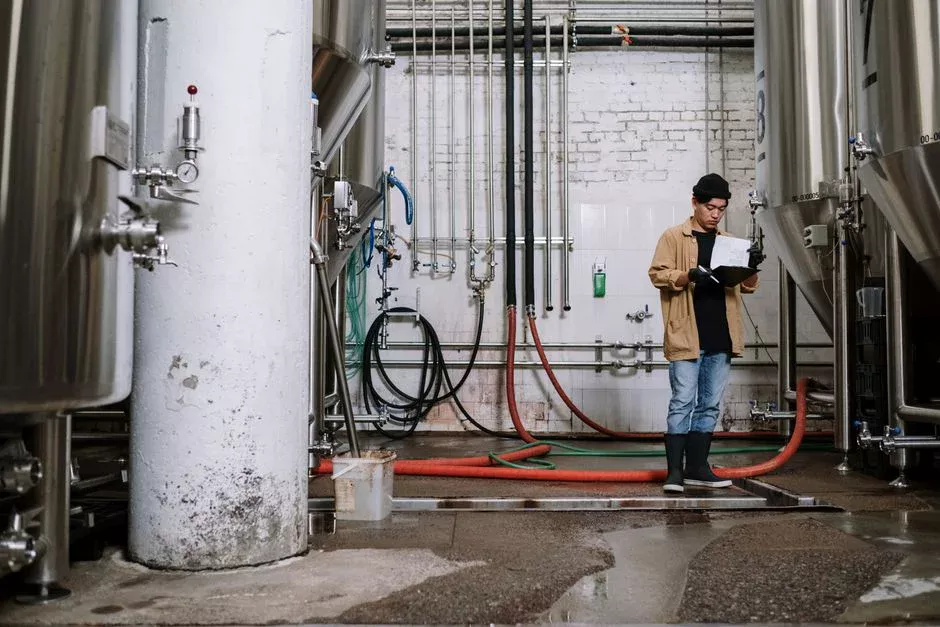
Schedule 10 of ECR 1997 is the compliance target for any pharma plant discharging to inland surface water — the Buriganga, Shitalakshya, or Karnaphuli, depending on location. Schedule 12 applies where the disposal route is land application to on-site or nearby agricultural land, which is common for plants in the Gazipur industrial belt. The numerical limits are non-negotiable; the DOE clears Environmental Impact Assessments and renews site clearance certificates against them. Notably, Bangladesh has not yet adopted numeric API/antibiotic limits comparable to the EU Watch List, but enforcement risk around antimicrobial resistance is rising through DGDA–DOE coordination, and forward-looking plants are designing for trace API removal ahead of regulation.
| Parameter | Schedule 10 (Inland Surface Water) | Schedule 12 (Irrigation) |
|---|---|---|
| BOD (mg/L) | ≤50 | ≤100 |
| COD (mg/L) | ≤200 | ≤400 |
| TSS (mg/L) | ≤150 | ≤200 |
| pH | 6.0–9.0 | 6.0–9.0 |
| Total Nitrogen (mg/L) | ≤100 | — |
| Total Phosphorus (mg/L) | ≤50 | — |
| Oil & Grease (mg/L) | ≤10 | ≤10 |
| Electrical Conductivity (dS/m) | — | ≤4.0 |
| Sodium Adsorption Ratio (SAR) | — | ≤26 |
| Temperature (°C rise above ambient) | ≤5 | ≤10 |
Per DOE ECR 1997, with discharge values consolidated from Schedule 10 (S.I. No. 9/2010 amendment) and Schedule 12 (S.I. No. 8/2017 amendment).
The Process Train: How a Bangladesh Pharmaceutical ETP Is Built
Six blocks, in series, with each block's effluent target feeding the next block's design load:
Block 1 — Equalization and cooling. 8–24 h HRT, sized at 1.5× peak daily flow, with mechanical mixing and a heat exchanger or cooling tower coil. This damps pH (4–9) and temperature (40–55 °C) swings from batch reactor discharge. Undersizing this tank is the single most common ETP failure in Bangladesh (see Block 6 design mistakes).
Block 2 — Physico-chemical primary. Automatic chemical dosing for pH and coagulant control feeds pH correction (NaOH/H₂SO₄), coagulant (PAC 50–200 mg/L), and flocculant (polyacrylamide 1–5 mg/L), followed by a DAF system for pharmaceutical primary treatment or lamella clarifier. Target: 30–50% COD reduction, >80% TSS removal, oil & grease to <15 mg/L before biology.
Block 3 — Biological treatment. For medium-strength formulation effluent, conventional activated sludge (SRT 15–25 days, MLSS 3,000–5,000 mg/L) or SBR is sufficient. For API streams, an MBR membrane bioreactor for pharma effluent using a DF series flat-sheet MBR membrane module (PVDF, 0.1–0.4 µm nominal pore) is the proven path: 80–90% pharmaceutical concentration reduction per Zhao et al. 2014, complete solids capture replacing the secondary clarifier, and tolerance to the residual solvents that knock out conventional biomass.
Block 4 — Tertiary polishing. Chosen by residual API target and footprint (see next section). Block 5 — Disinfection. A chlorine dioxide generator for pharma effluent disinfection dosing 1–2 mg/L ClO₂ meets the coliform and pathogen targets in Schedule 10 and aligns with WHO drinking-water guidelines for residual management. Block 6 — Sludge handling. Combined physico-chemical and biological sludge is thickened (gravity + polymer) and dewatered on a plate and frame filter press for pharma sludge dewatering to 22–28% dry solids; the cake is sent to secure landfill or, for antibiotic-contaminated sludge, to a licensed hazardous-waste incinerator (per DOE Hazardous Waste Management Rules 2011). Flow summary: Raw effluent → EQ → pH/coag → DAF → MBR → Polishing (AOP/GAC) → ClO₂ → Discharge; sludge line → Thickener → Filter press → Cake disposal. For a comparable reference on how a similar train is built for a neighboring Southeast Asian regulatory environment, see the pharmaceutical wastewater treatment in Thailand process guide (2026).
Polishing Technology Comparison: AOPs vs Activated Carbon vs Constructed Wetlands
The tertiary block is where the capex decision actually lives for a Bangladeshi pharma ETP. Three options dominate, and the right pick depends on the residual API profile, available land, and grid reliability.
| Technology | API Removal | Capex (relative) | Opex (relative) | Footprint | Bangladesh Suitability |
|---|---|---|---|---|---|
| AOPs (O₃/UV, O₃/H₂O₂, Fenton) | >90% for diclofenac, ibuprofen (Yuan et al. 2019) | High | Moderate–High (energy) | Small (5–10 m² per 100 m³/day) | Best where land is constrained; vulnerable to grid outages unless paired with captive power |
| Granular Activated Carbon (GAC) | >70% across mixed APIs (Huang et al. 2018) | Moderate | Moderate (carbon replacement 2–4×/yr) | Small | Reliable, low-tech; spent carbon must go to hazardous-waste handler |
| Constructed Wetlands | >85% for mixed APIs (Vymazal 2011) | Low | Very low (no energy, no media) | Large (5–10 m² per m³/day) | Ideal for Gazipur/Narayanganj plants with 0.5–2 ha of buffer land; climate is suitable 9–10 months/year |
Decision rule of thumb: AOPs when residual API target is <10 µg/L and footprint is tight; GAC when discharge route is Schedule 12 irrigation and spent-carbon logistics are in place; constructed wetlands when land is available and the discharge target is Schedule 10 with no acute toxicity requirement.
Water Reuse and Zero Liquid Discharge Options for Bangladesh Plants
Reuse is the upgrade path most Bangladeshi pharma plants can realistically adopt in 2026. An MBR + RO train can deliver boiler-feed-quality polishing water at up to 95% RO recovery; this water is suitable for cooling-tower make-up, boiler feed (after further ion exchange), and gardening, which together can offset 30–60% of municipal freshwater intake. For plants pursuing the RO polishing stage for boiler-feed reuse, pairing it with a multi-media filter pretreatment train extends membrane life and reduces cleaning frequency. Full Zero Liquid Discharge (ZLD) — MBR + RO + mechanical vapor recompression (MVR) evaporators/crystallizer — is technically viable but remains rare in Bangladesh due to capex (typically 2–3× the cost of a discharge-compliant ETP at the same capacity) and the energy intensity of evaporation. It is currently mandated only for select hazardous-waste-generating facilities under DOE special conditions. Constructed wetlands, sized at the polishing block, offer the most realistic near-term reuse-plus-disposal option for plants with available land. The Bangladesh Water Act 2013 and DOE's industrial water reuse guidance both encourage this direction.
Capex, Opex, and Common Design Mistakes in Bangladesh Pharma ETPs
For a 50–500 m³/day Bangladesh pharmaceutical ETP meeting Schedule 10, the installed capex typically runs USD 200–800 per m³/day (conceptual engineering range based on HydropureWater bid data 2024–2026) and opex lands in the range of USD 0.3–0.8 per m³ treated, dominated by energy, chemicals, and sludge disposal. Four design mistakes are seen repeatedly in local ETPs:
1. Equalization tank too small. Bangladeshi API plants run 2–4 batch campaigns per day. An EQ sized at average flow instead of 1.5× peak flow passes 4× hydraulic shocks directly into biology, washing out MLSS and crashing nitrification. A 100 m³/day plant needs an EQ of at least 60–80 m³ working volume (per HydropureWater field data, 2025).
2. No solvent stripping upstream of biology. Methanol, acetone, and DCM from API synthesis reach biology at inhibitory concentrations (typically >200 mg/L total VOCs) and kill nitrifiers within hours. A packed-tower air stripper or an MEE pre-concentrator must precede the bioreactor for any API stream above 5,000 mg/L COD.
3. Sludge handling undersized. A 100 m³/day API plant can generate 2–4 tonnes/day of dewatered cake once chemical and biological sludge are combined. A filter press sized for half that load becomes a bottleneck within months. The selection logic for the press itself is detailed in the MBR system manufacturer comparison guide, and the same sizing discipline applies to the dewatering stage.
4. No design allowance for antibiotic resistance. Passing antibiotic-laden effluent that meets BOD/COD but carries 10–50 µg/L of ciprofloxacin or azithromycin is a regulatory and reputational risk as DGDA–DOE coordination tightens. The biological and polishing stages must be designed and operated for trace API removal, not just carbonaceous load. For a detailed walkthrough of MBR commissioning parameters that support this design intent, see the MBR installation and commissioning guide (2026).
Frequently Asked Questions
What is the regulatory basis for pharma effluent discharge in Bangladesh?
The Bangladesh Environment Conservation Act 1995 (ECA 1995) and Environment Conservation Rules 1997 (ECR 1997), enforced by the Department of Environment (DOE). Pharma plants discharging to inland surface water must meet Schedule 10 limits (BOD ≤50 mg/L, COD ≤200 mg/L, TSS ≤150 mg/L, pH 6–9); plants discharging to land for irrigation must meet Schedule 12 (BOD ≤100 mg/L, COD ≤400 mg/L, EC ≤4 dS/m, SAR ≤26).
What is the standard treatment train for a Bangladesh pharmaceutical ETP?
Equalization and cooling (8–24 h HRT) → pH correction and coagulation → DAF or lamella clarifier → biological treatment (activated sludge or MBR for API streams) → tertiary polishing (AOPs, GAC, or constructed wetlands) → chlorine dioxide disinfection → sludge dewatering on a plate and frame filter press. This sequence handles Schedule 10 compliance and trace API removal for plants in the 50–500 m³/day range.
When should I choose MBR over conventional activated sludge?
MBR is the right choice when the influent is API synthesis effluent (COD >5,000 mg/L), when residual solvents are present, when plant footprint is constrained, or when the downstream polishing stage requires consistently low TSS (<10 mg/L) to function. For formulation effluent below 5,000 mg/L COD with no solvent loading, conventional activated sludge or SBR remains cost-effective.
How are antibiotic residues handled in a Bangladesh pharma ETP?
MBR provides 80–90% removal of mixed antibiotics through biodegradation and membrane rejection; an AOP polishing stage (O₃/UV or O₃/H₂O₂) pushes removal above 95% for recalcitrant compounds. Bangladesh has no numeric antibiotic limit yet, but DGDA–DOE coordination is tightening, and the design should target <10 µg/L total antibiotic residue in the final effluent.
Is there a packaged ETP option for small Bangladesh pharma plants?
Yes. For plants below 50 m³/day (small formulation units, Ayurvedic manufacturers, hospital-adjacent facilities), a skid-mounted package combining equalization, DAF, MBR, and chlorine dioxide disinfection is available with a footprint of 30–60 m². The same Schedule 10 limits apply, and a constructed-wetland polishing step is often added on-site for final polishing.