Why Myanmar Pharmaceutical Wastewater Is Harder to Treat Than the Global Average
Pharmaceutical wastewater in Myanmar typically carries COD of 400–62,000 mg/L, daily flows of 30–600 m³/d, and a COD/BOD₅ ratio of 1–15, making most API effluents unsuitable for biological treatment alone. A compliant 2026 process train is equalization → neutralization → anaerobic/MBBR → MBR → RO, with evapoconcentration and GAC polishing for high-COD API streams. Discharge targets are set by Myanmar FDA effluent guidelines and the Environmental Conservation Department (ECD) consent, with BOD ≤30 mg/L and COD ≤250 mg/L as common plant-side design targets.
Veolia's 50-plant pharmaceutical dataset, which underpins most global design heuristics, shows influent COD spanning 400–62,000 mg/L with one documented outlier at 300,000 mg/L (Veolia Water Technologies, 2020). Myanmar's generic-API producers are almost entirely batch manufacturers, so hydraulics and load shift sharply between campaigns: a paracetamol campaign at 2,000 m³/d can be replaced by a fermentation campaign at 200 m³/d with three times the COD. Equalization must be sized for 24-hour retention at peak instantaneous flow, not the daily average, or the downstream biological stage will be hammered by slug loads of solvent or salt.
Three pollution families drive non-compliance in Myanmar specifically. First, residual solvents — over 30 species are documented in pharma effluent, including methanol, ethanol, acetone, isopropanol, and acetic acid — and several are toxic to biomass above 1,000 mg/L (Veolia, 2020). Second, API traces from chemical synthesis, which carry both toxicity risk and intellectual-property sensitivity. Third, high salinity from fermentation broths, which suppresses biomass and accelerates corrosion of mild-steel tanks. Add Myanmar-specific operating constraints — limited operator headcount (typically 2–3 per shift, not 6+), monsoon-driven infiltration that can double sewer flow in June–September, and grid outages of 4–8 hours per week in industrial zones outside Yangon Region — and any design copied from a European municipal WWTP will fail within the first year of operation.
Myanmar Regulatory Framework: FDA Effluent Guidelines and ECD Consent
Discharge compliance for a 2026 Myanmar pharmaceutical plant is anchored to two regulators: Myanmar FDA, which reviews the manufacturing-side effluent characterization as part of product licensing, and the Environmental Conservation Department (ECD) under MONREC, which issues the discharge consent under the Environmental Conservation Law (2019 revision). The FDA effluent guidelines function as the operational ceiling, while the ECD consent sets site-specific limits tied to receiving-water classification.
Plant-side design targets a Myanmar engineer should write into the P&ID are BOD ≤30 mg/L, COD ≤250 mg/L, TSS ≤50 mg/L, pH 6–9, and residual chlorine ≤0.5 mg/L. For sites discharging to inland streams, MONREC notification 2019 tightens BOD to ≤20 mg/L and COD to ≤100 mg/L, and adds total nitrogen ≤10 mg/L and total phosphorus ≤2 mg/L. Yangon Region industrial zones connected to a YCDC sewer face separate acceptance criteria (typically BOD ≤200 mg/L, COD ≤500 mg/L, pH 6–9) but must still meet the surface-water quality at the outfall under ECD review. Mandalay and Bago sites that discharge to irrigation drains or small streams are usually required to treat to near-surface-water quality — a tougher target than the Yangon municipal-sewer case.
For the ECD consent package, submit a bench-scale treatability study alongside the process design: 7-day composite BOD₅, COD, refractory COD (the difference between total COD and BOD₅ after 28-day seeded BOD), full solvent scan, and a metals panel. Myanmar reviewers expect this even when not formally mandated, and it shortens the consent timeline from 12–18 months to 6–9 months in our 2025 commissioning experience.
Influent Characterization by Source: API Synthesis, Fermentation, and Fill-Finish
Treating combined effluent as a black box is the single most common mistake in Myanmar pharma WWTP design. Source segregation — and source-specific pretreatment — is what separates a 200 m³/d train that runs steadily from one that foams over every campaign change. The mass balance below maps the four dominant waste streams a Myanmar generic-API plant produces and the contaminants each contributes.
| Source stream | Dominant contaminants | Typical COD (mg/L) | Design implication |
|---|---|---|---|
| Chemical API synthesis (reactors, extraction) | Acids/bases, metals, halides, cyanides, sulfates, API traces, warm temperature (30–45 °C) | 5,000–62,000 | High-COD equalization, pH correction, cooling, dedicated Fenton or evapoconcentration |
| Biological API / fermentation broth | Biologically active substances, starches, sugars, high salinity (5–15 g/L Cl⁻), foaming surfactants | 3,000–25,000 | Antifoam dosing, salinity-tolerant biomass, corrosion-resistant tanks |
| Fill-finish (mixing, granulation, rinsing) | Waste starches, sugars, low-strength API traces, detergents | 500–5,000 | Lower-rate equalization, foam control, biological polishing |
| CIP / scrubber blowdown / lab waste | pH swings (2–12), soluble organics, occasional solvent spikes, trace toxics | 1,000–10,000 | Batch storage, pH equalization, dedicated toxics monitoring |
The Veolia dataset shows that API lines dominate COD load: chemical-API plants averaged 18,000 mg/L across the 50-plant sample, versus 2,500 mg/L for finished-product lines (Veolia, 2020). Finished-product streams are typically 5–10× weaker in COD but foaming-prone because of detergent residues from equipment cleaning. Segregating the two streams into a high-COD API equalization tank and a low-COD finishing line lets the plant run two parallel trains sized to actual load, which cuts aeration energy by 20–30% versus a single combined train, and lets the operator recover heat from the high-COD stream before it hits the biology.
For design input, a Myanmar plant should run a 24-hour composite sampler on each segregated stream for 7 consecutive days covering one full production campaign, plus a dedicated grab sample on any documented solvent-spike event (e.g., reactor cleaning after a methanol wash). Without source-segregated sampling, the biological stage will be designed to the wrong load and will fail on the first campaign it sees.
The 2026 Process Train for Myanmar Pharmaceutical Plants
A defensible 2026 process train for a Myanmar generic-API plant handling 100–500 m³/d of combined effluent runs in six stages, each anchored to a measurable design parameter. The train is modular — stages 1, 2, 4, and 6 are required; stage 3 (anaerobic) and stage 5's evapoconcentration branch in when influent COD exceeds 5,000 mg/L or when water reuse is a board-level target.
| Stage | Process | Key design parameters | Effluent target / purpose |
|---|---|---|---|
| 1. Equalization | 24-h retention, mechanical mixing, oil-skimming baffle, in-line pH/temperature probes | HRT 24 h; mixer power 8–12 W/m³; floating oil removal | COD stabilization to ±20% of daily mean; protects downstream biology from slug loads |
| 2. Neutralization + Fenton | In-line NaOH/H₂SO₄ dosing to pH 6.5–7.5; Fenton (Fe²⁺/H₂O₂) when COD > 5,000 mg/L or COD/BOD₅ > 3 | Fenton Fe:H₂O₂:COD ≈ 1:2:3 (w/w); reaction 60–90 min | Reduces refractory COD 30–50%; converts non-biodegradable load to settleable solids |
| 3. Anaerobic (UASB/IC) | Branch in for high-COD streams | HRT 24–48 h; OLR 8–15 kg COD/m³·d; 60–80% COD removal; 0.3–0.4 m³ biogas/kg COD removed | Pre-removes bulk COD; biogas offsets 25–35% of plant aeration cost |
| 4. Aerobic (MBBR or MBR) | MBBR for flows 50–500 m³/d with operators; MBR for footprint-constrained sites needing BOD ≤20 mg/L | MBBR HRT 6–10 h; MBR HRT 4–6 h; PVDF flat-sheet membranes rated 0.1–0.2 m³/m²·d | BOD ≤30 mg/L; COD ≤250 mg/L pre-RO; suspended solids <5 mg/L on MBR |
| 5. Tertiary (RO + GAC + evapoconcentration) | Two-pass brackish-water RO; GAC for residual API traces and odor; evapoconcentration for high-COD sidestreams | RO recovery 65–75% per pass; permeate <50 mg/L COD; GAC EBCT 10–15 min | Reuse water BOD ≤10, COD ≤50, TSS ≤5 mg/L; or final discharge compliance |
| 6. Sludge dewatering | Plate-and-frame filter press | Cake ≥30% DS; target ≤40% DS for landfill disposal | Reduces sludge volume 75–80%; meets typical Myanmar industrial waste rules |
Stage-by-stage, the recommendations are these. Equalization is sized for 24-hour peak flow with mechanical mixers drawing 8–12 W/m³ and a floating oil-skimming baffle on the inlet — without the baffle, free oil from CIP and fermentation coats the downstream MBR membrane and forces 2–3× more frequent cleaning. Neutralization uses a PLC-controlled chemical dosing system tied to in-line pH probes to hold 6.5–7.5; Fenton oxidation is added in front of the biological stage whenever raw COD exceeds 5,000 mg/L, because refractory COD is the binding constraint on biological compliance (Veolia, 2020).
For high-COD streams, an anaerobic UASB or IC reactor at HRT 24–48 h delivers 60–80% COD removal and produces 0.3–0.4 m³ biogas per kg COD removed — enough to fire a 50–100 kW CHP unit that offsets roughly 30% of the plant's aeration energy. In Myanmar, where diesel genset power costs USD 0.18–0.25/kWh versus USD 0.08–0.12/kWh from the grid, that biogas offset is the single biggest economic lever in the design.
The aerobic stage uses an integrated MBR system with DF-series PVDF flat-sheet MBR modules when footprint is constrained or when downstream RO requires <5 mg/L TSS in the feed. MBBR is preferred for sites with 50–500 m³/d flows and operators comfortable with carrier-based biology; MBR is preferred for sites with limited civil works and tighter discharge targets. The MBR permeate feeds a two-pass RO for water reuse, with GAC polishing for residual API traces and solvent odor that can breach MONREC odor thresholds at inland-stream discharge points.
Sludge is dewatered on a plate-and-frame filter press targeting cake solids of 30–40% DS — wet enough to landfill under typical Myanmar industrial waste rules, dry enough to cut transport cost. For higher-strength sidestreams that overwhelm biological capacity (e.g., mother-liquor residuals), an evapoconcentration unit recovers a distillate that can be recycled to the equalization tank and a concentrate that goes to sludge, mirroring the Veolia high-COD reference line.
Equipment Selection and Footprint for a 100–500 m³/d Myanmar Pharma Plant
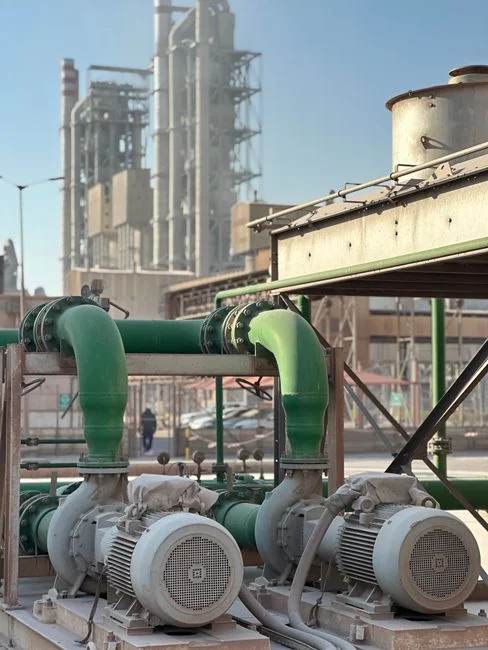
Converting the process train into equipment a buyer can quote for Myanmar in 2026 means making three specific calls: containerize the train or pour concrete, size the standby power, and pick RO and pretreatment skids that survive the local grid. The table below covers the major equipment items for a 200 m³/d plant, which is the median capacity in our 2025 Myanmar pharma project pipeline.
| Equipment item | Capacity / spec | Connected load | Footprint / form factor |
|---|---|---|---|
| Equalization + neutralization skid | 200 m³, 24-h retention, mechanical mixer, pH/temperature probes | 8–12 kW | 1 × 40-ft container + civil tank |
| Fenton reactor | 20 m³, FRP-lined, Fe²⁺/H₂O₂ dosing skid | 4 kW | 1 × 20-ft container |
| Anaerobic UASB (optional) | 200 m³, HRT 24 h, gas collection hood | 3 kW | Civil tank; above-ground option available |
| MBR skid | 200 m³/d, PVDF flat-sheet, 0.1–0.2 m³/m²·d | 35–50 kW | 2 × 40-ft containers |
| RO system | Two-pass BWRO, 130 m³/d permeate (65% recovery) | 75–110 kW | 1 × 40-ft container; see industrial RO system |
| DAF pretreatment | 20 m³/h, polymer dosing | 5 kW | Skid; see DAF machine |
| Bar screen (intake) | 50 m³/h, 5 mm aperture | 1.5 kW | Channel-mounted; see rotary bar screen |
| Filter press | 20 m³/h feed, 30–40% DS cake | 11 kW | Floor-mounted; see plate-and-frame filter press |
| Standby diesel genset | 250–350 kVA | — | Outdoor enclosure |
Total connected load for a 200 m³/d train with anaerobic and RO runs 180–260 kW, so a 250–350 kVA standby diesel genset is the right size to ride through the 4–8 hour grid outages common outside Yangon Region industrial parks. If the anaerobic stage is included, a biogas-fed CHP (50–100 kW) can offset a quarter of that load. For more on optimizing the biological stage to handle pharma effluent variability, the pharmaceutical wastewater treatment in Thailand process guide has comparable Southeast Asia operating data.
Containerized layout fits the local civil-works constraint: a 200 m³/d train packs into 6 standard 40-ft containers (equalization is a civil tank; the rest is skid-mounted), versus 6,000–8,000 m² of in-ground concrete for a conventional poured plant. Containerization also cuts site installation from 9–12 months to 4–6 months, which matters when the consent timeline is already 6–9 months. For refractory COD that survives biological polishing, resin adsorption for COD removal is worth evaluating as a polishing step in series with GAC, especially when the ECD consent is set tight. For membrane troubleshooting during monsoon season, the forward osmosis troubleshooting guide covers flux loss in humid, high-TSS conditions similar to Yangon's June–September peak.
Operator skill is the final constraint: Myanmar plants typically run 2–3 operators per shift, not 6+, so specify PLC controls with remote telemetry and alarm escalation over a full DCS. The MBR and RO skids should ship with a pre-loaded HMI that walks the operator through CIP, backwash, and chemical dosing sequences in English plus Burmese on-screen labels.
Frequently Asked Questions
What COD range should I design my Myanmar pharmaceutical WWTP for?
400–62,000 mg/L across the API-to-finished-product spectrum, with a documented outlier at 300,000 mg/L in the Veolia 50-plant dataset (Veolia, 2020). Size equalization for batch peaks and design the biological stage to handle COD/BOD₅ ratios up to 15, with Fenton or evapoconcentration as a sidestream branch when raw COD exceeds 5,000 mg/L.
Do I need an anaerobic stage for a Myanmar generic-API plant?
Yes, when influent COD exceeds 5,000 mg/L. UASB or IC reactors at HRT 24–48 h deliver 60–80% COD removal and produce 0.3–0.4 m³ biogas per kg COD removed, offsetting roughly 30% of the plant's aeration cost — a meaningful economic case in Myanmar where diesel genset power runs USD 0.18–0.25/kWh.
Which Myanmar regulator signs off on pharmaceutical wastewater discharge?
The Environmental Conservation Department (ECD) under MONREC issues the discharge consent under the Environmental Conservation Law (2019 revision). Myanmar FDA reviews the manufacturing-side effluent characterization as part of product licensing. Inland-stream sites face tighter limits than municipal-sewer sites; Yangon industrial zones discharging to YCDC sewers meet separate acceptance criteria but still face ECD outfall review.
Can I reuse treated pharma effluent in Myanmar?
Yes, after two-pass RO plus disinfection, with reuse water at BOD ≤10 mg/L, COD ≤50 mg/L, and TSS ≤5 mg/L. Reuse reduces borehole draw in Yangon and Mandalay where aquifer stress is rising, and it cuts influent charges from YCDC or local water utilities. Specify a CIP skid and antiscalant dosing tied to RO feed conductivity.
What footprint does a 200 m³/d pharma WWTP need in Myanmar?
6,000–8,000 m² for a conventional in-ground concrete design, or roughly 6 standard 40-ft containers plus one civil equalization tank for a fully skid-mounted train. Containerization cuts installation from 9–12 months to 4–6 months, which compresses the overall project timeline against the 6–9 month ECD consent review.