Why Pharmaceutical Wastewater in Indonesia Demands a Dedicated Treatment Train
A Jakarta API manufacturer that passed its 2024 internal QA review still received a KLHK notice of violation in early 2025 for COD excursions, BOD₅ spikes, and antibiotic activity above the threshold in its combined discharge — proof that municipal-style activated sludge is the wrong baseline for Indonesian pharmaceutical effluent. PP No. 22 Tahun 2021 Lampiran VI sets pharmaceutical manufacturing limits at BOD₅ 30 mg/L, COD 100 mg/L, TSS 30 mg/L, pH 6.0–9.0, total nitrogen 30 mg/L, phenol 0.5 mg/L, and an antibiotic activity test that the receiving environment must pass (PP 22/2021 Lampiran VI). PERMENKES No. 32 Tahun 2017 reinforces this on the GMP side by requiring that water, waste, and effluent handling be validated as part of site qualification and process validation for any facility manufacturing finished dosage forms.
The pollution load driving those limits is heavy. Industrial and domestic effluents discharge approximately 0.3 billion tons of micropollutants per year, including pharmaceuticals, hormones, agrochemicals, and fire suppressants (Springer, Environmental Chemistry Letters, 2025). Within that figure, 50–90% of ingested antibiotics are excreted unchanged in human faeces and enter sewage systems, so any combined sewer overflow in a dense Indonesian city carries antibiotic residues past the plant gate. The result is a compliance regime in which biology alone is rarely defensible; the engineer must prove BOD/COD removal, solids capture, and a polishing step that knocks down residual API activity before KLHK's BML (Buku Mutu Lingkungan) monitoring closes the loop.
Typical Influent Characteristics from Indonesian API and Generics Plants
The influent characteristics in Indonesian API and generics plants are defined by the wide envelope of batch fermenter washes, CIP rinses, and synthesis mother-liquors converging on the effluent header. A defensible design envelope in 2026 looks like this:
| Parameter | Typical range (Indonesian API/generics) | Design implication |
|---|---|---|
| COD | 1,500–8,000 mg/L | Requires biological step with high F/M tolerance or MBR |
| BOD₅ | 800–4,000 mg/L | BOD/COD ratio 0.4–0.5 indicates biodegradable fraction is high |
| TSS | 300–2,000 mg/L | DAF or lamella ahead of biology to protect membranes |
| pH | 4–9 | Equalization must include pH correction to 6.5–7.5 |
| Total nitrogen | 50–300 mg/L | Drives nitrification/denitrification sizing |
| Sulfate | 200–1,500 mg/L | Watch for H₂S in sewers; vent equalization |
| Paracetamol-class APIs | 0.1–300 mg/L (worldwide) | Triggers AOP/GAC polishing requirement |
| Carbamazepine-class APIs | up to 259 µg/L in urban sewage | Traces need carbon adsorption polishing |
| Temperature | 28–32 °C ambient | Favours mesophilic biology; no reactor heating needed |
Indonesian generics plants typically run 2–3 shifts with batch synthesis, which produces 4–8× peaking factors between shift changeovers. Equalization volume is sized at 8–24 hours of HRT to flatten those peaks before DAF and the biological stage; below 8 hours the DAF polymer dose swings and biology loses nitrification. Ambient temperature of 28–32 °C is an asset: mesophilic kinetics are near optimal year-round, so closed-reactor cooling is rarely needed, and the engineer saves on heat exchangers that plants in temperate climates have to budget for (HydropureWater field data, 2025).
The 2026 Process Train: Equalization, DAF, Biological, and Reuse
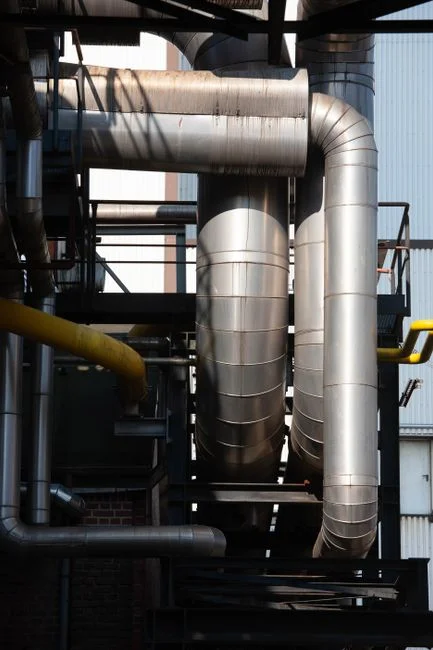
A 2026 Indonesian pharmaceutical ETP that must clear both PP 22/2021 and a reuse target typically stacks six unit operations.
- Flow and pH equalization. 8–24 hour HRT in a concrete or coated-steel basin with slow-speed mixers (G-value 50–80 s⁻¹) to keep TSS in suspension without emulsifying oils. pH correction to 6.5–7.5 with NaOH or H₂SO₄ via dosing skid.
- Dissolved air flotation. A dissolved air flotation system (4–300 m³/h, 13 standard models) handles suspended solids, free and emulsified oils, and colloidal API intermediates — typically removing 60–85% TSS and 50–70% COD in a single stage when polymer dose is tuned to the wastewater.
- Biological treatment. Two viable paths: (a) conventional activated sludge at lower CAPEX with HRT 18–36 h, or (b) a submerged integrated MBR membrane bioreactor with DF series PVDF flat-sheet MBR modules at HRT 8–14 h, footprint roughly 30–40% smaller, and <1 µm filtration that delivers effluent SS <5 mg/L — directly RO-ready.
- Advanced oxidation or GAC adsorption. For antibiotic and micropollutant polishing, wood-derived biochar, iron-modified wood-chip biochar, and conventional GAC all show high uptake of tetracycline, norfloxacin, ciprofloxacin, sulfamethoxazole, and paracetamol in real wastewater matrices (Springer, Environmental Chemistry Letters, 2025). Ozone/H₂O₂ AOP is the parallel route when footprint is tight.
- RO reuse loop. An industrial RO system with up to 95% recovery, fed by a multi-media pre-filter holding SDI <3, produces boiler-feed or CIP-grade water with conductivity <50 µS/cm. This is the step that converts compliance cost into water-recovery savings on water-stressed Java sites.
- Disinfection. A chlorine dioxide generator (50 g/h to 20,000 g/h) provides residual control for reuse loops where microbial compliance is required, without the THM formation risk of chlorine.
| Step | Equipment | Typical outcome |
|---|---|---|
| Equalization | Coated basin, slow mixers | Flow/pH damping, peak factor 4–8× → 1.5–2× |
| DAF | DAF | 60–85% TSS, 50–70% COD removal |
| Biology | MBR (DF modules) or AS | COD <100 mg/L, BOD₅ <30 mg/L, SS <5 mg/L (MBR) |
| Polish | GAC / AOP | Antibiotic activity below KLHK threshold |
| Reuse | RO + multi-media pre-filter | Conductivity <50 µS/cm, 95% recovery |
| Disinfection | ClO₂ generator | Microbial compliance for reuse |
Engineers cross-checking biological selection logic against other waste streams can utilize the AAO process working principle guide and the ultrafiltration troubleshooting field guide when piloting MBR modules in tropical ambient conditions.
Matching the Treatment Train to Indonesian Discharge and Reuse Goals
The right train depends on where the effluent ends up. For direct discharge to a receiving water body under PP 22/2021 Lampiran VI, the engineer targets COD ≤100 mg/L, BOD₅ ≤30 mg/L, and TSS ≤30 mg/L — and a properly operated DAF plus conventional activated sludge still clears those limits for many legacy APIs. When the plant is tied into a municipal interceptor feeding PT PAL JAYA or a city IPAL, pretreatment must satisfy the agreed hydraulic envelope and quality limits in the discharge agreement; an MBR is preferred because the low-SS effluent (<5 mg/L) avoids surcharges and protects the municipal plant's biology.
For plants chasing reuse targets — boiler feed, CIP, or cooling-tower makeup — the train extends to RO polishing. A multi-media pre-filter is non-negotiable here: SDI must be held below 3 or RO membranes fail their 5–7-year design life. A lamella clarifier is often used as a polishing stage between DAF and MBR when TSS variability threatens the membrane flux. Antibiotic-residue-sensitive sites — penicillin, cephalosporin, and macrolide lines — must add GAC or AOP polishing, as these residues trigger microbial-resistance exposure even at trace levels.
CAPEX and OPEX Benchmarks for a 2026 Indonesian Pharma ETP
For a packaged 200 m³/day plant in Java, 2026 turnkey CAPEX lands in the IDR 6–11 billion band (≈USD 380K–700K) depending on whether the biological stage is conventional activated sludge or MBR, and whether an RO reuse loop is included (HydropureWater field data, 2026). The MBR delta alone is IDR 1.5–2.5 billion over AS; an RO loop adds another IDR 1.2–2.0 billion, but typically pays back in 3–5 years on sites where raw water tariffs exceed IDR 8,000/m³.
| Cost element | 2026 Indonesian range | Driver |
|---|---|---|
| Packaged 200 m³/day ETP (AS + DAF) | IDR 6–8 billion | Civil works, tanks, blowers, controls |
| …with MBR upgrade | IDR +1.5–2.5 billion | DF modules, finer screening, scour aeration |
| …with RO reuse loop | IDR +1.2–2.0 billion | Membranes, high-pressure pumps, CIP skid |
| Aeration energy | 0.4–0.8 kWh/m³ | Blower selection, DO control |
| PVDF membrane replacement | Every 5–7 years | MBR flux and CIP discipline |
| Sludge dewatering | plate-and-frame filter press, 1–500 m² | Cake dryness >25% DS for offsite disposal |
| Chemical dosing | automatic chemical dosing skid | Coagulant, flocculant, pH, P-removal |
OPEX is dominated by aeration energy (0.4–0.8 kWh/m³), membrane replacement (PVDF modules on a 5–7 year cycle), and chemical dosing for pH correction and phosphorus precipitation. Sludge handling is a non-trivial line item; a plate-and-frame filter press with 1–500 m² filtration area brings pharma biological sludge to >25% dry solids, which is what KLHK-licensed haulers require for offsite disposal. Dosing reliability is the unglamorous failure mode; the automatic chemical dosing skid is the cheapest insurance against the pH excursions that knock nitrification offline for 7–10 days at a stretch.
Frequently Asked Questions
What are the PP
Frequently Asked Questions
What are the PP 22/2021 discharge limits for pharmaceutical wastewater in Indonesia?
Under Government Regulation (PP) No. 22 of 2021, pharmaceutical wastewater discharge is subject to strict parameter limits to protect water bodies. Key thresholds include a maximum BOD5 concentration of 30 mg/L, a COD limit of 150 mg/L, and Total Suspended Solids (TSS) capped at 30 mg/L. Additionally, the pH must be maintained within the 6.0–9.0 range, and ammonia levels must not exceed 10 mg/L.
What is the typical COD and BOD of pharmaceutical effluent from an API plant?
Raw effluent from Active Pharmaceutical Ingredient (API) manufacturing plants in Indonesia typically exhibits high organic loads due to the use of solvents and chemical precursors. Typical Chemical Oxygen Demand (COD) concentrations range from 2,000 mg/L to 10,000 mg/L, while Biochemical Oxygen Demand (BOD) generally ranges from 800 mg/L to 4,000 mg/L, often requiring multi-stage pre-treatment before biological processing.
Is MBR or conventional activated sludge better for Indonesian pharma wastewater?
Membrane Bioreactor (MBR) technology is generally superior to conventional activated sludge for Indonesian pharmaceutical facilities due to its superior footprint efficiency and higher effluent quality. MBR systems effectively retain high-molecular-weight pharmaceutical compounds and achieve consistent turbidity levels below 0.2 NTU, which is essential for meeting the stringent 2026 environmental compliance standards in space-constrained industrial zones.
How do you remove antibiotic residues from pharmaceutical wastewater?
To effectively remove recalcitrant antibiotic residues, a combination of Advanced Oxidation Processes (AOPs) and membrane filtration is required. Technologies such as Ozonation (O3), Fenton’s reagent, or UV/H2O2 oxidation are utilized to break down complex antibiotic molecular structures, followed by Nanofiltration (NF) or Reverse Osmosis (RO) to ensure the complete removal of micro-pollutants before the treated water is discharged or recycled.
What does a 200 m³/day pharmaceutical ETP cost in Indonesia in 2026?
As of 2026, the total installed cost for a 200 m³/day pharmaceutical Effluent Treatment Plant (ETP) in Indonesia ranges from IDR 4.5 billion to IDR 7.5 billion. This investment covers civil works, specialized electromechanical equipment, advanced oxidation modules, and automation systems, with the final price heavily influenced by the specific complexity of the chemical waste profile and the required degree of automation.