Why EV and Auto Parts Wastewater in Painted Post Is a DAF-vs-Clarifier Question, Not Either/Or
An EV or auto parts plant in Painted Post, NY, generates four wastewater streams that a conventional gravity clarifier alone cannot treat to NYSDEC SPDES limits: water-soluble cutting fluids, stamping and drawing lubricants, phosphate/nickel rinse water, and electrode-coating washwater from Li-ion anode/cathode lines. These streams contain emulsified oils with droplet sizes below 20 microns and near-neutral density, plus surfactants that prevent simple settling. A dissolved air flotation system achieves 95% oil/grease removal on the same feed where a settling clarifier stalls at roughly 70%, per the Ecologix 2026 selection guide. Painted Post sits in the Steuben County portion of the Corning-area industrial corridor, and discharges to surface water or to the local POTW are governed by a NYSDEC Region 8 SPDES permit or equivalent pretreatment limits. The 2026 verdict: DAF serves as the primary clarifier, with a lamella clarifier added downstream only where strict TSS caps, water reuse, or RO protection make polishing necessary.
How DAF and Clarifiers Actually Separate Contaminants
A DAF unit pressurizes a side stream of clarified effluent with air at 4–6 bar in a saturator tank, then releases the pressure through needle valves at the base of the flotation cell. The pressure drop nucleates a cloud of 30–50 micron microbubbles that attach to oil droplets and pre-formed floc, lifting them to the surface in 3–5 minutes where a paddle skimmer removes the float layer (Clearwater/SigmaDAF spec, 2026). Heavier inorganic solids settle to a bottom auger collection zone. The process depends on prior coagulant/flocculant chemistry: a demulsifier breaks the oil-in-water emulsion and a cationic polymer builds a floc large enough for bubble attachment, dosed through a PLC-controlled coagulant and flocculant dosing system.
A clarifier relies on gravity sedimentation in a quiescent tank. A conventional clarifier needs 2–4 hours of hydraulic residence time and works only on particles denser than water with sufficient settling velocity. A high-efficiency lamella clarifier adds 60° inclined plates spaced roughly 50 mm apart, which shortens the effective settling path and pushes surface loading to 20–40 m/h — about six times the rate of a conventional clarifier. Lamella plates cannot, however, fix the underlying physics: an emulsified oil droplet under 20 microns has a settling velocity of effectively zero, meaning it never reaches a plate surface regardless of the angle. DAF chemistry plus microbubble attachment provides the only single-stage path to a 95% oil/grease result.
Side-by-Side Comparison: DAF vs Clarifier for EV/auto Wastewater
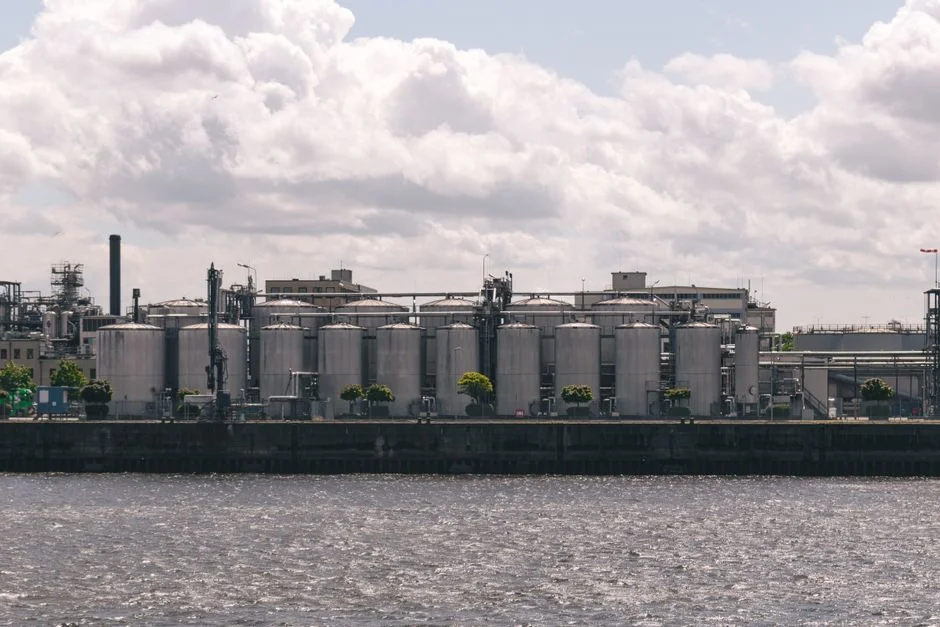
The following data points support capital review and equipment selection. Removal values come from the Ecologix 2026 DAF-vs-clarifier selection guide; hydraulic and footprint values come from manufacturer specifications (Clearwater/SigmaDAF 2026; HydropureWater field data, 2026).
| Parameter | DAF | Lamella Clarifier |
|---|---|---|
| Oil & grease removal | ~95% | ~70% (often insufficient) |
| TSS removal | 85–90% | ~90% |
| Hydraulic residence time | 20–40 min | 2–4 h (conventional); 30–60 min (lamella) |
| Footprint per m³/h | ~0.4 m² | ~0.6–0.8 m² |
| OPEX drivers | Compressed air, polymer, demulsifier | Polymer, sludge hauling |
| Microbubble size | 30–50 µm (enables oil capture) | N/A |
| Recovery from idle | <30 min | Several hours |
| Best-fit stream | Emulsified oil, FOG, intermittent flow | Inorganic TSS, metal fines, no oil |
For a Painted Post parts plant running 15–40 m³/h on a single shift with weekend batch dumps, the 20–40 minute DAF residence time offers a significant scheduling advantage over a clarifier. DAF microbubbles at 30–50 microns provide the only mechanism that physically captures sub-20-micron oil droplets, which dominate water-soluble cutting fluid streams. The footprint requirement is critical in older Steuben County plants where floor space is occupied by existing machinery; a DAF at ~0.4 m² per m³/h leaves more space for feedstock staging than a lamella at ~0.6–0.8 m² per m³/h. The dissolved air flotation system and the high-efficiency lamella clarifier are both available in skid configurations that simplify retrofit into older buildings. For energy budgeting, the DAF system power consumption vs treatment capacity guide outlines the kWh/m³ envelope a Painted Post plant should anticipate.
When Each Technology Wins: A Wastewater-Profile Decision Matrix
The selection process is profile-driven rather than technology-driven. Use the matrix below to map your influent to a unit operation.
| If your stream looks like… | Use as primary | Polish step |
|---|---|---|
| Free/emulsified oil >50 mg/L, water-soluble cutting fluid, stamping lube | DAF | Lamella if TSS reuse cap applies |
| Phosphate/nickel rinse with low oil, mostly dissolved metals | Lamella clarifier (after chemical precipitation) | Multimedia filter or RO |
| Intermittent batch discharge, single shift, weekend dumps | DAF (fast recovery) | Optional lamella |
| Glass/metal fines only, no oil, TSS-only limit | Lamella clarifier | Not required |
| Heavy lubricants >500 mg/L FOG with tight TSS reuse target | CPI/CAF pre-strip → DAF | Lamella polish |
| Li-ion electrode coating washwater with binder + NMP | DAF (after coagulant chemistry) | Lamella + RO |
The hybrid train — CPI or CAF pre-strip, then DAF, then lamella polish — is the 2026 best practice for EV parts plants with both heavy lubricants and tight TSS reuse targets (Sigmadaf Clarifiers, 2026). A CPI (corrugated plate interceptor) or CAF (cavitated air flotation) pre-stage strips 60–80% of bulk free oil before the DAF, which then polishes emulsified oil and fine TSS, with the lamella capturing residual carryover to protect downstream RO. A clarifier alone will fail to meet NYSDEC oil/grease limits on streams containing water-soluble cutting fluid above 20 mg/L.
Painted Post Compliance: SPDES Limits and What They Mean for Equipment Selection
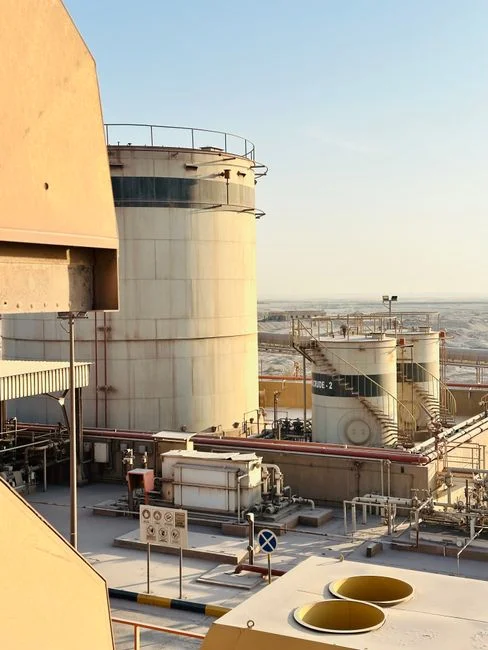
SPDES permits administered by NYSDEC Region 8 typically require oil/grease below 100–200 mg/L and TSS below 100 mg/L for industrial discharges to surface waters, with POTW pretreatment programs applying similar or slightly tighter limits for metals and pH. A properly chemistry-conditioned DAF consistently hits both caps in a single stage; a clarifier alone rarely hits oil/grease targets on EV parts streams, meaning a clarifier-only design often fails the SPDES test. If the plant operates under a zero-discharge or water-reuse target, the process extends: DAF protects a downstream reverse osmosis unit from oil fouling, with a lamella polish in between to drop TSS to the 10–20 mg/L range required for membrane longevity. The 95%/70% oil/grease comparison numbers used throughout this article are anchored to the Ecologix 2026 selection guide, and the 60–80% CAF pre-treatment range comes from Sigmadaf Clarifiers (2026).
2026 Cost and Footprint Snapshot for a Painted Post-Scale Plant
Capital costs are moderate for DAF (air compressor, saturator tank, skimmer, control panel), low for a conventional gravity clarifier (tank only), and higher for a lamella clarifier (tank, plate pack, and supports) (Ecologix, 2026). Operating costs differ by stream: DAF requires compressed air and polymer/demulsifier chemistry, while a clarifier requires polymer plus sludge hauling. On high-FOG streams, the clarifier produces more sludge because it cannot break the emulsion, whereas DAF effectively separates the oil phase. Total OPEX for oily EV parts streams typically favors DAF once the oil load exceeds roughly 200 mg/L.
The Clearwater COMPACT DAF single-skid threshold of 66 GPM (about 15 m³/h) is a useful analog: a 15–40 m³/h Painted Post parts plant falls into the single-skid class with a 25% margin, ensuring predictable installation costs and footprint. Lamella polish or RO add about 0.2–0.3 m² per m³/h to the DAF footprint if reuse is required. Before committing to a specification, run a jar test and, where the stream includes Li-ion coating washwater or spent drawing compound, request an on-site pilot. The 95% benchmark is a typical figure; specific polymer dosage and saturator pressure determine actual removal performance. HydropureWater can support jar testing and on-site pilot planning for Painted Post-area plants evaluating the dissolved air flotation system. Related buying guides: DAF vs clarifier for petroleum wastewater in Little Rock and DAF vs clarifier for plastics and rubber wastewater in Trenton.
Frequently Asked Questions
Is a DAF or a clarifier better for EV/auto parts wastewater in 2026?
A DAF is the preferred primary unit in 2026 for any EV or auto parts stream with emulsified oil, water-soluble cutting fluid, or stamping lubricants, providing 95% oil/grease removal compared to roughly 70% for a settling clarifier (Ecologix, 2026). A lamella clarifier should be used downstream as a polishing step for TSS removal rather than as a standalone solution.
What removal efficiency does a DAF hit on oil and grease?
A properly chemistry-conditioned DAF routinely achieves 95% oil and grease removal on industrial wastewater, per the Ecologix 2026 selection guide. A settling clarifier on the same feed typically stalls around 70% because sub-20-micron emulsified droplets do not settle under gravity regardless of residence time.
Can a DAF and a clarifier be used together?
Yes. The 2026 best practice for EV parts plants with heavy lubricants and tight TSS reuse targets involves a hybrid train: CPI or CAF pre-strip (60–80% bulk oil removal, per Sigmadaf Clarifiers 2026), followed by DAF for emulsified oil and fine TSS, and finally a lamella clarifier polish to protect downstream RO.
How much space does a DAF system need?
The Clearwater COMPACT DAF single-skid design handles up to 66 GPM (about 15 m³/h), which accommodates a 15–40 m³/h Painted Post parts plant with room for expansion. Footprint is roughly 0.4 m² per m³/h, compared to 0.6–0.8 m² per m³/h for a comparable lamella clarifier (HydropureWater field data, 2026).
What effluent limits apply in Painted Post?
NYSDEC Region 8 SPDES permits typically