Why Pharmaceutical Plants Near Little Falls Need On-Site Pretreatment
Pharmaceutical preparations plants near Little Falls meet pretreatment limits by treating wastewater on-site before sewer discharge to stay below the local POTW's SPDES permit and EPA's 40 CFR Part 439 categorical standards. The standard train is flow equalization, pH adjustment, dissolved air flotation (DAF) for suspended solids, biological treatment (activated sludge or MBR) for BOD/COD reduction, and polishing/disinfection. Effluent must protect the receiving POTW — the Little Falls NY facility's 12-month rolling mercury limit was reduced from 20 ng/L to 12 ng/L under SPDES permit NY0022403 (per NYSDEC 2022-03 modification) — so plants also monitor trace metals, pH 5.5–9.5, and oil and grease before discharge.
The mental model most engineers carry into a Little Falls project is backwards: they ask how the POTW treats pharmaceutical wastewater. The correct question is what the plant must do upstream so the POTW stays compliant. A 7.0 MGD publicly owned treatment works discharging to a Class C segment of the Mohawk River (per NYSDEC SPDES fact sheet for NY0022403) cannot afford pass-through from a single high-strength industrial user; one slug load of solvent or antibiotic residue can break the receiving plant's NPDES permit and trigger EPA enforcement under 40 CFR Part 403. Federal categorical standards under 40 CFR Part 439 govern pharmaceutical manufacturing point sources and are organized by subpart — fermentation, synthesis, formulations, research, and packaging — so a preparations (dosage-form) facility typically falls under a different subpart than an API synthesis plant, with a lower organic strength profile but the same categorical discharge limits. The binding constraint on any industrial user is the stricter of federal categorical limits or local POTW sewer use limits; local limits may be more stringent but never more lenient than the federal floor.
The Regulatory Stack: 40 CFR Part 403, Part 439, and the Local SPDES Permit
40 CFR Part 403 establishes the General Pretreatment Regulations, defining terms like "industrial user," "categorical user," and "significant noncompliance," and authorizing POTWs with approved pretreatment programs to enforce discharge limits on tributary industries. Part 439 sits on top of Part 403 and sets numerical effluent limitations for the pharmaceutical manufacturing category, broken out by subpart so the limits match the chemistry of each operation. Layer three is the local State Pollutant Discharge Elimination System (SPDES) or NPDES permit, which carries site-specific local limits that the control authority enforces through its pretreatment program. The Great Falls MT pretreatment page (greatfallsmt.gov) documents the four operational elements every POTW pretreatment program runs: permits, inspections, reporting, and enforcement. Little Falls NY and Little Falls MN operate equivalent programs under EPA authorization.
The Little Falls NY treatment plant holds SPDES permit NY0022403 for 7.0 MGD discharge to the Mohawk River (Class C), with a treatment train of bar screens, aerated grit, primary clarifiers, bio-tower trickling filter, and final clarifiers (per NYSDEC 2022-03). The 2022 permit modification removed the total residual chlorine limit because the permittee installed UV disinfection, and tightened the 12-month rolling mercury limit from 20 ng/L to 12 ng/L under a Type I Mercury Minimization Program. Any industrial user discharging mercury above that ceiling into the collection system forces the POTW into permit violation regardless of how well the plant's own treatment performs.
| Regulatory Layer | Document | Authority | What It Controls |
|---|---|---|---|
| Federal categorical | 40 CFR Part 439 | U.S. EPA | Numerical effluent limits for BOD5, TSS, COD, pH by manufacturing subpart |
| Federal general pretreatment | 40 CFR Part 403 | U.S. EPA | Defines industrial user, categorical user, significant noncompliance, enforcement authority |
| State permit | SPDES NY0022403 (Little Falls NY) | NYSDEC Region 6 | 7.0 MGD discharge to Mohawk River (Class C); mercury 12 ng/L 12-mo rolling; UV disinfection |
| Local sewer use ordinance | POTW industrial pretreatment program | City / POTW | Site-specific local limits; surcharge triggers; monitoring frequency; reporting forms |
What 'Pretreatment' Actually Means for a Preparations Plant
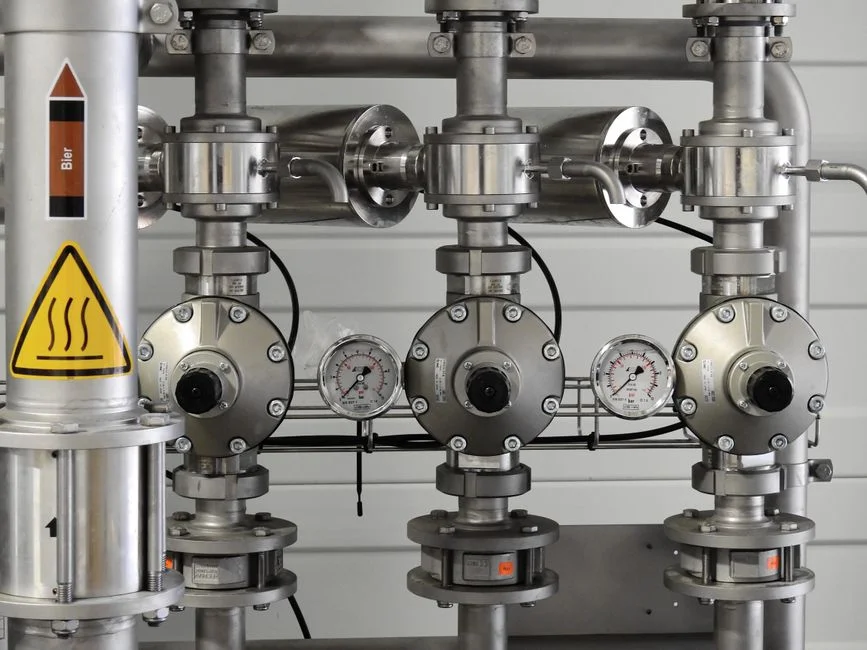
Pretreatment is the treatment an industrial user provides to its wastewater before discharging to the sewer, reducing pollutants and neutralizing the stream so the receiving POTW can meet its own permit (per the Great Falls MT definition). For a pharmaceutical preparations facility, the in-scope unit operations are pH neutralization, suspended-solids removal, oil and water separation, metals precipitation, biological oxidation, and disinfection. Effluent polishing with multimedia filtration or activated carbon is added when the stream carries API residuals, antibiotic residues, or solvents that pass-through biological treatment intact.
The typical preparations plant wastewater profile sits well below API synthesis strength: BOD5 in the 500–3,000 mg/L range, TSS 200–800 mg/L, pH variable between 4 and 10, modest temperature (less than 35 °C), and intermittent batch flow from cleaning-in-place (CIP) campaigns and equipment washes. That profile is still strong enough to upset a domestic works if discharged without equalization — peak BOD swings of 5:1 are common when a tablet-coating pan dumps. The design objective is threefold: pass federal categorical limits, avoid pass-through or interference at the POTW (the two legal standards under 40 CFR 403), and stay below any local headworks loading caps the control authority sets in its sewer use ordinance.
The Process Train: From Equalization to Disinfection
The recommended six-step train for a preparations plant discharging to a Little Falls-area POTW is straightforward to specify but unforgiving in operation. Step 1 is flow and load equalization, typically a 24–48 hour hydraulic residence time basin with diffused aeration to prevent septicity and strip volatile solvents; equalization alone can cut peak BOD swings from 5:1 down to 1.5:1, which is the difference between a working biological stage and a bulking clarifier. Step 2 is pH adjustment to 6.5–8.5 using a PLC-controlled chemical dosing system feeding sulfuric acid or caustic based on an in-line pH probe. Step 3 is a dissolved air flotation (DAF) system rated for the plant's peak hourly flow (the DAF line covers 4–300 m³/h) to remove suspended solids, colloids, and emulsified oil and grease, with typical removal efficiencies of 80–95% TSS and 60–90% FOG.
Step 4 is biological treatment, the workhorse of the train. Conventional activated sludge or an oxidation-ditch style reactor (as used at the Little Falls MN plant) handles BOD5 removal in the 85–95% range at F/M ratios of 0.2–0.4 day⁻¹ and MLSS of 2,500–4,000 mg/L. An MBR membrane bioreactor is the upgrade path when space is tight or the plant must hit a tighter effluent TSS ceiling (less than 5 mg/L), trading higher capital and membrane replacement cost for a smaller footprint and a sharper effluent. Step 5 is disinfection; UV is the preferred option because it leaves no residual, and the Little Falls NY POTW removed its total residual chlorine limit after installing UV (per NYSDEC 2022-03). A chlorine dioxide generator is the alternative where UV transmittance is poor or a residual is needed for a long sewer reach. Step 6 is sludge handling: waste activated sludge thickened and dewatered on a plate and frame filter press to 22–28% dry solids before disposal, recovering filtrate back to the head of the plant.
| Unit Operation | Design Parameter | Typical Removal | Notes |
|---|---|---|---|
| Flow equalization basin | 24–48 h HRT, diffused aeration | Peak BOD dampening 5:1 → 1.5:1 | Buffers batch CIP surges |
| pH adjustment | 6.5–8.5 setpoint, PLC dosing | n/a (neutralization) | Sulfuric acid or caustic on in-line probe |
| Dissolved air flotation | 4–300 m³/h, 4–6 bar saturator | 80–95% TSS, 60–90% FOG | Handles emulsified oils from tablet coating |
| Activated sludge / MBR | F/M 0.2–0.4 d⁻¹, MLSS 2,500–4,000 mg/L | 85–95% BOD5, 50–70% COD | MBR required for TSS < 5 mg/L effluent |
| UV or ClO₂ disinfection | 30–40 mJ/cm² UV dose | 3-log fecal coliform typical | UV leaves no residual (preferred) |
| Plate and frame filter press | 22–28% dry solids cake | 95% volume reduction vs. liquid sludge | Filtrate returned to head of plant |
Matching Unit Operations to Pharma-Specific Contaminants
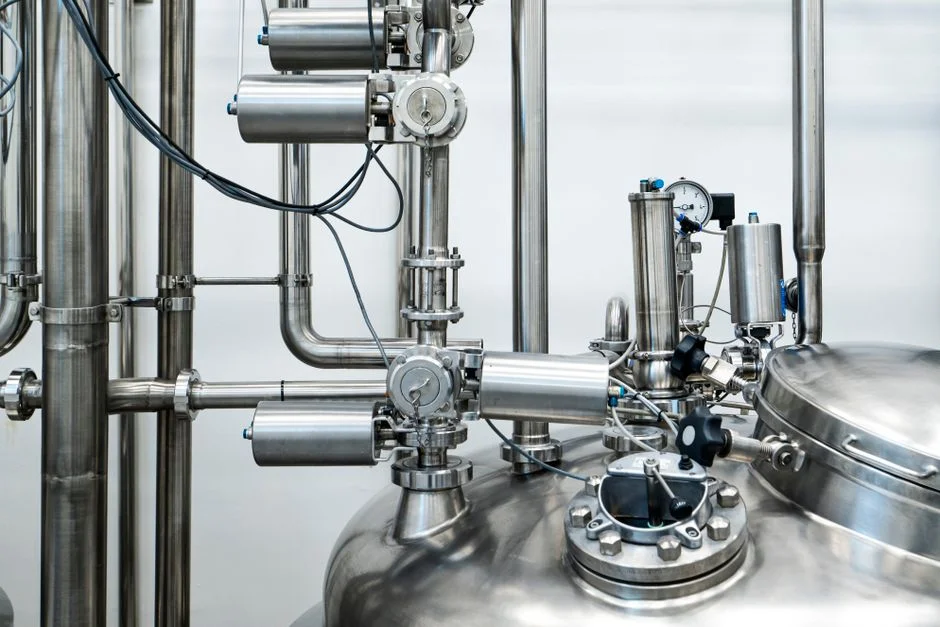
Active pharmaceutical ingredient residuals and antibiotic residues are the contaminant class that separates a generic food-and-beverage wastewater plant from a true pharmaceutical train. MBR and conventional activated sludge do not mineralize these compounds; they reduce BOD/COD but leave API residuals in the effluent, where the receiving POTW's chlorination or UV stage may form transformation products of unknown toxicity. A polishing step is required: ozone or UV/H₂O₂ advanced oxidation, or a multimedia filter with activated carbon as the final barrier. Solvent-bearing mother liquors from granulation or coating operations should be segregated at source and recovered by decantation or simple distillation; whatever carryover remains emulsified can be lifted by the DAF stage ahead of biology.
Trace metals are the constraint that trips most audits. The Little Falls NY permit's 12 ng/L 12-month rolling mercury ceiling (per NYSDEC 2022-03) is a forcing function: any plant discharging mercury-bearing cleaning compounds, broken thermometers, or analytical waste must run precipitation plus filtration and maintain a documented Mercury Minimization Program (MMP Type I under the NYSDEC framework). Silver and selenium behave similarly and need sulfide or hydroxide precipitation followed by multimedia filtration to capture the carryover. CIP chemicals — typically high-pH sodium hydroxide followed by high-temperature acidic rinses — should be routed to equalization rather than directly to biology, where a 12–13 pH slug would kill the biomass in minutes; PLC-controlled chemical dosing brings the mixed stream back to neutral before the biological stage.
The POTW Compliance Hand-Off: What Happens After You Discharge
Once the industrial user discharges, the burden shifts to the POTW. The Little Falls MN plant runs bar screen → grit chamber → anaerobic selector → oxidation ditch → final clarifier → UV → Mississippi River, with about 80 miles of collection sewer and 19 lift stations feeding it (per cityoflittlefalls.com). The Little Falls NY plant runs bar screens → aerated grit → primary clarifier → bio-tower trickling filter → final clarifier → UV → Mohawk River (per NYSDEC SPDES fact sheet for NY0022403). Both plants are sized for municipal flow with a tolerance band for industrial contribution, and both rely on the industrial user to keep toxics, oils, and slug loads out of the collection system.
The cost of non-compliance is not a fine in the first instance — it is pass-through. A slug discharge that breaks the POTW's NPDES permit triggers EPA enforcement under 40 CFR Part 403, contamination of the POTW's biosolids (which can disqualify them from land application), and a returned chain of liability to the industrial user under the control authority's Enforcement Response Plan. Because both Little Falls collection networks aggregate flow from many industrial users over tens of miles of sewer, a single bad discharger can force the receiving plant out of compliance for an entire day before the operator even sees the slug.
A 2026 Self-Audit Checklist for EHS Managers
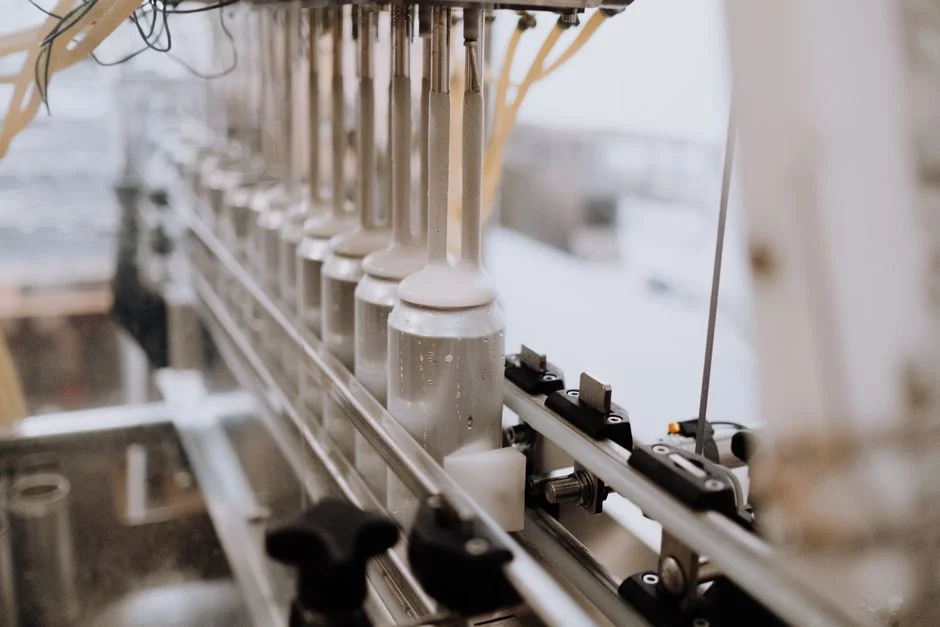
Use this checklist to benchmark your site against the regulatory and process train described above. Run it once per quarter and file the results with the same retention period as your categorical compliance reports. Sites that pass all five items in two consecutive quarters are in a defensible position if the control authority schedules an inspection.
| Item | Evidence to Pull | Pass Criterion |
|---|---|---|
| Confirm categorical applicability | Process description, SIC/NAICS code, batch records | Subpart identified under 40 CFR Part 439; limits posted in control room |
| Obtain POTW SPDES permit and sewer use ordinance | Current permit (e.g., NY0022403); latest ordinance revision | Local limits on file; revision date within 24 months |
| Map every discharge to the process train | P&ID, mass balance, sampling plan | No unmonitored streams; equalization, DAF, biology, disinfection all in series |
| Confirm trace-metal and mercury monitoring | Lab reports, 12-month rolling average calculation | Mercury ≤ 12 ng/L (NY) or local limit; chain-of-custody on every sample |
| Document MMP and chemical inventory | MMP Type I plan, chemical stock records | Mercury-containing items segregated; disposal receipts retained ≥ 3 years |
Frequently Asked Questions
What categorical standard applies to a pharmaceutical preparations (dosage-form) plant?
40 CFR Part 439 (Pharmaceutical Manufacturing Point Source Category) covers all subparts, with the formulations subpart typically applying to a tablet, capsule, or liquid dosage facility. The subpart sets numerical effluent limits for BOD5, TSS, COD, and pH, and the plant must meet the stricter of the federal categorical limit or the local POTW's sewer use limit.
Why is the Little Falls NY mercury limit 12 ng/L, and how does it affect my plant?
The 12-month rolling total mercury limit was reduced from 20 ng/L to 12 ng/L in the 2022 modification of SPDES permit NY0022403, alongside a Type I Mercury Minimization Program (per NYSDEC 2022-03). Any industrial user whose discharge raises the POTW's monthly or rolling mercury average above 12 ng/L is in pass-through violation under 40 CFR Part 403, regardless of how clean the rest of the effluent is.
Does my preparations plant need a DAF unit if we have no oil and grease?
If the facility runs tablet coating, fluid-bed granulation, or any operation that uses organic solvents or wax coatings, a DAF ahead of biology is the most reliable way to remove emulsified carryover and protect the biological stage from toxicity. For dry-powder-only operations with no solvent use, a clarifier may suffice, but most EHS managers keep a DAF in the train for surge events and batch CIP washdowns.
How often does the control authority inspect a categorical industrial user?
EPA's pretreatment program guidance and most local Enforcement Response Plans require at least one annual compliance inspection for categorical significant industrial users, with sampling at least semi-annually for the categorical parameters. Permittees in significant noncompliance can be inspected quarterly until they return to compliance for two consecutive sampling events.