
Why JBS's Expansion Reshapes Its Wastewater Problem
JBS, the world's largest meat processor, announced in mid-2025 that it intends to grow its U.S. beef processing capacity — a plan framed by The Economist (2025-06) as the world's biggest food company "beefing up in America." Every additional head slaughtered, deboned, and rendered translates directly into additional hydraulic and pollutant load on the plant's effluent treatment plant (ETP). For an environmental engineer scoping an upgrade, the engineering question is concrete: does the existing ETP have reserve capacity, or does the new processing line force a staged expansion of screening, FOG removal, equalization, biological treatment, and disinfection?
The wastewater math is unforgiving. Slaughterhouse effluent is 99.9% water and only 0.1% solids, but that 0.1% carries the treatment burden — blood, paunch contents, fat trimmings, suspended proteins, and dissolved organics that municipal POTWs are not designed to handle (per PMG Engineering, 2021). A single new kill floor can add 500–2,000 m³/day of high-strength effluent to an existing system. The downstream consequence is straightforward: a capacity expansion that ignores ETP sizing will breach the plant's NPDES permit within one production cycle.
What a Meat-Plant ETP Actually Has to Treat
Slaughterhouse influent contains some of the highest pollutant concentrations in the food industry. The numbers below represent the typical industry envelope; no JBS-specific data was available in the public sources reviewed, and any specific design must be calibrated against the plant's own composite sampler results.
| Parameter | Typical slaughterhouse influent range | Municipal sewage for comparison |
|---|---|---|
| COD | 1,500–10,000 mg/L | 250–500 mg/L |
| BOD₅ | 800–4,000 mg/L | 150–300 mg/L |
| TSS | 500–4,000 mg/L | 150–350 mg/L |
| FOG (oil & grease) | 200–1,500 mg/L | 50–100 mg/L |
| Total nitrogen | 100–400 mg/L | 20–50 mg/L |
| pH | 6–9 (variable) | 6.5–8.0 |
| Temperature | 20–35°C (CIP, hot cleaning) | 10–20°C |
Three operating characteristics distinguish meat-plant effluent from generic food-industry wastewater. First, FOG load is the dominant design driver: at 200–1,500 mg/L, oil and grease will coat biological reactor surfaces and clog fine-membrane systems unless removed upstream. Second, hydraulic and pollutant flow is highly batched — kill-floor shifts, rendering operations, and clean-in-place (CIP) cycles produce peak instantaneous flows that can run 2–3× the daily average. Third, temperature and pH swings from hot CIP streams (often 50–70°C) and from blood/paunch dumps shift reactor biology if the flow is not equalized. A meat plant's raw influent is roughly 5–20× stronger in COD and 5–15× stronger in FOG than what a municipal POTW is sized to accept, which is why direct discharge without pretreatment is a non-starter.
The Four-Stage ETP Process Train a JBS-Scale Plant Needs
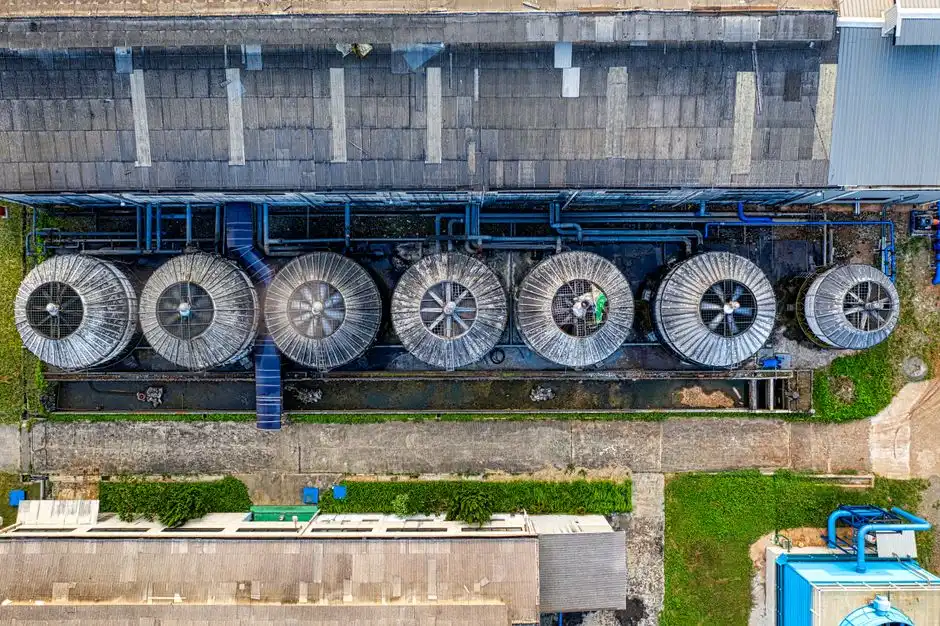
The standard ETP structure for any food plant consists of four stages — preliminary, primary, secondary, and tertiary — which must be configured to handle the specific loadings of a JBS-scale red-meat expansion.
Stage 1 — Preliminary treatment. A GX series rotary bar screen for headworks screening removes rags, paunch contents, hair, and plastics that would otherwise foul downstream pumps and DAF equipment. Bar spacing is typically 3–6 mm. Grit removal follows to protect rotating equipment in the biological stage.
Stage 2 — Primary treatment. Dissolved air flotation (DAF) is the workhorse for FOG and suspended solids. A properly sized dissolved air flotation system for FOG and TSS removal typically achieves 60–90% FOG removal and 50–70% TSS removal in slaughterhouse service, dropping FOG from 1,000 mg/L to under 100 mg/L before the biological stage. Hydraulic loading of 4–25 m³/m²·h is the design band, with hydraulic residence times of 20–40 minutes. The DAF clarifier vs alternatives selection guide covers the head-to-head trade-offs.
Stage 3 — Secondary (biological) treatment. Options include conventional activated sludge, sequencing batch reactor (SBR), moving-bed biofilm reactor (MBBR), or membrane bioreactor (MBR). For a JBS-scale expansion with constrained footprint and tightening discharge limits, an MBR membrane bioreactor for secondary biological treatment is the standard choice: it eliminates the secondary clarifier, holds 10,000–20,000 mg/L mixed liquor suspended solids, and produces a consistent effluent with TSS typically under 5 mg/L. See the explainer on how a membrane bioreactor works for process mechanics. For very high COD loads (>5,000 mg/L), an anaerobic/aerobic combination (e.g., UASB + MBR) is often preferred to recover biogas and reduce aeration energy.
Stage 4 — Tertiary filtration and disinfection. Multi-media filtration polishes residual TSS, followed by a ClO₂ generator for tertiary disinfection to meet fecal coliform limits (typically <200 CFU/100 mL for surface discharge or <2.2 CFU/100 mL for reuse) before the treated stream goes to the NPDES outfall or a reuse loop for wash-down water.
Design Parameters, Discharge Targets, and Sizing Assumptions
The table below provides the design-basis envelope for a project memo. Effluent targets assume a 40 CFR 432 compliance posture with an MBR polishing the biological stage; conventional activated sludge without filtration requires relaxed targets.
| Parameter | Influent range | Effluent target (MBR + ClO₂) | Effluent target (CAS, no filtration) |
|---|---|---|---|
| COD | 1,500–10,000 mg/L | ≤200 mg/L (MBR) / ≤50 mg/L with RO | ≤250 mg/L |
| BOD₅ | 800–4,000 mg/L | ≤30 mg/L | ≤30 mg/L |
| TSS | 500–4,000 mg/L | ≤30 mg/L (≤5 mg/L at MBR outlet) | ≤30 mg/L |
| FOG | 200–1,500 mg/L | ≤10 mg/L | ≤15 mg/L |
| Ammonia-N | 50–200 mg/L | ≤10 mg/L | ≤20 mg/L |
| pH | 6–9 | 6.5–8.5 | 6.5–8.5 |
Sizing rules of thumb for a JBS-scale expansion:
- Design flow: 500–5,000 m³/day based on the expansion scope; design the hydraulic train for 1.5× peak instantaneous flow.
- Equalization: provide 8–12 hours of equalization volume to flatten kill-floor and CIP peaks before DAF and biological stages.
- MBR module sizing: a DF series flat-sheet MBR module delivers 32–135 m³/day per module (80–225 m² membrane area, 0.1 μm nominal pore); a 2,000 m³/day plant requires roughly 15–60 modules in parallel depending on loading.
- Sludge handling: slaughterhouse biological sludge is typically 0.3–0.6 kg DS/kg BOD removed; a plate and frame filter press for biological sludge dewatering sized to 1–500 m² handles dewatering down to 18–25% dry solids for hauling.
The slaughterhouse wastewater treatment engineering guide covers the full design framework, including biogas recovery, equalization sizing, and reuse-water routing.
2026 U.S. Compliance and Regulatory Drivers
Three regulatory layers bind a JBS-scale ETP design in the U.S., and engineers should confirm each with the plant's compliance lead before freezing the design basis:
- EPA Effluent Limitations Guidelines, 40 CFR Part 432. The Meat and Poultry Products category sets the federal floor for BOD₅, TSS, oil & grease, and ammonia limits by subcategory (slaughterhouse, renderer, further processor). NPDES permits often impose tighter numbers.
- NPDES pretreatment program (40 CFR 403). This applies whenever the plant discharges to a publicly owned treatment works (POTW). Local limits for oil & grease, ammonia, and pH are often stricter than federal floors and can dominate the design.
- State-level overlays. Iowa DNR, Colorado CDPHE, Texas TCEQ, and other delegated states set meat-processing-specific limits that may exceed the federal floor. The 2026 permit cycle in several Midwest states has tightened ammonia-N limits for meat processors discharging to sensitive watersheds.
USDA-FSIS sanitation requirements shape the wastewater design through the volume and temperature of plant hygiene and CIP water; an FSIS-mandated sanitation cycle routinely adds 20–40% to the daily hydraulic load and pushes influent temperature above 30°C, which forces cooling or larger equalization volume before the biological stage.
CAPEX and OPEX Envelope for a JBS-Scale ETP Build
The published industry CAPEX band for a complete slaughterhouse wastewater treatment system runs $50K–$5M depending on flow, effluent targets, and whether biogas recovery is included (HydropureWater blog, 2026). A JBS-scale expansion in the 500–5,000 m³/day band typically lands in the $1M–$5M total CAPEX range, particularly if the scope includes anaerobic digestion with biogas utilization and a reuse-water polishing loop.
OPEX is dominated by aeration energy (typically 0.3–0.6 kWh/m³ for an SBR or MBR), chemical dosing for coagulation, pH adjustment, and nutrient control — handled in a packaged automatic chemical dosing for pH and coagulation control skid — and sludge hauling. MBR is CAPEX-heavier per m³/day but produces near-reuse water and a smaller footprint; conventional activated sludge plus a clarifier is cheaper upfront but results in a weaker effluent, a larger aeration basin, and a higher sludge yield.
Frequently Asked Questions
How much does a JBS-scale meat plant ETP cost?
A 500–5,000 m³/day slaughterhouse ETP typically lands in the $1M–$5M CAPEX band, with the upper end reserved for anaerobic digestion, biogas utilization, and reuse-water polishing (HydropureWater industry envelope, 2026).
Is an MBR required for a meat processing ETP?
While not strictly required by 40 CFR 432, an MBR is the practical choice for a JBS
Frequently Asked Questions
What ETP does JBS need after expanding its meat plant?
Following a capacity expansion, JBS requires an Effluent Treatment Plant (ETP) capable of handling increased hydraulic and organic loading, typically involving primary dissolved air flotation (DAF) for fat, oil, and grease (FOG) removal, followed by biological treatment. The system must be designed to manage a significant increase in total suspended solids (TSS) and chemical oxygen demand (COD), often requiring the addition of tertiary treatment processes like membrane filtration or advanced oxidation to meet stricter discharge limits for nitrogen and phosphorus.
How much does a slaughterhouse wastewater treatment plant cost in 2026?
In 2026, the capital expenditure for a meat processing ETP typically ranges from $5 million to $25 million depending on the daily flow rate and required effluent quality. Operating expenses, including energy, chemical dosing, and sludge disposal, generally add $0.50 to $1.50 per cubic meter of treated wastewater, influenced heavily by the rising costs of polymer coagulants and regulatory biosolids management protocols.
What are the typical influent parameters for meat processing wastewater?
Influent from a meat processing facility is characterized by high organic loads, typically presenting a COD range of 3,000 to 8,000 mg/L and BOD5 levels between 1,500 and 4,000 mg/L. TSS concentrations often range from 1,000 to 3,000 mg/L, with high concentrations of fats, oils, and grease (FOG) ranging from 500 to 1,500 mg/L, necessitating robust pre-treatment to prevent downstream equipment fouling.
Is MBR or conventional activated sludge better for a meat plant expansion?
Membrane Bioreactor (MBR) technology is generally superior for plant expansions where site footprint is constrained and high-quality reclaimed water is required for non-potable plant operations. While conventional activated sludge is lower in initial capital cost and simpler to maintain, MBR systems provide a significantly smaller physical footprint, superior effluent clarity, and the ability to operate at higher mixed liquor suspended solids (MLSS) concentrations, which is critical for managing the high organic fluctuations typical of expanded meat production lines.
What U.S. regulations apply to a meat plant ETP under NPDES?
Meat processing plants must comply with the Clean Water Act, specifically under the Meat and Poultry Products Point Source Category (40 CFR Part 432). These National Pollutant Discharge Elimination System (NPDES) permits set technology-based effluent limitations for BOD5, TSS, oil and grease, and ammonia-nitrogen, with specific facilities potentially subject to additional local limit requirements for phosphorus and total nitrogen based on the receiving water body's Total Maximum Daily Load (TMDL) status.