Why Turkey Creek Mining Discharges Face Stricter 2026 Pretreatment Expectations
The Turkey Creek watershed covers 119 km² across the western edge of the Ozark Highlands, drains directly into the Spring River, and sits inside the 6,500 km² Tri-State Mining District where Pb and Zn were extracted from 1850 through 1947 (Eades 2024, Missouri State University). Mining-era sediment is not a relic — it is the active compliance baseline. Eades' 2022 and 2024 overbank cores measured peak Zn at 44,072 ppm and peak Pb at 4,561 ppm in bench deposits, with contaminated overbank thickness averaging 1.3 m across floodplain sites (Eades 2022, oewri.missouristate.edu). The receiving POTW discharges into a corridor already on the EPA's National Priorities List, so even small dissolved-metal excursions from a mill side-stream are read against a contaminated-floodplain backdrop rather than a clean reference watershed.
Local control authorities operate under that lens. By 1990 EPA included Turkey Creek within the Oronogo-Duenweg Mining Belt Superfund site in Jasper County, and the 2013 Record of Decision (ROD) amendment set tributary-sediment cleanup levels at 2,949 ppm Zn and 219 ppm Pb (USEPA 2013, cited in Eades 2024). EPA soil action levels from the Oronogo-Duenweg and Newton County Mine Tailings sites already sit at 6,400 ppm Zn and 400 ppm Pb (Eades 2024). Because the POTW's sludge and the watershed's legacy sediment are under simultaneous federal scrutiny, the control authority enforces the lower end of 40 CFR 403 categorical pretreatment standards for SIC 10 (metal mining) and SIC 33 (primary metals): typically ≤1.0 mg/L Zn, ≤0.6 mg/L Pb, ≤0.3 mg/L Cd, and ≤30 mg/L TSS at pH 6–9. A Joplin-area process stream that "looks clean" by visual turbidity can still fail on dissolved Zn or Pb — chemistry, not just suspended solids, drives compliance.
What 40 CFR 403 and Local Limits Mean for Zn, Pb, Cd, and TSS in 2026
40 CFR Part 403 establishes general pretreatment standards that prohibit discharges causing pass-through or interference at the receiving POTW, and 40 CFR 421 (nonferrous metals) and 40 CFR 440 (mining) set categorical numerical limits that apply on top of those general rules. The 2024–2026 EPA enforcement and local-limit-derivation trend tightens the practical envelope for Tri-State District facilities because headworks-loadings calculations already start from a contaminated background. Local limits are derived using the POTW's Maximum Allowable Headworks Loading (MAHL), which is back-calculated so that metals partitioned into POTW sludge do not cause the WWTF to exceed its own NPDES permit limits or trigger sludge-disposal TCLP failures (40 CFR 403.5; MO 10 CSR 20-6). In the Joplin/Newton County service area, MAHL math has historically bound Zn and Pb tighter than the federal categorical maxima.
The 2020 EPA Nonpoint Source Success Story on Arizona's Turkey Creek (EPA 841-F-20-001M, July 2020) is the closest published precedent for the magnitude of improvement regulators expect: tailings removal on the Golden Belt and Golden Turkey mines cut copper loading by 58% and lead by 80% (epa.gov, July 2020). Although that case is Arizona nonpoint remediation rather than sewer pretreatment, it documents the scale regulators accept as feasible from a mining-influenced stream. That precedent, combined with the 2,949 ppm Zn / 219 ppm Pb ROD tributary cleanup levels (USEPA 2013), tells an engineer that residual solids — not just effluent — are part of the compliance conversation. The numeric envelope to design to in 2026 is summarized below.
| Parameter | 2026 design limit (sewer discharge) | Source |
|---|---|---|
| Zinc (Zn) | ≤ 1.0 mg/L | 40 CFR 421 categorical; local MAHL typically lower |
| Lead (Pb) | ≤ 0.6 mg/L | 40 CFR 421 categorical; Oronogo-Duenweg ROD influence |
| Cadmium (Cd) | ≤ 0.3 mg/L | 40 CFR 421/440 categorical |
| Total Suspended Solids (TSS) | ≤ 30 mg/L | 40 CFR 403.5; local limit typical |
| pH | 6.0 – 9.0 | 40 CFR 403.5(b)(1) mandatory range |
The 2026 Process Train: Equalization → pH/Coag → DAF → Filtration → (Optional) MBR
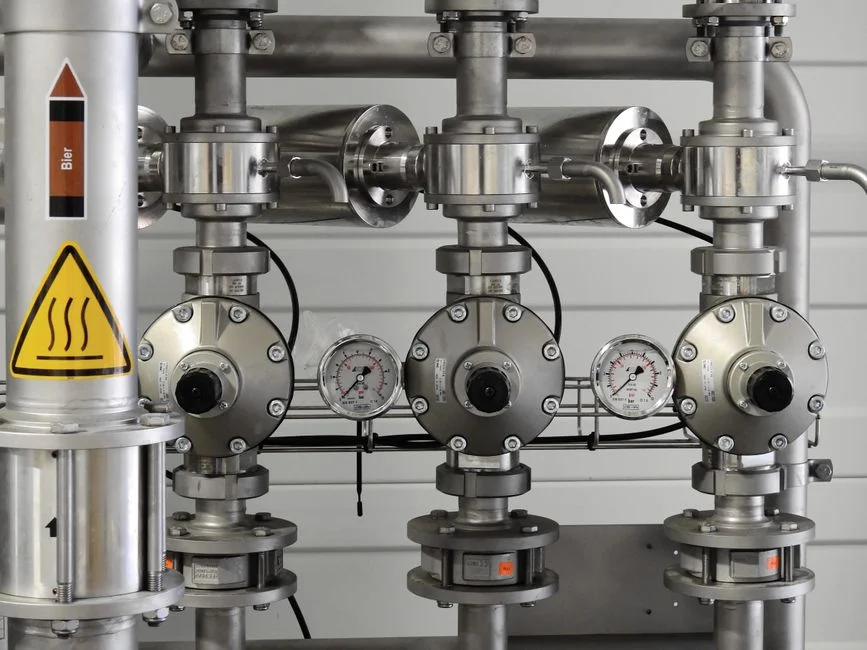
Step 1 — Equalization. A 6–12 h HRT basin with mechanical mixing dampens pH swings between acid-mine-drainage-influenced inflows (pH 4–6) and alkaline mill process water (pH 8–9). For sites without a dedicated Turkey Creek gage, use the Shoal Creek USGS #07187000 record — 19 m³/s mean and 12 m³/s median over 79 years, area-scaled to 2.1 m³/s mean and 1.3 m³/s median at the Turkey Creek confluence (Eades 2024, citing USGS 2021a) — to right-size emergency basin capacity. Equalization also gives the operator a buffer to keep feed conditions inside the stoichiometric window of the precipitator.
Step 2 — pH adjustment and coagulation. Dose NaOH (or lime for high-TDS flows) to a target of pH 8.5–9.5, which minimizes solubility of Zn(OH)₂ and Pb(OH)₂ across the 25 °C operating range typical of Joplin-area mills. Single-stage pH adjustment fails on mixed Cd/Zn streams because the optimum pH for Cd(OH)₂ (~10.5) sits well above the optimum for Zn(OH)₂ (~9.0), so a staged reactor train (8.5 in the first stage for Zn/Pb, 10–10.5 polishing for Cd) improves overall removal. Pair pH adjustment with anionic polymer at 0.5–3 mg/L and ferric chloride at 20–80 mg/L; the Fe(III) hydroxide floc sweeps colloidal metal-bearing precipitates and gives the downstream DAF a defined particle to float.
Step 3 — Dissolved Air Flotation. DAF units for metals-laden wastewater operating at 4–20 m³/h per m² hydraulic loading typically remove 80–95% of TSS and 60–85% of dissolved metals as a float layer, depending on coagulant dose and recycle ratio. DAF is preferred over a clarifier here because the metal-hydroxide floc is low-density and floats more readily than it settles, particularly when ferric chloride is the coagulant.
Step 4 — Multimedia filtration. An anthracite/sand/garnet bed polishing DAF effluent to <5 NTU turbidity, with backwash every 4–8 h, is the safety net that absorbs DAF upsets and protects any downstream membrane. Multimedia filtration polishing at this stage is what separates a "passed on a calm day" plant from one that holds the line through slug loads.
Step 5 — Optional MBR polish. Where the mill wants 30–50% reuse for dust suppression or non-contact cooling, a submerged PVDF 0.1 µm flat-sheet MBR delivers 10–20× lower energy than cross-flow ultrafilters and provides a final TSS barrier. The MBR membrane bioreactor polishing stage also produces a clarified permeate that simplifies downstream cooling-tower chemistry. Note that biological activity is incidental here; the membranes do most of the metals polishing. The DAF float and multimedia backwash are routed to sludge thickening — never to the head of the plant, where they would re-introduce the very metals the train was designed to remove.
| Unit operation | Design parameter | Typical removal / performance |
|---|---|---|
| Equalization basin | 6–12 h HRT, mechanical mixing | Dampens pH 4–9 → 7–8.5 at downstream train inlet |
| pH adjust + coagulation | NaOH/lime to pH 8.5–9.5; FeCl₃ 20–80 mg/L; anionic polymer 0.5–3 mg/L | Precipitates Zn(OH)₂, Pb(OH)₂; >90% dissolved Zn and Pb across two stages |
| DAF | 4–20 m³/h per m² hydraulic loading | 80–95% TSS; 60–85% dissolved metals capture as float |
| Multimedia filter | Anthracite/sand/garnet; backwash 4–8 h | Effluent turbidity <5 NTU; absorbs DAF upsets |
| MBR polish (optional) | PVDF 0.1 µm flat-sheet, submerged | Reuse-grade permeate; 30–50% plant recycle stream |
Matching the Train to Local Flow: 0.5 MGD Mill vs. 5 MGD Concentrator
Sizing the train correctly matters more than picking the right chemistry at the wrong flow. Three plant archetypes cover most Joplin-area loads, and the equipment spec scales with each.
Small mill (0.25–1.0 MGD, ~1–4 m³/h peak). A packaged DAF plus multimedia filter and a sludge-bag dewatering step keeps CAPEX low and the permit cycle short. A mechanical bar screen ahead of the DAF protects the flotation cells from rags and scale chips. A high-efficiency sedimentation tank upstream of the DAF is optional at this scale but useful if the influent TSS routinely exceeds 500 mg/L.
Mid-size mill (1–3 MGD, ~160–480 m³/h peak). A concrete equalization basin followed by a DAF unit with a lamella clarifier in parallel as redundancy is the typical 2026 layout. A plate-and-frame filter press handles the resulting float and clarifier sludge to 25–35% dry solids.
Large concentrator (3–10 MGD, ~480–1,600 m³/h peak). Full A/O biological for cyanide-ammonia side-streams, twin DAFs, multimedia filtration, and an MBR polish for 30–50% reuse. The Turkey Creek, Alabama WWTP expansion precedent (4 → 10 MGD operating, 20 MGD peak) shows that phased capacity expansion is feasible without shutting down an operating plant, which is directly relevant to Joplin-area mills planning incremental increases as Superfund-related permitting evolves (BL Harbert International project record). For operations with a roaster or kiln off-gas wet scrubber, a FGD scrubber wastewater treatment train is added upstream to handle the high-TDS, low-pH scrubber blowdown separately from the contact stormwater side-stream.
| Plant size | Flow (MGD) | Core train | Sludge handling |
|---|---|---|---|
| Small mill | 0.25 – 1.0 | Bar screen → DAF → multimedia filter | Bag dewatering or small plate press |
| Mid-size mill | 1 – 3 | EQ basin → DAF + lamella redundancy → multimedia | Plate-and-frame filter press |
| Large concentrator | 3 – 10 | A/O biological → twin DAFs → multimedia → MBR polish | Plate-and-frame press + lime/cement stabilization |
Sludge, Backwash, and TCLP: Closing the Compliance Loop
A pretreatment system that solves the effluent problem but creates a TCLP-failing sludge has not solved compliance — it has moved the same problem one unit operation downstream. Under 40 CFR 261.24, a waste exhibits the toxicity characteristic when the TCLP leachate contains Pb above 5.0 mg/L or Zn above 250 mg/L, and that waste must be managed as hazardous under RCRA Subtitle C. With a feed of 2,949 ppm Zn and 219 ppm Pb (the ROD tributary cleanup levels cited in Eades 2024), the float and clarifier sludge from a Tri-State District plant will routinely exceed one or both of those thresholds. Designing the dewatering step to handle that load — not hoping the chemistry will dodge it — is the difference between compliant operation and a generator-liability finding.
A plate-and-frame filter press typically dewaters metal-hydroxide sludge to 25–35% dry solids. Higher Zn/Pb loadings on the press cloth require polypropylene filter media and dedicated wash cycles between batches to prevent blinding. The pressed cake is then stabilized with lime or Portland cement to immobilize leachable metals before landfill disposal, which is especially important near the Oronogo-Duenweg belt where ROD levels (2,949 ppm Zn, 219 ppm Pb) leave little margin for re-leaching.
The single most effective control is automated chemical dosing: a PLC-controlled coagulant and pH dosing package that holds the precipitator inside its stoichiometric window prevents pH excursions that would otherwise re-dissolve Zn during press operation, when the sludge is at its highest solids concentration and most vulnerable to pH shifts. For comparison, the same engineering logic appears in our foundry sludge dewatering reference; the metals-chemistry overlay is what makes mining pretreatment distinct from foundry work.
Frequently Asked Questions
What are the 2026 sewer-pretreatment limits for Zn, Pb, Cd, and TSS for a metal mining or primary metals plant near Joplin, MO?
The local control authority typically enforces ≤1.0 mg/L Zn, ≤0.6 mg/L Pb, ≤0.3 mg/L Cd, and ≤30 mg/L TSS at pH 6.0–9.0 under 40 CFR 403, 40 CFR 421, and 40 CFR 440. Because the Oronogo-Duenweg Mining Belt Superfund site (Jasper County, MO) sets tributary-sediment cleanup levels at 2,949 ppm Zn and 219 ppm Pb (USEPA 2013 ROD amendment), MAHL-based local limits are usually tighter than the federal categorical maxima (Eades 2024).
Why does a Tri-State District mill fail Zn/Pb limits even when the effluent looks clear?
Zinc and lead pass through standard TSS removal as dissolved species when pH is not held in the 8.5–9.5 window where Zn(OH)₂ and Pb(OH)₂ are minimally soluble. A Joplin-area process stream that is visually clear can still carry 5–20 mg/L dissolved Zn if the precipitator is operating off-target, and 40 CFR 421 regulates total recoverable metal, not just particulate-bound.
How does the Oronogo-Duenweg Mining Belt Superfund site change pretreatment design?
It raises the evidentiary bar: sludge disposal must clear 40 CFR 261.24 TCLP thresholds (5.0 mg/L Pb, 250 mg/L Zn), and the POTW's MAHL calculation is backstopped by the ROD's 2,949 ppm Zn and 219 ppm Pb tributary cleanup levels (USEPA 2013). That is why a 2026 design pairs a high-efficiency DAF and multimedia polish with a plate-and-frame press and lime/cement stabilization — the sludge side is regulated, not just the supernatant.
What size of DAF and multimedia filter does a 1 MGD mill near Turkey Creek actually need?
A 1 MGD plant at ~160 m³/h peak needs a DAF rated at roughly 8–10 m³/h per m² of flotation area (about 16–20 m² total) plus a multimedia filter sized to handle 4–8 h backwash cycles at <5 NTU effluent. EQ basin HRT of 6–12 h is recommended to buffer the pH 4–9 swings documented in the watershed (Eades 2024, Shoal Creek USGS #07187000 scaled).