What SBR Actually Does in One Tank
An SBR — sequencing batch reactor — is an activated sludge system that runs on a timer instead of a pipe. Same biology as conventional activated sludge (CAS), same microorganisms doing BOD oxidation, nitrification, and denitrification, but the entire reaction sequence happens inside a single tank that cycles through five timed phases: fill, react, settle, decant, idle. Because equalization, biological treatment, and clarification all occur in the same vessel, an SBR eliminates the separate primary clarifier, aeration basin, and secondary clarifier that a continuous-flow CAS train needs — and that is the structural reason SBR CAPEX runs 20–40% below CAS for flows under 500 m³/day.
Typical 2026 industrial SBR cycle structure looks like this: a 1–2 h fill (often split into anaerobic, anoxic, and aerobic selectors to drive biological phosphorus removal and partial denitrification), 4–6 h react (aerobic BOD oxidation + nitrification at DO 1.5–2.5 mg/L, with an anoxic sub-phase for denitrification below 0.5 mg/L DO), 1–2 h settle (no flow, no aeration — quiescent clarification), 0.5–1 h decant (treated supernatant drawn off through a floating or telescopic weir decanter), and a short idle for sludge wasting and standby. Total cycle 6–12 h, giving 2–3 cycles per day per tank. Municipal-strength influents run 2 cycles/day; high-strength industrial wastewater (BOD >1,500 mg/L) usually runs 1 extended cycle to keep HRT in the 24–48 h range.
The single-tank architecture is also why SBR handles flow variability so well: the fill phase can absorb a 3–5× hydraulic surge without shocking the biomass, and the idle phase lets operators pause the plant entirely on weekends — something no continuous-flow CAS train can do without a separate equalization basin and bypass piping.
The Real SBR Advantages (and Why They Matter in 2026)
SBR's lower CAPEX is the headline number, but the operational case is what sells the system to a 2026 procurement lead. Civil cost runs 20–40% below CAS for 50–500 m³/day flows because the SBR tank absorbs the equalization function (per HydropureWater field data, 2026). No separate equalization basin, no primary clarifier, no RAS pumping gallery — three civil line items simply disappear from the BOQ.
Operational flexibility is the second lever. Because each phase is timer-controlled, the same tank can run a BOD-oxidation cycle on Monday, a nitrification-only cycle on Tuesday, and a biological phosphorus removal cycle on Wednesday without any new infrastructure. Food, dairy, and brewery plants with seasonal BOD swings (campaign brews, holiday dairy production) use this to avoid over-aerating dilute batches and under-aerating peak loads. SBR sludge settleability is structurally better than CAS: the long quiescent settle phase produces biomass with 30–50% lower SVI than comparable continuous-flow systems (HydropureWater field data, 2026), which translates directly into fewer clarifier upsets and lower polymer demand on the sludge dewatering line.
Footprint versus CAS is also favorable — a two-tank SBR fits where a CAS train needs four tanks (aeration, clarifier, RAS, equalization). It is not smaller than MBR — see the next section — but it is typically 25–35% smaller than an equivalent CAS layout. PLC automation maturity is the final 2026 advantage: modern SBR control systems (the same class of PLC that drives PLC-controlled coagulant and pH dosing for SBR pre-treatment) handle phase sequencing, DO setpoint ramp, and decanter positioning with minimal operator intervention, which matters for plants with one process operator covering multiple shifts.
The Real SBR Disadvantages (What Vendors Downplay)
Discontinuous discharge is the structural cost of the batch process. An SBR only produces effluent during the decant phase, so any plant with continuous reuse demand — a cooling-water make-up loop, a process rinse line, a 24-hour irrigation schedule — needs either 2–3 parallel SBRs offset in cycle phase or a downstream equalization tank. This is not a flaw, but it is a hidden CAPEX line that vendors routinely omit from the headline price.
Odor risk is real and specific. Anaerobic and anoxic fill phases release H2S when the influent carries sulfate — common in food processing (glucosamine, yeast, gelatin), brewery (spent grain washwater), and pharmaceutical (sulfate-rich process water) streams. Dissolved sulfide above ~2 mg/L in the SBR headspace is a routine trigger for neighbor complaints and corrosion of overhead steel. Pretreatment with fine bar screening to remove FOG and large solids ahead of the SBR reduces but does not eliminate the H2S risk; nitrate dosing into the anoxic phase or iron salt addition are the standard controls.
MBR's membrane barrier delivers a 60% smaller footprint than conventional activated sludge systems, which also beats SBR for tight indoor sites and modular containerized plants. SBR also requires more operator skill than the marketing suggests: cycle phase durations, DO setpoint (1.5–2.5 mg/L aerobic), and MLSS (3,000–5,000 mg/L operational, 8,000 mg/L hard ceiling) must be rebalanced whenever influent character changes — this is a tuning job, not a set-and-forget system. Floating decanter mechanisms wear, and scum accumulation on the supernatant surface during settle requires periodic surface skimming that continuous-flow clarifiers do not need. Finally, throughput is bounded: above roughly 2,000 m³/day, the number of parallel SBRs needed for hydraulic continuity makes MBR or CAS cheaper per m³ of installed capacity.
SBR vs MBR vs CAS: 2026 Comparison Matrix
Below is the head-to-head matrix for a 200–500 m³/day industrial site evaluating biological treatment options in 2026. Numbers are typical ranges for municipal-to-moderate-strength industrial influent (BOD 250–800 mg/L); high-strength chemical or landfill leachate shifts these bands upward.
| Parameter | SBR | MBR | CAS |
|---|---|---|---|
| Capital cost (relative) | Medium | High (+30–60% vs SBR) | Low–Medium |
| Footprint | Medium | Small (~60% of SBR) | Large |
| Effluent BOD (mg/L) | 10–30 | <5 | 20–30 |
| Effluent TSS (mg/L) | 10–30 | <1 | 20–30 |
| Effluent TN (mg/L, with anoxic phase) | 5–15 | <10 | 10–20 |
| OPEX per m³ treated | Low | 30–80% higher than SBR | Low |
Two hidden CAPEX items shift this matrix. MBR needs 1–2 mm pretreatment screening to protect the membrane modules from fiber, hair, and plastic — a fine bar screen ahead of the MBR is standard practice, and skipping it is the most common cause of premature membrane replacement. SBR has no equivalent fragility, but does need the MBR system for the reuse-quality alternative to SBR when effluent BOD <10 mg/L or turbidity <1 NTU is specified — for a BOD 10–30 / TSS 10–30 SBR effluent, the reuse case is typically polishing with sand filtration or a membrane, not a full MBR train.
SBR Cycle Tuning Numbers Engineers Actually Use
The numbers below are what an experienced SBR plant engineer sets during commissioning and re-tunes seasonally. They are the line items to specify in an RFQ data sheet.
| Parameter | Municipal-strength range | High-strength industrial range | Notes |
|---|---|---|---|
| HRT (hydraulic retention time) | 12–24 h | 24–48 h | Total cycle time, fill through decant |
| SRT (sludge age) | 10–25 days (nitrification) | 20–40 days (Bio-P) | Controlled via daily wasting in idle phase |
| F/M ratio | 0.05–0.15 kg BOD/kg MLSS·d | Same target | Rising F/M = sludge wasting overdue |
| DO setpoint (aerobic react) | 1.5–2.5 mg/L | 2.0–3.0 mg/L | Anoxic phase <0.5 mg/L |
| MLSS | 3,000–5,000 mg/L | 4,000–6,000 mg/L | 8,000 mg/L is the practical ceiling |
| Decanter type | Floating or telescopic weir | Same | Must include surface skimming |
For plants planning a 2027–2028 expansion, MABR as the emerging alternative is worth tracking — membrane-aerated biofilm reactors deliver SBR's footprint with MBR's effluent quality at lower aeration energy, but the technology is not yet procurement-ready at industrial scale for most 2026 projects.
When SBR Is the Wrong Choice (Decision Framework)
Four questions, in order. The answer to each one narrows the technology choice and prevents a 2026 procurement mistake.
- What is the flow rate? Under 50 m³/day = packaged SBR or MBR; 50–2,000 m³/day = SBR sweet spot; 2,000–5,000 m³/day = SBR with parallel tanks, MBR, or CAS; above 5,000 m³/day = CAS or hybrid, not SBR.
- How variable is the load? Steady 24/7 flow favors CAS; batch industrial discharges (brewery, dairy campaign, textile dye batches) favor SBR.
- Is reuse water required? If yes (BOD <10, TN <10, turbidity <1 NTU), pick MBR or hybrid SBR+MBR, not standalone SBR.
- Is site footprint severely constrained? If yes, MBR (60% smaller than SBR) wins. If CAPEX is the binding constraint and footprint is available, SBR wins.
Two 2026 hybrid configurations are worth naming. SBR + DAF pre-treatment is now standard for food, dairy, and textile plants where FOG and TSS shock would otherwise hammer the SBR biology — a DAF pre-treatment ahead of the SBR react phase cuts FOG 60–90% and TSS 50–80% before the biological stage, which lowers both aeration kWh and sludge yield. SBR + MBR polish is the 2026 answer to the "SBR effluent, reuse-quality" question — SBR does the heavy BOD removal cheaply, MBR polishes to reuse spec. Above 200 m³/day with a reuse target, this two-stage civil layout often beats a standalone MBR by 15–25% on CAPEX.
SBR Operating Cost Reality Check: 2026 OPEX Breakdown
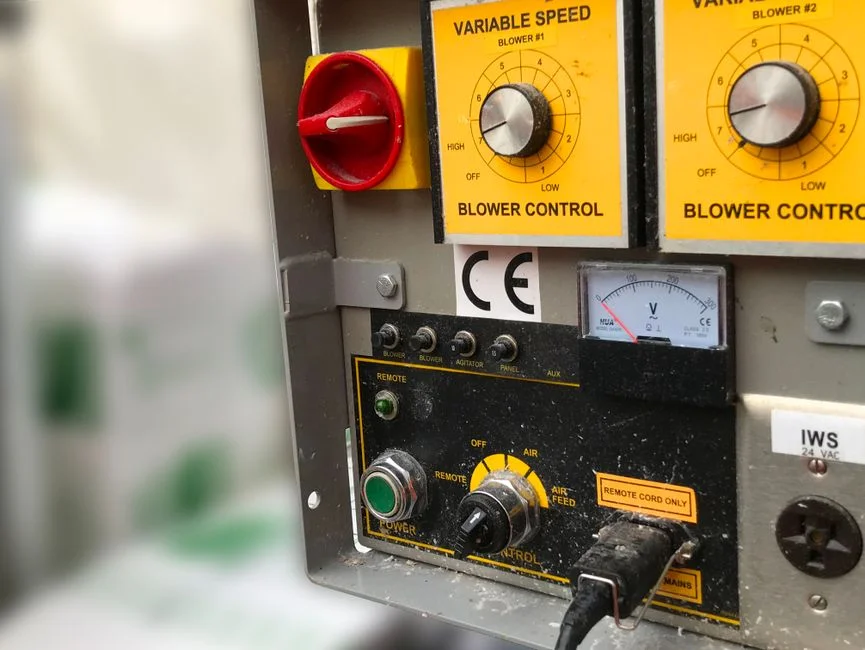
Aeration dominates SBR operating cost: 60–70% of total energy, typically 0.3–0.6 kWh/m³ treated for municipal-strength influent, climbing to 1.0–1.5 kWh/m³ for high-strength industrial streams (HydropureWater field data, 2026). The most actionable 2026 lever is the aeration profile during the react phase — ramp DO up only after BOD is consumed, not from the start of the cycle. The detailed tactics (blower VSD control, DO setpoint trimming, intermittent aeration during low-load periods) are covered in the dedicated SBR energy efficiency guide.
Sludge disposal is the second OPEX line. SBR waste activated sludge typically runs 0.3–0.5 kg DS per kg BOD removed; a plate-and-frame filter press for SBR waste activated sludge cuts volume 75–85% before hauling, which on a 200 m³/day plant at $80/wet-ton disposal can mean $40,000–$70,000/year in avoided landfill cost. Avoid the temptation to quote a single 2026 $/m³ CAPEX number — civil costs vary too much by region, soil condition, and tank material. Use the directional ranges above and the four-question framework to set the technology, then ask vendors for site-specific pricing.
Frequently Asked Questions
What are the main advantages of an SBR for industrial wastewater?
SBR delivers 20–40% lower CAPEX than continuous-flow activated sludge for flows under 500 m³/day, absorbs 3–5× hydraulic surges in the fill phase without biomass shock, allows weekend shutdowns via the idle phase, and produces sludge with 30–50% lower SVI than comparable CAS systems. The single-tank architecture eliminates separate equalization, aeration, and clarification basins.
What are the biggest disadvantages of SBR technology?
Discontinuous discharge (effluent only during decant — requires parallel tanks for continuous flow), H2S odor risk during anaerobic/anoxic fill on sulfate-laden food or brewery wastewater, larger footprint than MBR (MBR is ~60% smaller), and higher operator skill for cycle-phase tuning. Above ~2,000 m³/day, the number of parallel SBRs needed makes MBR or CAS cheaper per m³ of installed capacity.
How much more expensive is MBR than SBR to operate in 2026?
MBR operating cost runs 30–80% higher than SBR per m³ treated, driven by membrane aeration, periodic chemical cleaning, and membrane replacement (typically 7–10 year life). MBR delivers reuse-quality effluent (BOD <5 mg/L, TSS <1 mg/L, turbidity <1 NTU) that SBR alone cannot match — the OPEX premium is the price of reuse-grade water.
Can an SBR handle continuous industrial flow?
No, not as a single tank. SBR produces effluent only during the decant phase, so continuous 24-hour flow requires either 2–3 parallel SBRs offset in cycle phase or a downstream equalization tank sized to bridge the gap between decants. For continuous reuse water, the 2026 standard is hybrid SBR+MBR — SBR for cheap BOD removal, MBR for the reuse polish.
What is the main source of odor in an industrial SBR?
H2S released during the anaerobic and anoxic fill phases when the influent carries sulfate. Food processing (yeast, gelatin, glucosamine), brewery spent-grain washwater, and pharmaceutical streams are the usual suspects. Controls include nitrate dosing into the anoxic phase, iron salt addition, and DAF pre-treatment to cut FOG and suspended solids before they reach the SBR — see the dedicated SBR energy and odor control guide for the full set of 2026 tactics.