
Why Great Falls Food and Beverage Plants Need On-Site Pretreatment
Food and beverage plants near Great Falls, Montana meet pretreatment limits by submitting a Pretreatment Survey to the city's EPA-mandated Industrial Pretreatment Program, which then issues a permit setting site-specific discharge limits for BOD, TSS, FOG, and pH. Plants then install on-site treatment — typically screening, flow equalization, pH neutralization, dissolved air flotation (DAF) for FOG and solids, and biological treatment — and submit monthly self-monitoring reports to remain compliant.
The City of Great Falls operates an EPA-mandated Industrial Pretreatment Program that protects the sanitary sewer, the Veolia-operated wastewater treatment plant at 1600 6th Street NE, and the Missouri River from industrial pollutant loads. All non-domestic users within city limits must meet pretreatment program requirements, and industries with the potential to discharge harmful pollutants are issued permits with numeric discharge limits. The program allows pH neutralization, solids separation, oil/water separation, and metals removal as acceptable pretreatment categories.
Food and beverage wastewater is structurally different from domestic sewage. BOD and COD concentrations routinely run 10–20× higher than domestic baseline, and a dairy or brewery can generate loads at exactly that multiple. TSS, FOG, ammonia, and phosphate accompany that organic load. The receiving plant was built as a 1960 primary facility, upgraded with secondary biological treatment in the mid-1970s, and had its heat-treatment system replaced by anaerobic digesters in 2003 — a configuration sized for municipal loading rather than concentrated industrial streams. Cogeneration installed in 2008 saved $151,000 in electricity costs in its first year of operation, but the underlying hydraulic and biological capacity was never designed for brewery or dairy surges.
Peak flows make the problem worse. Washdown and shift-change discharges routinely run 2–5× average production flow, and any treatment train sized for average conditions fails at the moments that matter most. The Great Falls collection system adds further reason for the city to enforce limits at the source: 256 miles of gravity sewer mains, roughly 3,300 manholes, and 32 lift stations carry the discharge to the plant. A slug load released into a 100-year-old vitrified clay or concrete segment downstream of a permitted user can create a block, an overflow, or a permit violation that traces directly back to the source.
The Great Falls Pretreatment Permit Workflow (2026)
The permit process consists of five distinct steps regarding regulatory oversight. Step one is a Pretreatment Survey submitted to the city's Industrial Pretreatment Specialist, who then determines whether a Pretreatment Permit is required. Step two, if permitted, is a permit document that sets site-specific discharge limits, monitoring requirements, and sampling frequencies. Step three is routine inspection — the Specialist inspects wastewater processes, discharge points, and pretreatment equipment at permitted industries and at any new industries coming into the city. Step four is monthly self-monitoring reports reviewed by the Specialist to track pollutant loading and confirm compliance. Step five is the annual report the city submits to the EPA, paired with the Enforcement Response Plan that drives any non-compliance action.
Enforcement is not theoretical. The city's published escalation path moves from increased monitoring to mandatory pretreatment installation to permit revocation, with the documented ceiling being potential production shutdown when discharge problems become severe enough to threaten POTW compliance. Surcharges for excessive BOD, TSS, or FOG are a parallel financial exposure that hits before enforcement escalates.
Two entities matter operationally. The city Pretreatment Specialist is the regulatory point of contact for permit issuance, inspections, and enforcement. Veolia Water North America operates the receiving WWTP and the 32 lift stations under city contract and is the operational counterpart for hydraulic, biological, or odor issues that surface at the receiving end. Food/beverage plant engineers should expect to interact with both: the Specialist for paperwork and compliance status, Veolia for plant-side process questions.
Food and Beverage Waste Characteristics That Drive Equipment Selection
Four parameters drive nearly every equipment decision: BOD/COD, FOG, TSS, and pH. Ammonia, phosphate, and flow variability are secondary but material. Brewing and dairy operations are typically the highest loaders, with BOD running 10–20× domestic sewage. FOG enters the waste stream from cooking, cleaning, rendering, and CIP systems; it accumulates in sewer lines, causes blockages, and disrupts biological treatment at the POTW, which is why the Great Falls program lists oil/water separation as a required pretreatment type. TSS originates with raw-material washing, peeling, and CIP solids, and is typically removed by screening followed by DAF.
pH is the parameter most likely to fail a permit. Citric acid from fruit processing pulls the stream acidic; caustic CIP cleaners push it alkaline. The same facility can swing hour to hour through a sanitation cycle, and sewer districts cap pH precisely because extremes damage pipes, kill biology, and can release toxic gases in confined spaces. Ammonia and phosphate are the nutrients that, if untreated, drive downstream eutrophication and upset POTW biology. Flow variability during washdown — the 2–5× peak already cited — is the parameter that determines equalization basin sizing and the hydraulic rating of every downstream unit operation.
The table below summarizes typical ranges for the four Great Falls-area food/beverage sub-segments. Values are illustrative engineering ranges assembled from S3 and S5 qualitative descriptions; actual site values require sampling under representative operating conditions.
| Sub-segment | BOD (mg/L) | COD (mg/L) | TSS (mg/L) | FOG (mg/L) | pH |
|---|---|---|---|---|---|
| Brewery | 1,500–4,000 | 3,000–8,000 | 500–2,000 | 100–800 | 3–11 (wide swing) |
| Dairy processing | 2,000–5,000 | 4,000–10,000 | 800–2,500 | 200–1,000 | 4–11 |
| Meat processing | 1,000–3,000 | 2,500–6,000 | 500–2,000 | 300–1,500 | 6–9 |
| Grain milling/processing | 800–2,500 | 1,500–5,000 | 400–1,500 | 50–300 | 5–9 |
Building a Pretreatment Train for Great Falls Food and Beverage Discharge
A food/beverage pretreatment train for sewer discharge in Great Falls typically runs in six stages: raw wastewater, screening, equalization, pH adjustment, DAF, biological treatment, and clarification before discharge to the city sewer. The sludge side branches off at the DAF and biological steps into a thickener, then a filter press, then cake haul-off for permitted disposal.
Stage 1 is a rotary mechanical bar screen for headworks protection. Rags, plastics, and large solids are removed before they reach downstream equipment; this matches the Great Falls program's inclusion of solids separation as a required pretreatment type. Stage 2 is a flow equalization basin sized for peak washdown flow, not average production flow — equalization is what dampens both hydraulic surges and pH shocks before they hit downstream biology. Stage 3 is pH neutralization, either through an automatic chemical dosing system for pH and coagulant control feeding acid/caustic or through a magnesium hydroxide slurry such as 60% Mg(OH)₂, which delivers roughly 40% less chemical usage than caustic soda while remaining non-hazardous and non-corrosive for operators.
Stage 4 is a dissolved air flotation system for FOG and solids removal. DAF is the single most common equipment addition for food/beverage plants discharging to a municipal sewer because it handles both free and emulsified FOG and the colloidal solids that screening misses. Stage 5 is biological treatment for residual BOD/COD reduction — aerobic for moderate loads, anaerobic for high-strength streams where biogas recovery is economic, and MBR systems where sites pursue near-reuse-quality effluent or are footprint-constrained. Stage 6 is sludge dewatering, typically with a plate and frame filter press for sludge dewatering, producing a cake that is hauled off-site for permitted disposal. Auto chemical dosing skids (PLC-controlled coagulant and polymer feed) keep reagent dosing matched to influent variability and are the practical way to hold downstream performance stable across a washdown peak.
Choosing Pretreatment Equipment in 2026: Selection Criteria for Great Plants
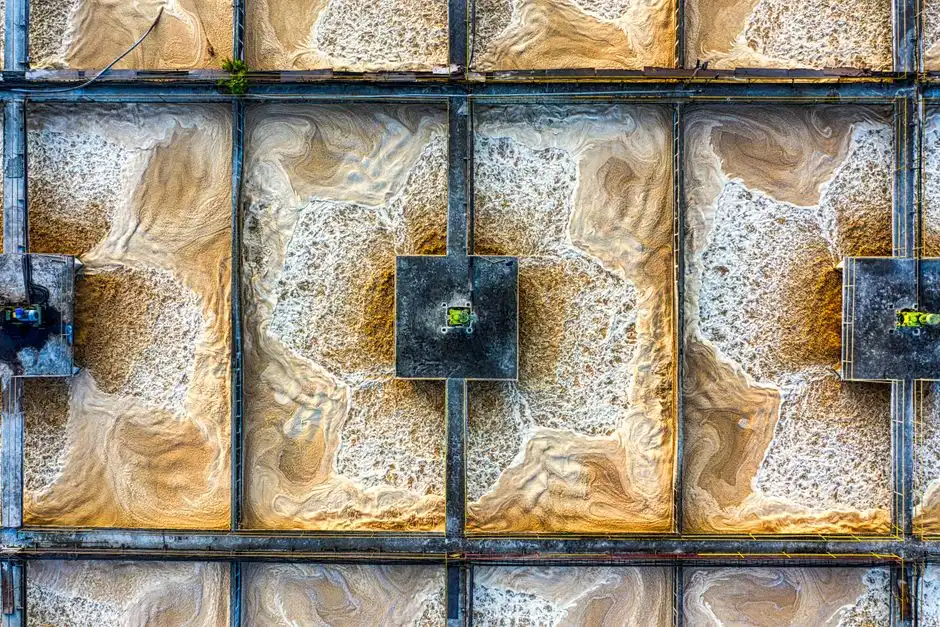
Selection starts with peak flow, not average flow. The DAF hydraulic capacity in m³/h should be matched to the equalized peak — washdown at shift change, not mid-production steady state. pH neutralization must be specified for the full anticipated swing, not the typical range; under-sized neutralization is the most common cause of pH permit violations at food/beverage sites. For the reagent itself, magnesium hydroxide slurry (e.g., 60% Mg(OH)₂) is the right pick where operator safety and lower sludge volume matter: it is non-hazardous, non-corrosive, and reduces sludge volume through coagulation, which directly cuts hauling fees. Caustic soda remains a valid choice where footprint or capital cost dominates, but the operator-handling profile is materially worse.
For the biological step, an MBR membrane bioreactor for biological BOD reduction delivers sub-1 μm filtration and roughly 60% smaller footprint than conventional activated sludge — relevant for Great Falls sites with limited indoor space or for plants pursuing water reuse. Where MBR capital is not justified, a high-efficiency sedimentation tank downstream of an aerobic or anaerobic biological stage provides clarification at lower cost. Plate-and-frame filter presses are available from 1 m² to 500 m² filtration area; hydraulic or PLC-automatic units are appropriate for food/beverage plants with daily sludge production. Material specification matters: NSF/FDA food-grade materials and 304/316 stainless where product-zone contact is possible should be confirmed at the order stage rather than retrofitted later.
| Unit operation | Right-size to | Common sizing mistake | 2026 spec check |
|---|---|---|---|
| Bar screen | Peak instantaneous flow | Sizing to average flow | Aperture, material, CIP compatibility |
| Equalization basin | 2–5× average flow, full shift volume | Single-shift sizing only | Mixing, aeration, retention time |
| pH neutralization | Full anticipated pH swing | Sizing to typical range only | Mg(OH)₂ vs. NaOH, dose control |
| DAF | Equalized peak flow (m³/h) | Sizing to average flow | Hydraulic cap, air-to-solids ratio |
| Biological (MBR/activated sludge) | Post-DAF BOD load | Sizing to pre-DAF load | MLSS, footprint, effluent target |
| Filter press | Daily sludge volume | Undersized cake production | Filtration area (1–500 m²), automation |
Frequently Asked Questions
What is the first step to get a pretreatment permit in Great Falls, MT?
Submit a Pretreatment Survey to the city's Industrial Pretreatment Specialist. The Specialist reviews the survey and determines whether a Pretreatment Permit is required for the facility's discharge.
What discharge parameters does the Great Falls pretreatment permit typically limit?
Permits set site-specific numeric limits, but the program routinely regulates BOD, TSS, FOG, and pH. The receiving WWTP was built around a 1960 primary plant upgraded in the 1970s and 2003, so the city enforces limits to keep industrial loads compatible with that infrastructure.
Why is dissolved air flotation the most common equipment choice for food and beverage pretreatment?
DAF removes both free and emulsified fats, oils, and grease and the colloidal solids that screening misses, in a single unit operation. It is the workhorse step between pH neutralization and biological treatment for breweries, dairies, meat processors, and grain mills discharging to a municipal sewer.
How are food and beverage flows in Great Falls different from domestic sewage?
Brewery and dairy wastewater can carry BOD 10–20× higher than domestic sewage, with corresponding elevations in COD, TSS, FOG, ammonia, and phosphate. Peak flows during washdown routinely run 2–5× average