Why East Longmeadow Pulp & Paper Mills Need a Dedicated Pretreatment Train
A paperboard or tissue mill near East Longmeadow, MA that discharges to the Springfield Regional Wastewater Treatment Facility is regulated as an indirect discharger under EPA's categorical pretreatment framework — not as a direct discharger holding its own NPDES permit. EPA's Pulp, Paper and Paperboard Effluent Guidelines at 40 CFR Part 430 apply to indirect discharges through local sewer-use ordinances and POTW pretreatment programs (per EPA, 2026). That distinction matters: a mill that assumes "we don't discharge to a river, so we don't have categorical limits" is wrong, and the binding effluent numbers it must hit come from whichever is tighter — the federal categorical standard or the local sewer-use ordinance.
Modern mills also face a tougher effluent than plants built in the 1990s. Industry data show up to 70 m³ of wastewater per metric ton of paper, but per-tonne water consumption has dropped roughly 95% over the past 30 years (bioresources review, 2024). Closing water loops concentrates BOD, COD, and colloidal fiber into a smaller stream — the retrofit train must handle higher strength at lower flow.
Western MA facilities most often fall into one of three 40 CFR Part 430 subcategories:
- Subpart B — Bleached Papergrade Kraft and Soda (market pulp, paperboard, tissue, and fine paper at bleached kraft mills).
- Subpart H — Semi-Chemical (pulp and paper at ammonia- or sodium-base semi-chemical mills).
- Subpart J — Recycled Fiber (paperboard from wastepaper, tissue from wastepaper without deinking, molded products without deinking) — the dominant subcategory for the recycled paperboard mills clustered along the Connecticut River Valley.
- Subpart L — Tissue, Filter, Non-Woven, and Paperboard from Purchased Pulp (non-integrated tissue and paperboard mills).
Regulated pollutants track the subcategory. For Subpart B bleached kraft the parameters include TSS, BOD, pH, settleable solids, and AOX/chlorinated organics. For non-bleached paperboard and recycled tissue (Subparts J and L), the load is dominated by TSS, BOD, and pH, with no AOX concern — which simplifies both equipment selection and discharge permitting. Massachusetts enforces parallel narrative-water-quality criteria under 314 CMR, and Springfield RWTF layers its own sewer-use limits on top, typically tighter on sulfides, phenols, and oil & grease than the federal categorical numbers.
The 2026 Pretreatment Process Train for Kraft, Recycled Fiber, and Paperboard Mills
The reliable 2026 retrofit pairs a high-rate anaerobic reactor with an MBBR for biological reduction, sized to hit the tighter of the categorical or local POTW limit. The seven-step unit process train below is what a plant engineer should hand to a process designer, with the function, design parameter, and selection trigger called out for each step. A rotary bar screen at the headworks protects downstream units from rag and fiber carryover, with a typical bar spacing of 3–6 mm.
| Step | Unit Process | Function | Typical Design Parameter | Selection Trigger |
|---|---|---|---|---|
| 1 | Equalization / neutralization basin | Smooth slug loads, correct pH to 6.5–8.5 | 4–24 h HRT, 50–150 mg/L CaCO₃ alkalinity dosing | Any mill with batch bleaching or pulping |
| 2 | Primary clarification or DAF | Remove settleable solids, FOG, stickies, colloidal fiber | DAF surface loading 20–40 m/h on inclined-plate units | DAF preferred when FOG or stickies present |
| 3 | High-rate anaerobic reactor (UASB/EGSB/IC) | 60–70% COD removal, biogas for digester heat | 10–20 kg COD/m³·d OLR, 30–37 °C mesophilic | Flows >2,000 m³/d or high COD |
| 4 | Aerobic polishing (MBBR or activated sludge) | Polish residual BOD/COD and nitrification if required | MBBR 5–15 g BOD/m²·d biofilm flux | MBBR if footprint-constrained; AS for greenfield with land |
| 5 | Tertiary lamella clarifier or DAF polish | Drop TSS to <30 mg/L for categorical monthly average | Lamella surface loading 20–40 m/h | Required when biology alone misses TSS |
| 6 | Disinfection (if POTW requires) | Reduce fecal coliforms before discharge | ClO₂ 1–5 mg/L residual or NaOCl to CT target | POTW-specific; some Massachusetts POTWs do not require |
| 7 | Sludge dewatering | Reduce sludge volume for landfill/incineration | Plate-and-frame press to 25–35% DS | All mills; pairs with biological WAS |
For Step 1, the equalization basin must be sized aggressively because the bleach-plant sewer is the most volatile stream on site — and the 2026 Woodland Pulp investigation found that slug pH excursions roughly 1,000 ft upstream of the dosing point drove an over-feed event that produced lethal H₂S, killing two employees. Equalization absorbs the slug before chemistry can react to it. For Step 2, a HydropureWater dissolved air flotation system at 20–40 m/h surface loading handles the colloidal fraction that primary clarifiers miss. The high-rate anaerobic reactor in Step 3 is justified at any flow above ~2,000 m³/d because biogas capture offsets reactor heat duty. A HydropureWater lamella clarifier in Step 5 polishes TSS to the 30 mg/L monthly-average ceiling without a second biological stage. A PLC-controlled chemical dosing system protects pH correction and nutrient addition from the probe-failure mode that triggered the Woodland event. A HydropureWater chlorine dioxide generator covers Step 6 disinfection where AOX carryover is a concern, since ClO₂ does not generate the chlorinated byproducts that sodium hypochlorite can. A plate-and-frame filter press in Step 7 routinely hits 25–35% dry solids for off-site disposal. Step 2 screening upstream is handled by a rotary mechanical bar screen at 3–6 mm spacing.
EPA Categorical Limits vs. Local POTW Limits: How the Numbers Stack Up
Federal categorical limits set the floor; local POTW sewer-use ordinances set the ceiling the design must actually hit. The table below summarizes the binding monthly-average and maximum-daily numbers for the three subcategories most relevant to western MA, then layers typical Springfield RWTF sewer-use limits beside them. The tightest number in each row drives equipment sizing.
| Parameter | 40 CFR Part 430 Subpart B (Bleached Kraft) — Max Daily / Monthly Avg | 40 CFR Part 430 Subpart J (Recycled Fiber) — Max Daily / Monthly Avg | 40 CFR Part 430 Subpart L (Tissue/Paperboard from Purchased Pulp) — Max Daily / Monthly Avg | Typical Springfield RWTF Sewer-Use Limit |
|---|---|---|---|---|
| TSS | ~12–30 kg/kkg product (subcat-specific) | ~8–20 kg/kkg product (subcat-specific) | ~6–15 kg/kkg product (subcat-specific) | 250 mg/L (typical local ceiling) |
| BOD₅ | ~6–15 kg/kkg product (subcat-specific) | ~5–12 kg/kkg product (subcat-specific) | ~4–10 kg/kkg product (subcat-specific) | 250–300 mg/L (typical local ceiling) |
| pH | 5.0–9.0 (instantaneous) | 5.0–9.0 (instantaneous) | 5.0–9.0 (instantaneous) | 6.0–9.0 (typical local range) |
| AOX | ≤0.1 kg AOX/t pulp (modern ECF/TCF benchmark) | Not applicable (no bleaching) | Not applicable (no bleaching) | Local check; MA 314 CMR narrative on toxicity |
| Sulfide (as H₂S) | Not specified in categorical | Not specified in categorical | Not specified in categorical | 1–10 mg/L (typical local limit) |
| Oil & grease | Not specified in categorical | Not specified in categorical | Not specified in categorical | 50–100 mg/L (typical local limit) |
The 40 CFR Part 430 numbers are expressed as mass per unit of product (kg per kkg, i.e., kg per metric ton), not concentration, because the rule follows the load-based framework that the EPA Effluent Guidelines framework uses. The Canadian Pulp and Paper Effluent Regulations (PPER) take the same load-based approach: TSS and BOD are the binding parameters, and acute lethality to fish is prohibited (Environment and Climate Change Canada, 2016, as cited in the bioresources review, 2024) — a useful benchmark for any New England facility discharging to a watershed that drains to fisheries. For AOX, the modern bleached-kraft benchmark is ≤0.1 kg AOX/t pulp, a 95% reduction since 1990 driven by ECF/TCF chemical substitution rather than end-of-pipe treatment (bioresources review, 2024). For Subpart J and Subpart L mills in the Connecticut River Valley that don't bleach, AOX is simply not in the design basis.
MBBR vs. Activated Sludge vs. SBR: Selecting the Right Aerobic Stage
The single largest equipment decision in the train is the aerobic stage, and the wrong choice locks in 20 years of operating cost. The three configurations each fit a specific flow/footprint/loading profile.
| Configuration | Footprint | CAPEX per m³ Treated | OPEX Driver | Best Fit | Weakness |
|---|---|---|---|---|---|
| MBBR (Moving Bed Biofilm Reactor) | ~60% smaller than AS for equivalent load | Moderate | Aeration kWh + carrier media replacement | Flows >5,000 m³/d, footprint-constrained, increasing flows | Higher carrier cost; less process control than AS |
| Activated Sludge (AS) | Largest (multiple basins + clarifier) | Lowest for greenfield | Aeration kWh + sludge wasting | Greenfield with >2 ha available land | Vulnerable to bulking from pulp-fiber carryover |
| SBR (Sequencing Batch Reactor) | Compact (single basin, batch operation) | Moderate | Aeration kWh + cycle-time overhead | Flows <5,000 m³/d, variable loading | Cycle time limits throughput; more complex controls |
MBBR retrofits have become the default at existing pulp and paper sites because biofilm carriers tolerate shock loads and low temperatures, and the technology was called out specifically as the retrofit choice in the Veolia 2024 pulp and paper webinar. Activated sludge remains the right answer for greenfield mills with more than 2 ha of available land and stable influent. SBR fits a different niche: flows under 5,000 m³/d with genuinely variable loading, where the decanting-under-quiescent-conditions step shaves TSS without a separate clarifier. A plant engineer working through this decision should cross-reference the MBBR for wood processing wastewater design guide and the SBR energy efficiency guide for aeration kWh optimization and biofilm carrier sizing data before locking in a configuration.
Equipment Selection and CAPEX Range for a 500–2,000 m³/d Pulp & Paper Pretreatment Skid
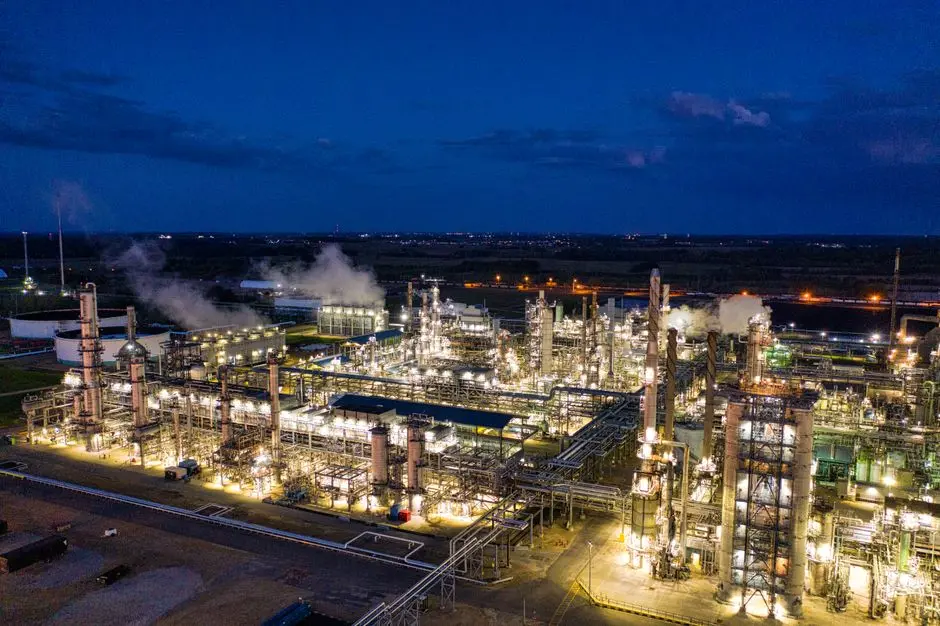
A 1,000 m³/d indirect-discharge pretreatment skid in 2026 is a defined equipment list, not a custom design. The procurement-level scope breaks down as follows: rotary bar screen → equalization basin with pH correction → DAF for fiber/FOG removal → high-rate anaerobic reactor (UASB/EGSB/IC) → MBBR or activated-sludge aerobic stage → lamella clarifier → chemical dosing skids for pH, nutrient, and polymer → ClO₂ generator for any required disinfection → plate-and-frame filter press for sludge dewatering. An integrated MBR system replaces the tertiary clarifier in tighter-footprint retrofits where the mill needs TSS <10 mg/L.
Order-of-magnitude CAPEX for a 500–2,000 m³/d skid in 2026 lands in the USD $2.5M–$8M installed band, with the high-rate anaerobic reactor and aeration basin driving roughly 50–60% of the total. DAF and chemical dosing are typically under 10% of total CAPEX but carry a disproportionate share of compliance risk — a DAF that doesn't remove colloidal fiber sends that load straight into the anaerobic reactor, raising COD loading and biogas variability. A PLC-controlled chemical dosing system and a HydropureWater chlorine dioxide generator round out the chemistry and disinfection skids.
Three procurement-level non-negotiables follow from the 2026 Woodland Pulp investigation. First, redundant pH probes on the equalization basin and the bleach-plant sewer header, with voting logic to confirm readings — the CSB report found the original probe was positioned roughly 1,000 ft upstream of the dosing trigger, a configuration that should not be specifiable in 2026. Second, redundant dosing pumps with a normally-closed block valve to prevent over-feed on controller failure. Third, fixed H₂S gas detection in the bleach-plant sewer line and the equalization basin headspace, with a hardwired alarm that triggers evacuation, not a SCADA pop-up. OSHA issued four willful citations and ~$800,000 in proposed fines after the January 2026 fatalities at Woodland Pulp in Baileyville, ME; the property damage alone was $16 million, and a personal gas monitor costs roughly $100 per employee (Bangor Daily News, 2026-08). For a mill spending millions on pretreatment, the gas-detection and dosing-redundancy layer is rounding error, and it is the single piece of the spec that audit reviewers will check first.
Frequently Asked Questions
Which 40 CFR Part 430 subcategory applies to a recycled paperboard mill in Massachusetts?
Recycled paperboard mills that produce paperboard from wastepaper without deinking fall under Subpart J (Recycled Fiber), per the EPA Effluent Guidelines framework. The regulated parameters are TSS, BOD, pH, and settleable solids — there is no AOX or chlorinated-organic limit because the mill does not bleach. If the mill purchases market pulp and converts it into paperboard without integrated pulping, it instead falls under Subpart L (Tissue, Filter, Non-Woven, and Paperboard from Purchased Pulp).
What BOD and TSS targets must an indirect discharger meet to discharge to the Springfield POTW?
The binding target is the tighter of the 40 CFR Part 430 Subpart J mass-based limit (expressed as kg per kkg of product) and the Springfield RWTF sewer-use concentration limit, which is typically 250 mg/L BOD and 250 mg/L TSS for industrial discharges. A 1,000 m³/d mill producing 200 t/d of recycled paperboard at 5 kg BOD/kkg product is well under 250 mg/L after a properly sized anaerobic + MBBR train, but the local sewer-use limit is still the design number.
Is a high-rate anaerobic reactor sufficient on its own, or is aerobic polishing required?
Anaerobic alone is not sufficient for 40 CFR Part 430 compliance. A high-rate UASB or EGSB typically removes 60–70% of COD at 10–20 kg COD/m³·d, but the residual BOD and the Massachusetts 314 CMR narrative-toxicity requirement both push the design toward a polishing aerobic stage. The bioresources review (2024) specifically identifies hybrid anaerobic/aerobic systems as the most appropriate configuration for meeting environmental regulations while reducing energy cost and greenhouse-gas emissions.
How are mills preventing H₂S buildup in bleach-plant sewer lines in 2026?
The 2026 Woodland Pulp investigation (CSB report) and the Bangor Daily News reporting on the resulting OSHA citations (2026-08) have made four measures standard practice: (1) fixed H₂S gas detectors in the bleach-plant sewer and the equalization basin headspace with hardwired evacuation alarms, (2) redundant pH probes with voting logic to prevent the 1,000-ft sensor-placement failure that triggered the fatal over-feed, (3) caustic dosing systems with redundant pumps and a normally-closed block valve to prevent over-feed on controller failure, and (4) personal H₂S monitors ("crickets") for every employee working in or near the bleach-plant sewer, costing roughly $100 per unit.
What is the typical payback period for an MBBR retrofit at a 1,000 m³/d pulp & paper facility?
For a 1,000 m³/d indirect-discharge mill retrofitting from a legacy activated-sludge basin to an MBBR, the installed CAPEX increment over a like-for-like AS rebuild typically lands in the USD $0.8M–$1.5M range, with a payback of 3–6 years driven by the footprint reduction (smaller tankage, lower concrete cost), the energy savings from biofilm versus suspended-growth aeration, and the avoided surcharges from Springfield RWTF for TSS/BOD exceedances. The figure varies sharply with influent temperature, which controls biological reaction rates, and with the local electricity tariff.