The Three-Layer Compliance Stack for Osceola-Area Chemical Plants
Chemical plants near Osceola, US meet pretreatment limits before sewer discharge by complying with a three-layer stack: 40 CFR 403.5(a)/(b) general and specific prohibitions, 40 CFR Part 414/415/417/419 categorical pretreatment standards, and the receiving POTW's site-specific local limits, with the most stringent applicable value controlling (per EPA, 2026). Most chemical plants qualify as Significant Industrial Users under 40 CFR 403.3(v) and must file a baseline monitoring report, maintain self-monitoring, and implement a slug load control plan under 40 CFR 403.8(f). The equipment train that hits the binding limit typically combines equalization, pH neutralization, dissolved air flotation, chemical precipitation for metals, and biological polishing (often an MBR).
The binding layer for an Osceola-area chemical plant is almost always the local POTW limit, not the federal categorical number. Confirm in writing which POTW's service area the facility falls in (the St. Joseph River / Elkhart-area watershed context typically routes flow to an Indiana-regulated POTW with a state-delegated pretreatment program), then pull that POTW's current local limits and Indiana DNR overlay before any design commitment (per EPA, 2026).
| Layer | Source | What it controls | Format | Enforceability |
|---|---|---|---|---|
| 1 — General & specific prohibitions | 40 CFR 403.5(a) and (b) | Pass-through, interference, ignitable/corrosive/toxic pollutant classes | Qualitative + listed banned pollutants | Enforceable even when no numeric limit is exceeded |
| 2 — Categorical pretreatment standards | 40 CFR Parts 414, 415, 417, 419, 433 | Numeric pollutant limits by industry subpart | Daily-max / monthly-average concentration or mass | Federal floor; binding if no local limit exists |
| 3 — POTW local limits | Receiving POTW's approved pretreatment program | Site-specific hydraulic, biological, and sludge capacity | Numeric limits, BMPs, narrative standards | Often more stringent than the federal categorical; usually the binding constraint |
Both pass-through at 40 CFR 403.3(p) and interference at 40 CFR 403.3(k) are qualitative triggers — a discharge is in violation if it causes or contributes to an NPDES permit violation at the receiving plant, even when every numeric limit is technically met (per EPA, 2026). That is why a chemical plant's local POTW connection point, not the federal categorical number, tends to drive the design.
When Your Plant Becomes a Significant Industrial User (SIU)
An Industrial User is any nondomestic discharger to a POTW; a Significant Industrial User is the subset defined at 40 CFR 403.3(v) that meets any one of three triggers (per EPA, 2026). For most chemical plants near Osceola, trigger (1) is the one that fires first.
- Trigger 1 — Categorical: subject to categorical pretreatment standards under 40 CFR Parts 405–471; most Osceola-area chemical plants hit this through Part 414, 415, 417, or 419.
- Trigger 2 — Volume: discharges an average of 25,000 gpd or more of process wastewater.
- Trigger 3 — POTW-loading share: process waste stream makes up 5% or more of the POTW's average dry-weather hydraulic or organic capacity.
SIU status brings a specific documentation set. The plant must file a Baseline Monitoring Report (BMR) at the point of categorical standard promulgation or new-discharge startup, then submit 90-day compliance reports on the schedule set under 40 CFR 403.12. The POTW issues a written control mechanism (an individual wastewater discharge permit or equivalent) and conducts routine inspections and sampling. For batch operators — common in the Elkhart-area specialty-chemical cluster — a slug load control plan under 40 CFR 403.8(f) is also typically required to prevent surge-driven pass-through or interference (per EPA, 2026).
The BMR is the document that defines the plant's pollutant envelope. Everything downstream of the BMR — local-limit negotiations, equipment sizing, capital planning — is measured against that baseline. A weak BMR makes the rest of the compliance program harder to defend.
Mapping Your Wastewater to the Right 40 CFR Subpart
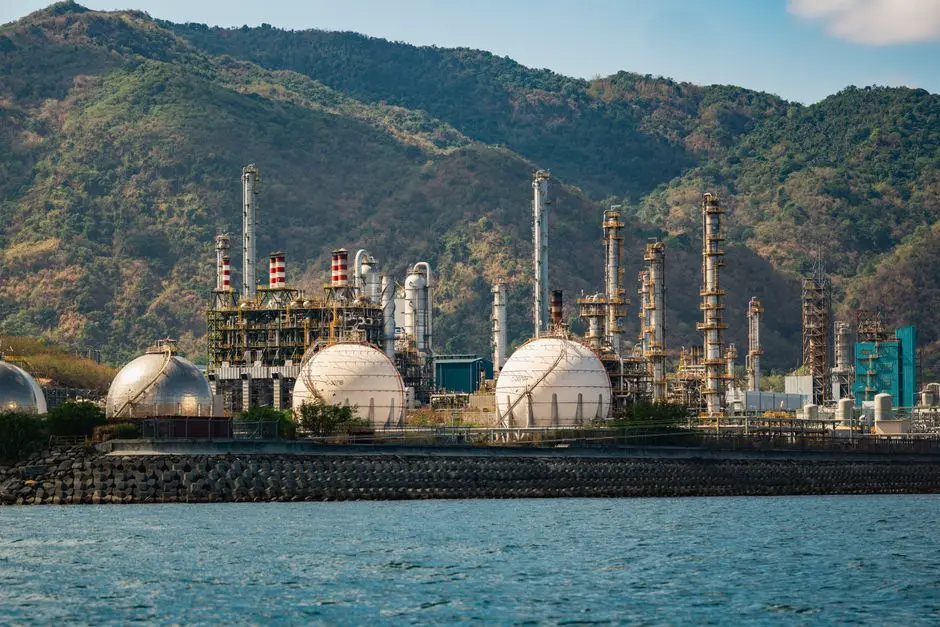
Identifying the controlling subpart is the step that converts plant chemistry into a numeric effluent target. Confirm current values in 40 CFR rather than relying on memorized values, because EPA revises subparts on a multi-year cycle and the local POTW may impose limits more stringent than the federal floor (per EPA, 2026). Where two subparts apply (e.g., a chemical plant with on-site metal-finishing), mass-balance both and apply the more stringent per-pollutant limit, consistent with 40 CFR 403.6 and standard POTW ordinances.
| Plant chemistry / process | Controlling subpart | Typical pollutants of concern |
|---|---|---|
| Organic synthesis, polymerization, plastics, synthetic fiber production | 40 CFR Part 414 | COD/BOD, phenols, solvents, acrylonitrile, caprolactam |
| Inorganic acids, bases, salts, chlor-alkali | 40 CFR Part 415 | pH, total dissolved solids, ammonia, fluoride, sulfide |
| Soaps, detergents, surfactants | 40 CFR Part 417 | BOD, FOG, MBAS, pH |
| Petroleum-derived streams, lubricants, solvents | 40 CFR Part 419 | Oil & grease, phenols, sulfide, COD, BTEX |
| Metal-bearing finishing or catalyst recovery | 40 CFR Part 433 | Cd, Cr, Cu, Ni, Pb, Zn, CN |
Indiana DNR does not categorically preempt the federal floor; it adds a state overlay that can tighten limits on a case-by-case basis through the NPDES-permitted POTW's approved pretreatment program. Get the local POTW's local-limit letter in writing and reconcile it against the 40 CFR subpart before the design basis is locked.
The Osceola Pretreatment Equipment Train: Six Unit Operations in Order
Six unit operations, deployed in roughly the order below, handle the majority of chemical plant wastewater streams that discharge to a POTW. The right subset is a function of the controlling pollutant; the full train is the common case because most plants hit two or three drivers simultaneously.
- Step 1 — Equalization and PLC-controlled pH dosing: dampens batch swings in pH, flow, temperature, and concentration. Sizing 4–8 hours of retention for continuous flow, hours-to-days for batch. Regulatory driver is 40 CFR 403.5(a) pass-through and 40 CFR 403.8(f) slug load control.
- Step 2 — Screening and grit removal at headworks: protects downstream pumps and membranes. A rotary mechanical bar screen is a typical baseline.
- Step 3 — Dissolved air flotation (DAF): removes oils, FOG, and free-floating solids; standard dissolved air flotation (DAF) systems for chemical plant pretreatment handle 4–300 m³/h across standard models.
- Step 4 — Chemical precipitation plus lamella clarifier: targets dissolved metals (Cd, Cr, Cu, Ni, Pb, Zn). A PLC-controlled automatic chemical dosing system feeds coagulant and pH adjuster, followed by a high-efficiency sedimentation tank (lamella clarifier).
- Step 5 — Biological polishing (activated sludge or MBR): brings COD/BOD to the POTW's local limit. An MBR membrane bioreactor system with PVDF submerged membranes at 0.1 μm pore size produces near-reuse-quality effluent and shrinks footprint roughly 60% versus conventional activated sludge.
- Step 6 — Multimedia or carbon filtration and, for plants pursuing water reuse, an RO polishing step. Add disinfection (chlorine dioxide) if the local limit or reuse target requires it.
| Step | Unit operation | Influent problem solved | Controlled parameter | Regulatory driver |
|---|---|---|---|---|
| 1 | Equalization + PLC pH dosing | Batch pH, flow, temperature, concentration swings | pH 6–9, flow variability | 40 CFR 403.5(a); 40 CFR 403.8(f) |
| 2 | Rotary mechanical bar screen | Solids, rags, debris | Screenings removal | Headworks protection; 40 CFR 403.5(b) |
| 3 | Dissolved air flotation (DAF) | Oils, FOG, free-floating TSS | Oil & grease, TSS | 40 CFR 403.5(a); categorical standard; local limit |
| 4 | Chemical precipitation + lamella clarifier | Dissolved metals (Cd, Cr, Cu, Ni, Pb, Zn) | Total metals | 40 CFR Part 433; local limit |
| 5 | Activated sludge or MBR | Soluble COD/BOD, ammonia | BOD, COD, NH₃-N | Categorical standard; local limit |
| 6 | Multimedia / carbon filtration, optional RO | Residual TSS, color, trace organics | TSS, turbidity, residual COD | Local limit; reuse-quality targets |
Under-sizing Step 1 (equalization) or Step 4 (chemical dosing) is the most common root cause of failed compliance events at chemical plants; both are the lowest-cost insurance items in the train.
Decision Logic: Building a Defensible 2026 Equipment Train
Four axes determine which subset of the six unit operations to actually build. Walking through them in order produces a defensible train instead of a generic one.
- Axis 1 — Controlling pollutant: oils and TSS push the design toward DAF; dissolved metals push toward chemical precipitation plus lamella clarifier; high COD/BOD pushes toward biological polishing or MBR; pH swings push toward equalization plus PLC-controlled dosing. Most plants hit two or three simultaneously, which is why the full train is the common case.
- Axis 2 — SIU status: SIU under a categorical standard makes the federal number the floor and the local limit the binding constraint; non-categorical IUs still must prevent pass-through and interference under 40 CFR 403.5(a), which is qualitative but no less enforceable.
- Axis 3 — Flow pattern: batch operations with long cycle times or shared collection systems need equalization sized for hours to days; continuous operations usually tolerate 4–8 hours of retention. The cost penalty for over-sizing equalization is small compared with the cost of a pass-through excursion.
- Axis 4 — Water reuse: if reuse is on the roadmap, the MBR-plus-RO path is a stronger candidate than discharge-only activated sludge because it produces reuse-quality water and offsets freshwater purchase cost. Pure discharge-to-sewer operations can stay on conventional activated sludge or a simpler aerobic basin.
Run all four axes in order. The intersection of Axis 1 (controlling pollutant) and Axis 2 (SIU status) is where the binding limit is identified; Axis 3 sets the equalization volume; Axis 4 sets whether the MBR-plus-RO branch is worth the incremental CAPEX.
2026 Cost and Sizing Benchmarks for the Osceola Pretreatment Train
The equalization + pH dosing + DAF + chemical precipitation + lamella clarifier + MBR backbone scales with flow, not just pollutant load. The table below groups plants into small / medium / large tiers and shows which unit operations dominate each tier's CAPEX share; specific 2026 dollar figures vary by site, influent matrix, and Indiana labor rates, so the cost drivers — tankage, membrane area, and chemical consumption — are listed in place of a fabricated benchmark.
| Plant tier | Indicative flow range (m³/day) | Unit operations included | Dominant CAPEX share |
|---|---|---|---|
| Small | Up to ~50 | Equalization, pH dosing, DAF, MBR | Tankage and skid integration; MBR membrane modules as a secondary share |
| Medium | ~50–250 | Equalization, pH dosing, DAF, chemical precipitation, lamella clarifier, MBR | Lamella clarifier and chemical dosing system; MBR membranes scale with flow |
| Large | > 250 | Full train plus optional RO polishing and chlorine dioxide disinfection generator for reuse | Concrete tankage, lamella clarifier surface area, MBR membrane area; sludge dewatering via a plate and frame filter press is a downstream CAPEX line item |
Equalization and PLC-controlled chemical dosing are the lowest-cost insurance items in the train. Under-sizing either is the most common root cause of failed compliance events (per commercial pretreatment guide). For a CAPEX memo, the defensible framing is to size equalization for the worst credible batch surge, then size DAF, precipitation, and MBR on the equalized daily-average flow.
Frequently Asked Questions
What is the binding pretreatment limit for a chemical plant near Osceola, US?
The binding limit is whichever of the three layers is most stringent: 40 CFR 403.5(a) general prohibitions, the federal categorical standard under 40 CFR Part 414, 415, 417, or 419, or the receiving POTW's site-specific local limits (per EPA, 2026). In most cases the local limit is the binding constraint. Confirm in writing with the receiving POTW before any design commitment.
How does a chemical plant qualify as a Significant Industrial User (SIU)?
An IU becomes an SIU under 40 CFR 403.3(v) by meeting any one of three triggers: being subject to a categorical pretreatment standard, discharging an average ≥25,000 gpd of process wastewater, or contributing a process waste stream ≥5% of the POTW's average dry-weather hydraulic or organic capacity (per EPA, 2026). Most Osceola-area chemical plants hit the categorical trigger through Part 414, 415, 417, or 419.
What is a slug load control plan and when is it required?
A slug load control plan is a written set of operating procedures, equalization capacity, and flow / pH monitoring designed to prevent non-routine pollutant releases or hydraulic surges from causing pass-through or interference at the POTW. SIUs are typically required to develop and implement a slug load control plan under 40 CFR 403.8(f), especially for batch operations (per EPA, 2026).
What unit operations make up a typical Osceola chemical plant pretreatment train?
The standard six-step train is equalization with PLC-controlled pH dosing, screening, dissolved air flotation (DAF) for oils and TSS, chemical precipitation plus a lamella clarifier for dissolved metals, biological polishing (activated sludge or MBR), and multimedia or carbon filtration with optional RO for reuse. MBR systems with PVDF submerged membranes at 0.1 μm pore size shrink footprint roughly 60% versus conventional activated sludge, and an MBR-plus-RO path produces near-reuse-quality effluent — see the MBR effluent quality and selection guide for sizing detail.
Are categorical pretreatment standards the same as POTW local limits?
No. Categorical pretreatment standards are federal numeric limits EPA issues for specific industry categories in 40 CFR Parts 405–471, while local limits are site-specific numeric limits the POTW's Control Authority sets and publishes in its approved pretreatment program. Local limits can be more stringent than the federal categorical standard when the receiving plant's hydraulic, biological, or sludge-handling capacity is constrained (per EPA, 2026). For a parallel regional comparison, see the Hopewell, Virginia chemical plant pretreatment guide and the chemical plant pretreatment guide for Summer Shade, KY.