
Why Johannesburg housing estates need packaged sewage treatment in 2026
South Africa's housing backlog in Gauteng sits above 1.4 million units, and mixed-income housing development has become the default urban policy response to that gap (per the 2026 housing pipeline referenced in mixed-income housing development strategy literature). Many of these estates, particularly township extensions south of Soweto, north toward Midrand, and along the N1 west toward Roodepoort, fall outside the municipal sewer catchment because Johannesburg Water's bulk interceptor capacity is constrained. The result is a procurement category that did not meaningfully exist a decade ago: a factory-built, buried or skid-mounted package sewage treatment plant sized for 200 to 3,000 units, delivered in 8 to 14 weeks, and operated by an estate management body rather than a municipal works team.
For a Johannesburg housing development, a buried A/O biological buried A/O package sewage treatment plant (such as the WSZ Series, 1–80 m³/h) or an integrated MBR package plant (10–2,000 m³/day) is the typical fit, sized at roughly 150–200 L per person per day for middle-income residential estates. Effluent must meet SANS 241 for irrigation reuse or the DWS General Authorisation for discharge, which both plants achieve with domestic-strength sewage (COD 250–600 mg/L, TSS 200–450 mg/L).
Conventional poured-concrete activated-sludge works are still specified for sites above about 2,000 m³/day, but below that threshold a package plant wins on three engineering grounds: shorter greenfield install time, no full-time operator (PLC-controlled with remote telemetry), and the entire unit can be buried below landscaping so the developer recovers the full erf footprint for sale. The typical Johannesburg scenarios that drive the package plant specification are: a gated community of 200–500 units where the developer wants a single buried tank under the communal garden; a mixed-income township extension of 500–2,000 units where a skid-mounted MBR sits beside the substation; and a rural periphery estate of 50–200 units where burial depth, groundwater, and dolomite risk shape the civils design. The urbanisation pressure behind all three is the same one flagged in the sustainable system-of-systems framework for South African settlements: existing wastewater infrastructure cannot keep pace with rapidly urbanising demand.
Sizing a package STP: flow norms, peaking factors, and loadings for residential estates
The single largest procurement risk on a housing-estate package plant is undersizing, because Johannesburg's diurnal residential peak — the morning shower-and-laundry window between 06:30 and 09:30 — runs 30 to 50% above the daily average. Start the design from per-capita flow, apply the peak, then add groundwater and desludging margins, not the other way round.
For per-capita flow, use 150 L/person/day for middle-income housing and 200 L/person/day for low-income or higher-occupancy typologies (4–6 residents per three-bedroom unit rather than 2.5–3.5). These align with the SABS-style design norms referenced in South African municipal guideline documents. Apply a peak factor of 1.3–1.5× on the average dry-weather flow to capture the 2–3 hour morning peak typical of residential catchments. If the package unit is buried below the Highveld water table, add 10–15% for ingress; on dolomitic sites near Centurion or southern Joburg, increase that to 15–20% and verify with a geohydrological report.
For influent characterisation, anchor the design to the South African sewer network dataset published for the Matla Power Station study, which sampled a real South African sewer and reported the parameter ranges an estate plant will see: organic matter (COD 250–600 mg/L), suspended solids (TSS 200–450 mg/L), pathogens (faecal coliforms 10⁶–10⁸ CFU/100 mL), and nutrients (NH₃-N 20–45 mg/L, total P 5–15 mg/L, pH 6.5–8.0). The S1 study also confirmed that biological treatment, membrane technology, and adsorption are the three recognised sewage-processing routes, which is why this guide scopes the comparison to those technology families rather than packaged sequencing batch reactors versus MBBR, both of which sit under the same biological-treatment umbrella.
| Parameter | Design value (residential) | Source / basis |
|---|---|---|
| Per-capita flow (middle-income) | 150 L/p/d | SABS-style design norms, SA municipal guidelines |
| Per-capita flow (low-income / high occupancy) | 200 L/p/d | SABS-style design norms, SA municipal guidelines |
| Peak factor (2–3 hr morning peak) | 1.3–1.5× | Standard residential diurnal curve |
| Groundwater ingress (buried unit) | +10–15% | Highveld water-table allowance |
| Influent COD | 250–600 mg/L | Matla sewer network, S1 dataset (2021) |
| Influent TSS | 200–450 mg/L | Matla sewer network, S1 dataset (2021) |
| Influent NH₃-N | 20–45 mg/L | Matla sewer network, S1 dataset (2021) |
| pH | 6.5–8.0 | Matla sewer network, S1 dataset (2021) |
Worked example for a 500-unit middle-income estate at 5 residents per unit: 500 × 5 × 150 L = 375,000 L/day average dry-weather flow. With a 1.4× peak factor, the design peak is 525 m³/day. Add 12% for groundwater ingress on a buried unit and the design flow becomes roughly 590 m³/day. Round up to a 600 m³/day package train — this is the figure a vendor will size to, not the 375 m³/day average.
Three packaged process trains that actually fit a Johannesburg housing development
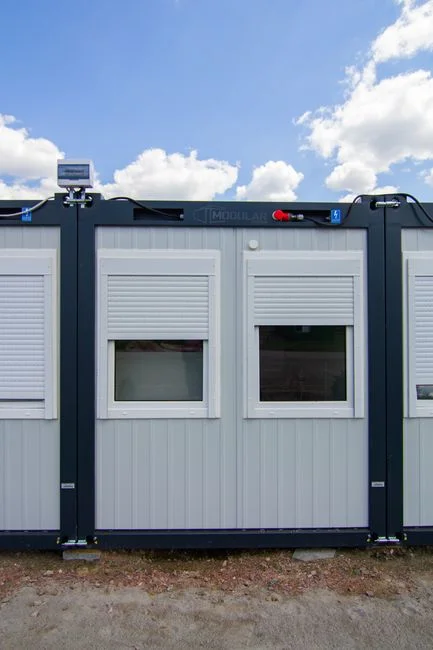
For a housing-estate flow band of roughly 50 to 2,000 m³/day, three packaged process trains are realistic and specified regularly in Gauteng. They differ enough on CAPEX, footprint, and reuse quality that the choice should be made before vendor engagement, not after.
A/O buried package (WSZ Series, 1–80 m³/h). Anoxic and aerobic contact oxidation zones followed by lamella sedimentation and chlorination inside a single buried or semi-buried tank. Fully automated with a PLC panel, no full-time operator, and the lowest installed CAPEX of the three options. Typical effluent at residential loadings: COD ≤50 mg/L, TSS ≤20 mg/L, NH₃-N ≤10 mg/L. Best fit when the estate wants the smallest above-ground visual impact, when the treated effluent is going to irrigation of open space rather than toilet flushing, and when the developer wants the simplest 10-year maintenance contract.
MBR package plant (10–2,000 m³/day). Activated sludge with a submerged PVDF hollow-fibre membrane module at nominal pore size below 1 µm. The membrane replaces the secondary clarifier and most of the disinfection step, so the footprint is roughly 60% smaller than an A/O package plus separate clarifier. Effluent is near-reuse quality: COD ≤30 mg/L, TSS ≤5 mg/L, turbidity ≤1 NTU — suitable for SANS 241 Class A irrigation reuse or toilet flushing. The trade-off is membrane replacement: PVDF modules typically have a 10–15 year operating life and a replacement cost that should be amortised into the lifecycle OPEX from day one. Best fit when the estate has a reuse scope (irrigation of common gardens, toilet flushing in the clubhouse, or sale of reuse water to a third party).
SBR package (sequencing batch reactor). Time-based fill, react, settle, decant, and idle cycles in a single tank. SBRs are well established in South African municipal works and handle variable inflow well — a real advantage on a housing estate where occupancy ramps up over the first 24 months. The footprint is larger than the A/O package because the same tank has to hold the batch, react it, and decant it sequentially. Best fit for very small sites (below about 50 m³/day) where the simplicity of one tank with no separate clarifier outweighs the footprint penalty.
| Criterion | A/O buried package (WSZ) | MBR package | SBR package |
|---|---|---|---|
| Flow envelope | 1–80 m³/h (≈24–1,920 m³/day) | 10–2,000 m³/day | 5–500 m³/day typical |
| Footprint | Smallest (buried under landscaping) | ~60% of A/O + clarifier | Largest (single batch tank) |
| Effluent COD | ≤50 mg/L | ≤30 mg/L | ≤40 mg/L |
| Effluent TSS | ≤20 mg/L | ≤5 mg/L | ≤15 mg/L |
| Reuse class | SANS 241 Class C / D (irrigation of open space) | SANS 241 Class A (irrigation + toilet flushing) | SANS 241 Class B / C |
| Operator requirement | None full-time (PLC + telemetry) | Membrane integrity checks monthly | None full-time; cycle tuning quarterly |
| CAPEX vs. baseline | 1.0× (baseline) | 1.1–1.2× baseline | 0.95–1.05× baseline |
| 10-year OPEX hot spot | Blower / aerator replacement at year 7–9 | Membrane replacement at year 10–15 | Decanter valve and diffuser service |
| Best fit | Lowest CAPEX, full burial, no reuse | Water reuse required, smallest above-ground footprint | Variable inflow, very small sites, SA-municipal familiarity |
Decision cue: if the estate has a water-reuse scope specified in the engineering report (typically a Johannesburg Water bylaw requirement for developments above a certain size), specify MBR. If the estate wants the lowest CAPEX and is content with irrigation of open space at SANS 241 Class C/D, specify the A/O buried package. If the site is below 50 m³/day and the consulting engineer wants a technology their local municipal works team already understands, SBR is defensible.
SANS 241, DWS General Authorisation, and what the regulator actually requires
There are two compliance gates for a Johannesburg housing-estate package plant, and they are not interchangeable. SANS 241 is the South African National Standard for drinking-water quality — its limits apply when the treated effluent is intended for potable augmentation or any use where human contact is unavoidable, including toilet flushing in a clubhouse. The DWS General Authorisation, issued under Section 39 of the National Water Act (Act 36 of 1998), sets the limits that apply to disposal or reuse of domestic wastewater where the activity falls below the threshold requiring a formal water-use licence. For a housing estate of 200 to 3,000 units the General Authorisation is almost always the right starting point; the formal licence route triggers only above about 2,000 m³/day or where the discharge goes to a watercourse rather than irrigation or a municipal sewer.
Discharge to a Johannesburg Water municipal sewer is a third route, and it still requires either a Section 21(c) and (i) water-use authorisation from the Department of Water and Sanitation or a municipal industrial effluent permit (technically a "pretreatment to municipal bylaw" arrangement). The package plant then has to meet the bylaw discharge limits, which are tighter than the General Authorisation on heavy metals but looser on ammonia. All three process trains in the previous section can meet the General Authorisation limits at the design loadings given in the sizing table.
The National Norms and Standards for Domestic Wastewater Treatment Works, published as Government Notice 267 of 2017, remain operative in 2026 and classify any treatment works smaller than 500 kL/day (500 m³/day) in the lowest design-and-audit band, which simplifies the professional-engineer sign-off requirement. Above 500 m³/day the design must be signed off by a registered professional engineer and the works registered with the DWS.
| Parameter | DWS General Authorisation limit | SANS 241 Class A (reuse) | Typical municipal sewer bylaw (Joburg) |
|---|---|---|---|
| COD | ≤75 mg/L (general); ≤30 mg/L (irrigation) | ≤30 mg/L | ≤500 mg/L (inflow to sewer) |
| TSS | ≤25 mg/L | ≤5 mg/L | ≤200 mg/L |
| NH₃-N | ≤6 mg/L (irrigation); ≤15 mg/L (other) | ≤1 mg/L | ≤50 mg/L |
| Faecal coliforms | ≤1,000 CFU/100 mL (irrigation) | ≤1 CFU/100 mL | n/a (treatment upstream) |
| pH | 6.0–9.0 | 6.0–9.0 | 6.0–10.0 |
2026 cost benchmarks for a packaged STP in the Johannesburg region
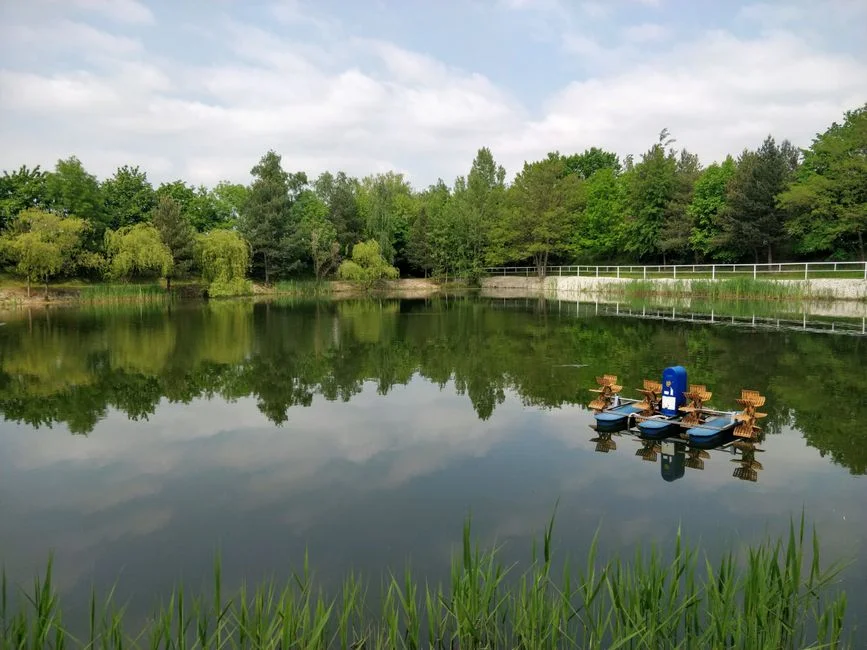
For 2026 budget framing on a Johannesburg housing-estate package STP, the following ZAR benchmarks apply at the 100–1,000 m³/day band. A buried A/O package plant installs at roughly R 25,000–45,000 per m³/day of design capacity, all-in: tank, excavation, M&E, control panel, disinfection, and commissioning. An MBR package plant runs 10–20% above the A/O baseline on CAPEX, but the civils footprint is smaller and the site cost is often a net-zero premium once the reduced earthworks are factored in. The CAPEX ranges below assume a greenfield site with normal soil conditions; dolomite-risk areas in the Centurion, southern Johannesburg, and parts of the West Rand add 15–30% to civils cost and that needs a separate geotech line in the budget.
On OPEX, a well-tuned A/O package plant draws 0.8–1.2 kWh per m³ treated; an MBR package plant draws 1.4–1.8 kWh/m³ because of the membrane cross-flow and backflush pumps. The largest non-energy consumable is sludge dewatering — for a 500 m³/day estate plant this is typically handled with a small package sludge dewatering press producing a cake of 18–22% dry solids for off-site disposal. Annual sludge-disposal cost is often the line item that surprises a developer who has only budgeted electricity.
| Capacity (m³/day) | A/O buried package (CAPEX, ZAR, 2026) | MBR package (CAPEX, ZAR, 2026) | Indicative OPEX (ZAR/m³, 2026) |
|---|---|---|---|
| 100 | R 2.5–4.5 million | R 2.8–5.0 million | R 4.5–6.5 |
| 250 | R 6.3–11.3 million | R 7.0–12.5 million | R 4.0–6.0 |
| 500 | R 12.5–22.5 million | R 14.0–25.0 million | R 3.5–5.5 |
| 1,000 | R 25.0–45.0 million | R 28.0–50.0 million | R 3.0–4.8 |
These figures are 2026 Johannesburg-region estimates and exclude VAT, professional fees, and the municipal connection charge. For broader South African wastewater plant cost benchmarks and a more detailed MBR cost and ROI reference, see the linked 2026 buyer guides. A useful international comparator is the New Zealand package wastewater plant engineering guide, which confirms the same CAPEX-per-m³ envelope at residential scale.
Vendor shortlist checklist for a 2026 South African package STP procurement
Before requesting a quote, send the following checklist to every vendor on the shortlist. Any supplier who cannot answer each item in writing is not yet a serious bidder.
- Compliance certificate for the specific model, not the technology family. Ask for a SANS 241 or DWS General Authorisation compliance certificate tied to the exact model number, at the exact design loading, on a real South African influent — not a generic "meets SANS 241" claim on a Chinese or European test report.
- Performance guarantee at design loading. Request a written performance guarantee on COD, TSS, NH₃-N, and faecal coliforms at the design loading for this specific estate, not at ideal lab conditions with glucose-spiked feed.
- 10-year membrane or aerator cost schedule. For MBR: request the membrane replacement cost per module and the expected service life. For A/O: request the 10-year aerator and blower replacement schedule with part numbers and ZAR prices.
- Local Gauteng service footprint. Verify the supplier has a Johannesburg-based commissioning team and a 24-hour spares callout. A package plant that takes five working days to get a replacement blower is a procurement risk the developer should not carry.
- PLC and SCADA package with remote telemetry. Confirm the package ships with a PLC panel, HMI, and remote telemetry so the estate manager can view trends from a phone. Municipal inspectors increasingly ask for this on handover.
- Factory-tested and skid-mounted. Confirm the unit is factory-tested on a water-recirculation rig before delivery and is delivered skid-mounted for the shortest possible on-site install window.
- Civil and structural drawings sealed by a Pr.Eng. For buried units on dolomitic or high-water-table sites, the vendor must provide a Pr.Eng-sealed drawing for the tank buoyancy check and the slab design.
- Sludge dewatering interface. Confirm the package plant has a defined sludge outlet compatible with a small plate-and-frame press and that the sludge yield estimate (kg DS/day) is given in the proposal.
Frequently Asked Questions
What flow rate should I size a package STP at per person for a Johannesburg housing estate?
Use 150 L per person per day for middle-income housing and 200 L per person per day for low-income or higher-occupancy typologies, in line with SABS-style South African municipal design norms. Apply a peak factor of 1.3–1.5× on the average dry-weather flow to capture the morning peak, and add 10–15% for groundwater ingress if the unit is buried below the Highveld water table.
What are the two compliance gates for a housing-estate package plant in Gauteng?
The two gates are SANS 241, which applies when the treated effluent is reused for potable augmentation or toilet flushing (Class A reuse), and the DWS General Authorisation issued under the National Water Act, which covers disposal or irrigation reuse of domestic wastewater below the formal water-use licence threshold. For a 200–3,000 unit estate the General Authorisation is almost always the right starting point; the formal Section 21(c) and (i) water-use licence route triggers only above about 2,000 m³/day or where the discharge goes to a watercourse.
Should I specify an A/O package or an MBR package for a new housing development?
Specify the MBR package if the estate has a defined water-reuse scope (irrigation of common gardens, toilet flushing in the clubhouse, or sale of reuse water) because the MBR effluent meets SANS 241 Class A at residential loadings. Specify the A/O buried package if the priority is lowest CAPEX, full burial under landscaping, and irrigation of open space only at SANS 241 Class C/D quality. The SBR package remains a defensible choice for sites below 50 m³/day where South African municipal familiarity with the technology is a procurement advantage.
What is the 2026 CAPEX for a buried package STP in the Johannesburg region?
For 2026, a buried A/O package plant installs at R 25,000–45,000 per m³/day of design capacity at the 100–1,000 m³/day band, all-in including tank, excavation, M&E, control panel, disinfection, and commissioning. An MBR package plant runs 10–20% above the A/O baseline on CAPEX but the smaller civils footprint often makes it a net-zero site-cost premium. These figures exclude VAT, professional fees, the municipal connection charge, and the 15–30% civils uplift for dolomite-risk areas.
How long does a buried package STP take from order to commissioning in South Africa?
A buried or skid-mounted package STP for a Johannesburg housing estate typically takes 8–14 weeks from purchase order to commissioning: 3–5 weeks for factory fabrication and acceptance test, 1–2 weeks for delivery to site, 2–4 weeks for civils, installation, and pipework, and 1–2 weeks for commissioning, seeding, and performance verification. The 10-year membrane or aerator replacement schedule should be confirmed in writing before the order is placed, because the lead time on those spares is often the long pole in the maintenance tent.