Three Failure Signatures That Tell You a UASB Startup Is Going Wrong
UASB reactor startup troubleshooting almost always resolves into one of three observable failure signatures, and identifying which one you are facing takes less than five minutes on shift. The first signature is biomass washout: the sludge blanket visibly rises toward the overflow weir, effluent turns turbid, and mixed liquor volatile suspended solids (MLVSS) inside the reactor fall week over week. The second is souring: pH drifts below 6.8, total volatile fatty acids (VFA) climb past 2,000 mg/L as acetic acid equivalents, and biogas CO2 content rises above 50% because methanogens are being outpaced by acidogens. The third is granulation failure: after 30-45 days the reactor holds only fluffy, low-density floc with poor settleability (SVI above 80 mL/g) and no discrete granules larger than 0.5 mm.
The textbook souring curve is documented in glucose-fed UASB startup work by Bhatti et al. (2014): reactor pH held between 7.0 and 7.4 during days 1-6, then declined from 7.3 to 6.7 across days 6-14 as VFA accumulated faster than alkalinity could buffer them. The wider operating window cited in the 2025 MDPI UASB review (S5) is pH 6.0-8.0, but operating anywhere below 6.8 during startup is a warning that methanogen activity is collapsing. A separate and less-discussed signature comes from Aiyuk et al. (2010), who documented that domestic sewage UASBs without pretreatment accumulated sludge equal to 70% of influent COD as suspended solids and required discharge roughly every 100 days; each discharge perturbs the methanogen population and produces a fresh-startup-like failure months into stable operation.
Symptom-to-Cause Diagnostic Table: What You Are Seeing and Why
The table below maps each observable symptom to its probable cause, the quantitative trigger that confirms it, and the immediate corrective action an operator should take on shift. Use it as a triage tool before opening any valve or shutting any feed pump.
| Symptom | Probable Cause | Quantitative Trigger | Immediate Action |
|---|---|---|---|
| pH falls below 6.5 within 14 days of seeding | VFA accumulation, alkalinity depletion | VFA/Alkalinity > 0.4 | Stop feed, dose NaHCO3 to bring ratio below 0.3 |
| Sludge blanket rising toward overflow weir, turbid effluent | Hydraulic or organic overload | Upflow velocity > 1.0 m/h (flocculent seed) or OLR > 5 kg COD/m3/d in week 1-2 | Cut feed by 50%, reduce recirculation, confirm influent TSS |
| Foam accumulating above the three-phase separator | FOG overload or rising sludge contacting GLS | Influent oil and grease > 50 mg/L | Install upstream FOG removal, drop feed rate by 30% |
| Biogas H2S above 2,000 ppm, methane yield low | Sulfate-reducing bacteria outcompeting methanogens | Influent SO42- > 500 mg/L | Dilute feed, add trace FeCl3 or consider sulfur polishing |
| Persistent turbid effluent with stable pH and VFA | Three-phase separator issue or hydraulic shock | Effluent TSS > 500 mg/L with normal VFA/Alkalinity | Inspect GLS deflection plates, check for intermittent pumping |
| No granules after 30-45 days, only fluffy floc | Inadequate seed or missing micronutrients | No granules > 0.5 mm visible in sampling port | Dose Ca2+ 100-300 mg/L or cationic polymer per S5 protocol |
For the washout row, the underlying number comes from S1: significant biomass washout was observed in the UASB at a volumetric loading Bv of 6 kg COD/m3/d, well within the range that eager operators push during the first two weeks. Translate that to a startup ceiling: hold OLR at or below 3-4 kg COD/m3/d for the first 30 days. The 2025 MDPI review (S5) also notes that upflow velocities above 4 m/h are only acceptable in EGSB configurations with an expanded granule bed, never in a conventional UASB startup.
Failure Mode 1: Biomass Washout During the First 30 Days
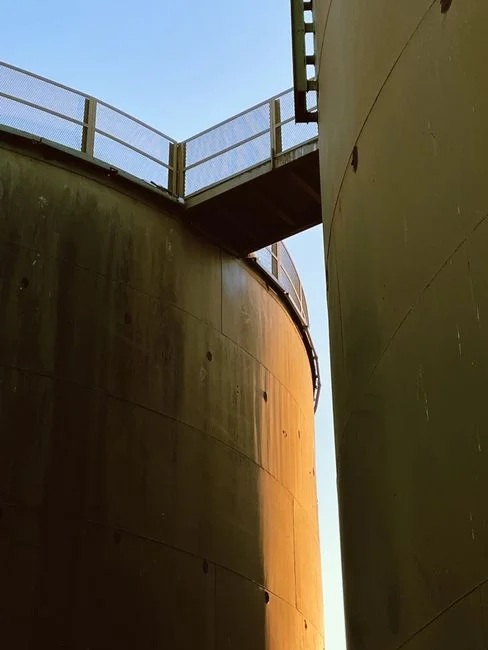
Biomass washout is the most common mechanical failure of a new UASB: sludge leaves the reactor faster than it can grow because hydraulic or organic loading exceed what the seed can retain. The root causes are predictable. Upflow velocity above 1.0 m/h for flocculent seed or above 1.5 m/h for granular seed physically lifts the blanket. Organic loading above 5 kg COD/m3/d in weeks 1-2 drives gas-induced lift that compounds hydraulic loss. S1 quantified this directly: significant washout in the UASB occurred at Bv = 6 kg/m3/d, exactly the loading inexperienced operators tend to overshoot because they want to "feed the bugs."
The five-step recovery protocol: (1) cut feed by 50% and hold for 48 hours, (2) reduce recirculation flow to lower superficial velocity below 0.5 m/h, (3) dose synthetic polymer or a multivalent cation (Ca2+, Fe2+) to accelerate granulation per the 2025 MDPI review, (4) reseed with fresh granular sludge if MLVSS drops below 50% of the initial inventory, (5) restart at OLR ≤ 1 kg COD/m3/d and ramp by 10-15% every 5-7 days only after turbidity clears. Prevention: install a properly designed feed distribution system with multiple inlet points and confirm influent TSS is below target via upstream screening before commissioning; this is the single most cost-effective step a plant owner can take to avoid washout in the first place.
Failure Mode 2: pH Crash and VFA Accumulation (Souring)
Souring is a biochemistry problem masquerading as a chemistry problem. Acidogens convert sugars and amino acids to acetate, propionate, and butyrate an order of magnitude faster than methanogens can convert those acids to methane. When the rate gap widens, VFA accumulates, bicarbonate alkalinity gets consumed as it neutralizes the acid, and pH slides. Once pH falls below 6.5, methanogen metabolism slows further, and the system tips into a positive feedback loop that can drop pH below 5.0 within hours. The Bhatti et al. (2014) glucose-fed startup data is the canonical example: pH 7.0-7.4 on days 1-6, then a decline from 7.3 to 6.7 across days 6-14 as VFA outran alkalinity generation.
The two numbers an operator must watch on shift are pH and the VFA/alkalinity ratio. The VFA/alkalinity ratio normalizes the buffer capacity of the system: a value above 0.3 is a warning, above 0.4 means feed stop, and a return below 0.3 is the green light to resume at reduced OLR. Recovery protocol without dumping the reactor: (1) stop feed immediately, (2) dose NaHCO3 to bring alkalinity back to 1,500-2,000 mg/L as CaCO3 and hold pH between 6.8 and 7.2, (3) maintain reactor temperature at 30-37°C because methanogens recover faster when warm, (4) resume feed at 30-50% of the previous OLR once VFA/Alkalinity is stable below 0.3, (5) ramp by 10% every 5-7 days. A PLC-controlled pH and bicarbonate dosing system automates step 2 and removes the manual error from a recovery that often happens at 2 a.m. Prevention: install continuous pH and ORP probes in the recirculation line with automatic feed shutoff at pH 6.7; the capex is trivial compared to a full reactor reseed.
Failure Mode 3: Sludge Buildup and the 100-Day Reset Problem
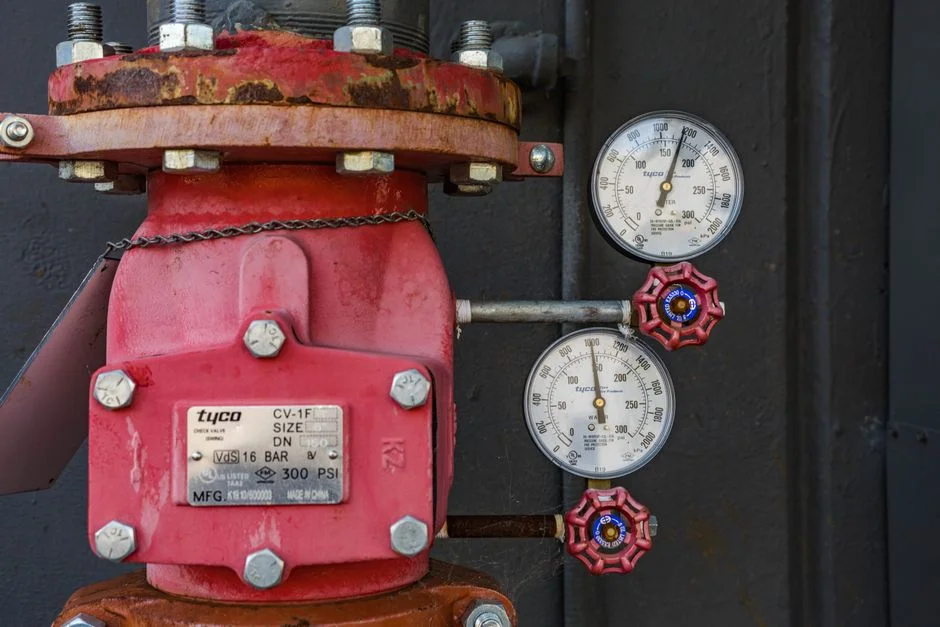
No top result in the current UASB literature highlights a failure that the 2010 Aiyuk et al. study documented in domestic sewage reactors: sludge accumulation reached 70% of influent COD as suspended solids, and the reactor required sludge discharge roughly every 100 days. Each discharge event perturbs the methanogen population and triggers what looks like a fresh startup failure: rising effluent COD, VFA spike, foam, and pH drift, all happening months after the original commissioning.
| Event | What Happens | Operational Signal | Operator Action |
|---|---|---|---|
| Day 0-80: Stable operation | COD removal > 70%, biogas CH4 > 65% | Effluent TSS stable | No action; log baseline |
| Day 80-100: Sludge blanket rises | Physical displacement of active biomass | Effluent TSS climbing week over week | Schedule controlled sludge discharge |
| Discharge day | Sudden drop in MLVSS, microbiota shock | — | Discharge to a plate and frame filter press for sludge management |
| Days 1-7 post-discharge | Mini-startup: VFA spike, pH dip | VFA/Alkalinity > 0.3 | Re-feed at 50% OLR for 7 days, then ramp |
The fix has three parts: (1) remove FOG and suspended solids upstream with a DAF unit so sludge production drops, (2) pre-thicken feed to avoid hydraulic shock during discharge, (3) schedule sludge discharge during low-loading periods and re-feed at 50% OLR for 7 days afterward. The 100-day reset is where upstream pretreatment earns its ROI: preventing the reset is cheaper than recovering from it.
Pretreatment and Seeding Strategy That Prevents 80% of Startup Failures
Most UASB startup failures are upstream design failures. Seed selection is the first decision: a minimum of 2 L of septic tank sludge per liter of reactor volume is the baseline (S2), but mature granular sludge harvested from a working UASB shortens startup from 60-90 days to 15-20 days at 37°C. Influent screening with a rotary mechanical bar screen for UASB influent at 3-5 mm aperture removes rags, plastics, and fibrous debris that clog the three-phase separator and cause the kind of hydraulic channeling that triggers washout.
FOG removal with a DAF unit for FOG and suspended solids removal ahead of the UASB should target oil and grease below 50 mg/L; every mg/L of FOG that enters the reactor carries biomass out as scum. pH and temperature conditioning in an equalization tank with a probe and chemical dosing system holds feed at 6.8-7.2 and 30-37°C before it enters the reactor, eliminating the temperature and pH shocks that drive souring. Cation dosing during weeks 1-4, adding Ca2+ at 100-300 mg/L, Fe2+, or synthetic polymers, accelerates granulation per the 2025 MDPI review. For plants scaling up to high-strength waste streams, the economics of pretreatment versus recovery are detailed in this high-strength organic wastewater treatment cost comparison; for the FOG side of the operation, the same foaming mechanism is dissected in the clarifier scum troubleshooting guide. For facilities pairing anaerobic reactors with downstream MBR, an industrial pretreatment spec guide for anaerobic reactors covers the screening and equalization design envelope.
Operator Shift Checklist: UASB Startup Daily Monitoring
The following daily log is the single most-cited artifact from this article: print it, walk the plant with it, and fill in the numbers for the first 90 days. Patterns only emerge when the data is written down.
| Parameter | Measurement Point | Warning Threshold | Action Threshold |
|---|---|---|---|
| Influent pH | Equalization tank outlet | < 6.8 | < 6.5: dose NaHCO3 at equalizer |
| Reactor pH | Recirculation line | < 6.8 | < 6.5: stop feed, dose alkalinity |
| VFA / Alkalinity | Lab titration, daily | > 0.3 | > 0.4: stop feed |
| OLR | Calculated from feed flow × COD | > 5 kg COD/m3/d in week 1-2 | Cut feed by 50% |
| Upflow velocity | Calculated from recirculation | > 1.0 m/h (floc seed) | Reduce recirculation |
| Effluent TSS | Effluent sampling port | > 300 mg/L | > 500 mg/L: suspect washout |
| Biogas CH4 / CO2 | Gas line analyzer | CO2 > 45% | CO2 > 50%: methanogen stress |
| Reactor temperature | Mid-bed probe | < 30°C | < 25°C: check heat tracing |
Weekly, pull a sample from the bed port and inspect the granules: black, dense, well-settled particles larger than 0.5 mm are healthy. Brown, gray, or fluffy floc with poor settleability signals stress, often preceding a washout or souring event by 5-7 days. Record every feed change, dose event, and disturbance in a dedicated startup log book; the cause of a failure two months from now will be visible only in three weeks of retrospective data.
Frequently Asked Questions
How long does UASB startup take?
Typical startup is 30-90 days depending on seed quality, temperature, and influent strength. With mature granular seed and a stable 37°C feed, 15-20 days is achievable, as documented in the Bhatti et al. (2014) glucose-fed study and the 2025 MDPI UASB review.
What causes granules to wash out?
Upflow velocity above 1.0 m/h for flocculent seed or 1.5 m/h for granular seed, organic loading above 5 kg COD/m3/d in the first two weeks, or hydraulic shock from intermittent feed all drive washout. S1 quantified the threshold at Bv = 6 kg/m3/d for the conventional UASB.
How do I fix a sour UASB reactor?
Stop feed immediately, dose NaHCO3 to bring VFA/alkalinity below 0.3, hold pH between 6.8 and 7.2, and restart at 30-50% of the previous OLR. Full recovery usually takes 7-14 days if the seed inventory is intact.
Why is my UASB foaming?
Foam is most often FOG accumulation from inadequate upstream removal, nitrogen deficiency in the feed (C:N above 30:1), or a rising sludge blanket contacting the gas-liquid-solid separator. Targeting FOG below 50 mg/L in the influent with a DAF unit eliminates the most common cause.
Can I add polymers to speed up granulation?
Yes. Cationic polymers and multivalent cations (Ca2+, Fe2+, Al3+) at 100-300 mg/L are documented in the 2025 MDPI UASB review to accelerate granulation and shorten startup. Dose during weeks 1-4 of a new commissioning for the strongest effect.