Why Dye-House Effluent Is Harder to Treat Than General Industrial Sewage
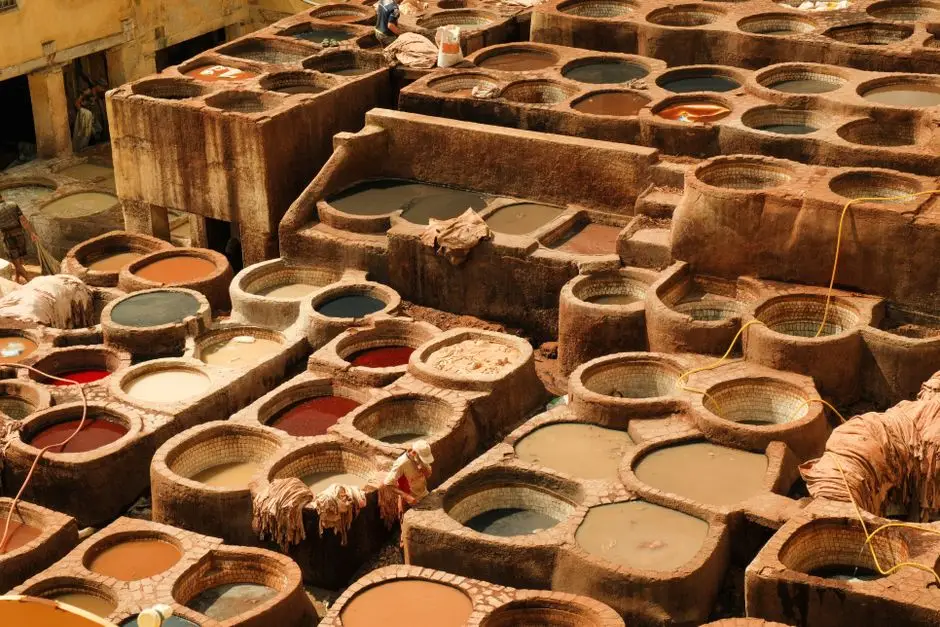
Reactive dye loss during cellulosic dyeing runs 10–40% of applied dye mass, meaning a significant share of the color and COD load entering the sewer originates in the dye bath rather than in finishing auxiliaries (per academic review at Durban University of Technology, doi:10.51415/10321/2860). That fraction does not behave like generic industrial sewage. Once a reactive dye reacts with cellulose, the unfixed portion hydrolyzes into a sulfonated aromatic compound that resists conventional activated-sludge biodegradation and absorbs strongly in the visible spectrum, carrying ADMI color and COD together in a form that survives primary clarification.
The auxiliary chemistry compounds the problem. Sodium chloride or Glauber's salt (Na₂SO₄) is dosed at 50–100 g/L to push reactive dye fixation, sending total dissolved solids to 5,000–15,000 mg/L in the dye-bath stream. Sodium carbonate and caustic push pH to 10–12 during fixation, while subsequent neutralization drags it to 2–4 in the wash-off; without equalization, a single batch can swing the equalization-tank pH by 6–8 units. Surfactants, antifoams, and reducing agents (sodium hydrosulfite) enter in smaller volumes but create discrete compliance risks regarding sulfides, BOD, and oil & grease.
Upstream of the dye house, desizing, scouring, and bleaching add starches, PVA sizes, and hydrogen peroxide. These raise COD by another 200–500 mg/L and push BOD₅ above 800 mg/L in the combined wastewater. A plant near Old Hickory that treats its stream as "industrial wastewater" rather than as a dyeing-specific stream will miss the chemistry that drives the equipment train: high salinity, hydrolyzed reactive dye, extreme pH swings, and color measured in ADMI units rather than TSS.
Pretreatment Limits That Apply Near Old Hickory, TN
Discharges to the Old Hickory WWTP and the broader Nashville Metro Water Services (NMS) collection system comply with a two-tier regulatory stack. The federal tier is 40 CFR Part 410 (Textile Mills, Point Source Category), which sets categorical pretreatment standards for BOD₅, TSS, pH, sulfides, total chromium, and oil & grease. Subcategories (woven vs. knit finishing, carpet vs. yarn) carry different daily-maximum and monthly-average BOD₅ values, so the first engineering step is identifying the correct subpart for the David County facility. Layered on top is 40 CFR Part 403, the General Pretreatment Regulations, which prohibit pass-through and interference at the POTW and require sampling, reporting, and slug-control plans regardless of category.
The local tier is the NMS industrial pretreatment program, which converts 40 CFR 410 into site-specific discharge limits enforced through the control authority's SIU permits. The table below summarizes the limit envelope a knitting/dyeing/finishing plant near Old Hickory should design against; exact values must be confirmed in the current permit.
| Parameter | Typical daily-max limit (NMS-style program) | Regulatory source |
|---|---|---|
| pH | 5.0–10.0 (instantaneous) | 40 CFR 410 subcategory |
| TSS | 250–300 mg/L | 40 CFR 410; local SIU permit |
| COD | 400–600 mg/L (local limit, not in 410) | NMS local limit |
| BOD₅ | 150–200 mg/L (subcategory-dependent) | 40 CFR 410 |
| Sulfides (as S) | 1.0 mg/L | 40 CFR 410 |
| Total chromium | 2.0 mg/L | 40 CFR 410 |
| Oil & grease | 100 mg/L | 40 CFR 410 / 403 |
| Color (ADMI) | Locally enforced (often 200–400 ADMI) | NMS local limit |
Color is the most common source of violation notices for dye houses, even though it does not appear in 40 CFR 410. Local programs measure it as ADMI units on a true composite, and the limit is enforced against a 24-hour flow-proportional sample. A plant that hits every numerical limit in 410 but ships visible color to the POTW will still receive a notice of violation.
The 2026 Unit-Process Train That Actually Meets Those Limits
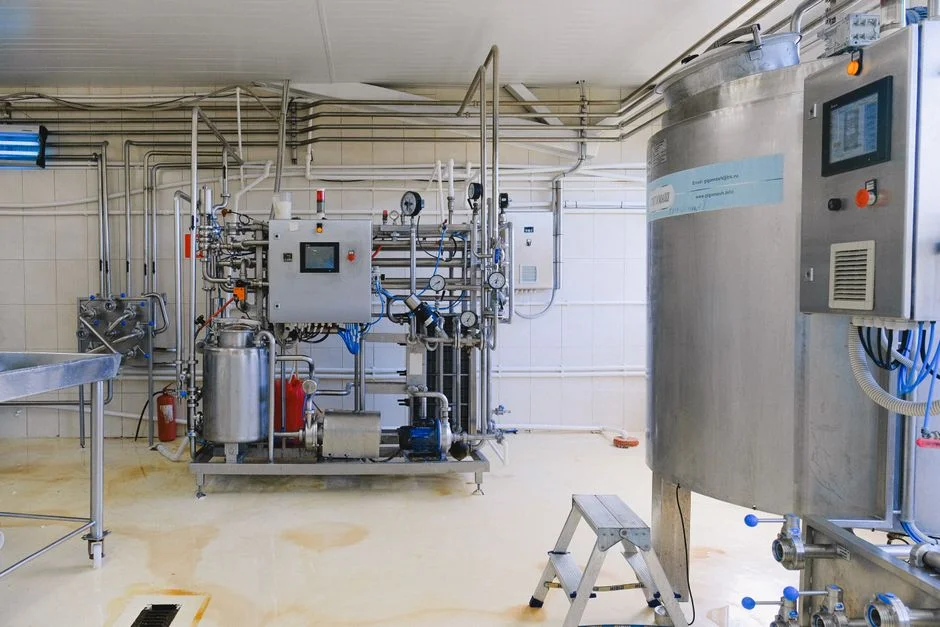
The equipment train below is the configuration that consistently meets 40 CFR 410 plus the local ADMI, sulfide, and COD limits in 2026 retrofits.
- Headworks and equalization. A GX rotary mechanical bar screen removes fiber, rags, and packaging debris before flow enters a covered, aerated equalization tank sized for 8–24 hours of residence. The EQ tank dampens pH swings and blends color shocks, providing a stable feed to downstream chemistry. Online pH and ORP probes feed the chemical-dosing PLC.
- pH correction and chemical conditioning. A PLC-controlled chemical dosing skid handles sulfuric acid or caustic for pH correction, alum or ferric chloride coagulant, and anionic flocculant for the hydrolyzed reactive-dye fraction. Acid/alkali adjustment must precede coagulant addition; the pH window for optimal floc formation of hydrolyzed reactive dyes is roughly 6.5–8.0. For sulfide control, hydrogen peroxide or ferrous sulfate is dosed upstream of the DAF to oxidize S²⁻ to elemental sulfur or sulfate. The polymer dosing system engineering guide covers the make-down and aging steps.
- Dissolved air flotation. A dissolved air flotation system (4–300 m³/h, 13 standard models, micro-bubble generation) removes the coagulated dye floc, suspended solids, fiber lint, and entrained oil. Textile DAFs are typically sized at 20–40 m³/h per 1,000 m³/d of design flow because of the high float load. Sizing guidance for desizing streams is covered in the DAF sizing for textile desizing streams reference. DAF effluent typically shows 50–70% COD reduction and 80–90% color reduction (ADMI).
- Biological polishing. Conventional activated sludge handles residual COD and BOD but rarely achieves consistent ADMI below 200 units on reactive-dye effluent. The 2026 retrofit preference is an integrated MBR membrane bioreactor with submerged PVDF flat-sheet modules (0.1–0.4 μm pore size) operated at 8,000–12,000 mg/L MLSS. The high biomass inventory retains slow-growing organisms that mineralize dye chromophores, and the membrane rejects the colloidal color fraction.
- Sludge handling. DAF float and waste biological solids are dewatered on a plate-and-frame filter press to 25–35% dry solids, suitable for offsite disposal or landfill. Filter area is chosen from the dry-solids mass balance; for a 1,000 m³/d plant, expect 8–15 m³/d of wet cake.
- Optional tertiary. If the plant reuses process water or is preparing for zero-liquid-discharge, sand/multi-media filtration followed by an industrial reverse osmosis process polishes the MBR permeate to under 50 mg/L TDS.
| Unit process | Primary target parameter | Typical performance |
|---|---|---|
| Equalization + pH correction | pH, flow variability | pH to 6.5–8.0; flow dampening |
| Coagulation/flocculation + DAF | Color (ADMI), TSS, sulfides, oil & grease | 50–70% COD, 80–90% ADMI removal |
| MBR biological polishing | Residual COD, BOD₅, color | COD <300 mg/L, ADMI <200 |
| Plate-and-frame press | Sludge volume reduction | 25–35% dry solids cake |
| RO (optional) | TDS for reuse | <50 mg/L TDS permeate |
Equipment Selection Checklist for 2026 Compliance Upgrades
The procurement shortlist below ties each equipment category to the specific discharge parameter established in the previous section, mapping to 40 CFR 410 and local NMS limits.
- Headworks: rotary mechanical bar screen for fiber, rags, and packaging debris ahead of the equalization tank.
- Equalization and instrumentation: covered, aerated EQ tank with mechanical mixers; online pH/ORP probe tied to the dosing PLC.
- Chemical dosing: PLC-controlled acid/alkali, coagulant, flocculant, and optional sulfide-oxidant lines on a single pre-wired skid.
- DAF: Unit, 4–300 m³/h range, 13 standard models, sized at 20–40 m³/h per 1,000 m³/d of design flow for textile streams.
- Biological stage: integrated MBR with submerged PVDF flat-sheet modules (0.1–0.4 μm), operated at 8,000–12,000 mg/L MLSS.
- Sludge dewatering: plate-and-frame filter press, filter area derived from the dry-solids mass balance.
- Tertiary (optional): sand/multi-media filter plus RO if the plant is moving toward process-water reuse or zero-liquid-discharge.
Sampling, Monitoring, and Recordkeeping the POTW Will Expect
Under 40 CFR 403.12(g), self-monitoring programs must support both 24-hour flow-proportional composite samples (for TSS, COD, BOD₅, color/ADMI) and grab samples (for pH, sulfides, total chromium, oil & grease). NMS-style programs typically require both on the same day, with pH and sulfide grab samples taken at the in-plant sampling port. The port must be located before the building trap and after the last process stream ties in, with safe access for the POTW inspector; flow-proportional sampling on the discharge line is the preferred configuration.
Chain-of-custody forms, flow-proportional sampler calibration logs, and standard-method documentation (e.g., 24-hour composite preserved at 4 °C) must be retained for at least three years. The most common administrative cause of a notice of violation is a missed or misplaced sample; confirm the in-plant port location with the control authority before finalizing the 2026 compliance plan.
Frequently Asked Questions
What is the single most common cause of a sewer-authority violation notice for a dye house near Old Hickory?
Color in ADMI units. 40 CFR 410 does not list color, but local industrial pretreatment programs enforced by Nashville Metro Water Services do. This parameter survives conventional primary and secondary treatment because hydrolyzed reactive dyes are non-biodegradable. The practical fix is chemical coagulation upstream of a DAF followed by an MBR polish.
Do reactive-dye discharges require biological treatment at all, or can chemistry alone meet 40 CFR 410?
Chemistry (coagulation + DAF) can hit the categorical TSS, oil & grease, and total chromium limits, and can remove 80–90% of ADMI color, but residual COD typically remains at 300–500 mg/L — above the 400–600 mg/L local COD limit in many Nashville-Metro-
Frequently Asked Questions
What are the sewer discharge limits for textile plants near Old Hickory, Tennessee?
Textile facilities discharging into the Old Hickory area municipal sewer system must adhere to the local limits set by Metro Water Services (MWS) in addition to federal categorical pretreatment standards. While local limits vary based on the specific industrial user permit, typical requirements include a biochemical oxygen demand (BOD) limit often capped at 300 mg/L, total suspended solids (TSS) at 300 mg/L, and specific heavy metal concentrations such as Chromium (total) at 2.0 mg/L and Copper at 2.0 mg/L.
Is DAF enough on its own to treat reactive dye wastewater?
Dissolved Air Flotation (DAF) is generally insufficient as a standalone solution for reactive dye wastewater. While DAF is effective at removing suspended solids and emulsified oils, reactive dyes are highly water-soluble and pass through physical separation processes. Effective treatment requires a preceding chemical coagulation and flocculation stage using inorganic coagulants like ferric chloride or aluminum sulfate to destabilize the dye molecules before the DAF unit can successfully float the resulting solids.
Which EPA regulation covers textile mill pretreatment — 40 CFR Part 403 or 410?
Both regulations are applicable, but they serve different functions. 40 CFR Part 403 establishes the General Pretreatment Regulations, which define the legal framework, reporting requirements, and prohibited discharge standards for all industrial users. 40 CFR Part 410, the Textile Mills Point Source Category, provides the specific effluent limitation guidelines (ELGs) that dictate the numerical discharge limits for pollutants based on the specific subcategory of textile processing, such as wool scouring, dyeing, or finishing.
How do you remove color from dye-house wastewater before discharge?
Color removal is typically achieved through an integrated multi-stage process. Primary treatment involves chemical oxidation using ozone or hydrogen peroxide to break the chromophore bonds in dye molecules. This is often followed by adsorption using activated carbon or advanced membrane filtration, such as nanofiltration or reverse osmosis, to capture residual dissolved colorants that remain after biological or chemical precipitation processes.
What is the typical pH range a textile plant must hold to discharge to a POTW?
Most Publicly Owned Treatment Works (POTWs) strictly regulate pH to prevent damage to infrastructure and interference with biological treatment processes. Facilities in the Old Hickory region are typically required to maintain a discharge pH within the range of 5.0 to 10.0 standard units. Discharges falling outside this range are considered non-compliant and may result in surcharges or enforcement actions due to the corrosive risk to sewer piping.