
Why Desizing Effluent Is Unusually Demanding on Reverse Osmosis
Desizing liquor is the single most aggressive textile stream an RO element will see in a finishing mill. It leaves the size bath hot — typically 35–55 °C — and loaded with COD in the 2,000–15,000 mg/L range, BOD₅ often 40–60% of COD, and a mix of sizing agents (polyvinyl alcohol, modified starch, carboxymethyl cellulose, acrylate copolymers) together with lubricant and wax emulsions. Three RO-specific foulants follow directly from that chemistry: organic fouling from residual PVA and starch that slip past biology, scaling driven by phosphate- and silicate-bearing auxiliaries carried over from the size mix, and biofouling that takes hold the moment the residual BOD rises above RO-compatible levels. The current framing of textile brine RO is no longer "water reuse" alone — a 2022 ScienceDirect study positions RO brine as a water-and-salt recovery opportunity inside a zero liquid discharge (ZLD) envelope, which is the economic context most 2026 retrofits are being justified under. The practical consequence for sizing is that an RO running on under-treated desizing feed loses 20–40% of its specific flux within the first 200–400 operating hours, before any CIP cycle is even triggered.
Step 1: Characterize the Desizing Feed Before You Touch a Membrane
No sizing math is meaningful until the feed is characterized across a full production week. The minimum parameter set a process engineer must lock down before opening a membrane datasheet is: average and peak hourly flow (m³/h), pH, temperature, COD, BOD₅, TSS, conductivity and TDS, total hardness, reactive and total silica, phosphate, iron, residual PVA/starch, and oil & grease. Each parameter drives a specific design choice — silica and phosphate set the antiscalant program and cap the recovery per the high-recovery RO scaling analysis on vivianite precipitation in anaerobic effluent desalination (SSRN/Elsevier); conductivity sets the osmotic pressure and therefore the high-pressure pump duty; temperature sets the flux correction factor and the choice of element (standard versus low-energy). Desizing is a batch operation, so peak hourly flow routinely lands at 2–3× the daily average, and the equalization tank volume must be solved before the RO feed pump is selected. Sampling protocol should be a 24-hour composite plus four grab samples per shift, repeated across at least one full production week to capture style and color changes.
| Parameter | Typical desizing range | Why it matters for RO sizing |
|---|---|---|
| Flow (avg / peak) | 20–80 m³/h / 2–3× peak | Sets equalization volume, pump duty, and membrane area |
| Temperature | 35–55 °C | Applies TCF (1.3–1.6) to flux; limits element life above 45 °C sustained |
| COD / BOD₅ | 2,000–15,000 / 800–6,000 mg/L | Sets biological pretreatment load and residual target < 50 mg/L |
| Conductivity / TDS | 2,000–8,000 µS/cm / 1,500–5,000 mg/L | Sets osmotic pressure and high-pressure pump head |
| Reactive silica | 10–60 mg/L as SiO₂ | Caps recovery; drives antiscalant selection |
| Phosphate (PO₄³⁻) | 5–40 mg/L | Drives vivianite (Fe₃(PO₄)₂·8H₂O) scaling risk above ~80% recovery |
| Residual PVA / starch | 50–500 mg/L (raw); < 20 mg/L target post-UF | Sets biological + UF performance targets |
| Oil & grease | 20–200 mg/L (raw); < 0.1 mg/L target | Requires DAF or MBR skimming before UF |
Step 2: Lock the Pretreatment Train (Biological + UF Is Not Optional)
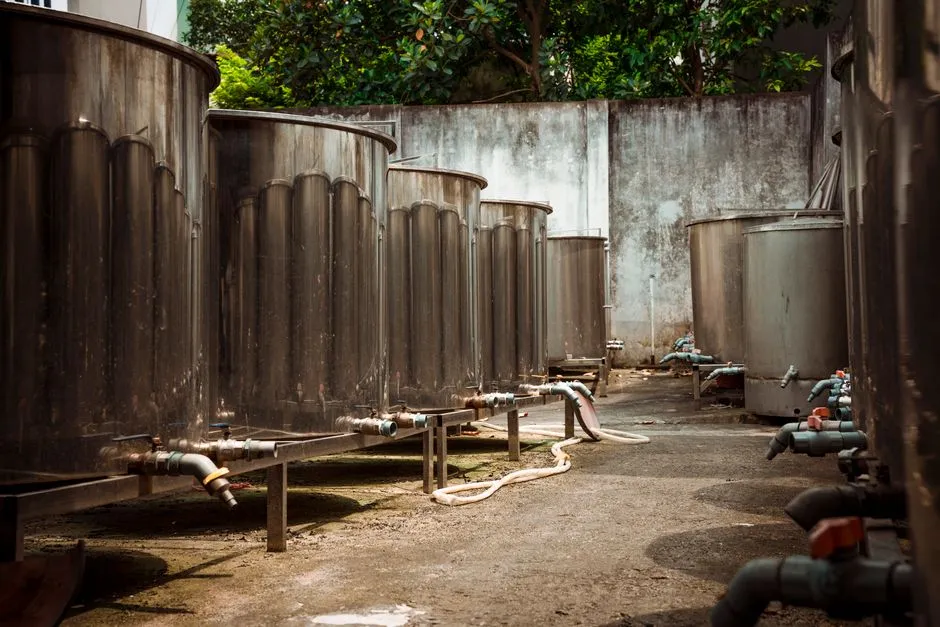
Pretreatment is part of the RO sizing, not a parallel project — this is where most desizing RO installations fail in their first year. The 2026 baseline train for a desizing stream is: equalization → pH and temperature adjustment → biological treatment (MBR or MBBR) → UF at 0.1–0.2 µm with PVDF membranes (submerged or external) → 5 µm cartridge guard → RO high-pressure pump. The placement of MF/UF ahead of RO is consistent with the ACS ES&T Water (2025) reuse-train principle that an RO in a reuse train must sit behind a low-SDI barrier to control biofouling. RO feed targets the pretreatment must hit are: SDI < 3 (preferably < 2), turbidity < 1 NTU, residual COD < 50 mg/L, residual PVA < 20 mg/L, and oil & grease < 0.1 mg/L. A DAF pre-clarifier alone is not enough — DAF strips floatables and emulsified oils but does not bring COD, BOD, or colloidal organics down to RO-compatible levels, and the residual organics will foul the RO within weeks. The biological stage must be sized for the thermal and toxic shocks typical of desizing batch dumps; a poorly buffered MBBR is the most common single point of failure in the chain. In a well-designed train, the MBR pretreatment step is what makes the RO economically defensible.
Step 3: Set Recovery and Flux — The Two Numbers That Drive Everything
Recovery and flux are the two design choices that determine membrane area, pump head, energy, and brine volume simultaneously. For a desizing RO in standard reuse duty, the default is 70–75% recovery in a single stage; cap at 80% unless a second-pass RO or a brine concentrator is explicitly in scope. Above ~80% recovery, vivianite (Fe₃(PO₄)₂·8H₂O) precipitation becomes the rate-limiting scaling mechanism in anaerobic-effluent RO, and desizing auxiliaries that carry phosphate push the risk envelope even further left. Flux should be specified as a net flux of 12–18 LMH referenced to 25 °C; apply a temperature correction factor (TCF) of roughly 1.3–1.6 for feeds in the 35–45 °C window, with the caveat that sustained operation above 45 °C shortens element life and pushes the net flux specification toward the low end of the range. Higher flux values look attractive in a vendor proposal but accelerate fouling; a net flux of ≤14 LMH is the conservative choice for feeds with measurable residual organics.
| Design lever | Conservative (fouling-prone feed) | Standard (well-pretreated desizing) | Aggressive (clean reuse) |
|---|---|---|---|
| Recovery (single stage) | 60–65% | 70–75% | 78–80% |
| Net flux at 25 °C reference | 10–14 LMH | 14–18 LMH | 18–22 LMH |
| TCF for 35–45 °C feed | 1.3 | 1.4 | 1.5–1.6 |
| Brine fraction of feed | 35–40% | 25–30% | 20–22% |
| Antiscalant dose (typical) | 5–10 mg/L | 2–5 mg/L | 1–3 mg/L |
Step 4: Calculate Membrane Area, Vessels, and Pump Head
This is the sizing math the engineer opened the article to find. The required membrane area is calculated as:
Membrane area (m²) = permeate flow (m³/h) × 1,000 / (flux (LMH) × TCF)
Worked example: a 50 m³/h permeate target at 15 LMH net flux referenced to 25 °C, with a TCF of 1.4 to reflect a 38–42 °C feed, gives 50,000 / (15 × 1.4) ≈ 2,380 m² of active membrane area. Converting to elements: a standard 8-inch (200 mm) brackish-water element delivers 35–40 m², so 2,380 m² corresponds to 60–68 elements, commonly arranged in 6–8 pressure vessels of 7–8 elements each in a single stage. The high-pressure pump head is the sum of feed osmotic pressure + net driving pressure + friction losses + permeate backpressure. For a desizing feed of 2,000–5,000 mg/L TDS after biological and UF treatment, the net feed pressure typically lands in the 10–15 bar range; the pump should be specified at 20–25 bar to retain margin for fouling, temperature drift, and permeate throttling. Energy benchmark for a properly designed single-pass desizing RO at this scale is roughly 0.6–1.0 kWh per m³ of permeate, depending on recovery and feed salinity — use that band to sanity-check any vendor claim. The industrial RO system sizing should always be cross-checked against this band before a PO is released. For comparison, the same calculation logic applied to a starch-bearing food-industry stream is laid out in the engineering guide on RO sizing for potato starch wastewater.
Step 5: Handle the Brine — Because 20–30% of the Feed Will Become It
At 75% recovery, every 100 m³/h of RO feed produces approximately 25 m³/h of RO concentrate carrying 4–5× the feed TDS plus the rejected organics, color, and residual sizing agents. The ScienceDirect study on textile brine RO explicitly frames this stream as a water-and-salt-recovery opportunity, not as a disposal problem — particularly for PVA-laden desizing concentrates where downstream salt recovery economics are improving as ZLD tariffs tighten. The decision framework for 2026 is straightforward: if the mill has a ZLD target or a site-wide brine concentrator, the RO concentrate feeds it directly; if not, evaluate blending the concentrate back into the biological plant's recycle loop against local TDS disposal limits, or send it to a filter press for solids handling before further treatment. For smaller mills without crystallizer CAPEX, the more practical route is to derate recovery to 60–65% so the brine stays inside local TDS limits without thermal hardware. Either way, the brine stream must be sized in parallel with the RO — not after.
Pretreatment Options Compared for Desizing RO Feed
The decision an engineer has to make is which pretreatment chain gets the feed to SDI < 3 and COD < 50 mg/L at the lowest combined CAPEX plus OPEX. Three options are typically offered by vendors; the comparison below uses the same desizing feed and the same downstream RO specification.
| Pretreatment option | Effluent COD (mg/L) | Effluent SS (mg/L) | Suitable as direct RO feed? | Expected RO element life |
|---|---|---|---|---|
| Equalization only | 2,000–15,000 | 200–800 | No | Hours to weeks — not viable |
| Equalization + DAF + sand filter | 800–3,000 | 30–80 | Marginal | 3–6 months before CIP |
| Equalization + MBR + UF | < 50 | < 1 (turbidity < 1 NTU) | Yes (SDI < 3) | 2–4 years with routine CIP |
For desizing specifically, the MBR + UF row is almost always the answer. A standalone DAF will not bring COD and BOD down to RO-compatible levels, and a sand filter does nothing for dissolved organics. The CAPEX delta between the DAF chain and the MBR + UF chain is recovered inside the first year of RO element replacement savings. For engineers who need a worked example of the upstream sizing, the DAF sizing for textile white water guide covers the pre-clarifier step in detail, while the MBR sizing for textile white water guide covers the biological stage.
Common Sizing Mistakes on Desizing RO Projects
Four failure modes account for the majority of desizing RO underperformance in the field. Skipping the equalization tank is the first one: batch desizing flows swing 2–3× inside a single shift, and without equalization the RO feed pressure and recovery targets are unachievable. Treating "textile wastewater" as a single stream is the second — desizing, dyeing, and finishing liquors are chemically distinct, and an RO sized for composite dye-house effluent will foul within weeks on raw desizing. Oversizing flux to win the bid is the third: a 22–25 LMH spec on a desizing feed is a fast path to weekly CIP cycles and shortened element life, regardless of what the membrane datasheet claims. Ignoring the temperature correction is the fourth and most common in cold-climate retrofits — desizing streams run hot, and a cold-spec RO will be undersized by 20–30% on permeate capacity once the TCF is applied correctly.
Frequently Asked Questions
What is the typical recovery for a desizing RO system?
For a single-stage desizing RO in standard reuse duty, 70–75% recovery is the default; cap at 80% unless a second-pass or brine RO is in scope, because recoveries above ~80% trigger vivianite scaling on phosphate-bearing desizing auxiliaries (per the SSRN/Elsevier high-recovery RO analysis). Mills without a ZLD train should derate to 60–65% to keep the concentrate inside local TDS disposal limits.
How do you handle PVA in the desizing feed before the RO?
PVA is removed upstream of the RO by a biological stage (MBR or MBBR) followed by UF, with a residual PVA target of less than 20 mg/L at the RO feed. DAF alone is not sufficient because PVA is dissolved, not floatable, and a sand filter does nothing for dissolved polymers. The biological stage must be sized for the hot, variable desizing load — temperature and toxicity shocks from size bath dumps are the most common cause of downstream RO fouling.
Does a desizing RO need two passes?
Single-pass is sufficient when the permeate target is process water reuse (typical conductivity < 200 µS/cm). Two-pass RO is only justified when the permeate must meet boiler-feed or specific reuse chemistry stricter than roughly 50 µS/cm, and the second pass should be sized at 85–90% recovery on the first-pass permeate to keep its feed osmotic pressure manageable.
Which antiscalant should be specified for a high-recovery desizing RO?
Specify a phosphonate-free, silica-dispersant antiscalant rated for high-recovery operation (most vendors publish a 75–80% recovery ceiling). Phosphate-bearing antiscalants should be avoided on desizing feeds that already carry 5–40 mg/L PO₄³⁻, because adding more phosphate worsens the vivianite scaling risk at recoveries above 80%.
How often does a well-sized desizing RO need CIP?
On a properly pretreated feed (MBR + UF, SDI < 3, residual COD < 50 mg/L, oil & grease < 0.1 mg/L), a desizing RO running at 14–18 LMH and 70–75% recovery typically needs a CIP every 3–6 months, with element life of 2–4 years. CIP intervals shorter than 4–6 weeks indicate either pretreatment underperformance or a flux specification that is too aggressive for the feed.