
Why Soapstock Water Is a Special Case for MBR Design
Soapstock is the aqueous by-product of vegetable-oil caustic refining, and acidulation converts the saponified fatty acids into a separated acid-oil layer plus a hot, acidic, emulsified wastewater that is the worst-case oily stream most refinery MBRs will ever see. The typical design envelope runs COD 5,000–20,000 mg/L, BOD 2,500–10,000 mg/L, oil & grease (O&G) 2,000–8,000 mg/L, sulfate 1,000–5,000 mg/L, with pH 1–3 after acidulation (or 9–12 after caustic split) and temperature 50–80 °C. The 2022 MDPI review of MBR treatment for industrial oily wastewater (S2) categorizes oil in wastewater as free, dispersed, and emulsified; soapstock is dominated by emulsified and finely dispersed oil that does not break under gravity, which is precisely what makes generic oily-MBR sizing guidance fail. The practical consequence: soapstock cannot be sent straight to a submerged MBR, and the pretreatment train described in the soapstock water pretreatment before MBR process guide — screening, DAF, equalization-cooling, pH correction — is not optional. Skipping any gate returns the membrane to a fouling trajectory measured in days rather than months.
Step 1 — Build the Daily Load Mass Balance
Every tank, pump, and membrane downstream is sized from a single artifact: a daily mass balance in kg/day. Pull design flow Q (m³/day) and concentrations of COD, BOD, O&G, TSS, sulfate, pH, and temperature from the refinery's composite sampler, then compute loads as Q × C × 1,000 / 1,000,000 for each parameter. Split the flow between continuous refinery discharge (steady, typically 60–70% of total volume, 40–60 °C) and batch acidulation streams (slug, 30–40% of volume, 60–80 °C, pH 1–3, O&G often >5,000 mg/L). Equalization volume is set by the slug, not the average, because a 4-hour acidulation dump arriving at 70 °C will pin the MBR feed temperature if the basin is sized only to the daily mean.
Worked example: assume Q = 500 m³/day at 12,000 mg/L COD, 4,000 mg/L O&G, pH 2.0, 70 °C, plus 1,500 mg/L TSS.
| Parameter | Concentration | Daily load (kg/day) |
|---|---|---|
| COD | 12,000 mg/L | 6,000 |
| BOD | 6,000 mg/L | 3,000 |
| O&G | 4,000 mg/L | 2,000 |
| TSS | 1,500 mg/L | 750 |
| Sulfate | 3,000 mg/L | 1,500 |
| Temperature (peak) | 70 °C | — cooling duty ≈ 11,000 kWh/day to 38 °C |
The 6,000 kg COD/day and 2,000 kg O&G/day are the numbers the pretreatment and aeration tanks are sized against. The design target entering the MBR is ≤38 °C, because standard PVDF membranes tolerate up to 40 °C continuous and 45 °C short-term; cooling duty is a direct output of the mass balance, not a guess.
Step 2 — Pretreatment Train: Screening, DAF, Cooling, pH Correction
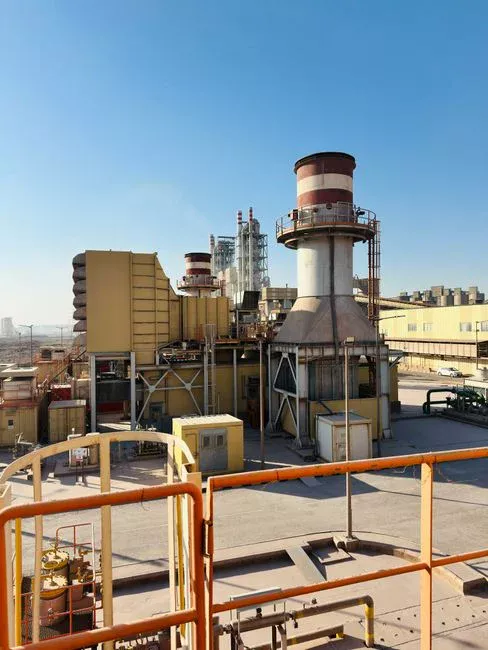
Each pretreatment unit earns its place by removing a specific membrane-fouling risk. A GX-series rotary mechanical bar screen at 2–3 mm aperture captures pulp, seed fragments, and floatables that would otherwise blind the DAF and rag around the membrane aerators. A dissolved air flotation system is the FOG workhorse: size it at 15–25 m³/h per m² of surface loading, dose polymer if the bench jar test confirms an HLB-shifted emulsion, and target >80% O&G removal so the DAF effluent carries <100 mg/L O&G into the bioreactor. Equalization follows with 12–24 h of average flow (extend to 24–36 h if acidulation batches dominate), mechanically mixed and gently aerated to dampen both hydraulic and thermal slugs simultaneously. pH correction to 6.5–8.0 with a automatic chemical dosing for pH correction is mandatory before the MBR; acidulated soapstock at pH 2 will kill biomass within hours, and lime is preferred over NaOH for high-sulfate streams because it co-precipitates gypsum and drops sulfate loading on the biology.
| Unit | Design parameter | Target | Justification |
|---|---|---|---|
| Rotary bar screen | 2–3 mm aperture | <50 mg/L TSS reduction | Protects DAF and membrane aerators |
| DAF | 15–25 m³/m²·h | O&G <100 mg/L, >80% removal | Prevents oil blinding of membrane surface |
| Equalization/cooling | 12–24 h residence | T ≤38 °C, pH 6.5–8.0 | Dampens thermal and FOG slugs |
| pH correction | NaOH or lime dosing | 6.5–8.0 outlet | Protects biomass from acid shock |
The 2023 MBR technology review (S4) notes that submerged configurations tolerate lower flux but offer higher permeability than sidestream — which is exactly why pretreatment quality is non-negotiable in a submerged design. Every kilogram of O&G that slips past the DAF lands on the membrane.
Step 3 — Bioreactor Sizing: MLSS, SRT, HRT
The activated-sludge side of the MBR tank is sized to keep slow-growing oil-degrading species dominant and to suppress filamentous bulking under high FOG. Hold MLSS at 8,000–12,000 mg/L: use the lower end (8,000–9,000) when DAF effluent still carries >200 mg/L O&G, and the upper end (10,000–12,000) when DAF effluent is <100 mg/L O&G. SRT of 25–40 days is the operational lever that out-selects filaments and gives oil-degrading populations time to establish. HRT of 6–10 h translates the 500 m³/day example to an aeration volume of 125–210 m³; check F/M against 0.05–0.15 kg COD/kg MLSS·d, which is the right window for a high-loaded refinery MBR. Aeration sizing must run 1.5–2.0× the calculated standard oxygen demand, because the COD is high and the membrane zone needs sustained DO at 1.5–2.5 mg/L to scour the surface without dislodging the cake.
| Parameter | Design range | 500 m³/day result |
|---|---|---|
| MLSS | 8,000–12,000 mg/L | 10,000 mg/L |
| SRT | 25–40 days | 30 days |
| HRT | 6–10 h | 8 h → 167 m³ aeration volume |
| F/M | 0.05–0.15 kg COD/kg MLSS·d | 0.12 (6,000 / (10 × 167 × 10)) |
| DO in membrane zone | 1.5–2.5 mg/L | 2.0 mg/L |
Step 4 — Membrane Area: Flux, Derating, and Module Count
Net flux for submerged PVDF on soapstock feed is 12–18 LMH; never design above 20 LMH because emulsified oil causes rapid irreversible fouling, and the S2 review's discussion of dispersed and emulsified oil forms corroborates the conservative ceiling. Convert net flux to installed gross flux with a 0.6–0.75 design derating factor that accounts for relaxation, backwash downtime, and progressive fouling between chemical cleans. The membrane area formula is A = Q / (J_net × derating).
Worked example: 500 m³/day = 20,833 L/h. At 15 LMH net and 0.7 derating, J_gross = 10.5 L/m²·h, so A = 20,833 / 10.5 ≈ 1,985 m². Round to 2,000–2,400 m² after adding a 20% future-load margin, because soapstock refineries debottleneck refining capacity and the MBR tends to be the system that gets retrofitted last and paid for first. Translate area into DF-series PVDF flat-sheet membrane modules at 150 m² per cassette: 2,000 m² ≈ 13–14 cassettes plus one redundant for service rotation. The full integrated MBR wastewater treatment system package ties cassette count, blower duty, and permeate pump sizing into a single P&ID deliverable.
| Step | Value |
|---|---|
| Design flow | 500 m³/day = 20,833 L/h |
| Net flux (J_net) | 15 LMH |
| Derating factor | 0.7 |
| Gross flux (J_gross) | 10.5 L/m²·h |
| Required membrane area | ≈ 1,985 m² |
| With 20% margin | ≈ 2,400 m² |
| Cassettes (150 m² each) | 13–14 + 1 standby |
Step 5 — Module Selection: Flat Sheet vs Hollow Fiber for Oily Feed
Flat-sheet PVDF (DF series, 0.1 μm nominal pore size, integrated aeration box) is the better geometry for soapstock: it tolerates hair and fiber fouling that would strand a hollow-fiber bundle, individual cassettes are replaceable without draining the tank, and the integrated aeration box means the membrane scouring blower is specified per cassette — not per plant — which keeps the design honest when the feed shifts. Hollow fiber offers higher packing density and lower capex on consistent municipal-strength feed, but on a soapstock stream with surfactant variability and slug FOG, a single underperforming DAF day can irreversibly clog the bundle. The deciding factor is feed variability, not footprint. Use HydropureWater's module selection guide to size cassette count and blower duty together rather than treating them as separate procurement lines.
| Criterion | Flat sheet (DF series) | Hollow fiber |
|---|---|---|
| FOG tolerance | High | Moderate |
| Surfactant/emulsion tolerance | High | Low–moderate |
| Replaceable in service | Per cassette | Per module |
| Energy (vs sidestream cross-flow) | 10–20× less | 10–20× less |
| Best fit for soapstock | Yes | Only with very stable DAF |
Step 6 — Operability, Cleaning, and Design Margins
The system has to survive the second oil campaign, not just the commissioning report. Specify a 5 min on / 1 min off relax cycle and CIP at 1× per 30–60 days using NaOCl (1,000–2,000 mg/L free chlorine, 2 h soak) followed by citric acid (1,000 mg/L, pH 2.5, 1 h); expect 30–50% flux recovery per clean. Hold the 20% future-load margin on membrane area as a non-negotiable line item — soapstock plants debottleneck the refinery before they debottleneck the effluent plant. Specify one online-standby cassette, dual aeration blowers, and a sludge buffer so waste discharge does not coincide with peak oily load. Set a TMP shutdown alarm at 30 kPa and a chemical-clean trigger at 20 kPa sustained, and trend the data so membrane life can be forecast against actual operating history rather than the OEM curve. The waste-activated sludge downstream is dewatered on a plate and frame filter press for waste-activated sludge sized at 15–20 kg DS/m²·h for the MBR sludge age used here.
Frequently Asked Questions
What net flux should I use for a submerged MBR on soapstock water?
Design at 12–18 LMH net flux for submerged PVDF on acidulated soapstock feed, with 15 LMH as a defensible midpoint. Apply a 0.6–0.75 derating factor to convert net to installed gross flux; never specify above 20 LMH because emulsified oil drives irreversible fouling well before that ceiling.
Is DAF really necessary before the MBR on a soapstock stream?
Yes. Skipping DAF on a 2,000–8,000 mg/L O&G feed sends emulsified oil straight onto the membrane, and CIP frequency drops from once per 30–60 days to once per 3–7 days. Size DAF at 15–25 m³/m²·h and target <100 mg/L O&G in the DAF effluent before the bioreactor.
What MLSS and SRT should I run for a refinery soapstock MBR?
Run MLSS at 8,000–12,000 mg/L and SRT at 25–40 days, with the lower MLSS band when DAF effluent O&G is still >200 mg/L and the upper band when DAF effluent is <100 mg/L. The 25–40 day SRT is what keeps slow-growing oil-degrading species dominant and out-selects filamentous bulking under high FOG loading.
What pH and temperature must the MBR feed be held to?
Hold pH at 6.5–8.0 and temperature at ≤38 °C entering the MBR tank. Standard PVDF flat-sheet membranes tolerate up to 40 °C continuous and 45 °C short-term; below pH 6.0, biomass activity collapses within hours, and above 40 °C, membrane lifetime shortens measurably.
Flat sheet or hollow fiber for a soapstock MBR?
Flat-sheet PVDF is the safer default on soapstock because it tolerates fiber fouling, allows per-cassette replacement, and pairs with an integrated aeration box for membrane scouring. Hollow fiber is acceptable only when DAF performance is verified stable and feed FOG variability is low — conditions that are rare in batch-driven acidulation plants.