Why Soapstock Water Breaks an MBR Without Pretreatment
Soapstock is the heavy aqueous phase drawn off during alkali refining of crude soybean, palm, sunflower, or rapeseed oil, and it carries a contaminant profile that is fundamentally different from generic vegetable oil refinery wastewater. Raw soapstock typically runs 30,000–80,000 mg/L COD, 5–15% FOG, and contains emulsified sodium soaps that hold free fatty acids (FFAs) in stable suspension; after acidulation the pH drops to 1.5–3.0 and the FFA phase separates for sale, leaving a wash water that still carries residual oil droplets below 10 µm. Those sub-10 µm droplets are precisely the size that passes gravity skimmers and blinds a PVDF membrane, and MBR systems are only documented to handle such droplets when the bulk oil has already been removed upstream (MDPI, 2022).
Two operational factors make the stream worse than a typical refinery effluent. First, discharge is batched: the acidulation cycle swings pH from 1 to 11 and temperature from 30 °C to 80 °C within a single shift, and without equalization those swings shock the biomass and accelerate trans-membrane pressure rise. Second, even after biological pretreatment, sunflower and soybean oil MBR pilots required SRT control between 10 d, 40 d, and infinite to keep permeate flux stable, indicating how sensitive the membrane is to residual slowly-biodegradable FFA (Springer, 2023). The practical conclusion: a standard refinery wastewater train sized for whole effluent will foul an MBR within months if soapstock is routed through it without a dedicated guard train.
The Five-Stage Pretreatment Train in 2026
The pretreatment train for edible oil soapstock water ahead of an MBR is ordered so that each stage removes a class of contaminant the next stage cannot handle, and the sequence below can be dropped directly into a PFD for a 2026 retrofit or greenfield line. Skipping any stage shows up as MBR fouling within three to six months of start-up.
- Coarse screening. A rotary mechanical bar screen with 2–5 mm aperture removes gin trash, meal fines, and broken filter cake carried over from upstream refining; this protects the acid dosing pump and prevents plate-pack fouling in the gravity separator.
- Acid/heat splitting. Sulfuric acid is dosed to pH 2.0–3.0 and the stream is heated to 60–80 °C, which converts the sodium soap emulsion back to free fatty acids plus sodium sulfate. The FFA-rich phase is decanted for sale, and the aqueous phase moves forward.
- Free-oil skimming. An API separator or corrugated-plate interceptor with 1–2 h residence removes the bulk free-oil layer by density difference; oil-density-based skimmers are most effective at this stage because the oil phase is now low-viscosity and warm (MDPI, 2022).
- pH and temperature conditioning. Caustic dosing brings the stream back to pH 6.5–7.5, and a heat exchanger cools it to 35–40 °C to match the mesophilic operating window of the downstream MBR. This is the single most important setpoint for protecting nitrifying and oleolytic biomass.
- Dissolved air flotation polish. A dissolved air flotation (DAF) system with 20–30% recycle and 20–80 µm micro-bubbles targets residual FOG ≤50 mg/L and TSS ≤100 mg/L, which is the influent envelope a submerged PVDF MBR can sustain without rapid fouling.
An equalization (EQ) tank runs in parallel to the train, not in series. Sized for 12–24 h HRT with mechanical mixing, vent for H2S if sulfates are present, and pH/temperature/level instrumentation, the EQ tank buffers batch swings so that the screening, splitting, and DAF stages see a steady feed. The same parallel-buffer concept is used in brewery spent yeast water pretreatment before MBR, where batch fermenter discharge is damped ahead of biological polishing.
| Stage | Equipment | Target Influent | Target Effluent | Key Control Variable | Design HRT / Spec |
|---|---|---|---|---|---|
| 1. Coarse screening | Rotary bar screen (GX) | Crude soapstock water | Solids >2–5 mm removed | Aperture setting | Continuous, 2–5 mm |
| 2. Acid/heat split | Acid mix tank + heat exchanger | pH 6–11, 30–80 °C | pH 2.0–3.0, 60–80 °C | H2SO4 dose, temperature | 20–40 min |
| 3. Skim | API / CPI separator | Bulk free oil layer | Bulk oil removed | Weir level, sludge draw | 1–2 h |
| 4. pH/temperature condition | NaOH dosing + cooler | pH 2.0–3.0, 60–80 °C | pH 6.5–7.5, 35–40 °C | Caustic dose, outlet T | 15–30 min |
| 5. DAF polish | DAF | Residual FOG, TSS | FOG ≤50 mg/L, TSS ≤100 mg/L | Recycle ratio, air-to-solid | 20–30% recycle, 5–15 m/h loading |
| EQ (parallel) | EQ tank + mixer | Batch spikes | Steady feed | Level, pH, T | 12–24 h |
Critical Parameters at Each Pretreatment Stage
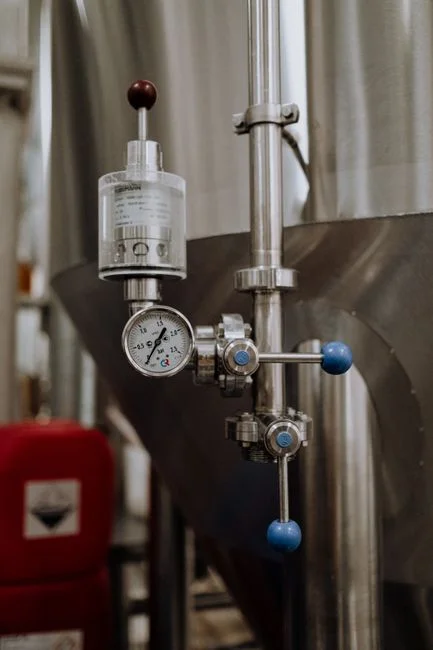
The numbers below are what to write into the control philosophy and P&ID; vague language like "adjust as needed" is useless at procurement. DAF surface loading for oily food-industry wastewater is typically 5–15 m/h on the working envelope of 4–300 m³/h, which is the operating band food-industry DAFs are designed around (per DAF product specification, 2026). The EQ tank should be sized for 12–24 h HRT with a mechanical mixer sized at 4–6 W/m³, a vent sized for H2S if sulfates are present, and continuous pH, temperature, and level instrumentation feeding the plant SCADA.
The pH control loop should be set to 7.0 ± 0.3 with caustic dosed through a PLC-controlled metering pump; an automatic chemical dosing system with redundant pumps and inline pH probe is standard for this duty. FOG at the DAF outlet should be measured by hexane extraction (EPA 1664 method) with a target of ≤50 mg/L to protect the MBR; if the refinery is targeting RO for reuse, the FOG target drops to ≤30 mg/L because free oil fouls RO spacers faster than it fouls an MBR. The SRT of the downstream MBR is the second-order control: pilots on vegetable oil refinery wastewater showed that SRT of 10 d, 40 d, and infinite each gave different flux and microbial profiles, so the SRT must be selected in parallel with the pretreatment envelope, not after (Springer, 2023).
| Parameter | Design Setpoint | Alarm / Trip | Instrument |
|---|---|---|---|
| EQ tank HRT | 12–24 h | Low < 8 h | Level + flow totalizer |
| Acid split pH | 2.0–3.0 | <1.5 or >3.5 | Inline pH probe |
| Acid split temperature | 60–80 °C | >85 °C | RTD + PLC interlock |
| Conditioning pH (to MBR) | 7.0 ± 0.3 | <6.0 or >8.5 | Inline pH + caustic pump |
| Conditioning temperature (to MBR) | 35–40 °C | <30 °C or >43 °C | Outlet RTD |
| DAF surface loading | 5–15 m/h | >18 m/h | Flow + DAF area |
| DAF recycle ratio | 20–30% | <15% or >35% | Recycle flowmeter |
| FOG at DAF outlet | ≤50 mg/L (discharge) / ≤30 mg/L (RO reuse) | >75 mg/L | EPA 1664 grab + online probe |
| TSS at DAF outlet | ≤100 mg/L | >150 mg/L | Online TSS probe |
| MBR SRT | 30–60 d (typical oil refinery window) | <15 d or >80 d | MLSS + wasting pump |
How Pretreatment Protects the MBR Membrane
Each guard stage in the train maps to a specific MBR failure mode, and the mapping is what makes the train defensible in an internal review or HAZOP. Emulsified oil and free fatty acids above ~30 mg/L cause irreversible pore adsorption on PVDF; the MBR review literature consistently identifies fouling as the dominant operating constraint, with chemical cleaning only partially restoring flux (Bagheri & Mirbagheri, 2018, as cited in Springer, 2020). The acid/heat split and skimmer exist specifically to push FFA below that threshold before the membrane sees it.
pH excursions below 5 or above 9 inhibit the nitrifying and oleolytic bacteria the MBR relies on, and the SRT-dependent microbial community in oil-refinery MBRs shifts measurably between 10 d, 40 d, and infinite SRT operation, meaning a feed pH swing that wipes out a fraction of the community takes weeks to recover (Springer, 2023). Temperature below 15 °C slows hydrolysis of long-chain FFA, while temperatures above 45 °C damage PVDF membrane integrity; the 35–40 °C conditioning target sits inside both bounds and matches the mesophilic operating window. TSS spikes above 200 mg/L after poor DAF performance cake the membrane surface and drive CIP frequency to 3–5× normal, which is the single most expensive operating penalty on this duty. Submerged PVDF modules, such as the MBR flat sheet membrane module with 0.1 µm pore size, are engineered for pretreated industrial wastewater — not raw soapstock — and the upstream train is what makes the membrane's stated flux and lifetime ratings achievable. For a packaged skid reference, see the MBR membrane bioreactor system.
Discharge vs. Reuse: Closing the Refinery Water Loop
Whether MBR permeate is a final effluent or a polishing step before reuse determines whether the pretreatment FOG target is 50 mg/L or 30 mg/L, and that single decision flows back into DAF sizing. For discharge only, MBR permeate from a soybean, palm, sunflower, or rapeseed refinery typically meets indirect discharge limits for BOD, COD, and FOG; local regulation drives the final envelope, but the pretreatment train above is sufficient to clear the membrane's fouling envelope and produce a compliant permeate.
For reuse as cooling-tower makeup or low-pressure boiler feed, the MBR permeate is sent through an RO pass; the FOG target ahead of MBR must be tightened to ≤30 mg/L because free oil fouls RO spacers and is not removed by CIP on the RO side. Pairing the RO system downstream of the MBR is the standard closed-loop configuration for refineries targeting freshwater reduction. The reuse concept follows the same logic as the MBR for detergent wastewater engineering guide, where the biological stage is sized to protect a downstream polishing step rather than to meet a final discharge limit on its own.
Frequently Asked Questions
What influent FOG and TSS can a PVDF MBR accept from an edible oil refinery?
A submerged PVDF MBR with 0.1 µm pore size is designed for pretreated industrial wastewater, not raw soapstock. The practical envelope from operating data and DAF performance bands is FOG ≤50 mg/L and TSS ≤100 mg/L ahead of the MBR; above these levels, irreversible pore adsorption and surface caking drive CIP frequency to 3–5× normal.
Why is acid/heat splitting needed before DAF on soapstock water?
Soapstock carries sodium soap emulsions that hold free fatty acids in sub-10 µm droplets, which pass gravity skimmers and blind a membrane. Dosing sulfuric acid to pH 2.0–3.0 and heating to 60–80 °C converts the sodium soap back to free fatty acids plus sodium sulfate, allowing a clean phase separation and a FFA product that can be sold; without this step the DAF is loading against an emulsion, not a free-oil layer, and the FOG breakthrough to the MBR stays above 100 mg/L.
What pH and temperature should soapstock water be at when it enters the MBR?
Condition the stream to pH 6.5–7.5 and 35–40 °C using caustic dosing and a heat exchanger. This window sits inside the mesophilic operating range, keeps nitrifying and oleolytic bacteria active, avoids PVDF integrity loss above 45 °C, and prevents FFA hydrolysis slowdown below 15 °C; the parameter table in the third section gives the alarm and trip setpoints for the control loop.
When is an equalization tank mandatory rather than optional?
An EQ tank is mandatory whenever the refinery discharges soapstock water in batches with pH swings from 1 to 11 and temperature swings from 30 °C to 80 °C. Sized at 12–24 h HRT with a mechanical mixer, H2S-rated vent, and continuous level/pH/temperature instrumentation, the EQ tank dampens batch spikes so the acid split, skimmer, and DAF see a steady feed; without it, the SRT of the downstream MBR drifts as the biomass community chases each shock.