Why Houston Clinics Need a Dedicated Hospital Sewage Treatment Plant
A 30-bed outpatient surgical center in Memorial Hermann's shadow cannot rely on the city interceptor to do its job. Conventional municipal plants were not designed to strip pharmaceutical residues, disinfectants, chemotherapeutics, and radiology rinse water from clinical streams, and per the PMC review on hospital wastewater, most publicly owned treatment works (POTWs) underperform on those recalcitrant organics. Texas regulators agree: the binding framework for a 2026 Houston clinic is EPA's Effluent Limitations Guidelines under 40 CFR Part 460 for medical waste streams, layered with state-level limits in TCEQ 30 TAC §305.41 and §307.5.
The Houston-specific risk profile is what makes a generic national guide fail here. Harris County receives roughly 50 in/yr of rainfall, and hurricane-driven inflow peaks (Harvey 2017 dropped 60+ inches in four days) regularly overwhelm subsurface equipment that was not designed for immersion. The TCEQ's 2024 PFAS action levels now sit at 4–10 ng/L for PFOA/PFOS in hospital effluent, and Harris County's 2024 PFAS sampling initiative flagged several clinic-discharge points for follow-up.
Clinic-strength wastewater is also stronger than domestic sewage. Typical outpatient flow runs BOD 150–500 mg/L, TSS 100–400 mg/L, and carries pathogens plus whatever trace chemotherapeutics, radiographic contrast, or formaldehyde the practice generates. A community septic tank cannot meet those loads, and a city POTW connection still requires pretreatment under TCEQ 30 TAC §305 for pH, fecal coliform, and residual chlorine. The full pretreatment logic is mapped in the Houston hospital wastewater compliance guide.
TCEQ and EPA Effluent Limits Houston Clinics Must Hit in 2026
These are the numbers a clinic owner or procurement engineer can hand to a vendor and an engineer without further translation. They come straight from TCEQ 30 TAC §305.41 and §307.5, with the EPA Multi-Sector General Permit (MSGP) renewal of 2024 layered on top for non-POTW discharges.
| Parameter | Daily limit (TPDES / surface water) | Notes for Houston clinics |
|---|---|---|
| BOD₅ | ≤ 30 mg/L | 7-day average; sample at end of disinfection |
| TSS | ≤ 30 mg/L | Same composite protocol as BOD₅ |
| NH₃-N (summer, May–Oct) | ≤ 3 mg/L | Stricter warm-season limit applies statewide |
| NH₃-N (winter, Nov–Apr) | ≤ 5 mg/L | Relaxed for cold-water toxicity |
| Fecal coliform | ≤ 200 CFU/100 mL | Geometric mean; geometric mean not to exceed 200 in any 30-day period |
| Residual Cl₂ (chlorine systems only) | ≥ 1.0 mg/L after 30-min contact | Dechlorination required if TRC > 1.0 mg/L at outfall |
| pH | 6.0 – 9.0 standard units | Continuous monitoring required for surface discharge |
| PFOA / PFOS (TCEQ 2024 action level) | 4–10 ng/L | Monitoring required for hospitals > 50 beds; advisory for smaller clinics |
| Total residual oxidant (ozone systems) | ≤ 0.1 mg/L at outfall | Quench with UV or carbon before discharge |
Three discharge pathways exist, and choosing the wrong one drives 6–9 months of permit delay. TPDES (Texas Pollutant Discharge Elimination System) applies to surface-water discharge and requires a general or individual permit. OSSF (on-site sewer facility) is TCEQ Chapter 285 for subsurface disposal, viable only for very small flows with favorable soils. POTW (discharge to city sewer) still triggers a pretreatment permit under 30 TAC §305.351 for any clinic generating infectious waste, mercury from dental amalgam, or photographic chemicals. Non-compliance penalties run up to $25,000 per violation per day under Texas Water Code §7.351, so getting the pathway right at scoping is cheap insurance.
The Three Hospital Sewage Treatment Plant Types That Work for Clinics
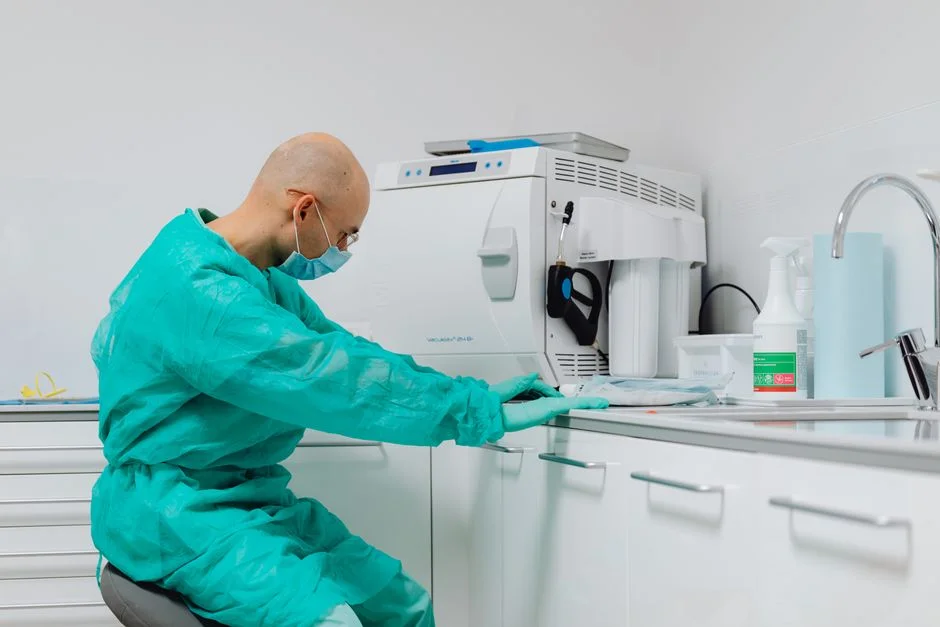
Three technology families actually clear TCEQ review for sub-200-bed Houston clinics. The fourth — conventional activated sludge with a clarifier and chlorine contact tank — is technically permissible but loses on footprint, operator hours, and permit review time.
Type 1 is the buried A/O package plant (WSZ series). Anoxic zone, aerobic contact-oxidation zone, integrated sedimentation, and a disinfection chamber sit inside a single buried steel tank with a 1–80 m³/day capacity. No full-time operator is required, which is why it dominates 1–10 m³/day clinics (dental, single-suite veterinary, small specialty practices) with available land and a low flood-risk siting.
Type 2 is the MBR membrane bioreactor. Activated sludge is followed by submerged PVDF ultrafiltration with sub-1 μm pores, which physically excludes bacteria and most viruses. Capacity runs 10–2,000 m³/day, footprint is roughly 60% smaller than an equivalently rated Type 1, and the effluent is close to reuse quality (BOD < 5 mg/L, TSS < 1 mg/L, turbidity < 1 NTU typical). AUC Group's published Texas project data shows MBR plants gain TCEQ approval in roughly one-quarter the review time of conventional activated sludge — a project-schedule advantage that often outweighs the higher sticker price for clinics on tight opening dates.
Type 3 is the compact ozone disinfection system. Multi-stage filtration plus ozone contact delivers a 99%+ pathogen kill rate, total footprint from 0.5 m², and no liquid-chemical dosing. It is the right pick for dental, veterinary, and small clinics with < 5 m³/day and tight indoor or courtyard siting, especially where the site cannot accept a buried tank.
Constructed wetlands and septic tanks are the two options that get pitched but do not work. Wetlands need 5–10 m² per m³/day of flow — Houston land costs make that uneconomic. Septic tanks provide zero pathogen control and will not satisfy the fecal coliform 200 CFU/100 mL ceiling.
Head-to-Head Comparison: MBR vs. Buried A/O vs. Ozone Package
This is the matrix a clinic procurement engineer screenshots and emails to ownership. Every cell is a 2026 number a vendor should be able to defend in writing.
| Variable | WSZ A/O (buried) | MBR (skid-mounted) | Ozone (compact) |
|---|---|---|---|
| Capacity range | 1–80 m³/day | 10–2,000 m³/day | 0.5–20 m³/day |
| Footprint (m² per m³/day) | 0.8–1.2 | 0.3–0.5 | as low as 0.5 m² total |
| HRT (hydraulic residence time) | 6–8 h | 4–6 h | 1–2 h (with upstream buffer) |
| Effluent BOD guarantee | ≤ 20 mg/L | ≤ 5 mg/L | ≤ 15 mg/L (with pre-filter) |
| Effluent TSS guarantee | ≤ 20 mg/L | ≤ 1 mg/L | ≤ 10 mg/L |
| TCEQ review time (typical) | 6–9 months | 1.5–3 months | 3–5 months |
| CAPEX ($/m³/day installed, 2026) | $8,000–$15,000 | $18,000–$32,000 | $12,000–$22,000 |
| OPEX ($/m³ treated) | $0.25–$0.45 | $0.55–$0.90 | $0.40–$0.70 |
| Operator required | None (monthly visit) | Part-time, 4–8 h/wk | None (monthly visit) |
| Houston flood rating | Buried → excellent | Skid-elevated → excellent | Surface or skid → good if elevated |
| Best fit | 1–10 m³/day, low-flood site, no operator budget | 10–200 m³/day, tight footprint, reuse-quality needed | < 5 m³/day, dental/vet/IVF, no chemicals on site |
Reading the matrix: a 50 m³/day clinic with hurricane-flood exposure should pick the MBR. A 5 m³/day dental office on high ground with no full-time engineer should pick the WSZ. Anything generating chemotherapeutics or needing reuse water for cooling-tower makeup should pick the MBR for its physical membrane barrier.
Sizing a Hospital Sewage Treatment Plant for Your Houston Clinic
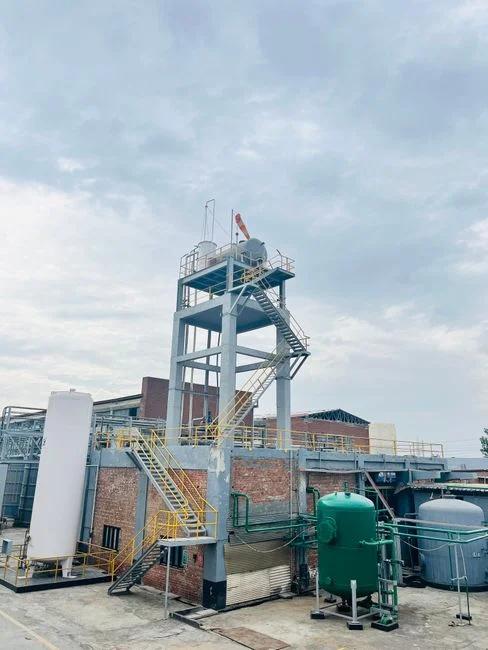
Three steps, all runnable in a spreadsheet before any vendor visit.
Step 1 — Average daily flow. Use 50–100 gal/patient-day for outpatient clinics, 200–300 gal/bed-day for surgical or inpatient, and 80–150 gal/staff-day across shifts. For a 30-bed outpatient surgical center with 20 staff, that is 30 × 100 + 20 × 100 = 5,000 gpd average (≈ 19 m³/day).
Step 2 — Peaking factor. TCEQ design guidance uses 2.5–4.0× for commercial and medical flows. Add another 1.5× for Houston's summer surge when staff空调 condensate and patient volume both peak. 5,000 × 4 × 1.5 = 30,000 gpd peak wet weather (≈ 113 m³/day).
Step 3 — Design safety margin. TCEQ will not accept a unit that runs above 80% of hydraulic capacity at peak; design for 1.5× the calculated peak, which gives a 170 m³/day design flow. That points firmly to MBR, not WSZ, and rules out a compact medical wastewater system.
If a vendor's proposed unit does not list a hydraulic capacity at least 2× your calculated average, walk away — undersized equalization is the single most common TCEQ hydraulic-violation finding.
2026 CAPEX and OPEX: What Houston Clinics Actually Pay
Sticker price is roughly 60% of lifetime cost. The OPEX drivers below are what determines whether the project pencils.
| Cost line | WSZ A/O (50 m³/day) | MBR (50 m³/day) | Ozone (5 m³/day) |
|---|---|---|---|
| CAPEX installed (2026) | $400K–$750K | $900K–$1.6M | $60K–$110K |
| Electricity (kWh/m³) | 0.3–0.5 | 0.6–1.2 (aeration + scour air) | 0.8–1.4 (ozone generator) |
| Membrane / lamp replacement | n/a | $80–$120/m² every 5–7 yr | UV/ozone cell every 3–5 yr |
| Operator labor | ~$0 (monthly service) | ~$8K–$15K/yr part-time | ~$0 (monthly service) |
| 10-yr total cost of ownership | $700K–$1.1M | $1.4M–$2.3M | $110K–$220K |
Texas-specific soft costs add another 8–14% to a project budget: TCEQ permit fees run $1,200–$4,500 for a TPDES general permit, Harris County's industrial waste surcharge applies to any clinic discharging > 25,000 gpd to a POTW, and 2026 EPC labor in the Gulf Coast region is running 6–9% YoY increases (per HydropureWater field data, 2026). For facilities with a chlorine-based disinfection train, an on-site ClO₂ generator cuts the chemical-delivery and HAZMAT-storage line items by roughly 40% versus bulk hypochlorite.
Houston Installation Pitfalls and How to Avoid Them
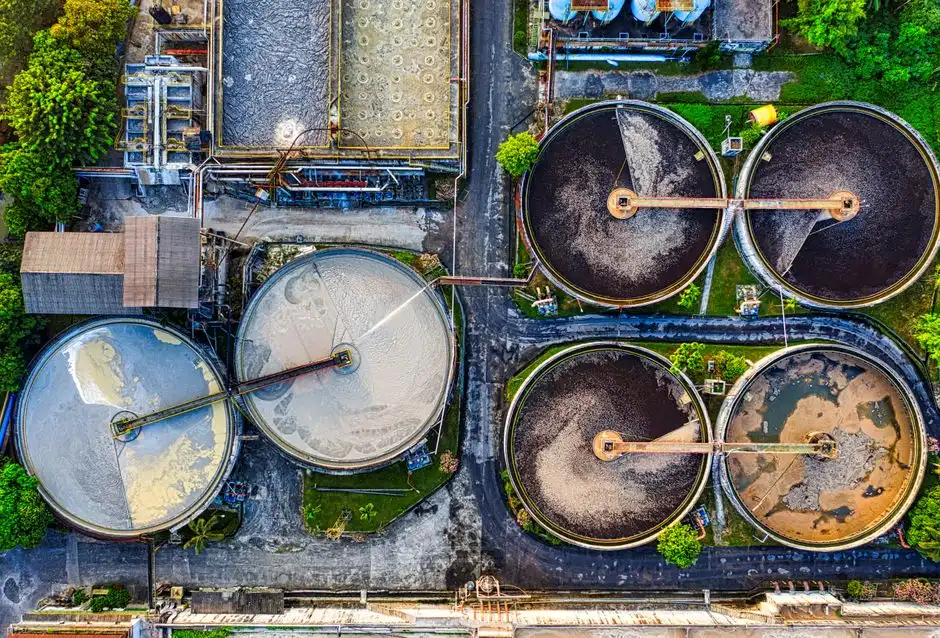
Four failure modes appear on almost every clinic retrofit that misses schedule or budget.
Pitfall 1 — Surface concrete tanks in the 100-year floodplain. Post-Harvey assessments found that over 60% of on-site wastewater equipment in Harris County flood zones had been submerged, contaminated, or destroyed. Require a buried design (WSZ) or skid-elevated design (MBR) with the unit base at or above the 500-year flood elevation.
Pitfall 2 — Skipping the TCEQ pre-application meeting. A formal pre-application meeting compresses the permit timeline by 6–9 months. Vendors who refuse to attend are vendors who have not read the §305 rule recently. Write attendance into the procurement contract.
Pitfall 3 — Undersizing for chemotherapeutic waste. Oncology and infusion clinics generate recalcitrant organics that a standard A/O or MBR will not break down. Add a dedicated equalization tank and an advanced oxidation stage; Fenton oxidation for recalcitrant organics is the most cost-effective polish step at clinic scale (5–50 m³/day).
Pitfall 4 — Membrane fouling from hair, gauze, and lint. Clinic wastewater carries far more solids than domestic sewage. Always specify a rotary mechanical bar screen with 2–3 mm openings upstream of any MBR; without it, membrane replacement cycles drop from 7 years to 3.
Frequently Asked Questions
What is the smallest hospital sewage treatment plant TCEQ will approve for a Houston clinic? TCEQ will approve a packaged OSSF as small as 500 gpd under 30 TAC §285, but any clinic with disinfection, surgical, or imaging waste needs a system meeting §305.41 limits, which effectively starts the practical floor at 1,000 gpd and pushes most buyers toward a 5–10 m³/day package unit.
How long does TCEQ take to approve a packaged sewage treatment plant in 2026? Conventional activated-sludge packages average 6–9 months for TPDES general-permit review; MBR systems typically clear in 1.5–3 months because TCEQ treats the membrane barrier as a built-in disinfection credit, per AUC Group's published Texas project timelines.
Can a clinic discharge to the Houston city sewer without on-site treatment? No, not if it generates infectious waste, mercury dental amalgam, or photographic fixer. The City of Houston Industrial Waste Ordinance and 30 TAC §305.351 require an on-site pretreatment system to hit the POTW's pH 6–9 ceiling and the 200 CFU/100 mL fecal coliform limit at the sampling manhole.
What does a 50 m³/day clinic sewage treatment system cost installed in Houston? In 2026, expect $400K–$750K for a buried A/O package, $900K–$1.6M for a skid-mounted MBR, and roughly $1.4M–$2.3M total over 10 years including membranes, electricity, and operator labor.
Do Houston clinics need to test for PFAS in 2026? TCEQ's 2024 PFAS action levels of 4–10 ng/L for PFOA/PFOS apply as monitoring requirements to hospitals above 50 beds; smaller clinics are advisory only, but procurement teams should still spec an MBR with PAC adsorption so a future rule change does not trigger a retrofit.