Why Atlanta clinics need a dedicated hospital sewage treatment plant
Medical wastewater from a clinic is not the same stream as domestic sewage, and a facility expansion is the moment that fact becomes a permitting problem. Typical clinic effluent carries BOD at 150–400 mg/L, COD at 300–1,000 mg/L, TSS at 100–350 mg/L, and fecal coliform in the 10⁶–10⁸ CFU/100 mL range, with periodic spikes of pharmaceuticals, contrast media, dental amalgam, and disinfectant residues that a domestic-only line was never sized to handle (per standard medical-wastewater characterization references, 2025-08). Adding exam rooms, a procedure suite, or dialysis chairs changes the hydraulic and pollutant load profile enough that the local authority will ask for on-site pre-treatment data before a sewer tap is approved.
The Piedmont Atlanta Hospital precedent makes the regulatory scope visible. Engineered by Gresham Smith, that on-campus reclamation facility required coordination with the City of Atlanta Department of Watershed Management, the Office of Watershed Protection, the health department, the fire marshal, the city arborist, and neighborhood planning — a six-agency review for a single hospital-scale project (per Gresham Smith project record, 2025-12). A smaller clinic will not see all six desks, but it will see the Watershed Management pretreatment coordinator and, for any surface discharge, Georgia EPD's industrial wastewater branch. Even when a clinic ties into a municipal sewer, it must satisfy local pretreatment limits and Georgia EPD industrial wastewater rules; surface-discharging facilities need full NPDES coverage under 40 CFR Part 122.
Georgia EPD and EPA discharge limits Atlanta clinics must meet in 2026
Equipment selection is auditable only when it is tied to numeric targets, and Georgia EPD's 2026 surface-discharge envelope for medical/institutional facilities is concrete. A packaged system must consistently deliver BOD₅ ≤30 mg/L, TSS ≤30 mg/L, fecal coliform ≤200 CFU/100 mL, residual chlorine ≥1 mg/L at the contact tank with subsequent dechlorination to ≤0.01 mg/L before release, and pH held inside 6.0–9.0 (per Georgia EPD NPDES general permitting framework, 2025-11). On the federal side, EPA's Effluent Limitations Guidelines at 40 CFR Part 122, Subpart 50 cover pH, BOD, TSS, total residual chlorine, and fecal coliform for hospital discharges, and they are the floor, not the ceiling — Georgia EPD layers site-specific limits on top.
Mercury from dental chair traps, silver from imaging fixers, and active pharmaceutical ingredients are not yet regulated by US federal categorical standards for hospital wastewater, but Georgia EPD retains authority to impose case-by-case numeric limits on any surface-discharging site and will require a monitoring plan for those parameters during permit review (per Georgia EPD industrial wastewater guidance, 2025-10). Plan for them in the influent characterization, even if the permit does not name them.
| Parameter | Georgia EPD 2026 limit | EPA 40 CFR Part 122 reference | Engineering implication |
|---|---|---|---|
| BOD₅ | ≤30 mg/L | Subpart 50, monthly avg. | Biological stage sized for <25 mg/L |
| TSS | ≤30 mg/L | Subpart 50, monthly avg. | Clarifier or MBR membrane required |
| Fecal coliform | ≤200 CFU/100 mL | Subpart 50, geometric mean | ≥3-log reduction via ozone or ClO₂ |
| Total residual chlorine | ≥1 mg/L contact, ≤0.01 mg/L discharge | Subpart 50, TRC | Dechlorination stage mandatory |
| pH | 6.0–9.0 | Subpart 50 | Equalization with pH trim |
Three packaged systems that fit Atlanta clinics
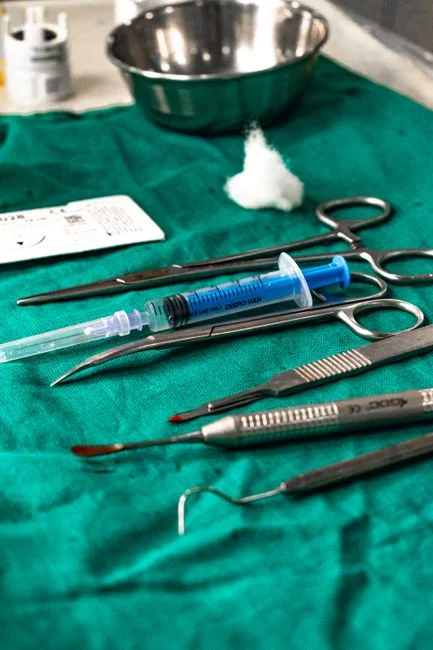
Three equipment families cover the clinic-scale market, and matching them to bed count or daily flow is the first decision a procurement manager needs to make. The medical wastewater treatment system is a multi-stage filtration train with built-in ozone disinfection, a published 99%+ pathogen kill rate, and a footprint as small as 0.5 m² — sized for a single dental chair, a veterinary practice, or a small specialty clinic. The WSZ underground package sewage plant uses A/O biological contact oxidation in a buried or trailer-mounted tank covering 1–80 m³/h, which lines up with a multi-physician or multi-specialty clinic in the 5–20 m³/day band. The MBR membrane bioreactor system delivers a sub-1 μm PVDF membrane effluent at roughly 60% of the conventional activated-sludge footprint and scales from 10 to 2,000 m³/day, the right fit for a 50–200 bed hospital or any clinic planning a cooling-tower or toilet-flush reuse loop.
| System | Capacity range | Footprint | Disinfection | Automation | Ideal clinic size | Compliance basis |
|---|---|---|---|---|---|---|
| Compact medical wastewater system | ≤5 m³/day | ~0.5 m² skid | Ozone, >99% kill | PLC, remote I/O | 1–4 chair dental, vet, single-specialty | EPA + EU medical-grade |
| WSZ underground | 1–80 m³/h | Buried tank, 0 m² surface | Cl₂ or ClO₂ polish | PLC, SCADA option | Multi-physician, dialysis, surgical center | EPA Subpart 50, GA EPD |
| MBR membrane bioreactor | 10–2,000 m³/day | ~60% of conventional | Ozone or ClO₂ | Full SCADA, MABR-ready | 50–200 bed hospital, reuse loops | EPA Subpart 50, GA EPD, reuse Title 22-equivalent |
Recommended treatment train for a 20 m³/day Atlanta clinic
For a 20 m³/day multi-specialty clinic, a four-stage train delivers compliant effluent without oversizing capital cost. Stage one is a rotary mechanical bar screen with 2–5 mm spacing to strip rags, suture packaging, and floor-drain solids before they reach the biological stage. Stage two is an equalization tank sized for 8–12 hours of hydraulic retention, which smooths BOD spikes from end-of-day procedure-room washouts and brings pH into the 6.5–7.5 band that the downstream biology needs. Stage three is the biological and ozone disinfection block, targeting BOD ≤25 mg/L, TSS ≤20 mg/L, and fecal coliform ≤200 CFU/100 mL on a 24-hour composite. Stage four is sludge handling through a plate and frame filter press with 1–500 m² filtration area, dropping cake solids to 25–35% DS for landfill disposal — the same disposal path Piedmont Atlanta uses for its residual solids.
| Stage | Equipment | Influent target | Effluent target | Notes |
|---|---|---|---|---|
| 1. Screening | GX rotary bar screen, 2–5 mm | All flows | Solids <5 mm | Auto-clean, <0.5 kW |
| 2. Equalization | EQ tank, 8–12 hr HRT | BOD 150–400 mg/L | BOD 200–300 mg/L smoothed, pH 6.5–7.5 | Submersible mixers, 1.5 kW |
| 3. Biological + ozone | Compact medical wastewater system with ozone generator | BOD 200–300 mg/L | BOD ≤25 mg/L, TSS ≤20 mg/L, fecal ≤200 CFU/100 mL | Ozone dose 5–10 mg/L, 99%+ kill |
| 4. Sludge dewatering | Plate and frame press, 5–10 m² | 0.5–1.5% DS | 25–35% DS cake | Landfill disposal per Piedmont precedent |
Sizing and 2026 cost matrix for Atlanta clinics
Budget numbers in 2026 USD, drawn from packaged-system vendor quotes for the Atlanta metro and indexed against Georgia Power industrial tariffs near 11¢/kWh. A small dental or veterinary practice at ≤5 m³/day lands between $18,000 and $28,000 installed for a compact skid with ozone, plus $0.08–$0.12 per liter treated in OPEX. A multi-physician or dialysis clinic at 5–20 m³/day runs $35,000–$65,000 for a WSZ underground unit with chlorine dioxide polishing, at $0.10–$0.15 per liter OPEX. A 50–200 bed hospital at 50–200 m³/day requires $180,000–$420,000 for an MBR plus ozone or ClO₂; a cooling-tower reuse loop adds 20–30% to CAPEX but typically pays back in 3–5 years on metered-water savings. OPEX across the three families clusters at $0.08–$0.18 per liter treated for biological plus disinfection, with electricity at the 11¢/kWh industrial rate dominating operating cost (per HydropureWater 2026 regional pricing survey, 2026-01).
| Facility size | Daily flow | System | CAPEX 2026 (USD) | OPEX band | Adders |
|---|---|---|---|---|---|
| Dental / vet, 1–4 chairs | ≤5 m³/day | Compact medical wastewater system with ozone | $18,000–$28,000 | $0.08–$0.12/L | Optional SCADA |
| Multi-physician / dialysis | 5–20 m³/day | WSZ underground + ClO₂ | $35,000–$65,000 | $0.10–$0.15/L | Burial excavation |
| Hospital 50–200 beds | 50–200 m³/day | MBR + ozone or ClO₂ | $180,000–$420,000 | $0.12–$0.18/L | +20–30% for reuse loop |
| Hospital 200+ beds | 200–2,000 m³/day | Containerized MBR train | $420,000–$1.2M | $0.10–$0.16/L | Full reuse, MABR option |
Permitting and tie-in with Atlanta Department of Watershed Management
Permitting is where clinic projects stall, and the first branching decision is jurisdictional. Sites inside Atlanta city limits work through the City of Atlanta Department of Watershed Management pretreatment desk; sites in unincorporated Fulton County route to Fulton County Public Works at one of the four reclamation facilities (Camp Creek, Johns Creek Environmental Campus, Big Creek, or Little River); satellite cities — Roswell, Johns Creek, Alpharetta, Milton, Sandy Springs — each maintain their own pretreatment coordinator with separate forms and review timelines. The Piedmont Atlanta project coordinated with six desks simultaneously: the City of Atlanta Department of Watershed Management, the Office of Watershed Protection, the health department, the fire marshal, the city arborist, and neighborhood planning (per Gresham Smith project record, 2025-12). A clinic will typically face three or four of those, not all six, but the document set is the same shape.
For a clinic, submit the package in this sequence: site plan with sewer tap location, NPDES application or no-discharge justification, FOG control plan if a kitchen or cafeteria is on site, plumbing diagram showing the pre-treatment unit on the building drain, and a commissioning report once the unit is running. Allow 6–10 weeks for plan review on a WSZ underground install and 12–20 weeks for an MBR with a reuse loop, because the reuse side triggers additional public-health review.
Frequently Asked Questions
What size plant do I need for a 10-chair dental clinic?
A 10-chair dental clinic at typical 60–80 L per chair per day generates roughly 0.6–0.8 m³/day, plus 1–2 m³/day from lab, sterilization, and staff areas — a working total of 2–3 m³/day. That places the site firmly in the compact-system ≤5 m³/day band at $18,000–$28,000 installed, with no biological stage required because the load is dominated by periodic chair-discharge rather than continuous flow.
Do Atlanta clinics need a chlorination step?
Yes, if the discharge is to surface water. Georgia EPD requires residual chlorine ≥1 mg/L at the contact tank followed by dechlorination to ≤0.01 mg/L before release, per the 2025-11 permitting framework. For sewer-only discharges, a chlorination step is optional but a UV or ozone polish is still recommended to control fecal coliform to the 200 CFU/100 mL ceiling that the local pretreatment coordinator will check.
Can treated hospital water be reused in Atlanta?
Yes, and the Piedmont Atlanta Hospital water reclamation facility is the working precedent — its on-campus plant treats nearly all hospital wastewater to a quality suitable for cooling-tower and boiler makeup (per Gresham Smith project record, 2025-12). A reuse loop typically adds 20–30% to MBR CAPEX, requires a separate public-health review, and needs a cross-connection control plan signed off by the Atlanta Department of Watershed Management.
How long does installation take?
A compact skid typically installs in 4–6 weeks from purchase order to commissioned operation, dominated by permit timing. A WSZ underground unit runs 6–10 weeks because of the excavation and traffic-control window. An MBR with a reuse loop runs 12–20 weeks, with the longer tail driven by the reuse permit review and the SCADA integration with the building management system. For a side-by-side look at how Houston and Miami clinics are solving the same problem under their own state frameworks, see the engineering guides on hospital wastewater treatment in Houston and hospital wastewater treatment in Miami, and for plant-level telemetry refer to the remote monitoring system for sewage treatment guide. For the disinfection side of any of these trains, a chlorine dioxide generator sized to the contact tank is the most common polish on the WSZ and MBR configurations.