Understanding Package Wastewater Treatment Plants for Johor
A package wastewater treatment plant in Johor, Malaysia, is a compact, pre-engineered, and often modular system designed to treat wastewater from residential, commercial, or industrial sources to meet discharge standards. These self-contained units offer rapid deployment, reduced footprint, and cost-effectiveness for decentralized or smaller-scale applications, crucial for supporting Johor's rapid development and environmental compliance. Unlike traditional site-built facilities that require extensive civil engineering and lengthy construction timelines, package plants are manufactured in a controlled factory environment and transported to the site as ready-to-install modules. This approach minimizes on-site disruption and ensures consistent build quality across various projects in the region.
The core characteristics of these systems include a modular design that allows for scalability, minimal civil work requirements, and automated operation modes that reduce the need for constant manual supervision. For a facility manager in Johor Bahru or an industrial developer in Pasir Gudang, this means a significantly shorter path from project inception to operational status. These plants are engineered to handle various influent types, ranging from standard domestic sewage to complex industrial effluents containing high levels of organic matter or suspended solids. The versatility of a compact underground sewage treatment plant for communities makes it particularly attractive for Johor’s burgeoning residential townships where land value is at a premium.
The relevance of package plants in Johor is underscored by the state's significant investment in water infrastructure. With the Johor government allocating approximately RM184 million for new water treatment plants (WTPs) to meet rising demand, there is a parallel emphasis on managing the resulting wastewater. As the state focuses on securing its water future, decentralized package plants provide a vital solution for areas not yet served by centralized sewer networks. They ensure that new developments can proceed without straining existing infrastructure while maintaining strict adherence to the Environmental Quality Act 1974.
Why Package Plants are Ideal for Johor's Diverse Needs
Package plants reduce the land requirement for wastewater infrastructure by up to 50% compared to traditional field-constructed systems, making them essential for Johor's high-density industrial parks and residential developments. In urban expansion zones like Iskandar Puteri, where every square meter is accounted for, the compact footprint of a package plant allows developers to maximize sellable or usable space. These systems are often designed as vertical or integrated units that consolidate primary, secondary, and tertiary treatment phases into a single footprint, significantly reducing the spatial impact on the project site.
Rapid deployment and scalability are critical advantages in Johor’s fast-paced economic environment. Traditional wastewater treatment plants can take 12 to 24 months to design and construct; in contrast, a package plant can be delivered and commissioned within 8 to 12 weeks. This speed is a decisive factor for industrial projects that must meet tight production deadlines. the modular nature of these systems allows facility managers to start with a capacity suited for initial phases and add modules as occupancy or production volumes increase. This "pay-as-you-grow" model optimizes initial capital expenditure and prevents the inefficiencies of operating an oversized plant at low initial loads.
Cost-effectiveness is achieved through reduced civil works and lower installation overheads. Because the internal components, piping, and electrical systems are pre-installed by the manufacturer, the on-site work is limited to foundation preparation and basic plumbing connections. This leads to a lower total cost of ownership (TCO) for small to medium-scale projects. these plants are designed to meet the stringent Malaysian Environmental Quality (Sewage and Industrial Effluents) Regulations 2009. By ensuring high effluent quality, package plants protect Johor's sensitive water bodies, such as the Johor River and the Tebrau Strait, from contamination, thereby avoiding the heavy fines associated with regulatory non-compliance. Their versatility extends across residential communities, hotels, hospitals, and remote industrial sites, providing a reliable advanced MBR package wastewater treatment system for diverse sectors.
Types of Package Wastewater Treatment Technologies for Johor
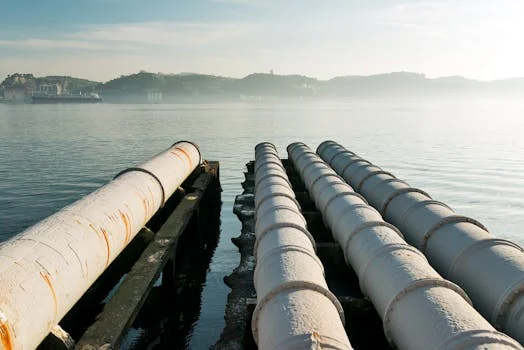
Selecting the appropriate technology for a package plant depends on the influent strength and the required discharge standard, with MBR and A/O processes being the most prevalent in the Malaysian market. Each technology offers distinct advantages depending on whether the primary goal is simple discharge compliance or high-level water reuse. Understanding these differences is essential for procurement specialists who must balance performance with operational complexity.
Integrated Biological Systems (A/O and SBR): The Anaerobic/Anoxic/Oxic (A/O) process is a staple for domestic sewage treatment. Systems like the WSZ series utilize integrated biological contact oxidation to remove organic pollutants. These plants typically handle flow rates between 1 and 80 m³/h, making them ideal for residential clusters or commercial complexes in Johor. The A/O process is highly effective at removing Biochemical Oxygen Demand (BOD) and Chemical Oxygen Demand (COD), often achieving removal rates exceeding 85-90% (HydropureWater field data, 2025). They are favored for their stability and relatively low energy consumption compared to more intensive filtration methods.
MBR (Membrane Bioreactor) Package Plants: For projects requiring superior effluent quality or looking toward water recycling, MBR technology is the gold standard. By combining biological treatment with membrane filtration (typically <0.1 μm), an advanced MBR package wastewater treatment system can produce effluent that is virtually free of suspended solids and pathogens. MBR systems occupy a footprint approximately 60% smaller than traditional activated sludge plants because they eliminate the need for secondary clarifiers. In Johor, where industrial water tariffs are a consideration, MBR systems enable the reuse of treated water for non-potable applications like cooling towers or landscape irrigation, providing a clear path to sustainability.
Dissolved Air Flotation (DAF) for Industrial Pre-treatment: In many Johor industrial applications, particularly in food processing or manufacturing, wastewater contains high levels of Fats, Oils, and Grease (FOG) and Total Suspended Solids (TSS). A DAF package unit serves as an essential pre-treatment step. By introducing micro-bubbles that attach to particles and float them to the surface for skimming, DAF systems can remove over 90% of FOG and TSS. These units often handle capacities from 4 to 300 m³/h and are frequently paired with biological systems to protect downstream membranes or biological cultures from fouling.
| Technology Type | Primary Application | Typical BOD Removal | Footprint Factor | Recommended For |
|---|---|---|---|---|
| Integrated A/O | Domestic Sewage | 85% - 92% | Standard | Residential & Commercial |
| MBR (Membrane) | High-Quality Reuse | 95% - 99% | Ultra-Compact | Sensitive Discharge/Reuse |
| DAF (Package) | Industrial Pre-treatment | Var. (90% FOG) | Compact | Food/Manufacturing Effluent |
Key Considerations for Selecting Your Package Plant in Johor
Compliance with the Malaysian Department of Environment (DOE) Industrial Effluent Regulations 2009 is the primary driver for package plant design parameters in Johor. Before procurement, it is vital to perform a detailed analysis of the influent wastewater characteristics. This includes measuring the average and peak flow rates (ranging from 1 to 2000 m³/day for larger MBR systems), as well as the concentrations of BOD, COD, TSS, and nutrients like Nitrogen and Phosphorus. For industrial projects, the presence of heavy metals or toxic compounds must also be identified, as these may require specialized pre-treatment modules to prevent biological system failure.
The required effluent quality is determined by the discharge point. In Johor, discharging into "Standard A" water catchments requires much stricter limits than "Standard B" areas. A compact underground sewage treatment plant for communities must be engineered to consistently meet these limits under varying load conditions. site constraints play a major role in selection. If the available area is extremely limited, an underground WSZ series system might be the only viable option, as it allows the surface to be used for parking or landscaping. Access for maintenance vehicles and the proximity to power utilities are also logistical factors that can influence the final design and placement of the unit.
Operational and maintenance (O&M) requirements should not be overlooked. While modern package plants are highly automated, they still require periodic sensor calibration, sludge removal, and membrane cleaning (in the case of MBRs). Prospective buyers should evaluate the level of automation offered—PLC-based systems with remote monitoring capabilities can significantly reduce the need for on-site operators, which is a major benefit for remote industrial sites in Johor. Finally, the budget must account for lifecycle costs. A lower initial purchase price may be offset by high energy consumption or frequent chemical requirements, making a detailed MBR system costs, technology, and ROI analysis essential for long-term financial planning.
Package Wastewater Treatment Plant Cost in Johor, Malaysia: What to Expect
The capital expenditure (CAPEX) for a package wastewater treatment plant in Malaysia typically accounts for only 20-30% of the total lifecycle cost, with operational expenses (OPEX) representing the majority of the long-term investment. When searching for "Package wastewater treatment plant in Johor Malaysia price," buyers must understand that quotes are highly customized based on capacity and technology. A basic A/O system for a small residential development will have a vastly different price point than a high-capacity MBR system designed for industrial chemical effluent. The materials of construction—such as carbon steel with epoxy coating versus stainless steel or FRP—also significantly impact the initial cost.
Operational costs are driven primarily by energy consumption, chemical usage for pH adjustment or coagulation, and labor for maintenance. MBR systems, while providing superior water quality, generally have higher energy requirements for membrane scouring compared to simple biological oxidation systems. However, these costs can be mitigated by the potential ROI gained from water reuse. In Johor's industrial sector, where water scarcity can impact production, the ability to recycle 70-80% of process water can lead to a payback period of 3 to 5 years, depending on local water tariffs and discharge fees (HydropureWater field data, 2025). For more context on international pricing benchmarks, facility managers can refer to a detailed guide on package plant costs and specs.
Investing in a high-quality package plant also serves as insurance against regulatory fines. The Malaysian DOE has increased its enforcement of the Environmental Quality Act, and the costs associated with a single non-compliance event can exceed the annual O&M budget of a well-designed plant. a compliant and efficient system enhances corporate sustainability profiles, which is increasingly important for companies operating within Johor's international industrial zones. When evaluating quotes, it is recommended to request a comparing prefabricated wastewater plant manufacturers and ROI breakdown to ensure that the selected system offers the best value over its 15-20 year expected lifespan.
Frequently Asked Questions About Package Wastewater Treatment in Johor
What is a wastewater package plant?
A wastewater package plant is a pre-engineered, modular system that integrates all necessary treatment stages—such as aeration, sedimentation, and filtration—into a single or series of transportable tanks. They are designed for on-site treatment where centralized sewer access is unavailable.
How much does a package wastewater treatment plant cost in Malaysia?
Costs vary widely based on capacity (m³/day) and the complexity of the pollutants. A small domestic system may start at a lower price point, while industrial-grade MBR systems require a higher investment. It is best to consult a detailed guide on package plant costs and specs for current market ranges.
What types of package wastewater treatment plants are best for industrial use in Johor?
Industrial applications typically favor MBR systems for high-quality discharge or DAF units for removing oils and solids. The choice depends on whether the effluent is being discharged to a sewer, a watercourse, or being reclaimed for reuse within the factory.
What are the regulations for wastewater discharge in Johor, Malaysia?
All discharge must comply with the Environmental Quality Act 1974. Specifically, industrial effluents must meet the limits set in the Environmental Quality (Industrial Effluent) Regulations 2009, which define parameters for BOD, COD, TSS, and heavy metals based on Standard A or Standard B locations.
Can package plants be installed underground?
Yes, many systems, such as the WSZ series, are specifically designed for underground installation. This is a common choice for a compact underground sewage treatment plant for communities in Johor to save space and minimize aesthetic impact.
Related Equipment
The following HydropureWater products are engineered for the wastewater challenges discussed above:
- compact underground sewage treatment plant for communities — view specifications, capacity range, and technical data
- advanced MBR package wastewater treatment system — view specifications, capacity range, and technical data
Need a customized solution? Request a free quote with your specific flow rate and pollutant parameters.