Indonesia's Lead Discharge Limit: What PP 22/2021 Actually Says
Under Indonesia's PP 22/2021 (Peraturan Pemerintah No. 22 Tahun 2021) implementing Law 32/2009, the maximum allowable lead (Pb) concentration in industrial wastewater discharged to water bodies is 0.1 mg/L. Effluent discharged to sea carries the same 0.1 mg/L limit. The upstream Class I water quality standard for lead is 0.03 mg/L.
PP 22/2021, which replaced the older PP 82/2001, is the implementing regulation of Undang-Undang No. 32 Tahun 2009 on Environmental Protection and Management (Undang-Undang Perlindungan dan Pengelolaan Lingkungan Hidup). The 0.1 mg/L Pb ceiling sits in Annex VI, Table 1 for discharges to water bodies, and the same value is mirrored in Annex VI, Table 2 for marine discharges. Annex I sets the ambient water quality standard for raw drinking water source protection at 0.03 mg/L Pb, which becomes the practical design target whenever a facility's outfall sits upstream of a PDAM (Perusahaan Daerah Air Minum — regional drinking water utility) intake. KLHK (Kementerian Lingkungan Hidup dan Kehutanan — the Ministry of Environment and Forestry) inspectors will cross-reference your self-monitoring report against these annexes during a routine audit, so the exact citation matters in every compliance memo.
| Parameter | Value | Source |
|---|---|---|
| Pb max — discharge to water body | 0.1 mg/L | PP 22/2021, Annex VI Table 1 |
| Pb max — discharge to sea | 0.1 mg/L | PP 22/2021, Annex VI Table 2 |
| Pb max — discharge to municipal sewer (typical PDAM) | 0.05 mg/L | Negotiated per Annex VII |
| Class I ambient water quality (upstream intake) | 0.03 mg/L | PP 22/2021, Annex I |
| Prior regulation (superseded) | 0.1 mg/L (Pb total) | PP 82/2001 |
Why Lead Is Regulated So Tightly: Toxicity and Bioaccumulation
Lead is a cumulative neurotoxin with no known safe threshold for children, which is why the WHO drinking water guideline sits at 10 µg/L (0.01 mg/L) — ten times stricter than Indonesia's industrial discharge ceiling. A single microgram-per-liter rise in tap water corresponds to a measurable shift in pediatric blood lead levels across exposed populations, and the damage to cognitive development is largely irreversible past early childhood. The 2018–2020 UNICEF/PURE study across Java documented elevated blood lead (≥5 µg/dL) in 35–45% of children living within 2 km of lead-acid battery recycling and primary smelting operations, providing the domestic evidence base KLHK cites when defending the 0.1 mg/L industrial limit.
Bioaccumulation in sediment is the second reason the number cannot be relaxed. A discharge that "meets" 0.1 mg/L still loads roughly 100–500 mg of Pb per cubic meter of receiving water per year, and riverbed sediments act as a long-term reservoir — measured sediment cores downstream of Indonesian battery plants commonly show 200–800 mg/kg Pb versus a background of 20–40 mg/kg. The 90 ppm voluntary paint lead standard mentioned in Indonesian regulation (a reduction from 600 ppm) addresses ingestion exposure for children but does not control the aqueous pathway; both routes converge on the same vulnerable receptor.
Lead Chemistry in Wastewater: Solubility, Speciation, pH Window
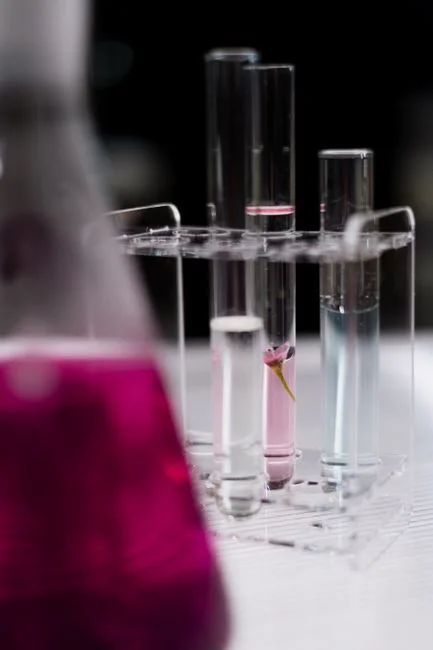
Lead hydroxide, Pb(OH)₂, reaches its minimum aqueous solubility (approximately 1 mg/L as Pb at 25°C in pure water) between pH 9.5 and 10.5, and this narrow window defines the entire hydroxide precipitation strategy. Below pH 9, the species shifts to soluble Pb²⁺ and precipitation efficiency collapses; above pH 11, amphoteric redissolution kicks in and plumbite ions (Pb(OH)₃⁻, Pb(OH)₄²⁻) carry lead back into solution, which is why over-liming actually worsens effluent quality. Engineers designing for 0.1 mg/L Pb target a controlled set-point of pH 9.5–10.0 with ±0.2 unit tolerance.
Reagent choice has direct cost and sludge consequences. Sodium hydroxide (NaOH) produces a denser, lower-volume sludge and is easier to dose accurately via a PLC-controlled chemical dosing system, but chemical cost runs 2–3× higher than lime. Lime (Ca(OH)₂) is the workhorse reagent for high-flow facilities and generates 3–4× more sludge by dry weight due to calcium carbonate coprecipitation, which inflates B3 (Bahan Berbahaya dan Beracun — hazardous and toxic materials) waste disposal costs. Sodium sulfide (Na₂S) precipitates PbS at much lower pH (7–9) and tolerates complexing agents better, but the resulting sludge is sulfide-bearing, classified as a more hazardous B3 waste code, and releases H₂S if the cake acidifies during storage.
Complexing agents are the silent killer of hydroxide precipitation. EDTA, NTA, citrate (common in cleaning rinses), and ammonia (common in copper/zinc plating rinses that often share a sewer with lead processes) bind Pb²⁺ into soluble chelates that resist hydroxide formation even at pH 10. When influent COD (chemical oxygen demand) exceeds 200 mg/L or total nitrogen exceeds 50 mg/L, a single hydroxide stage rarely achieves 0.1 mg/L — the engineering response is either ferric chloride coagulation (which competes for the ligands) or a sulfide polishing stage after the hydroxide clarifier.
| Industry | Typical Influent Pb (mg/L) | Key Interferences | Recommended pH Set-Point |
|---|---|---|---|
| Electroplating (Pb-Sn, Pb-Cu alloys) | 5–200 | Cyanide, EDTA, ammonia | 9.5–10.0 + sulfide polish if NH₃-N > 50 mg/L |
| Lead-acid battery manufacturing | 10–500 | Sulfate, high TDS (total dissolved solids) | 9.0–9.5 (sulfate competes above pH 10) |
| Electronics soldering (Sn-Pb) | 1–50 | Flux organics, fluoride | 9.5–10.0 + fluoride precipitation upstream |
| Primary smelting | 20–300 | Arsenic, zinc, copper | 9.5–10.0 with staged co-precipitation |
Standard Treatment Train for PP 22/2021 Lead Compliance
A treatment train that reliably meets the Indonesian 0.1 mg/L Pb ceiling — and that gives the operator a comfortable safety margin during upset events — has eight functional steps. Sizing is shown for a 50 m³/day plating shop, which is representative of mid-sized operations in Jababeka, Cikarang, and the Surabaya industrial corridor.
- Equalization: 12 m³ tank with mechanical mixing, 6-hour HRT (hydraulic retention time) to smooth pH swings (typical plating influent pH 1–4) and dampen peak flow from batch dumps.
- pH adjustment stage 1: NaOH or lime dosing to pH 9.5–10.0 via inline probe and PID (proportional-integral-derivative) loop. Caustic demand typically 0.8–1.2 kg NaOH per kg of Pb precipitated plus acid neutralization for the carrier stream.
- Coagulation/flocculation: Polymer flocculant (cationic polyacrylamide, 0.5–2 mg/L) plus 5–15 mg/L ferric chloride as coagulant aid when complexing agents are present. Flocculation time 20–30 min at G = 50–80 s⁻¹ velocity gradient.
- Lamella clarification: Surface loading 20–40 m/h on a lamella clarifier for lead-bearing wastewater achieves >95% Pb removal as Pb(OH)₂ sludge. The inclined-plate design keeps the footprint at roughly 30% of an equivalent conventional clarifier — relevant for facilities with tight indoor plant layouts.
- Multimedia filtration: Sand + anthracite + garnet, 1.2 m bed depth, 10–15 m/h filtration velocity. Polishes residual TSS (total suspended solids) and adsorbed lead to <0.5 mg/L.
- Ion exchange polishing (recommended): Strong-acid cation resin in Na⁺ form, 6–8 BV/h (bed volumes per hour) service flow. Drives Pb to <0.05 mg/L, which is the engineered safety margin against sampling variance and influent spikes.
- Sludge dewatering: A filter press for lead sludge dewatering producing 30–45% dry solids cake. For a 50 m³/day plant running at 100 mg/L influent Pb and 95% removal, expect 25–40 kg/day of dry Pb-bearing cake, classified as B3 hazardous waste under PP 101/2014 (the B3 waste management regulation).
- Online continuous monitoring: Anodic stripping voltammetry (ASV) or colorimetric Pb analyzer on the final discharge line, with 4–20 mA signal to the plant SCADA (supervisory control and data acquisition) and 15-minute data logging for the KLHK self-monitoring report.
Capital cost for a 50 m³/day train of this configuration in 2026 sits at roughly USD 180,000–280,000 installed (excluding building and permitting), with operating cost in the USD 1.20–1.80 per m³ range dominated by NaOH consumption and B3 sludge disposal fees — see the battery cell wastewater treatment cost and treatment train benchmark for comparison data and the electronics assembly wastewater treatment cost benchmark for lower-concentration streams. When the influent carries oil or surfactant emulsions (common in stamping and machining rinse water), a DAF (dissolved air flotation) stage is sometimes inserted ahead of the clarifier — see the engineering trade-off discussion in the 2026 DAF vs lamella clarification guide.
Discharge Point Matters: River, Sea, and Class I Catchments
The receiving water body changes the design target, and treating all three as a single 0.1 mg/L problem is one of the most common engineering mistakes in permit applications. Discharge to a river or lake is governed by Annex VI Table 1 at 0.1 mg/L Pb; discharge to sea is Annex VI Table 2 at the same numerical value but with additional marine toxicity considerations (salinity shifts the Pb²⁺/PbCl⁺ speciation and can destabilize effluent quality near the outfall). Discharge upstream of a Class I drinking water intake triggers a self-imposed design target of 0.03 mg/L — matching the ambient standard rather than the discharge limit, because KLHK can revoke the permit if downstream raw water quality is compromised. Discharge to a municipal sewer (often the case for facilities in DKI Jakarta or Bandung that lack on-site treatment capacity) is governed by Annex VII and typically negotiated downward to 0.05 mg/L with the receiving PDAM, which then concentrates the lead in their WWTP (wastewater treatment plant) biosolids and faces its own disposal problem.
| Discharge Mode | Regulatory Pb Limit | Engineering Design Target | Why the Gap |
|---|---|---|---|
| River / lake (water body) | 0.1 mg/L | 0.1 mg/L | Statutory minimum |
| Sea (marine) | 0.1 mg/L | 0.1 mg/L + salinity check | Same number, but speciation shifts |
| Upstream of Class I intake | 0.1 mg/L (discharge), 0.03 mg/L (ambient) | 0.03 mg/L | Permit risk if ambient standard is breached |
| Municipal sewer (PDAM) | Negotiated (Annex VII) | 0.05 mg/L typical | WWTP biosolids liability |
Source Control First: Reducing the Lead Load Before Treatment
The cheapest milligram of lead removed is the one that never enters the wastewater stream, and source control almost always beats end-of-pipe polishing on a cost-per-kg-Pb-removed basis. Closed-loop rinse water recovery on plating lines using drag-out tanks and ion-exchange recirculation cuts the lead-bearing wastewater volume by 70–85% and reduces reagent consumption proportionally — typical payback for a single plating line retrofit in 2026 is 14–22 months at Indonesian chemical and B3 disposal prices. Drag-out reduction through improved rack drainage, stagnant rinse placement, and air-knife blow-off directly lowers the mass loading on the clarifier. Stream segregation is the third lever: lead-bearing rinse water should never share a sewer with cyanide, chromium(VI), or fluoride streams, because mutual interference destroys precipitation efficiency for all three metals. Finally, electronics manufacturers with a choice should evaluate the SAC (tin-silver-copper) lead-free solder alloys; while conversion is capital-intensive, it eliminates the lead wastewater stream entirely and removes PP 22/2021 from the compliance checklist for that process.
Monitoring, Sampling, and Documentation for KLHK Audits
Engineering work is only half the compliance picture — KLHK inspectors will focus on the documentation chain. Compliance samples must be 24-hour flow-weighted composites, preserved with HNO₃ to pH <2, stored at 4°C, and analyzed within the 28-day method hold time for total Pb (per SNI (Standar Nasional Indonesia — Indonesian National Standard) 6989.3 reference methods and APHA (American Public Health Association) Standard Methods 3030/3120). Online continuous monitoring (ASV or colorimetric) on the discharge line is recommended for real-time alarm and SCADA logging, but it does not replace the quarterly third-party accredited lab confirmation that must accompany each Laporan Lingkungan Hidup (six-monthly environmental report) submission.
| Requirement | Specification | Reference |
|---|---|---|
| Sample type | 24-hour flow-weighted composite | PP 22/2021 monitoring provisions |
| Preservation | HNO₃ to pH < 2, 4°C, 28-day hold time | APHA 3030 / SNI 6989.3 |
| Online analyzer | ASV or colorimetric, 15-min log interval | KLHK best-practice guidance (2024) |
| Third-party confirmation | Quarterly, accredited lab (KAN — Komite Akreditasi Nasional) | PP 22/2021 self-monitoring |
| Reporting cadence | Self-monitoring every 6 months (Laporan Lingkungan Hidup) | PP 22/2021 reporting provisions |
Frequently Asked Questions
What is the maximum lead concentration allowed in industrial wastewater in Indonesia? The maximum is 0.1 mg/L total Pb for discharges to water bodies (PP 22/2021, Annex VI Table 1) and the same 0.1 mg/L for marine discharges (Annex VI Table 2). Annex I sets the upstream Class I ambient water quality standard at 0.03 mg/L.
Does the lead limit change if the facility discharges to the sea instead of a river? The numerical limit is identical at 0.1 mg/L, but marine toxicity considerations and salinity-driven speciation shifts require an additional review of the discharge plume model. The local Dinas Lingkungan Hidup (regional environment agency) may impose monitoring conditions beyond the national minimum.
What is the typical pH range for lead precipitation in wastewater treatment? Lead hydroxide reaches minimum solubility between pH 9.5 and 10.5. Operators should target pH 9.5–10.0 with ±0.2 unit control. Above pH 11, amphoteric redissolution forms plumbite ions and effluent quality worsens.
How often must a facility sample its lead discharge for KLHK compliance? PP 22/2021 requires six-monthly self-monitoring reports supported by 24-hour composite samples, with quarterly third-party accredited lab confirmation. Online continuous monitoring is recommended for real-time alarm but does not substitute for the certified lab analyses.
Is lead-bearing sludge from a wastewater treatment plant classified as B3 hazardous waste? Yes. Filter cake from Pb precipitation typically contains 5–15% lead on a dry basis and is classified as B3 hazardous waste under PP 101/2014. It must be sent to a licensed B3 treatment and disposal facility, with manifest documentation retained for at least five years.