
What Battery Cell Manufacturing Wastewater Actually Contains
Cell coating washwater carries 15,000–50,000 mg/L of COD before any recovery step, dominated by N-methyl-2-pyrrolidone (NMP) solvent that carries dissolved PVDF binder and carbon black into the wastewater stream. The five primary streams a designer must handle are: electrode coating washwater (NMP-laden), cell formation cooling water (carrying LiPF6 hydrolysis products), electrolyte filling overflow, dust scrubber blowdown, and stack assembly rinse. Each has a distinct pollutant profile and a distinct cost consequence, which is why no single-technology train can carry a Li-ion gigafactory's wastewater load.
Beyond the organics, the heavy-metal profile is broad: lithium at 50–500 mg/L, cobalt, nickel and manganese in the tens-to-hundreds mg/L range, plus regulated metals — lead, copper, cadmium, chromium and mercury — at trace levels that still trigger categorical pretreatment limits (per Membrion's characterization of battery manufacturing wastewater). Non-conventional pollutants include aluminum, iron, oil and grease, TSS, and pH swings from acid electrolyte spills. Fluoride from LiPF6 hydrolysis (LiPF6 + H2O → LiF + PF5; PF5 + 3H2O → H3PO4 + 5HF) routinely lands at 200–1,500 mg/L and drives the low-pH, high-toxicity classification that forces a dedicated handling train separate from the coating washwater line.
| Stream | Dominant Pollutant | Typical Concentration | pH |
|---|---|---|---|
| Electrode coating washwater | NMP, PVDF binder, COD | COD 15,000–50,000 mg/L | 6–9 |
| Cell formation cooling water | LiPF6 → HF, LiF, PF5 | F⁻ 200–1,500 mg/L | 2–5 |
| Electrolyte filling overflow | LiPF6, DMC/EC solvents | Li 200–800 mg/L, F⁻ 500–2,000 mg/L | 2–4 |
| Dust scrubber blowdown | TSS, Al, Fe, carbon black | TSS 500–5,000 mg/L | 7–9 |
| Stack assembly rinse | Trace metals, oils | Cu/Ni 1–20 mg/L, O&G 50–500 mg/L | 6–8 |
These are the influent conditions the equalization basin, NMP stripper, precipitation train and RO skid must be sized against. The cost numbers in the next section are direct consequences of this profile — particularly the lithium, cobalt and NMP concentrations, because those are the streams with recoverable value.
CAPEX Breakdown by Treatment Stage
A large-scale battery cell plant budgets $35–50 million for wastewater treatment, or 8–12% of total facility capex, with lithium-ion specifically sitting at the top of that range because of the multi-metal removal train (per MarketIntelo 2025-08 data). Lithium-ion facilities average $6–9 per 1,000 gallons operating cost versus $3–5 for other chemistries, and the cost differential is structural — not negotiable. What is negotiable is how the $35–50M gets allocated across process stages, which is the line-item split the SERP currently hides behind the aggregate figure.
| Process Stage | Share of Turnkey Capex | Typical Scope |
|---|---|---|
| Equalization / neutralization | 8–10% | Equalization basin, NaOH/H2SO4 dosing, mixing |
| NMP distillation / recovery | 22–28% | Vacuum distillation column, reboiler, condenser |
| Chemical precipitation (heavy metals) | 18–22% | Multi-stage reactors, lamella clarifier, PLC-controlled chemical dosing for pH adjustment and metal precipitation |
| Biological polishing | 8–12% | Aeration basin, MBR modules, blower skid |
| MF / UF pretreatment | 5–8% | Backwashable membrane racks, CIP system |
| RO / nanofiltration polish | 18–25% | Two-pass RO, energy recovery device, antiscalant dosing |
| Evaporation / crystallization (ZLD) | 10–15% | Mechanical vapor recompression, crystallizer, centrifuge |
Two rules of thumb to defend in front of a CFO. First, advanced multi-technology systems cost 15–20% more upfront than single-tech trains but deliver 35–50% opex savings and 80–90% water recovery (per MarketIntelo 2025-08). Second, the equipment-cost number is not the turnkey number — add 20–30% for site work, civil foundations, electrical, I&C, and EPC markup before it reaches the capex line. A $40M equipment budget realistically lands at $50–52M on the project cost report.
OPEX Drivers: What Makes the $4–9 per 1,000 Gallon Number Move
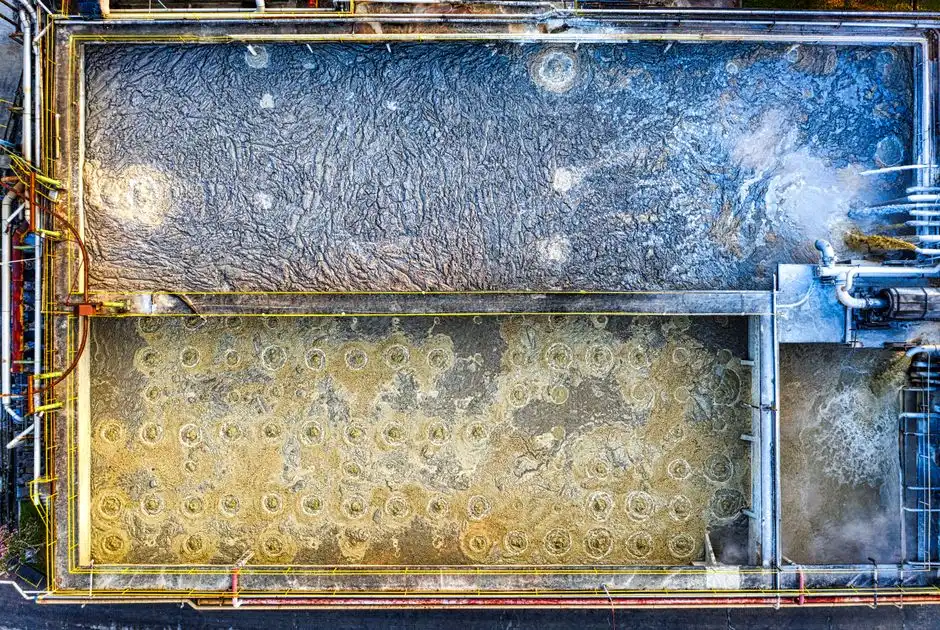
Operating cost for a Li-ion cell plant splits into four buckets: chemicals at 30–40%, energy at 25–35%, sludge disposal at 15–25%, and labor plus maintenance at 10–15%. The biggest single lever most plants underestimate is energy, because NMP distillation is electrically hungry. If the designer skips biological pretreatment and routes raw coating washwater straight to the stripper, the distillation column alone can consume 40–60% of the total electricity the wastewater system draws.
Chemical dosing is the second-biggest lever. Caustic for pH adjustment (NaOH), sulfuric acid for fluoride neutralization, sodium sulfide (Na2S) for mercury and lead precipitation, sulfide or hydroxide for cobalt and nickel, and polymer flocculants for the clarifier all scale linearly with flow. The dose rates that move the OPEX needle are pH correction (typically 1–3 kg NaOH per m³), sulfide dose for divalent metals (0.5–1.5 kg Na2S per m³) and flocculant (2–10 g/m³). Sludge generation runs 0.3–0.8 kg dry solids per m³ treated, and because the cake is heavy-metal classified, disposal lands at $200–500/ton rather than the $30–80/ton non-hazardous rate — this is where a filter press for heavy-metal sludge dewatering at 22–28% dry solids vs. 12–15% for a belt press directly cuts hauling cost. RO polish at 10–15 kWh/m³ and an evaporator at 25–60 kWh/m³ dominate the energy bucket at high-recovery targets; combined, a 90% reuse plant spends roughly 8–12 kWh per m³ treated across the whole train, with reuse rates of 60–80% standard and 90–95% with ZLD add-on.
The Hidden Offset: Lithium, Cobalt and NMP Recovery Revenue
Wastewater is a cost line in the capex model and a credit line in the operating model, and the credit is what the top-of-page SERP answers do not quantify. Industrial-grade metal values for recovered streams in 2026 sit at roughly $13–14/kg for lithium carbonate equivalent, $28–30/kg for cobalt, and $16–17/kg for nickel — these are not LME battery-grade prices, but they are the realistic values for hydroxide or carbonate recovered from washwater via precipitation and selective ion exchange. A 20 GWh cell line generating 5,000–8,000 m³/day of process wastewater carries roughly 40–80 tonnes/yr of recoverable lithium in the washwater, which at $13/kg yields $520K–1.04M/yr in revenue or avoided chemical purchase. Cobalt recovery from the same plant typically lands at 5–15 tonnes/yr, worth $140K–420K/yr at $28/kg.
NMP is the larger credit. Virgin NMP trades at $3,500–5,000/tonne, and a 1 GWh coating line yields 200–600 tonnes/yr of recoverable NMP at 95–99% purity from a well-designed vacuum distillation train, worth $0.7M–3M/yr per GWh. The sum across metals and solvent for a well-designed train is $1.2–2.4M/yr per GWh of installed capacity, which offsets 20–35% of annual wastewater OPEX at current metal and solvent prices. The CAPEX impact is real too: a DAF for TSS and oil/grease removal before biological or membrane polishing protects downstream units and improves NMP phase separation, which directly raises recovery yield.
Comparing Treatment Train Options for 2026 Plant Designs
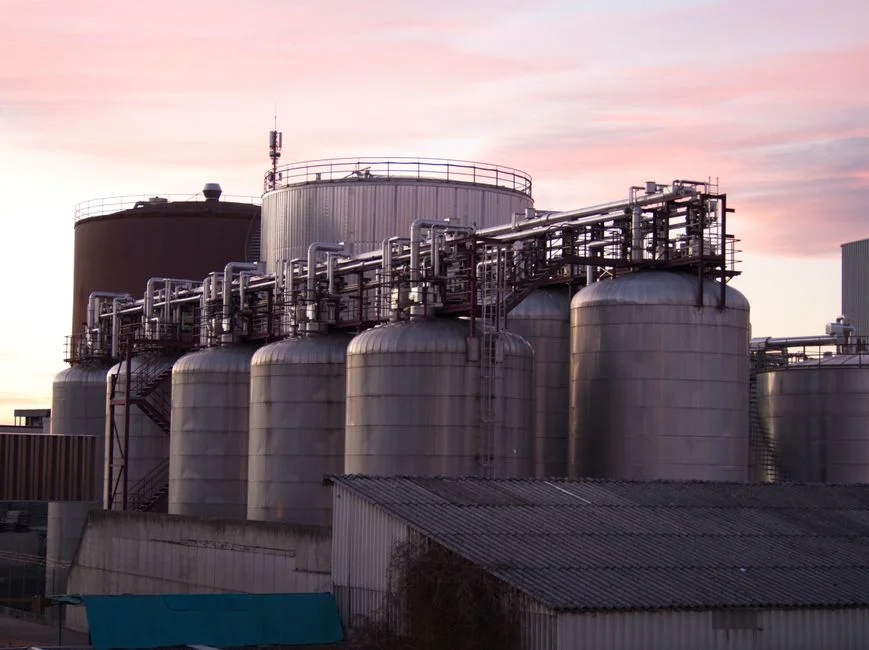
Three process trains cover the realistic design space for a 2026 gigafactory. The choice is not technology preference — it is driven by discharge limit, water-reuse target, and local water tariff.
| Option | Scope | Relative Capex | OPEX ($/1,000 gal) | Water Recovery | Fit |
|---|---|---|---|---|---|
| A — Chemical precipitation only | Equalization + NaOH/H2SO4 + clarifier + sludge handling | Baseline (1.0×) | $3–5 | 0–20% (sewer discharge) | Discharge-to-sewer with relaxed metal limits; no reuse target |
| B — Precipitation + biological + MF/RO | Option A + MBR biological + MF/UF + two-pass RO | 1.15–1.20× | $5–7 | 80–90% | 2026 default for new Li-ion gigafactories; EU export, mixed reuse |
| C — NMP distillation + precipitation + biological + RO + evaporation | Option B + NMP stripper + evaporator/crystallizer | 1.35–1.50× | $7–9 | ≥95% (ZLD) | Water-scarce jurisdictions, ZLD mandate, premium recovery economics |
The decision rule is arithmetic. If the local water tariff exceeds $2/m³ or the jurisdiction mandates zero liquid discharge, Option C is the only defensible answer. Otherwise Option B is the cost optimum: the 15–20% higher capex over Option A pays back in 3–5 years from chemical savings, water reuse credits, and the avoided sewer discharge fees, which together generate the 35–50% opex savings (per MarketIntelo 2025-08). Adding MBR biological polishing for high-COD coating washwater as a separate stage rather than routing raw coating water directly to RO is the single biggest opex hedge against NMP breakthrough into the membrane train.
2026 Regulatory Landscape Driving Treatment Choices
Three regulatory regimes are tightening simultaneously, and the cost optimum shifts depending on which market a plant exports into. In China, GB 30485-2024 (Cement) and the GB/T 31962-style updates for new-energy industries are pushing lithium effluent limits toward <10 mg/L in 2026, with provincial caps in Sichuan and Yichun stricter still. Any cell plant siting in those provinces must engineer for lithium recovery, not just removal. The EU Battery Regulation 2023/1542 mandates recycled-content thresholds of 16% cobalt, 6% lithium, and 6% nickel by 2031, and while the deadline is five years out, the recycled feedstock has to come from somewhere — closed-loop water systems with metal recovery are the cheapest domestic source. In the US, EPA Metal Finishing categorical standards at 40 CFR 433 plus state-level PFAS scrutiny on LiPF6 hydrolysis products frame the compliance baseline, with California DTSC acting as the de facto reference for new permits.
The implication for capex is direct: any 2026 plant planning to export cells into the EU must design for recovery, not just discharge compliance. That shifts the cost optimum from Option A toward Option B or C, and it is the reason 48.6% of the 2025 battery plant wastewater market value sits in Li-ion-specific equipment (per MarketIntelo 2025-08). Plants that defer the recovery train to a future retrofit will pay 25–40% more in brownfield install cost than they would in a greenfield design.
Frequently Asked Questions
How much does wastewater treatment cost for a battery cell manufacturing plant in 2026?
Capital investment runs $35–50 million for a large-scale facility (8–12% of total plant capex), and operating cost runs $4–9 per 1,000 gallons, with lithium-ion facilities averaging $6–9 per 1,000 gallons (per MarketIntelo 2025-08).
Why is lithium-ion wastewater more expensive to treat than other battery chemistries?
The wastewater contains multiple recoverable metals — lithium, cobalt, nickel, manganese — plus NMP solvent and HF from LiPF6 hydrolysis, requiring a multi-stage train (precipitation, biological, RO) that other chemistries do not need. This drives the $6–9 vs. $3–5 per 1,000 gallon gap.
How much revenue can metal recovery offset in wastewater OPEX?
A well-designed train on a 20 GWh cell line recovers roughly $1.2–2.4M/yr per GWh of installed capacity from lithium, cobalt, and NMP, offsetting 20–35% of annual wastewater OPEX at current metal prices ($13–14/kg Li, $28–30/kg Co, $3,500–5,000/t NMP).
Do new 2026 plants need zero liquid discharge?
Not universally, but jurisdictions with water tariffs above $2/m³, sites in Chinese provinces with strict lithium caps, or any plant exporting to the EU under Battery Regulation 2023/1542 should plan for ≥90% recovery. Option C (NMP distillation + biological + RO + evaporation) is the ZLD-capable configuration.
What is the typical payback for adding metal recovery to a battery plant wastewater train?
The 15–20% capex premium for an Option B train over a precipitation-only Option A pays back in 3–5 years from chemical savings, water reuse credits, and recovered metal value, with a 35–50% opex reduction over the system life (per MarketIntelo 2025-08).


