Tea Processing Wastewater Sludge Treatment: 2026 Process & Cost Guide
Tea processing wastewater sludge treatment is best handled with an anaerobic digester (UASB or EGSB) upstream of an aerobic MBBR, followed by a DAF or lamella clarifier and a plate-and-frame filter press for dewatering. Typical sludge yield is 2–6 kg dry solids per ton of finished tea; dewatered cake reaches 22–28% DS on a filter press, and total 2026 CAPEX for a 50 m³/day tea line runs $180K–$420K with OPEX of $0.8–1.6 per m³. This combination directly addresses the polyphenol inhibition that defeats conventional municipal-style activated sludge designs.
Why Tea Processing Sludge Behaves Differently from Municipal Sludge
Tea factory effluent combines four distinct streams — withering condensate, roller/CTC washwater, fermentation liquor, and liquid polyphenol extracts — into a single high-strength wastewater with COD typically between 2,500 and 6,000 mg/L (Spans 2024 review of tea-processing wastewater characterizations). The blend carries 800–1,500 mg/L of total polyphenols and tannins, which are the root cause of nearly every settling failure seen on a tea line.
Tea polyphenols and tannins are bacteriostatic to heterotrophic floc-forming bacteria, and the practical consequence is filamentous bulking and dark, stable foam in the aeration tank. The 2016 Springer study on rice-bran addition documented that high-polyphenol industrial wastewaters routinely push SVI above 200 mL/g, and field experience on black-tea lines in Assam and Kerala confirms the same range (HydropureWater field data, 2025). A conventional circular clarifier with a 1.5 m/h overflow rate simply cannot retain a floc that bulky — it washes over the weir, the recycle stream thickens, and the operator eventually blames the aeration tank when the problem is really in the clarifier.
Quantify the sludge before you size anything: typical biological sludge yield on a tea line is 2–6 kg dry solids per ton of finished black or green tea, derived from the mass balance of COD removal with a ~60% biodegradable fraction and a yield coefficient Y of 0.3–0.45 kg VSS per kg COD removed. A 50 m³/day line making 8 tons of finished tea per day therefore generates roughly 16–48 kg DS/day — small in absolute terms, but the sludge is polyphenol-laden and notoriously hard to dewater.
One advantage is thermal: withering and dryer exhaust condensate leaves the line at 50–70 °C, so a mesophilic anaerobic digester running at 35–37 °C needs little or no external heat input during the cropping season. That single fact shifts the energy balance of the entire sludge train in favor of a UASB-plus-digester layout rather than a purely aerobic system.
The 2026 Process Train: Equalization → Anaerobic → Aerobic → Sludge Handling
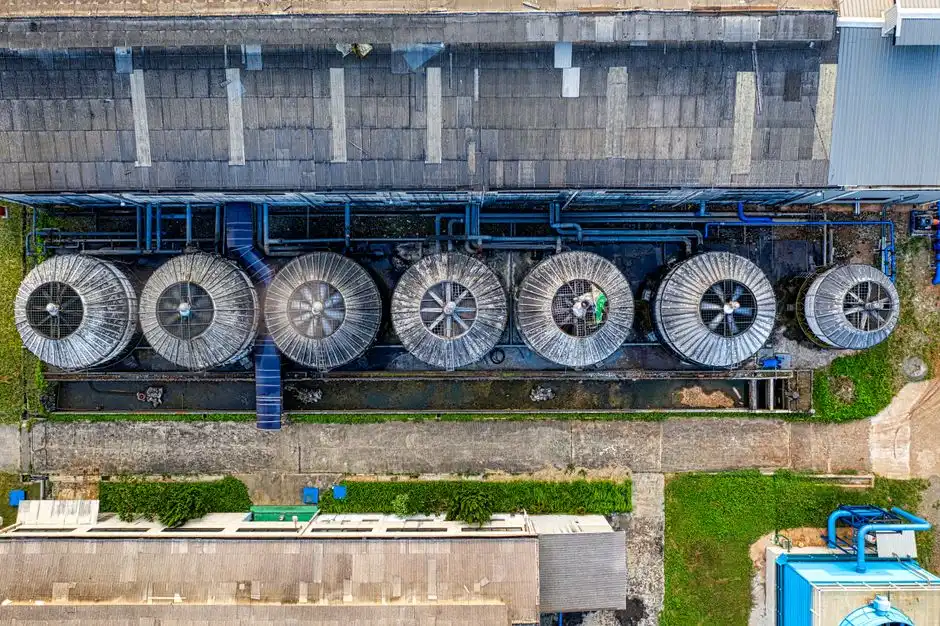
The reference flow diagram for a 50 m³/day black or green tea line in 2026 runs: equalization → oil/grease removal → UASB (or EGSB) → MBBR → DAF or lamella clarifier for primary clarification → sludge thickening → mesophilic digestion → plate-and-frame press. The equalization basin is sized at 8–12 h HRT with a mechanical mixer and pH trim to 6.8–7.4; an oil/grease skimmer is mandatory because the rolling and lubricating steps add floatables that foul any membrane or fine-mesh equipment downstream.
The anaerobic stage should be a UASB or EGSB rather than a CSTR for tea lines — the upflow velocity (0.7–1.5 m/h) keeps the polyphenol-rich sludge in contact with the granular biomass and prevents the washout that plagues a CSTR. Expected COD reduction is 55–70% at 12–18 h HRT for a high-strength black-tea effluent, and the biogas produced (60–70% CH₄) is suitable for direct firing in the factory boiler. For plants that have already seen anaerobic trouble, the EGSB reactor troubleshooting guide walks through the typical failure modes on tea lines.
Aerobic polishing uses an MBBR rather than conventional activated sludge because the attached-growth carriers tolerate the polyphenol toxicity better than a suspended floc. Target MLSS 3,000–4,000 mg/L on the carrier surface, F/M 0.1–0.2 kg COD/kg MLSS·d, and SRT 15–25 days. The SRT must exceed 20 days to retain the slow-growing polyphenol-degrading bacteria — a 7–10 day SRT, typical of municipal designs, washes them out and the residual polyphenols escape into the clarifier. If bulking still appears, the root cause is almost always SRT, and the activated sludge settling problems explained resource identifies the same threshold for polyphenol-rich streams.
The sludge line recycles the thickener supernatant and pressate back to the EQ basin to retain alkalinity and recover the slowly-biodegradable residual COD. For zero-liquid-discharge (ZLD) sites, the RO concentrate is fed to a mechanical vapor recompression (MVR) evaporator, recovering >95% permeate for boiler feed or garden irrigation — the CAPEX jump is roughly $180K–$260K for a 50 m³/day evaporator package, and it is justified only where freshwater cost or discharge fees exceed $1.5/m³.
| Stage | Equipment | Key Sizing Parameter | 2026 Design Value |
|---|---|---|---|
| Equalization | EQ basin, mixer, skimmer | HRT | 8–12 h |
| Anaerobic | UASB or EGSB | HRT / upflow velocity | 12–18 h / 0.7–1.5 m/h |
| Aerobic | MBBR | MLSS / SRT | 3,000–4,000 mg/L / 20–25 d |
| Clarification | DAF or lamella | Overflow rate | 1.0–1.5 m/h (lamella) / 20–40 m/h hydraulic (DAF) |
| Sludge thickening | DAF or gravity thickener | Target DS | 3–5% |
| Dewatering | Plate-and-frame press | Cake DS | 22–28% |
| Optional ZLD | RO + MVR evaporator | Permeate recovery | >95% |
Sludge Thickening and Digestion: Cutting the Cake Before the Press
Thickening cuts the sludge volume reaching the dewatering stage by 60–80%, and that single reduction drives the filter-press cloth area, polymer consumption, and OPEX. A gravity thickener for primary sludge targets 3–5% DS at 8–12 m³/m²·d solids loading, with polymer dose 3–6 g/kg DS of cationic polyacrylamide. On high-polyphenol streams the cationic dose alone may not bridge the floc — a dual-polymer (cationic + anionic, dosed sequentially) reliably reaches target solids where a single-polymer system leaves a cloudy supernatant (HydropureWater field data, 2025).
For waste activated sludge, DAF sludge thickener for polyphenol-bulking activated sludge is the better choice — it achieves 3–5% DS at 20–40 m/h hydraulic loading and an air-to-solids ratio of 0.02–0.05, and it does not require the sludge to settle. That distinction matters because the same floc that washes over a clarifier weir floats beautifully on a DAF blanket; the bubble-attachment mechanism is unaffected by poor compressibility.
Mesophilic anaerobic digestion of the combined thickened sludge runs at 35–37 °C, SRT 20–25 days, and achieves 40–55% volatile solids destruction. A two-stage CSTR/EGSB hybrid handles the seasonal load swings between monsoon crop and dry-season crop that tea factories see, with the CSTR providing buffering and the EGSB providing the high-rate digestion. A PLC-controlled polymer dosing skid on the digester feed line is worth the small incremental CAPEX because it keeps the thickened feed solids stable through the load swings.
Dewatering Decision: Plate-and-Frame Press vs Decanter Centrifuge
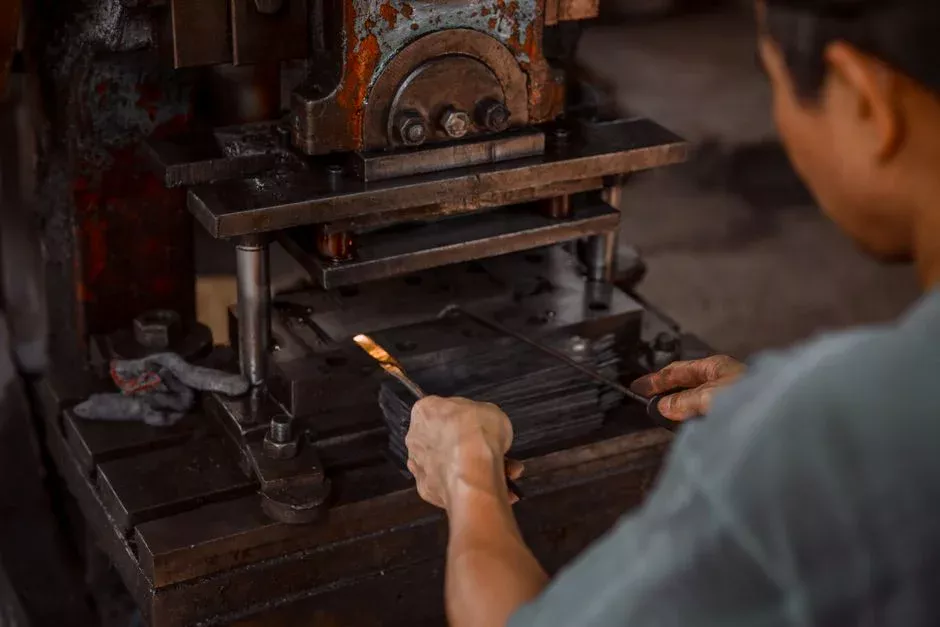
For polyphenol-rich tea-factory biological sludge the choice is between a plate-and-frame filter press for 22–28% cake solids and a decanter centrifuge. A screw press is unsuitable because the soft floc shears through the screen and solids capture drops below 85% — that is the most common equipment mistake on tea lines.
The plate-and-frame press delivers 22–28% DS cake at 2–4 kg DS/m²·h, polymer demand 4–8 kg/t DS, and OPEX dominated by cloth replacement (every 800–1,200 cycles, ~$1.20–$1.80 per m² of cloth) plus operator labor for opening and closing. The decanter centrifuge delivers 16–20% DS at 50–120 m³/h (depending on bowl volume), polymer 6–10 kg/t DS, and OPEX dominated by power for the G-force drive and scroll-flight abrasion from tea-leaf fines — the abrasive fines are the killer, and the scroll typically needs re-welding every 6,000–9,000 hours on a tea line.
Selection rule: use a filter press when the cake is destined for compost or fuel pellets (>22% DS is required for stable handling and transport) and the operator is present for the 20–30 minute cycle; use a centrifuge when the feed is variable, polyphenol-rich, and the line must run unmanned overnight. The 2026 filter press OPEX breakdown and the 2026 decanter centrifuge design guide put full numbers to both options.
| Parameter | Plate-and-Frame Press | Decanter Centrifuge |
|---|---|---|
| Cake solids | 22–28% DS | 16–20% DS |
| Throughput | 2–4 kg DS/m²·h | 50–120 m³/h feed |
| Polymer demand | 4–8 kg/t DS | 6–10 kg/t DS |
| Solids capture | >95% | 90–93% |
| OPEX driver | Cloth, labor | Power, scroll wear |
| Best fit | Compost / fuel pellets, staffed shift | Variable feed, unmanned line |
2026 Cost Bands and Payback Logic for a 50 m³/day Tea Line
CAPEX for a 50 m³/day black/green tea line in 2026 splits roughly as follows in USD: civil works and EQ basin $35K–$60K, anaerobic reactor (UASB/EGSB) $50K–$110K, aerobic MBBR $25K–$55K, DAF or thickener $20K–$45K, dewatering equipment (press or centrifuge) $40K–$110K, and automation and chemical dosing $15K–$35K — totaling $185K–$420K before any ZLD package. Add $180K–$260K for RO + MVR if the site has decided on zero-liquid discharge and faces either freshwater scarcity or a discharge fee above $1.5/m³.
OPEX runs $0.8–$1.6 per m³ treated, dominated by power (35%), polymer (25%), and labor (20%); biogas export to the boiler or hot-water reuse to the withering trough offsets 15–25% of OPEX in well-run installations. Payback is 3.0–4.5 years on (a) avoided municipal sewage surcharges, (b) biogas-fired boiler savings, and (c) water reuse for garden irrigation or boiler feed — and the compliance trigger is the CPCB tea-industry discharge envelope (BOD₅ ≤ 100 mg/L, COD ≤ 250 mg/L, SS ≤ 100 mg/L for discharge to surface water, per the most recent CPCB industry-specific notification) or the EU BAT-AEL for food-and-beverage processing where the plant exports to the EU.
| Cost Block | 2026 CAPEX (USD) | Notes |
|---|---|---|
| Civil + EQ basin | $35K–$60K | Includes oil/grease skimmer |
| Anaerobic reactor | $50K–$110K | UASB or EGSB, GRP or concrete |
| Aerobic MBBR | $25K–$55K | K1/K3 carriers, fine-bubble diffusers |
| DAF / thickener | $20K–$45K | DAF preferred for bulking sludge |
| Dewatering | $40K–$110K | Filter press or centrifuge |
| Automation + dosing | $15K–$35K | PLC, polymer skid, instrument air |
| Total (no ZLD) | $185K–$420K | Excludes land and contingency |
Frequently Asked Questions
What sludge yield should a 50 m³/day black-tea line expect?
2–6 kg DS per ton of finished tea, so 16–48 kg DS/day on a line producing 8 t/day. Use the upper bound when the line runs liquid polyphenol extracts, the lower bound when only withering and roller washwater is treated (HydropureWater field data, 2025).
Why does my activated sludge foam and wash out of the clarifier?
Polyphenols and tannins inhibit floc-forming heterotrophs, push SVI above 200 mL/g, and cause filamentous bulking. Extend the aerobic SRT to 20–25 days to retain the slow-growing polyphenol degraders, and switch the secondary clarifier to a DAF unit if washout persists.
Plate-and-frame press or decanter centrifuge for a 22–25% cake target?
Plate-and-frame press — it consistently delivers 22–28% DS on tea-factory biological sludge, versus 16–20% DS from a decanter. If the cake is going to compost or a fuel pellet, you need >22% DS and the press is the only option without a thermal dryer downstream. See the plate-and-frame filter press for sizing.
What HRT does a UASB need for tea effluent?
12–18 h HRT for high-strength black-tea effluent at 35–37 °C, achieving 55–70% COD reduction and 60–70% CH₄ biogas suitable for boiler firing. The EGSB reactor troubleshooting guide walks through the typical granule washout and short-circuiting failure modes on tea lines.
What CAPEX should I present to management for a 50 m³/day line in 2026?
$185K–$420K USD for the full train without ZLD, or $365K–$680K with a ZLD package. Payback runs 3.0–4.5 years on avoided surcharges, biogas to the boiler, and water reuse, and the design must hit CPCB (BOD₅ ≤ 100 mg/L, COD ≤ 250 mg/L, SS ≤ 100 mg/L for surface-water discharge) or the equivalent EU BAT-AEL envelope to be defensible.
Can a DAF thickener handle the polyphenol-bulking waste activated sludge?
Yes — DAF is the recommended thickening step for tea-line WAS because it does not require the sludge to settle. It reaches 3–5% DS at 20–40 m/h hydraulic loading with an air-to-solids ratio of 0.02–0.05, and the bubble-attachment mechanism is unaffected by the poor floc compressibility that defeats gravity thickeners. See the DAF sludge thickener specifications for a typical 50 m³/day unit.