What Makes Pulp and Paper Wastewater So Hard to Treat Biologically
Pulp and paper mills produce four chemically distinct streams that converge on the biological stage: debarking and wood-yard runoff (low COD, high TSS and color), brown stock washing liquor (high COD 1,500–6,000 mg/L, BOD 600–2,500 mg/L, warm at 50–80 °C), bleach plant effluent (moderate COD but elevated AOX at 10–40 mg/L and intense color from chlorinated lignin derivatives), and recycle paper de-inking wastewater (high volume, variable COD, surfactant and ink load). The composite BOD/COD ratio typically lands at 0.25–0.45, which means the carbon is biodegradable but the kinetics are slower than municipal sewage, where the ratio is usually 0.4–0.6. The reason a three-stage train is now standard is that the biological stage strips COD and BOD efficiently but barely touches AOX, color, or recalcitrant chlorinated organics — those require downstream membrane or advanced oxidation polishing to meet the 2026 EPA Pulp, Paper and Paperboard effluent guidelines and EU IED BAT-AEL ranges (per EPA 40 CFR 430 and EU BAT-AEL 2026 references).
| Mill type | COD (mg/L) | BOD (mg/L) | TSS (mg/L) | AOX (mg/L) | Color (Pt-Co) |
|---|---|---|---|---|---|
| Kraft / sulfate (bleached) | 1,500–3,000 | 600–1,200 | 500–2,000 | 10–40 | 2,000–6,000 |
| Mechanical / TMP / CTMP | 3,000–6,000 | 1,500–2,500 | 800–2,500 | <5 | 3,000–8,000 |
| Recycle (de-inking) | 2,000–5,000 | 800–1,800 | 1,000–3,000 | 2–10 | 1,500–4,000 |
| Unbleached sulfite | 1,500–2,500 | 500–900 | 300–1,000 | <3 | 1,000–3,000 |
The Three Biological Stages Every Modern Mill Uses
A modern pulp and paper biological treatment train is a three-stage cascade: anaerobic for high-rate COD reduction and biogas recovery, aerobic for residual BOD and nutrient removal, and polishing (MBR or tertiary filtration) for AOX, color, and TSS to reuse quality. The anaerobic stage — typically UASB, EGSB, or IC — operates at HRT 6–24 h, mesophilic temperature 30–37 °C, and removes 60–80% of influent COD while producing 0.30–0.40 m³ CH₄ per kg COD destroyed. High-rate anaerobic has been deployed in pulp and paper since the early 1980s, first at recycled paper factories where wastewater volume justified the capital (per Veolia Biothane operating history). The aerobic stage runs at MLSS 3,000–5,000 mg/L, SRT 15–30 days, F/M 0.1–0.3 kg BOD/kg MLVSS·d, and DO 1.5–2.5 mg/L; it consistently achieves 85–95% BOD and 60–75% COD removal when designed properly. The polishing stage — either a submerged submerged MBR system with 0.1–0.4 µm PVDF membranes or a microscreen discfilter — drives TSS below 5 mg/L and residual COD below 100 mg/L, which is the threshold for water reuse in pulp dilution showers. Return activated sludge (RAS) at 50–100% of forward flow is standard, and A2O configurations use internal recycle of 200–400% to drive denitrification. For mills planning a retrofit around an existing aeration basin, the DF series PVDF flat sheet MBR module drops directly into the existing tank and avoids building new civil works.
Anaerobic Reactors: UASB, EGSB, and IC Compared for Paper Mills
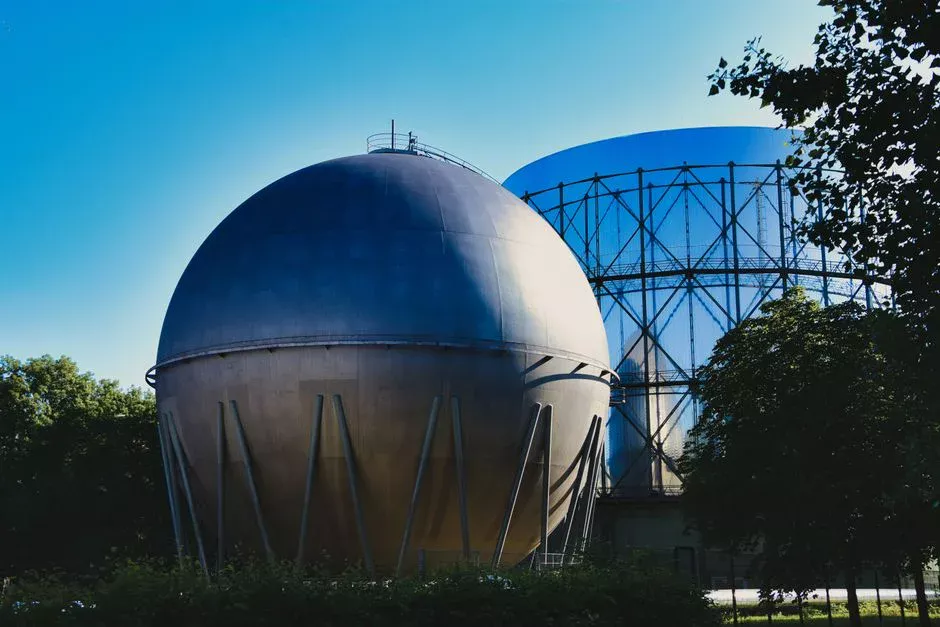
The choice between UASB, EGSB, and IC hinges on influent COD concentration, available footprint, and the mill's tolerance for granular sludge management. UASB reactors run at upflow velocity ~1 m/h, HRT 8–24 h, and organic loading 5–15 kg COD/m³·d — they fit Kraft condensates and moderate-strength streams where simplicity matters more than footprint. EGSB reactors push upflow to 6–10 m/h with HRT 4–8 h and OLR 15–35 kg COD/m³·d, which is the right call for recycle paper mills and mechanical pulping where hydraulic volume is large but tank footprint is constrained. IC (internal circulation) reactors reach 20–40 kg COD/m³·d by recirculating biogas-driven flow through two stages, but they demand a more uniform feed and tighter temperature control. All three need protection from resin acids and chlorophenols, which inhibit methanogens above 50–100 mg/L — meaning equalization and a lamella clarifier for fiber recovery upstream is non-negotiable. Expected methane yield is 0.30–0.40 m³ CH₄ per kg COD removed at 60–80% COD reduction, which at current industrial gas prices (2026) usually pays back the reactor capital in 3–6 years for any mill above 50,000 m³/d of high-COD stream (HydropureWater field data, 2026). Veolia's Biothane track record — operating in recycled paper since the early 1980s — confirms the technology is mature, not experimental (per Veolia Biothane reference list, 2025-11).
| Reactor | Upflow (m/h) | HRT (h) | OLR (kg COD/m³·d) | COD removal | Best fit |
|---|---|---|---|---|---|
| UASB | ~1 | 8–24 | 5–15 | 60–75% | Kraft condensates, moderate COD |
| EGSB | 6–10 | 4–8 | 15–35 | 65–80% | Recycle paper, high hydraulic load |
| IC | 10–30 | 2–6 | 20–40 | 70–80% | Concentrated black liquor sidestreams |
Aerobic Biological Treatment: Activated Sludge, SBR, and A2O
Conventional activated sludge (CAS) remains the workhorse for large continuous Kraft mills because it tolerates diurnal load swings and integrates with existing clarifiers — design windows are MLSS 3,000–5,000 mg/L, SRT 15–30 d, HRT 6–12 h, F/M 0.1–0.3 kg BOD/kg MLVSS·d, DO 1.5–2.5 mg/L in the aeration basin, and RAS 50–100%. Sequencing batch reactors (SBR) compress this into a single timed-fill/decant/oxic/anoxic cycle and reach MLSS up to 6,000 mg/L, which suits small mills and recycle paper operations with batch pulp digester discharges. A2O (anaerobic/anoxic/oxic) is the right call when the mill's 2026 permit requires total nitrogen below 10–15 mg/L — internal recycle of 200–400% from the oxic to the anoxic zone drives denitrification without a separate post-denitrification stage. Across all three configurations, expect 85–95% BOD removal, 60–75% COD removal, and 40–70% TKN removal for CAS, climbing to >80% TKN removal under A2O with the recycle ratios above. Mills that target paper mill wastewater treatment in line with EU BAT-AEL 2026 should not push the aeration tank harder than the windows given here — the better path is a downstream MBR or tertiary filter, which decouples solids retention from hydraulic retention and lets the aeration basin run at lower MLSS without losing effluent quality. For a compact packaged train, the WSZ underground integrated sewage treatment unit bundles equalization, anoxic, oxic, and clarification in one buried shell, useful for small mills with limited plot area.
MBR and Tertiary Polishing: Closing the Loop on AOX, Color, and TSS
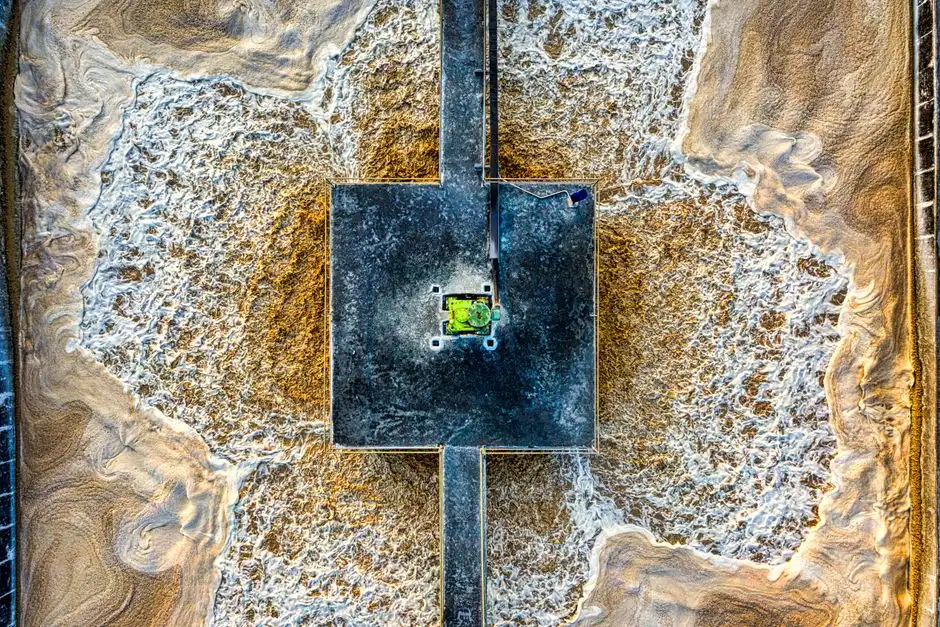
Submerged MBRs couple an activated-sludge basin with 0.1–0.4 µm PVDF ultrafiltration membranes, which delivers TSS below 5 mg/L, residual COD below 100 mg/L, and total removal of dispersed solids and most colloidal color bodies — typically 60–80% color removal in the MBR alone. Footprint is roughly 60% smaller than a CAS + clarifier train at the same load because the membranes eliminate the secondary clarifier and allow MLSS up to 8,000–10,000 mg/L in the bioreactor. The submerged MBR system offered in the DF family integrates coarse-bubble aeration scouring under the membrane stack, which keeps energy use 10–20× lower than external cross-flow designs and makes retrofits into existing aeration basins straightforward. When reuse is the target, an MBR alone is often not enough: residual AOX at 5–15 mg/L and true color above 500 Pt-Co require advanced oxidation (ozone at 5–15 mg/L dose, UV/H₂O₂, or Fenton) to reach 30–60% AOX reduction and 70–90% color removal typical for these systems. Mills that only need TSS polishing for discharge compliance — and are not pursuing reuse — can use a Hydrotech-type discfilter as a cheaper tertiary option; capacities typically run 5–20 m³/m²·h at 10–20 µm aperture. The DF series PVDF flat sheet MBR module is the preferred drop-in when the upgrade is happening inside an existing aeration tank and the engineer wants to avoid civil works. For a deeper process comparison, the MBR vs extended aeration comparison walks through the OPEX/ROI math side by side.
How to Choose the Right Biological Treatment Train in 2026
The selection logic in 2026 is driven by three constraints: influent COD strength, the mill's reuse versus discharge posture, and whether total nitrogen below 10–15 mg/L is in the permit. Lead with EGSB or IC if influent COD exceeds 2,000 mg/L and forward flow is above 20,000 m³/d — the energy recovery from biogas offsets most of the reactor's OPEX and the foot print reduction versus UASB is significant. Pick A2O or SBR with anoxic/oxic cycling if the permit calls for total nitrogen below 15 mg/L; conventional CAS cannot get there without a separate denitrification stage. Add a submerged MBR when the goal is water reuse for pulp dilution showers, dilution of process chemicals, or boiler feed make-up after RO — the reuse water quality thresholds (TSS <5 mg/L, COD <100 mg/L, color <500 Pt-Co) are unreachable with biological stages alone. Add a discfilter or sand filter only when discharge compliance is the goal and reuse is not on the table. Pretreatment is the same regardless of biological choice: a rotary bar screen at 5–10 mm aperture, equalization basin sized at 6–12 h HRT, and a DAF pre-treatment unit for fiber and ink recovery before the biological train. Anaerobic reactors in particular fail fast on suspended solids above 200–300 mg/L, so DAF and the upstream lamella clarifier are not optional. For operational issues that surface after startup, the EGSB reactor troubleshooting guide documents the failure modes (granule washout, sulfate toxicity, temperature drop) that most often derail a 2026 commissioning.
| Driver | Anaerobic | Aerobic | Polishing | Best fit |
|---|---|---|---|---|
| Influent COD >2,000 mg/L, high volume | EGSB or IC | CAS | Discfilter | Recycle paper, mechanical pulp |
| TN <15 mg/L required | UASB | A2O (IR 200–400%) | MBR | Bleached Kraft with strict permit |
| Reuse for pulp dilution | EGSB | SBR or A2O | MBR + AOP | Water-scarce regions, EU BAT-AEL |
| Discharge only, moderate load | Optional | CAS | Sand filter | Small unbleached mills |
Frequently Asked Questions
What is the typical COD and BOD removal across the full biological train? A properly designed anaerobic + aerobic + MBR train removes 95–99% of influent COD (from 1,500–6,000 mg/L down to 50–100 mg/L) and 98–99% of BOD (from 600–2,500 mg/L down to <30 mg/L), meeting the 2026 EPA Pulp & Paper effluent guidelines for both parameters.
How long should the anaerobic HRT be for a recycled paper mill? Plan for HRT 4–8 h in an EGSB reactor at upflow velocity 6–10 m/h, mesophilic 30–37 °C, and organic loading 15–35 kg COD/m³·d; this is the Veolia Biothane operating envelope that has been proven in recycled paper since the early 1980s.
What MLSS and SRT should a pulp mill aerobic basin target? Run MLSS at 3,000–5,000 mg/L (up to 6,000 mg/L in an SBR), SRT 15–30 days, and F/M 0.1–0.3 kg BOD/kg MLVSS·d; these windows deliver 85–95% BOD removal and protect nitrifiers under variable mill loads.
Does biological treatment remove AOX and color from bleach plant effluent? No — the biological train typically removes only 10–30% of influent AOX and 30–50% of true color; reaching EU BAT-AEL 2026 ranges for AOX and color requires an MBR plus advanced oxidation (ozone, UV/H₂O₂, or Fenton) downstream.
Which pretreatment is required before a UASB or EGSB reactor? Bar screening at 5–10 mm, equalization at 6–12 h HRT, and DAF or a lamella clarifier to drop suspended solids below 200–300 mg/L; suspended solids above this range wash out granular sludge and destabilize the reactor within days.