UAE Sulfide Discharge Limit Under Federal Decree-Law 12/2026
Under UAE Federal Decree-Law No. 12 of 2026, sulfide (as S²⁻) discharged to a marine outfall is limited to 1 mg/L as a 24-hour composite sample, with free hydrogen sulfide (H₂S) capped at 0.1 mg/L. Industrial facilities in oil & gas, petrochemical, tanning, and pulp & paper must meet this at the discharge point, with pH held between 6.0 and 9.0.
Federal Decree-Law No. 12 of 2026, in force since January 2026, consolidates and supersedes Ministerial Decree 302/2009 as the primary federal instrument governing industrial marine discharges across all seven emirates. The law's Schedule 3, Table 4 carries the sulfide parameters; the executive regulations issued by the Ministry of Energy and Infrastructure (MoEAT) define the monitoring protocol, while enforcement is delegated to the competent local authority — typically Fujairah Municipality for east-coast outfalls, Abu Dhabi City Municipality (ADM) and the Department of Energy (DoE) for the capital's industrial zone, and Dubai Municipality for Jebel Ali discharges.
The 1 mg/L S²⁻ figure sits inside a wider parameter envelope. Temperature at the outfall must not exceed 35 °C, total suspended solids (TSS) are capped at 50 mg/L, chemical oxygen demand (COD) at 500 mg/L, and five-day biochemical oxygen demand (BOD₅) at 100 mg/L. Total residual chlorine is limited to 0.5 mg/L, and free chlorine to 0.1 mg/L. None of these numbers is decorative — failing any one of them constitutes a permit violation under Article 14 of the new law.
| Parameter | Marine outfall limit | Source clause |
|---|---|---|
| Sulfide (as S²⁻) | 1 mg/L, 24-hr composite | Schedule 3, Table 4, row 17 |
| Free dissolved H₂S | 0.1 mg/L, grab sample | Schedule 3, Table 4, row 18 |
| pH | 6.0–9.0 | Schedule 3, Table 4, row 1 |
| Temperature | ≤35 °C | Schedule 3, Table 4, row 2 |
| TSS | 50 mg/L | Schedule 3, Table 4, row 5 |
| COD | 500 mg/L | Schedule 3, Table 4, row 7 |
| BOD₅ | 100 mg/L | Schedule 3, Table 4, row 8 |
What Changed vs the 2009 Ministerial Decree 302
The 2009 Ministerial Decree 302/2009 regulated sulfide only as total S²⁻ at 1 mg/L and made no explicit reference to free dissolved H₂S. That wording left a workable loophole: a plant holding its effluent at pH 6.5–7.0 could show total sulfide below 1 mg/L on a methylene-blue titration while still releasing 30–60% of its sulfide load as gaseous H₂S into the receiving water and the headspace of any downstream pumping station. The new federal instrument closes that gap by adding a 0.1 mg/L free H₂S cap measured at the discharge point, and by switching monitoring from grab-only to a 24-hour flow-paced composite for S²⁻ plus a concurrent grab for pH and free H₂S (per MoEAT guidance, 2026-Q1).
Penalties have also been restructured. Administrative fines under the new federal environmental law range from AED 100,000 for a first documented exceedance to AED 5,000,000 for repeated or wilful violations, and are levied in addition to a mandatory corrective-action plan with milestone reporting through the MoEAT portal. Article 22 of the Decree-Law gives the competent authority power to suspend operating permits pending verification of compliance, a remedy the 2009 instrument did not carry.
Any facility whose operating permit was issued under Ministerial Decree 302/2009 — essentially every UAE industrial discharger prior to 2026 — must reapply through the local competent authority within 12 months of the Decree-Law's publication, i.e. by January 2027. Practical implication: a tannery beamhouse passing on free H₂S at pH 6.5 today may fail under the new rule even with total S²⁻ comfortably under 1 mg/L, and the redesign of the polishing step should be scoped now rather than after the first inspection cycle.
Where Sulfide Comes From in UAE Industrial Effluent
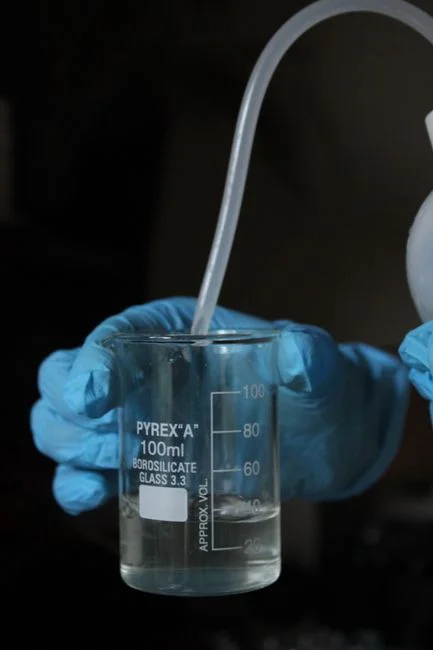
Sulfide loads in UAE industrial wastewater are dominated by refinery sour-water stripper (SWS) overhead condensates, which routinely discharge at 100–500 mg/L S²⁻ and represent the single largest source by mass in the country. Petrochemical desalter wash water follows at 30–120 mg/L S²⁻, while FGD scrubber blowdown from gas-fired power plants in the Al Taweelah and Shuweihat clusters contributes 20–60 mg/L S²⁻ when the limestone slurry absorbs reduced sulphur species from the flue gas. Leather tanneries in the Sharjah Industrial Area run beamhouse and pickling liquors at 80–250 mg/L S²⁻ at pH 8–10, generated when sodium sulphide (Na₂S) and sodium hydrosulphide (NaHS) are used for hair removal.
Other significant sources: Kraft process condensates from pulp and paper mills at 50–300 mg/L S²⁻; food-processing rendering and fermentation streams at 5–40 mg/L S²⁻; textile desizing baths at 10–60 mg/L S²⁻ when sulphur dyes are used; and landfill leachate from sites such as Al Ghusais at 20–80 mg/L S²⁻, an often-overlooked municipal stream that can carry substantial loads into marine outfalls during wet weather.
The engineering pivot of every treatment train is the pH-dependent speciation of sulphides. Above pH 9.2, sulphide exists almost entirely as HS⁻ and S²⁻ ions in solution; between pH 7 and 9.2 the equilibrium mixture contains roughly 50–99% HS⁻; below pH 7 the undissociated H₂S fraction rises sharply and starts partitioning into the gas phase. Treatment chemistry exploits this — keeping sulphide in ionic form for precipitation or biological oxidation, or driving it into the gas phase for stripping — but the same equilibrium means any process upset that drops pH below 7 will release H₂S to atmosphere and risk failing the new 0.1 mg/L free-H₂S cap at the outfall.
Treatment Technologies That Hit 1 mg/L S²⁻
Four technology families consistently deliver the 1 mg/L S²⁻ and 0.1 mg/L free H₂S limits at industrial scale: chemical precipitation, advanced oxidation, air stripping, and biological oxidation. The right choice depends on influent concentration, flow variability, downstream reuse, and local sludge-disposal economics.
Chemical precipitation with ferric chloride (FeCl₃) or ferrous sulphate (FeSO₄) dosed at 2.5–3.5× the stoichiometric ratio of Fe:S²⁻ is the workhorse for influent in the 50–150 mg/L S²⁻ range, achieving 90–95% removal with a sludge yield of 4–6 kg dry solids per kg S²⁻ removed. The iron sulphide sludge is dense, settles rapidly, and is filterable; the spent liquor is clear enough to discharge to a marine outfall in most cases, though it will still fail the new free-H₂S cap if the clarifier supernatant drops below pH 7. Fenton oxidation (H₂O₂ + Fe²⁺ at pH 3–4) reaches 95–99% removal and is used as a polishing step to nail the last 5–10 mg/L; OPEX runs 2–3× precipitation alone because of acid dosing, iron catalyst, and the extra sludge, so it is rarely used as a stand-alone primary stage.
Air stripping in a packed column operated at pH < 6 will remove 80–90% of sulphide as H₂S gas that must be captured in a downstream NaOH scrubber to avoid an odour violation under Federal Law 24/1999 on community nuisance. It is rarely used standalone in UAE refineries because of the stripper height (typically 6–9 m) and the operational discipline needed to keep the off-gas scrubber within pH 11–12. Biological oxidation in an MBBR or activated-sludge train seeded with Thiobacillus and other sulphide-oxidising bacteria delivers 98–99% removal for 20–200 mg/L influent, but it needs a 4–6 week biofilm establishment period and is sensitive to slug loads; most operators therefore put a chemical precipitation stage upstream as a buffer.
Combined DAF + chemical oxidation is the most common UAE refinery configuration for a 50 m³/h stream, delivering COD <500 mg/L and S²⁻ <1 mg/L in the final effluent with a footprint of roughly 60–80 m² including chemical storage. An industrial DAF unit for sulfide-laden wastewater typically anchors the front end of this train, with FeCl₃ dosed in-line ahead of the flotation cell.
| Technology | Removal efficiency | Influent range (mg/L S²⁻) | OPEX ($/m³) | CAPEX scale (50 m³/h) | Footprint | Key drawback |
|---|---|---|---|---|---|---|
| FeCl₃ precipitation + DAF | 90–95% | 50–150 | 0.25–0.40 | $120K–$180K | Small | Iron sludge disposal |
| Fenton oxidation (H₂O₂/Fe²⁺) | 95–99% | 10–80 | 0.55–0.85 | $90K–$140K | Small | Acid use, low pH |
| Air stripping + NaOH scrubber | 80–90% | 50–300 | 0.30–0.50 | $180K–$260K | Tall (6–9 m) | Odour risk, off-gas handling |
| MBBR biological oxidation | 98–99% | 20–200 | 0.20–0.35 | $140K–$220K | Medium | 4–6 wk startup, shock sensitivity |
| DAF + Fenton polishing | 99%+ | 100–300 | 0.45–0.70 | $210K–$320K | Medium | Two-stage OPEX |
Designing a Compliant Treatment Train: Step-by-Step
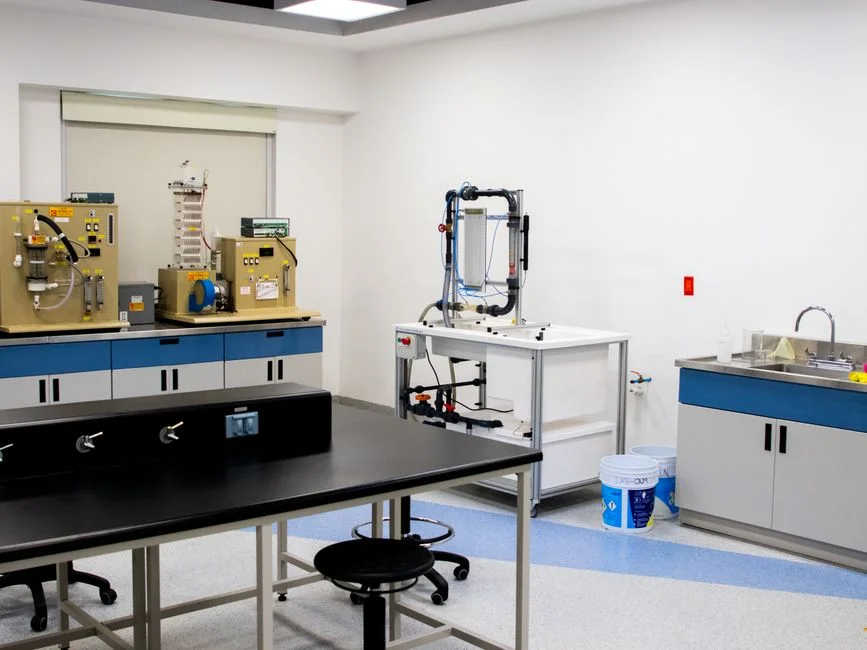
- Equalisation and pH pre-conditioning. Balance flow in a 6–12 hour HRT basin and dose NaOH to lift pH to 9.5–10. Holding the stream in this band keeps sulphide as HS⁻/S²⁻ and prevents H₂S off-gassing in the collection system, which would otherwise corrode concrete and trigger community nuisance complaints. A PLC-controlled FeCl₃ and Fenton dosing skid handles the NaOH/FeCl₃ logic on pH and ORP probes.
- Chemical precipitation. Dose FeCl₃ at 2.5–3.5× stoichiometric into a rapid-mix tank with 1–3 minutes contact time, then send the flow to a lamella clarifier for iron-sulfide sludge settling or directly to a DAF cell. Target supernatant S²⁻ of 5–15 mg/L; this is the bulk-removal stage.
- Polishing. For influent >100 mg/L or where the clarifier overflow still sits above 5 mg/L S²⁻, add an MBBR with sulphide-oxidising media (specific surface area 750–1,200 m²/m³) sized for 6–8 hr HRT, or a Fenton polishing train if the site already runs at low pH. Fenton is preferred when the operator needs <1 mg/L total S²⁻ in the final effluent rather than just meeting the cap with margin.
- Final pH correction and flow metering. Re-acidify with H₂SO₄ or CO₂ to pH 7.5–8.5 to fall inside the 6.0–9.0 envelope, and install a calibrated Parshall flume or magnetic flow meter at the marine outfall sampling port for the 24-hr composite auto-sampler.
- Online monitoring and reporting. An online H₂S analyser (e.g. ATI Q45H or equivalent gas-sensing membrane probe) feeds a 4–20 mA signal to the DCS, with the 24-hr composite auto-sampler refrigerated at ≤4 °C and preserved with NaOH to pH > 11. Sample reports are uploaded to the MoEAT self-monitoring portal on a quarterly cadence.
CAPEX benchmark for a 50 m³/h fully fitted train including civils, dosing skids, lamella clarifier, MBBR, analyser house, and commissioning lands in the $180K–$320K installed range in 2026 UAE, with OPEX of $0.25–0.55 per m³ depending on sludge-disposal routing. For a refresher on effluent COD/BOD interactions that govern the parallel organic envelope, the global BOD effluent limits for industrial plants guide covers the same parameter family in other jurisdictions.
Cost and Compliance Checklist for 2026
FeCl₃ at 3× stoichiometric on a 50 mg/L S²⁻ stream consumes roughly 2.1 kg FeCl₃ per kg S²⁻ removed, equating to $1.10–1.40 per kg at UAE 2026 spot prices for 40% liquid FeCl₃. Total treatment cost — chemicals, power (mainly for aeration and DAF recycle pump), sludge dewatering, and consumables — lands at $0.30–0.65 per m³ treated for a 50 m³/h plant, with sludge disposal contributing 30–40% of OPEX in most UAE installations.
A five-point compliance checklist for any EHS manager preparing for 2026 inspections:
- Confirm the operating permit now references Federal Decree-Law 12/2026, not Ministerial Decree 302/2009.
- Install or validate an online S²⁻ analyser at the marine outfall with a grab-sample validation port.
- Verify 24-hour flow-paced composite sampling protocol per APHA 4500-S²⁻ D, with HDPE bottles preserved to pH > 11 with NaOH.
- Train operators on pH control — pH excursions below 7 are the single most common cause of free-H₂S failures.
- File the quarterly self-monitoring report through the MoEAT portal, with raw data and chain-of-custody attached.
Non-compliance fines run AED 100,000–5,000,000 with potential operating suspension, and any single violation event wipes out OPEX savings of roughly $0.10/m³ on a 50 m³/h stream within hours. The economics of designing to the limit, not just to the median, are unambiguous. For comparison with the parallel cyanide regime that hits metal-finishing plants in the same supply chain, the India cyanide discharge limit guide covers a related heavy-metal parameter family. Engineers already familiar with the Egyptian Law 4/1994 framework can read the parallel BOD treatment-train logic in the Egypt BOD and effluent standards guide.
For asset-protection context on keeping the analyser and dosing system online, the predictive maintenance framework for 2026 wastewater plants lays out the digital-side controls that prevent the drift failures that cause most compliance excursions.
Frequently Asked Questions
What is the exact sulfide discharge limit in the UAE for 2026? The marine outfall limit is 1 mg/L S²⁻ measured on a 24-hour flow-paced composite sample, with a separate cap of 0.1 mg/L on free dissolved H₂S measured by grab sample, both taken at the discharge point under Federal Decree-Law No. 12 of 2026, Schedule 3, Table 4.
Does this limit apply to inland discharges too? Yes. The federal law covers marine and inland discharges alike, but emirate-level regulations tighten the limits further for non-marine outfalls: 0.5 mg/L S²⁻ is the typical inland and reuse limit applied by Dubai Municipality and the Abu Dhabi Department of Energy, and reuse for irrigation may require 0.1 mg/L S²⁻ with no detectable free H₂S.
How is sulfide sampled and analysed for compliance reporting? A flow-paced 24-hour composite is collected in HDPE bottles and preserved with NaOH to pH > 11 to fix sulphide as S²⁻; the bottle is refrigerated at ≤4 °C and analysed within 24 hours by the methylene blue method (APHA 4500-S²⁻ D). Free H₂S is measured on a concurrent grab sample by gas-sensing electrode or iodometric titration.
What is the cheapest technology to meet the 1 mg/L limit? For influent up to 150 mg/L S²⁻, FeCl₃ precipitation followed by a DAF or lamella clarifier is the lowest-OPEX route at $0.25–0.40 per m³. Fenton oxidation is used as a polishing step only when the clarifier overflow cannot be brought below 5 mg/L economically.
Does the limit apply to oil and gas produced water? Yes. Produced water discharged to a marine outfall carries the same 1 mg/L S²⁻ cap, and Abu Dhabi City Municipality additionally requires total dissolved sulphide below 0.5 mg/L in cooling-tower reuse loops, with continuous online H₂S monitoring and quarterly third-party verification under the ADM produced-water protocol issued in 2025-09.