Why Glass Manufacturing Wastewater Is a Hard Problem for Membranes
Glass plant wastewater is not a generic industrial stream — the influent chemistry blocks the two workhorse solutions (sodium-cycle softening and standalone RO) that engineers reach for first. Cutting, grinding, and washing release suspended silica at 200–2,000 mg/L and drive total hardness to 400–1,500 mg/L as CaCO₃, while organic cutting fluids and lubricants push COD into the 150–800 mg/L range. Where HF acid polishing is used for high-end flat glass or fiber-optics, residual fluoride runs 5–50 mg/L, and spent cerium-oxide or zircon polishing slurries add colloidal solids that defeat conventional clarification.
The failure mode is predictable: a sodium-cycle softener strips Ca²⁺ and Mg²⁺ but leaves silica untouched, and colloidal silica passes straight through to the RO membranes, where it forms a gel layer that no clean-in-place cycle fully removes. Standalone RO is the other reflex — but at 15–80 bar it rejects monovalent salts the plant never needed to remove, tripling energy draw for a permeate that is then blended back up for cooling-tower and scrubber makeup. What the stream actually demands is a 200–500 mg/L TDS permeate with divalent ions dropped by 95–99%, which is exactly the window nanofiltration occupies.
Antifouling UF work published in 2024 by Springer on acrylic-fiber/nanochitosan nanocomposite membranes reported sustainable flux of 150–183 L/m²·h at 4 bar for a comparable industrial stream (Springer, 2024-04) — a useful baseline when you size the upstream UF stage. The takeaway for a procurement officer is that the right train is UF for silica/colloid guard, NF for divalent and COD rejection, and RO only if boiler makeup demands it.
Where Nanofiltration Sits Between UF and RO
Nanofiltration occupies a defined pore-size window of 0.5–2 nm, between ultrafiltration (0.01–0.1 μm) and reverse osmosis (a dense layer below 0.001 μm). That geometry is what gives NF its signature selectivity: 95–99% rejection of divalent ions (Ca²⁺, Mg²⁺, SO₄²⁻) through a combination of size exclusion and Donnan charge effects, against only 20–80% rejection of monovalent ions (Na⁺, Cl⁻). COD and color are removed in the 80–95% range by the same surface-charge mechanism.
Operating pressure is the second axis that makes NF the right fit. NF runs at 4–30 bar, compared with 1–4 bar for UF (the Springer 2024-04 study operated its UF stage at the 1–4 bar end) and 15–80 bar for RO. That pressure window halves the specific energy of an equivalent RO polishing step and is the main reason NF is preferred when the reuse target is cooling-tower and scrubber makeup, not ultrapure boiler feed.
The decision boundary is sharp: NF is not a replacement for RO when permeate TDS must drop below 50 mg/L, but it is the correct polishing step when 200–500 mg/L permeate is acceptable. The same boundary holds for fluoride — standalone NF will leave 30–60% of fluoride in the permeate, so HF-bearing streams need either a tighter RO polish or a sacrificial alumina/calcium contactor upstream.
| Parameter | Ultrafiltration (UF) | Nanofiltration (NF) | Reverse Osmosis (RO) |
|---|---|---|---|
| Pore size / layer | 0.01–0.1 μm | 0.5–2 nm | <0.001 nm (dense) |
| Operating pressure | 1–4 bar | 4–30 bar | 15–80 bar |
| Divalent ion rejection | 0–10% | 95–99% | 99–99.8% |
| Monovalent ion rejection | 0% | 20–80% | 98–99.5% |
| COD rejection | 10–40% | 80–95% | 95–99% |
| Typical flux (L/m²·h) | 50–150 | 15–30 | 10–25 |
| Permeate TDS target | Near feed | 200–500 mg/L | <50 mg/L |
Process Train: UF Pretreatment → NF Polishing → Optional RO
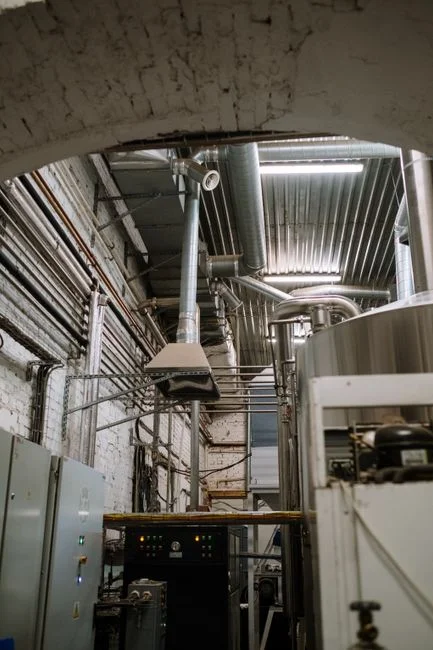
A defensible glass-plant reuse train for a 50 m³/h line is a five-stage cascade, sized so each stage hands off a stream the next stage can actually handle.
- Stage 1 — Coagulation + DAF or lamella clarifier. Poly-aluminum chloride dosing at 20–40 mg/L followed by a DAF pre-treatment stage ahead of the NF skid drops TSS below 30 mg/L and strips settleable silica, polishing slurry, and oil/grease. Lamella clarifiers are a credible substitute where footprint is constrained.
- Stage 2 — Multimedia filter + 5 μm cartridge guard. A multi-media filter polishing the DAF overflow before the UF/NF train brings SDI below 3 and protects downstream membrane fibers. Anthracite-sand-garnet beds run at 10–15 m/h.
- Stage 3 — UF (0.1–0.2 μm PVDF). A submerged UF/MBR module used as the NF pre-filter brings SDI below 2 and removes the colloidal silica that would otherwise gel the NF surface. Operate at 40–80 L/m²·h and backwash every 20–30 minutes.
- Stage 4 — NF at 10–20 bar. Thin-film composite polyamide elements in 4-inch or 8-inch format at 75–85% recovery, with CIP every 4–8 weeks using citric acid (pH 2–3) and an alkaline surfactant (pH 11–12). Antiscalant dosing at 2–5 mg/L keeps silica below its solubility limit through the concentrate.
- Stage 5 (optional) — Brackish-water RO polish. A brackish-water RO polish on the NF permeate is only required when the reuse target is boiler makeup below 100 mg/L TDS. Cooling-tower and scrubber service can take NF permeate directly.
Design the train at 75–90% overall recovery. The 10–25% blowdown concentrates the silica, hardness, and fluoride the NF rejects and is the stream to send to existing evaporation or crystallization if a zero-liquid-discharge (ZLD) upgrade is on the roadmap. For a worked example of a comparable biological + membrane reuse train, the biological pre-treatment train that can be combined with NF polishing illustrates how a BOD-removal front end is laid out for an equivalent flow.
2026 CAPEX and OPEX for a Nanofiltration System in a Glass Plant
The 2026 turnkey price for a complete UF+NF skid (coagulation/DAF excluded) on a glass line sits in three bands, with the spread driven by skidded versus containerized build, CIP automation, and PLC scope. The numbers below are inclusive of UF prefilter, NF vessels, high-pressure pump, CIP skid, and PLC.
| Capacity | CAPEX range (USD, 2026) | Typical OPEX (USD/m³) |
|---|---|---|
| 20 m³/h skid | $180,000 – $420,000 | $0.55 – $1.10 |
| 50 m³/h skid | $260,000 – $740,000 | $0.45 – $0.90 |
| 100 m³/h system | $580,000 – $1,600,000 | $0.40 – $0.75 |
The line items that build the OPEX figure are straightforward to defend in a budget memo:
- Membrane replacement: thin-film composite NF elements at $40–$90 per m², with 2–4 year typical life in glass service (HydropureWater field data, 2026). A 50 m³/h NF train carries roughly 200–300 m² of membrane area, so the annualized replacement reserve is $3,000–$27,000 per year.
- Energy: 0.25–0.6 kWh per m³ permeate at 15 bar — roughly half of an equivalent RO polishing step. At $0.08–$0.12/kWh industrial tariff, that is $0.02–$0.07 per m³.
- Chemicals: antiscalant, CIP acid/alkali, and neutralizer at $0.04–$0.12 per m³ feed.
- Labor and maintenance: 0.3–0.8 FTE allocated for a 50 m³/h line, including membrane integrity testing, CIP logging, and consumable change-out.
- Total OPEX (energy + chemicals + membranes + labor + consumables): $0.45–$1.10 per m³ treated in 2026 dollars.
For a procurement officer building the budget memo, the analogous analogous CAPEX/OPEX line items for an industrial membrane reuse train translate directly — the glass numbers above are within the same envelope as electronics assembly lines of equivalent throughput.
Operating Risks and How to De-Risk Them
Four failure modes account for the bulk of unplanned NF downtime in glass service, and each has a specific engineering mitigation.
Colloidal silica scaling is the dominant one. A warm CIP at pH 11–12 every 6–8 weeks dissolves the silica gel that builds on the membrane surface; the more durable fix is to hold the UF effluent SDI below 2 so colloidal silica never reaches the NF in the first place. Fluoride attack on polyamide layers is a quieter but more permanent failure: HF at low pH hydrolyzes the amide bonds in thin-film composite membranes. Hold feed pH between 6.5 and 8.0, and if HF is consistently above 20 mg/L, specify ceramic NF elements — they tolerate pH 0–14 and survive HF service that would destroy polyamide in under a year.
Grease and polishing-compound fouling is upstream, not on the membrane. The fix is mechanical: a high-efficiency sedimentation tank or DAF stage ahead of the multimedia filter to drop oil and grease below 5 mg/L before the stream reaches the cartridge guard. For plants handling emulsified cutting fluids, the emulsified oil and polishing-compound removal upstream of NF is the right upstream reference.
Permeate flux decline is a design choice as much as an operating problem. NF elements are routinely rated at peak flux of 30–35 L/m²·h on clean water, but sustained operation at that rate on glass feed fouls within weeks. Design the membrane area for 18–25 L/m²·h sustainable flux — that headroom is what lets you ride out a missed CIP without losing the train.
Frequently Asked Questions
What does a nanofiltration skid for glass manufacturing wastewater cost in 2026? Turnkey CAPEX in 2026 runs $180,000–$420,000 for a 20 m³/h skid, $260,000–$740,000 for a 50 m³/h skid, and $580,000–$1,600,000 for a 100 m³/h system, inclusive of UF prefilter, NF vessels, high-pressure pump, CIP skid, and PLC. Total OPEX lands at $0.45–$1.10 per m³ treated.
What rejection rates does NF deliver for silica, hardness, fluoride, and COD in a glass line? Expect 95–99% rejection of total hardness (Ca²⁺, Mg²⁺), 80–95% COD rejection, 40–70% silica rejection on polymeric NF (higher on ceramic), and 30–60% fluoride rejection from a single NF pass — HF streams need RO polish or a fluoride-selective contactor.
Can NF replace RO for glass wastewater reuse? Yes, when the reuse target is cooling-tower or scrubber makeup with 200–500 mg/L TDS permeate. No when the target is high-pressure boiler makeup below 100 mg/L TDS — in that case keep an RO polish on the NF permeate.
What is the typical membrane lifetime and CIP frequency for NF on glass plant feed? Thin-film composite polyamide elements last 2–4 years in glass service, with CIP every 4–8 weeks. Ceramic NF elements extend element life past 5 years at higher CAPEX.
What is the payback period for a glass-plant NF reuse train? At $1.50–$4.00 per m³ of displaced fresh water and avoided wastewater discharge surcharges of $0.50–$2.00 per m³, a 50 m³/h line running 6,000 hours per year typically returns CAPEX in 2–4 years, with operating payback under 18 months in regions where industrial water tariffs are above $2.00/m³.