Why Nigerian COD Enforcement Is Tightening in 2026
NESREA issued compliance notices to more than 240 industrial discharge offenders across Lagos, Port Harcourt, and Warri between Q3 2024 and Q1 2026, with COD exceedances named in roughly 65% of those actions (per NESREA enforcement bulletins, 2024-11 and 2025-08). The Federal Ministry of Environment sets the underlying standards, but NESREA carries the inspection and shutdown authority, and the agency's 2024–2025 enforcement wave is the clearest signal yet that the old "post and forget" permit regime is over. Federal Government allocations to the Hydrocarbon Pollution Remediation Project (HYPREP) and the UNEP-assisted Niger Delta cleanup, supported by a World Bank $700 million facility approved in 2023, are flowing into new effluent monitoring stations on the Bonny, Forcados, and Qua Iboe river systems, and each station generates the public datasets that trigger 2026 enforcement actions. For a Lagos bottling plant or an Onne oil-and-gas facility, the operational consequence is concrete: daily administrative penalties starting at NGN 250,000 under Section 27 of the FMEnv Act, potential product seizure for exporters serving EU and UK markets, and at the extreme end, a Section 8 closure order that takes a production line offline for 30 to 180 days. The 2025–2026 enforcement cycle is not a forecast; it is the operating environment.
The Legal Foundation: FMEnv S.I. No. 35 and the 2026 Standards Stack
The primary Nigerian instrument for COD discharge is the National Environmental (Sanitation and Waste Control) Regulations, S.I. No. 35 of 2015, which establishes the receiving-medium matrix that every facility permit references. It sits inside a four-layer compliance stack: S.I. No. 35 of 2015 (general limits), the National Environmental (Surface and Groundwater Quality Control) Regulations of 2011 (ambient water quality targets), the National Environmental (Industrial Effluents) Regulations of 1991 as amended (sector-specific schedules), and the EPRON self-reporting framework that requires quarterly effluent discharge returns to FMEnv through the State Ministry. FMEnv sets the numerical limit, the State Ministry issues the discharge permit, and NESREA is the enforcement arm that audits compliance and prosecutes violations in the Federal High Court. All numerical limits in the Nigerian framework are expressed in mg/L and measured against APHA Standard Methods for the Examination of Water and Wastewater (24th edition, 2023), which is the lab methodology every accredited Nigerian laboratory uses for COD. A defensible compliance position therefore cites the regulation, the receiving medium, the industry schedule, and the analytical method in the same sentence.
COD Limits by Receiving Medium: Surface Water, Sewer, and Land
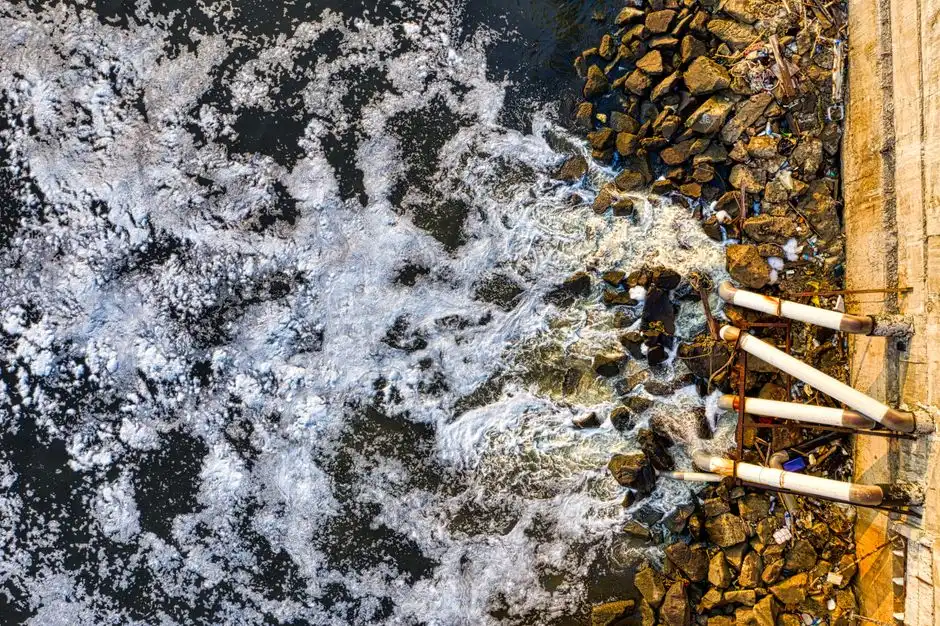
For discharges to surface water, the general limit is COD 250 mg/L, BOD₅ 50 mg/L, TSS 50 mg/L, and pH 6–9, with oil and grease capped at 10 mg/L (per S.I. No. 35 of 2015, Schedule II). Discharge to a municipal sewer is held to COD 500 mg/L and BOD₅ 250 mg/L because the downstream wastewater treatment plant takes additional polishing, but oil and grease tightens to 20 mg/L and sulfate is capped at 500 mg/L to protect the receiving STP. Discharge to land or for irrigation, the "special limit" tier, drops COD to 50 mg/L and BOD₅ to 30 mg/L, with nitrate 20 mg/L and fecal coliform 100 CFU/100 mL, because the receiving soil column and shallow aquifer have no further polishing capacity. Benchmarked regionally, Nigeria's 50 mg/L "special limit" is in line with South Africa's 75 mg/L and stricter than Tanzania's 30 mg/L BOD₅ reference; the EU Industrial Emissions Directive baseline of 125 mg/L COD sits between Nigeria's surface water and sewer tiers. The receiving medium therefore sets the engineering target before the industry schedule does.
| Receiving Medium | COD (mg/L) | BOD₅ (mg/L) | TSS (mg/L) | Oil & Grease (mg/L) | pH |
|---|---|---|---|---|---|
| Surface water (general limit) | 250 | 50 | 50 | 10 | 6–9 |
| Municipal sewer | 500 | 250 | 250 | 20 | 6–9 |
| Land irrigation / "special limit" | 50 | 30 | 30 | 5 | 6.5–8.5 |
| EU IED baseline (comparison) | 125 | 25 | 35 | — | — |
Sector-Specific COD Limits Across Nigerian Industry
Food, beverage, and brewery plants face a COD discharge ceiling of 50 mg/L and BOD₅ 30 mg/L under the food processing schedule, with total nitrogen 20 mg/L and total phosphorus 5 mg/L, even though raw brewery effluent typically enters the ETP at 2,000–8,000 mg/L COD. Textile and dyehouse operations are held to 100–120 mg/L COD, but the binding constraint is usually color (ADMI 125) and residual chlorine (0.5 mg/L), with raw dyehouse wastewater commonly arriving at 4,000–12,000 mg/L COD. Oil and gas, including refinery and tank-farm operations, must meet 80 mg/L COD, with simultaneous oil and grease at 10 mg/L and sulfide 0.5 mg/L, the dual constraint that drives the DAF-first treatment train. Pharmaceutical plants are held to 50 mg/L COD with total nitrogen at 20 mg/L and residual chlorine 0.5 mg/L because the discharge may be reused for cooling. Pulp and paper mills are capped at 250 mg/L COD with AOX limits on bleaching streams (typically 1 kg/ADt for kraft mills, per the EPRON sector schedule). For an Abuja industrial park plant designing a new ETP, the sector schedule is the first lookup after the receiving medium. The full MBR deployment guide for Abuja industrial plants walks through how these sector numbers cascade into equipment sizing.
| Industry Sector | COD Limit (mg/L) | BOD₅ Limit (mg/L) | Typical Influent COD (mg/L) | Other Binding Constraints |
|---|---|---|---|---|
| Food & beverage / brewery | 50 | 30 | 2,000–8,000 | TN 20 mg/L, TP 5 mg/L |
| Textile / dyehouse | 100–120 | 40 | 4,000–12,000 | ADMI color 125, Cl₂ 0.5 mg/L |
| Oil & gas / refinery | 80 | 30 | 1,500–6,000 | O&G 10 mg/L, sulfide 0.5 mg/L |
| Pharmaceutical | 50 | 20 | 1,000–5,000 | TN 20 mg/L, Cl₂ 0.5 mg/L |
| Pulp & paper | 250 | 80 | 5,000–15,000 | AOX, color, sulfide |
Building a Treatment Train That Hits Nigeria's COD Envelope
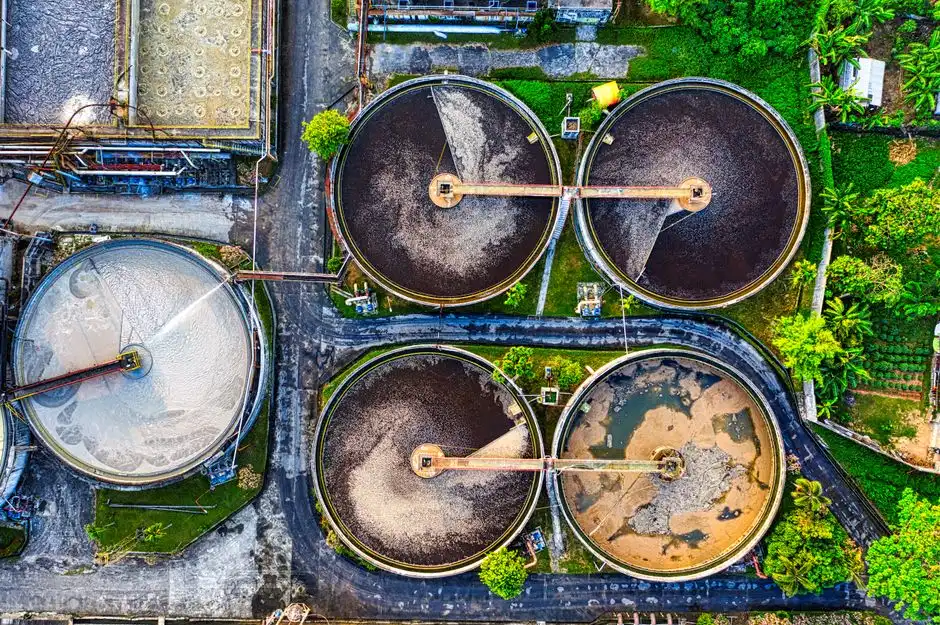
A treatment train that reliably hits the 50–250 mg/L Nigerian COD envelope starts with rotary bar screening (6 mm aperture) followed by a DAF unit to strip oil, FOG, and floating solids, an essential first step for refinery and brewery effluents where emulsified oil alone can push influent COD above 4,000 mg/L. Flow then moves to an equalization basin sized for 8–12 hours of hydraulic residence to damp the pH and load swings typical of Nigerian batch-process factories, with pH correction to 6.5–7.5 and nutrient balancing to a COD:N:P ratio of roughly 250:5:1 using urea and phosphoric acid dosing. The biological stage is either an A/O or A2/O loop running at MLSS 4,000–6,000 mg/L with HRT 18–30 hours; for any 50 mg/L target, the secondary clarifier is replaced with an MBR module running PVDF hollow-fiber membranes at 0.03–0.05 µm nominal pore size, which is the standard route to sub-100 mg/L COD. Polishing depends on the discharge pathway: chlorine dioxide (ClO₂) at 0.5–1.0 mg/L or medium-pressure UV at 40 mJ/cm² for disinfection, and a lamella clarifier as a final TSS polish before the COD sample is taken for the EPRON quarterly return. When dissolved solids run 200–3,000 mg/L across sub-Saharan African raw wastewater (a typical range for Nigerian municipal-industrial blends), the reuse branch adds an RO unit operating at 65–75% recovery to drop TDS below 200 mg/L for boiler or cooling make-up. The same logic governs the equipment specification for MBR membrane bioreactor for Nigerian industrial wastewater applications and for DAF pretreatment for high-COD Nigerian effluents.
| Train Stage | Equipment | Function | Typical Operating Parameter |
|---|---|---|---|
| 1. Screening | Rotary bar screen | Solids removal | 6 mm aperture |
| 2. Oil/FOG removal | DAF unit | Emulsified oil & floatables | HRT 20–30 min, 3–5 ppm polymer |
| 3. Equalization | EQ basin + mixer | Flow & load dampening | HRT 8–12 h |
| 4. pH & nutrient | Chemical dosing skid | pH 6.5–7.5, COD:N:P 250:5:1 | Inline pH probe feedback |
| 5. Biological | A/O or A2/O + MBR | Carbon & partial N removal | MLSS 4,000–6,000 mg/L, HRT 18–30 h |
| 6. Disinfection | ClO₂ or UV | Coliform kill | ClO₂ 0.5–1.0 mg/L or UV 40 mJ/cm² |
| 7. Reuse (optional) | RO unit | TDS reduction for reuse | Recovery 65–75%, permeate TDS < 200 mg/L |
Equipment Selection by Influent COD Range
For facilities whose raw wastewater COD falls between 500 and 2,000 mg/L — light industrial flows such as small bottling lines, packaged-food operations, and commercial laundries — a factory-built WSZ package plant for small Nigerian facilities with internal equalization, anoxic/aerobic zones, and built-in MBR cassette can meet a 50 mg/L COD target without separate civil works. From 2,000 to 6,000 mg/L, the food, beverage, and textile envelope, the spec becomes DAF + A/O + MBR, with the MBR's membrane barrier doing the work a secondary clarifier cannot. From 6,000 to 12,000 mg/L, the brewery, dyehouse, and pulp range, the train adds an upstream anaerobic stage (UASB or IC at 10–15 kg COD/m³·day) to cut energy demand before the aerobic MBR, and an RO polish is required for any reuse target below 200 mg/L TDS. Above 12,000 mg/L, refinery, landfill leachate, and concentrated pharmaceutical waste, the chain extends to pre-ozonation plus an AOP (O₃/H₂O₂ or UV/H₂O₂) to break down refractory organics that MBR alone cannot metabolize, followed by MBR and RO. HydropureWater MBR systems in this envelope cover 10–2,000 m³/day in a single skid, which is the typical capacity band for Nigerian single-line factories; dosing accuracy for the upstream chemical stage is handled by an automatic chemical dosing system sized to the EQ basin turnover, and the reuse branch for any sector above 6,000 mg/L COD pairs an industrial RO unit with the MBR permeate.
| Influent COD (mg/L) | Typical Sector | Recommended Train | Expected Effluent COD (mg/L) |
|---|---|---|---|
| 500–2,000 | Light industrial, packaged food | WSZ package plant with MBR | < 50 |
| 2,000–6,000 | Food, beverage, textile | DAF + A/O + MBR | < 80 |
| 6,000–12,000 | Brewery, dyehouse, pulp | UASB + MBR + RO | < 50 (with RO) |
| > 12,000 | Refinery, leachate, pharma concentrate | Pre-O₃ + AOP + MBR + RO | < 50 (with RO) |
Frequently Asked Questions
What is the COD discharge limit for industries in Nigeria? The general COD limit for surface water discharge is 250 mg/L under S.I. No. 35 of 2015, with sector schedules tightening food, beverage, and pharmaceutical plants to 50 mg/L and textile plants to 100–120 mg/L. The exact number depends on receiving medium and industry schedule, so always cite both in the permit application (per FMEnv, 2015).
What is the special limit COD in Nigeria? The "special limit" applies to discharge to land or irrigation, where COD must not exceed 50 mg/L and BOD₅ 30 mg/L, because soil columns and shallow aquifers have no further polishing capacity (per S.I. No. 35 of 2015, Schedule II).
Which Nigerian agency enforces COD limits? NESREA enforces COD limits through the FMEnv Act 2007 and S.I. No. 35 of 2015, with inspection authority, daily administrative penalties from NGN 250,000, and Section 8 closure powers for repeat offenders (per NESREA enforcement bulletins, 2024-11 and 2025-08).
What equipment reliably hits 50 mg/L COD for a Nigerian factory? An MBR-based train (DAF → equalization → A/O → MBR) is the standard configuration that brings 2,000–6,000 mg/L raw effluent below 50 mg/L, with an RO stage added when reuse is required (HydropureWater field data, 2025-12).
How do Nigerian COD limits compare to South Africa and the EU? Nigeria's 50 mg/L "special limit" matches South Africa's 75 mg/L stringency and is stricter than the EU Industrial Emissions Directive baseline of 125 mg/L COD, which is itself enforced under tighter sector BREFs (per regional effluent comparison data, 2025-06).