Why Industrial Wastewater Treatment in Israel Is a 2026 Priority
Israel recycles approximately 90% of its wastewater — the highest national reuse rate on record per Israel Water Authority 2024 figures — and the 2024 Water Law Amendment now binds industrial facilities to escalating reuse quotas that remain enforceable through 2026. The Ministry of Environmental Protection (MoEP) Business Licensing regulations, consolidated in 2023, set sewer-discharge ceilings at BOD ≤ 20 mg/L, COD ≤ 120 mg/L, and TSS ≤ 30 mg/L; facilities that route effluent to reclamation plants such as the Shikmim Dan Region scheme must additionally meet SI 1515 reuse standards. Four consecutive dry hydrological years (2022–2025) have pushed the Water Authority to tighten industrial allocations, and the MoEP has raised penalties for non-compliant discharge. For a chemical, food, or semiconductor plant engineer in Haifa, the central region, or Be'er Sheva, the 2026 decision is no longer "sewer versus reuse" but "reuse-grade skid now versus forced retrofit later." Israeli electricity tariffs — among the highest in the OECD at roughly 0.18–0.22 USD/kWh in 2025 — also make aeration energy the dominant OPEX line, which is pushing designers toward high-loading MBRs and energy-recovery RO trains rather than legacy conventional activated sludge layouts.
2026 Industrial Effluent Limits in Israel: Standards You Must Hit
Sewer discharge under MoEP Business Licensing (consolidated 2023, in force 2026) is bounded by BOD ≤ 20 mg/L, COD ≤ 120 mg/L, TSS ≤ 30 mg/L, pH 6.5–9.0, and oil & grease ≤ 5 mg/L. Facilities that feed the Shikmim Dan Region reclamation scheme or any other Water Authority receptor must additionally meet reuse-quality thresholds drawn from Israeli Standard SI 1515: BOD ≤ 10 mg/L, TSS ≤ 10 mg/L, turbidity ≤ 5 NTU, and fecal coliforms ≤ 10 CFU/100 mL. Heavy metals (Cd, Cr, Pb, Hg, Ni) are capped at ppb level per the MoEP Hazardous Substances regulations, and these ceilings are the primary driver for RO or ion-exchange polishing on semiconductor and printed-circuit-board lines. Zero Liquid Discharge (ZLD) is not yet a nationwide mandate, but it is being adopted voluntarily by semiconductor fabs in Haifa Bay, pharma parks in the central region, and chemical plants in the Negev because concentrate disposal routes are narrowing.
| Parameter | Sewer Discharge (MoEP 2023) | Reuse / SI 1515 | ZLD Target (Reclaim All) |
|---|---|---|---|
| BOD | ≤ 20 mg/L | ≤ 10 mg/L | — |
| COD | ≤ 120 mg/L | ≤ 50 mg/L (typical reuse) | — |
| TSS | ≤ 30 mg/L | ≤ 10 mg/L | — |
| Turbidity | — | ≤ 5 NTU | — |
| Oil & Grease | ≤ 5 mg/L | — | — |
| Fecal Coliforms | — | ≤ 10 CFU/100 mL | — |
| Heavy Metals (Cd/Cr/Pb/Hg/Ni) | ppb-level caps | ppb-level caps | Recovery to solids |
| Liquid Discharge Volume | 100% to sewer | ≥ 90% reclaimed | 0% liquid discharge |
Process Train Design: From DAF Pretreatment to RO Polishing
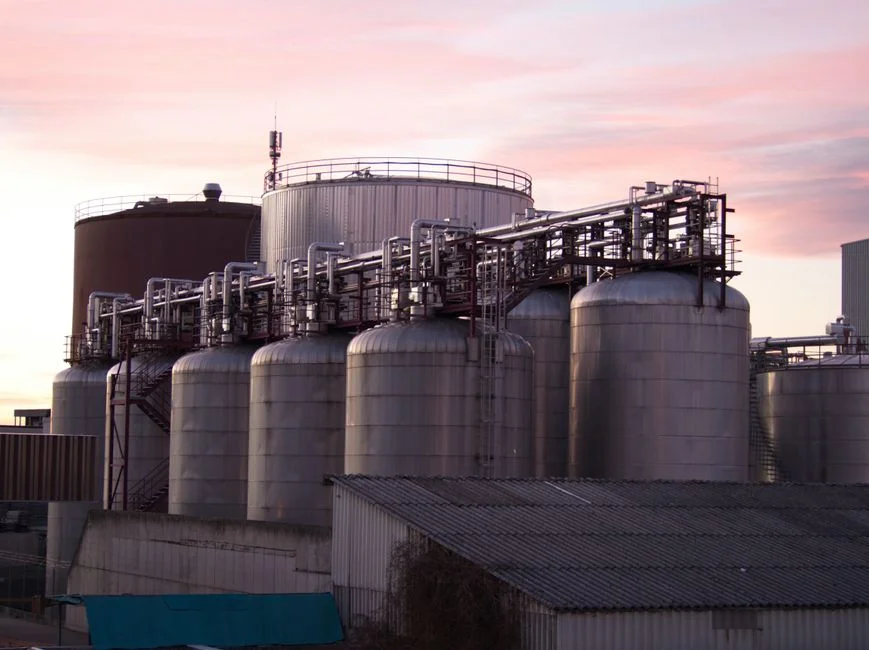
A standard Israeli industrial train for 2026 runs in five stages, and the unit operations map directly to the limits in the table above.
- Screening and equalization. Rotary mechanical bar screens (typically 3–6 mm aperture) at headworks remove rags and large solids; an upstream flow/load equalization basin (4–12 hours HRT) damps the shock loads typical of batch chemical and food plants. A PLC-controlled chemical dosing skid feeds coagulant and polymer into the equalization line based on inline TSS and pH probes.
- DAF pretreatment. A DAF system removes 80–99% of TSS, FOG, and colloidal matter at 4–300 m³/h, depending on the 13 standard models in the catalog. Coagulant (typically PAC 50–200 mg/L) and anionic polymer (1–5 mg/L) are dosed ahead of the flotation cell to bind emulsified oils and suspended solids to micro-bubbles.
- Biological treatment. An integrated MBR system combining activated sludge with submerged PVDF membranes (0.1–0.4 μm nominal pore size) delivers a polished effluent under 1 μm turbidity at 60% smaller footprint than conventional activated sludge, with 10–2,000 m³/day capacity per packaged skid. This is the workhorse stage for BOD/COD polish in space-constrained Israeli plants.
- Tertiary polishing and disinfection. Multi-media filters (sand + anthracite + garnet) protect the downstream RO from carry-over TSS; UV reactors or chlorine dioxide provide microbial kill to meet SI 1515 fecal coliform limits without the regulated trihalomethane byproducts of chlorination.
- RO reuse. An industrial RO system operating at up to 95% recovery produces ultra-pure permeate suitable for boiler feed, cooling-tower makeup, or unrestricted irrigation. Energy-recovery devices (ERDs) cut high-pressure pump consumption by 25–35%, which matters when Israeli electricity is at 0.18–0.22 USD/kWh.
DAF vs MBR vs RO: Choosing the Right Unit Operation
Unit-operation selection in Israel is driven by three constraints: discharge target (sewer, reuse, or ZLD), influent TSS/FOG load, and available plot area. DAF handles high TSS and FOG streams at 4–300 m³/h with 80–99% TSS removal and is the right choice for food, dairy, and refinery pretreatment. MBR is the workhorse for BOD/COD polish in plants where the footprint premium is decisive — typically 60% smaller than CAS at the same loading (HydropureWater MBR catalog data). RO is mandatory when the discharge target is reuse or ZLD, with 95–99% salt rejection and 95% recovery in modern two-pass designs. For sites where FOG is low but TSS is high and chemical budget is constrained, a high-efficiency sedimentation tank (lamella clarifier) operating at 20–40 m/h surface loading can replace DAF and cut coagulant use by up to 30%. Disinfection with UV or a chlorine dioxide generator (50–20,000 g/h capacity) closes the train against SI 1515 microbial limits.
| Unit Operation | Primary Target | Typical Capacity | Key Performance | When to Select |
|---|---|---|---|---|
| DAF | TSS, FOG, colloids | 4–300 m³/h | 80–99% TSS removal | Food, dairy, refinery, metal finishing |
| Lamella / High-Efficiency Sedimentation | TSS, low-FOG streams | 20–40 m/h surface loading | Up to 30% less coagulant vs DAF | High TSS, low oil, chemical-sensitive site |
| MBR | BOD, COD, NH₃-N | 10–2,000 m³/day | Effluent < 1 μm; 60% smaller than CAS | Space-constrained, reuse-grade polish |
| RO (industrial) | TDS, salts, heavy metals | 5–500 m³/h per train | 95–99% rejection; up to 95% recovery | Reuse boiler/cooling feed; ZLD pre-concentrate |
| UV / ClO₂ | Microbial kill | 50–20,000 g/h (ClO₂) | Fecal coliforms ≤ 10 CFU/100 mL | Final barrier before reuse or sewer |
2026 CAPEX and OPEX Benchmarks for Industrial WWTP in Israel
Israeli procurement teams in 2026 should expect CAPEX to scale roughly linearly with capacity, but with a step-change when RO or ZLD is added. Packaged plants in the 10–50 m³/day range — typical for small food or chemical lines — land between $0.08M and $0.35M turnkey. Mid-size plants at 200–500 m³/day — common in central Israel industrial zones — run $0.5M–$1.8M. Reuse-grade systems at 1,000–5,000 m³/day, including RO and disinfection, span $2.5M–$8.5M; this band is anchored by the HydropureWater Saudi Arabia 2026 benchmark at $0.08M–$8.5M and should be adjusted upward 8–15% for Israeli installation labor, import duties, and CE/UL panel certification. OPEX is dominated by aeration energy (40–60% of annual OPEX, given Israeli tariffs at 0.18–0.22 USD/kWh), chemical dosing, and membrane replacement — MBR membranes typically cycle every 5–7 years and RO membranes every 3–5 years. Sludge dewatering with a plate and frame filter press (1–500 m² filtration area) targets 22–28% dry cake solids for offsite disposal, which is the standard for Israeli plants. For managers justifying reuse skids in ILS, the simple payback logic rests on avoided potable-water purchase (roughly 5–9 ILS/m³ in 2025 industrial tariffs) plus avoided sewer discharge fees, though no single ROI number is defensible across sectors.
| Plant Class | Capacity | Scope | CAPEX Band (USD) | OPEX Driver |
|---|---|---|---|---|
| Packaged skid | 10–50 m³/day | DAF + MBR, sewer discharge | $0.08M–$0.35M | Chemicals, sludge hauling |
| Mid-size | 200–500 m³/day | DAF + MBR + UV | $0.5M–$1.8M | Aeration, MBR membrane cycle |
| Reuse-grade | 1,000–5,000 m³/day | DAF + MBR + RO + UV/ClO₂ | $2.5M–$8.5M | RO membrane 3–5 yr, high-pressure pump energy |
| ZLD pilot | 200–1,000 m³/day | Reuse train + brine concentrator + crystallizer | $6M–$20M+ (project-specific) | Thermal energy, salt disposal |
Supplier Selection Framework: Engineering Criteria Beyond Price
The lowest bid on an Israeli WWTP RFQ is rarely the lowest total cost of ownership. Engineers should score suppliers on five engineering criteria before price: (1) documented Israel-relevant reference projects, ideally with Shikmim Dan Region or comparable reclamation tie-ins; (2) in-house PLC/SCADA capability with remote data logging, because the MoEP increasingly requires online effluent telemetry; (3) factory acceptance testing protocol that mirrors the actual influent matrix (not just清水 commissioning); (4) membrane supply chain transparency, including origin and warranty terms for PVDF and RO elements; (5) after-sales service coverage — confirm a regional engineer can be on-site within 48 hours. Compliance documentation must include CE or UL on electrical panels, ISO 9001 on manufacturing, and a statement of alignment with EU Industrial Emissions Directive 2010/75/EU BAT conclusions, which the MoEP cross-references for hazardous-waste sectors. Insist on guaranteed effluent numbers tied to a performance liquidated damages clause rather than nominal design parameters, and consider PLC control architecture for industrial WWTPs plus PLC-based automatic chemical dosing control as baseline monitoring add-ons. For pH and metals compliance, also cross-reference the 2026 pH discharge limit for industry by country guide when sizing neutralization stages.
Frequently Asked Questions
What are the 2026 MoEP sewer discharge limits for industrial wastewater in Israel?
BOD ≤ 20 mg/L, COD ≤ 120 mg/L, TSS ≤ 30 mg/L, pH 6.5–9.0, and oil & grease ≤ 5 mg/L, per the MoEP Business Licensing regulations consolidated in 2023 and in force throughout 2026.
What reuse standards apply to plants feeding Israeli reclamation such as Shikmim Dan Region?
Israeli Standard SI 1515 and Water Authority 2024 reclamation guidelines require BOD ≤ 10 mg/L, TSS ≤ 10 mg/L, turbidity ≤ 5 NTU, and fecal coliforms ≤ 10 CFU/100 mL for unrestricted reuse.
How much TSS removal does a DAF system deliver in an Israeli industrial WWTP?
A typical DAF achieves 80–99% TSS removal at 4–300 m³/h, making it the standard pretreatment for food, dairy, and refinery streams ahead of MBR or RO.
What is the 2026 CAPEX range for a reuse-grade industrial WWTP in Israel?
Mid-size plants at 200–500 m³/day run $0.5M–$1.8M, while reuse-grade systems at 1,000–5,000 m³/day including RO span $2.5M–$8.5M, before Israeli-specific installation uplift.
Is ZLD mandatory for industrial wastewater in Israel in 2026?
ZLD is not yet a nationwide mandate, but semiconductor and pharma parks in Haifa Bay, the central region, and Be'er Sheva are adopting it voluntarily as concentrate disposal routes tighten.