Why Argentine Beverage Plants Need Sub-Sector-Specific Wastewater Design
Beverage wastewater treatment in Argentina in 2026 typically combines rotary screening, DAF, equalization, a UASB or EGSB anaerobic stage, and an MBR polishing step, with effluent meeting ACUMAR Resolución 1113/2013 and provincial ADA limits (COD ≤ 250 mg/L, BOD ≤ 50 mg/L for discharge to water body). For Mendoza wineries vintage COD reaches 8,000–25,000 mg/L; for Tucumán citrus/cane plants 4,000–10,000 mg/L. CAPEX for a 500 m³/d packaged train runs USD 380K–720K, OPEX USD 0.32–0.78/m³.
Argentine beverage producers cluster into three load profiles that demand different hydraulic and biological sizing. Mendoza wineries (8,000–25,000 mg/L COD, pH 3.5–4.2 from must lees, peak in March–April vintage) push 4- to 8-fold COD spikes over an 8–10 week campaign. Tucumán citrus and sugar-cane processors (4,000–10,000 mg/L COD, October–March campaign) handle pectin-rich, FOG-laden effluent with high TSS. Buenos Aires metro soft drink bottlers and breweries (1,500–4,000 mg/L COD) run year-round with daily CIP spikes, sitting under the most regulator-visible discharge basin in the country.
Water scarcity in Cuyo pushes recycle targets to 70–90%, making MBR+RO reuse trains standard for Mendoza. By contrast, the Riachuelo-Matanza basin compliance pressure — Riachuelo Lot 2 commissioned June 2025 with a 12 km subfluvial outfall and 34 riser diffusers at 40 m depth (Fisia Italimpianti/Webuild, 2025) — makes Buenos Aires plants the first to face mandatory online COD and flow telemetry by end of 2026. In Mendoza, AquaTec's winery case demonstrated that anaerobic digestion of wine fermentation wastewater, paired with biogas-to-CHP, achieved carbon-neutral operation — the value proposition that drives 2.5–4 year payback on the UASB+CHP premium. In Tucumán, HydroCycle's mobile-trailer rental model (monthly lease, 3-month season) has become the cash-flow lifeline for SMEs under Argentina's current FX conditions.
| Sub-Sector | COD Range (mg/L) | Peak Factor | Campaign Window | Recycle Target | Regulator Pressure |
|---|---|---|---|---|---|
| Mendoza wine | 8,000–25,000 | 4–8× | Mar–Apr (8–10 wk) | 70–90% | Med-High (Sec. Ambiente) |
| Tucumán citrus/cane | 4,000–10,000 | 2–4× | Oct–Mar | 40–60% | Medium (ADA provincial) |
| AMBA soft drink/brewery | 1,500–4,000 | 1.1–1.4× | Year-round + daily CIP | 30–50% | High (ACUMAR) |
Influent Characteristics by Beverage Sub-Sector
Sub-sector influent parameters drive equalization volume, DAF sizing, and biological stage selection — the engineer should size off the peaks, not the annual averages. Across all three Argentine beverage clusters the BOD₅/COD ratio sits at 0.45–0.65, which confirms biodegradability and supports biological treatment over advanced oxidation. TSS reaches 2,500–6,000 mg/L in citrus and brewing effluent, with FOG at 500–1,800 mg/L — both numbers that force a DAF ahead of any biological step to protect the UASB and MBR from fouling.
Mendoza vintage effluent shows a 3- to 6-fold flow spike and 4- to 8-fold COD spike concentrated in 8–10 weeks; equalization tanks must hold 3–5 days of peak flow (or roughly 2,500–4,000 m³ for a 500 m³/d plant) to smooth load on the biological stages. AMBA bottlers see daily peak/avg ratios of only 1.1–1.4 but suffer CIP chemistry swings (pH 2–12) that demand neutralization upstream of equalization. Tucumán citrus plants combine pectin loads (which drive foaming in UASB) with seasonal startup shock loads in October.
| Parameter | Mendoza Wine | Tucumán Citrus/Cane | AMBA Bottling/Brewery |
|---|---|---|---|
| COD (mg/L) | 8,000–25,000 | 4,000–10,000 | 1,500–4,000 |
| BOD₅ (mg/L) | 4,500–13,000 | 2,200–5,500 | 800–2,200 |
| TSS (mg/L) | 1,500–4,500 | 2,500–6,000 | 500–2,000 |
| VSS (% of TSS) | 80–90 | 75–88 | 65–80 |
| Total N (mg/L) | 40–120 | 30–90 | 20–60 |
| Total P (mg/L) | 10–35 | 15–40 | 5–20 |
| pH | 3.5–4.2 | 4.5–7.0 | 2.0–12.0 (CIP swings) |
| Temperature (°C) | 18–28 | 25–35 | 20–35 |
| FOG (mg/L) | 100–400 | 500–1,500 | 500–1,800 |
| Peak/Avg Ratio | 3.0–6.0 (seasonal) | 2.0–3.5 (campaign) | 1.1–1.4 (daily CIP) |
The 2026 Standard Process Train: Screening → DAF → Equalization → UASB → MBR
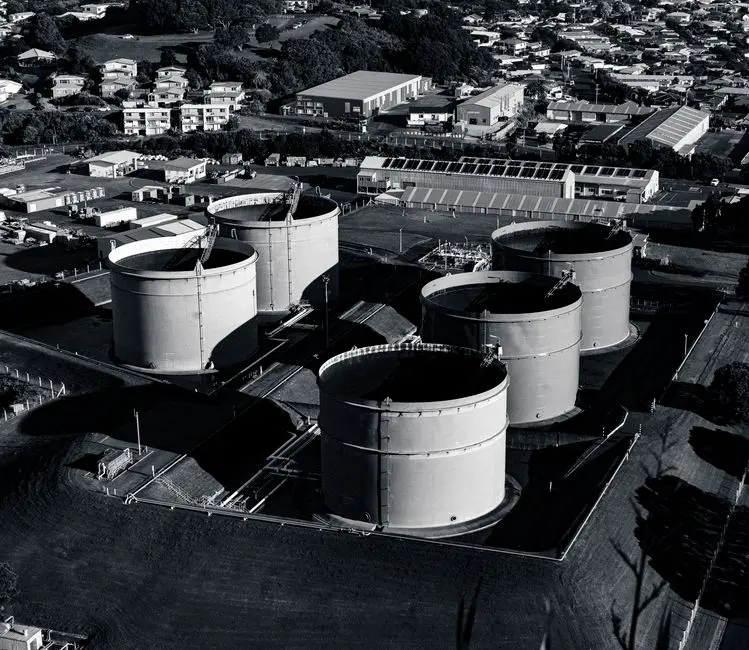
A defensible 2026 treatment train for an Argentine beverage plant at 200–500 m³/d runs rotary screening → DAF → equalization → UASB/EGSB → MBR, with optional RO polish for reuse and a filter press for sludge. Each stage is anchored to a removal target and a sizing parameter the engineer can defend in a CAPEX memo.
Stage 1 — Screening. A GX series rotary bar screen at 3–6 mm aperture removes grape stems, citrus pulp, and bottle-cap debris before they hit downstream pumps. Plants targeting 80%+ reuse step down to 1–3 mm fine screening to reduce grit load on the MBR.
Stage 2 — DAF. A DAF system at hydraulic retention 20–40 min and air-to-solids ratio 0.02–0.06 hits 85–95% TSS removal and 60–80% FOG removal. Argentine F&B facilities that have retrofitted Dutch ultrasonic wet-process pretreatment report a 60% reduction in coagulant and polymer consumption (per supplier roundup, 2025).
Stage 3 — Equalization. Basin sized for 12–48 hours, or 3–5 days of peak flow for Mendoza vintage. Continuous mechanical mixing at 5–10 W/m³ prevents acidification and septicity.
Stage 4 — UASB/EGSB. Anaerobic reactor operated at 10–15 kg COD/m³·d OLR, 30–37°C mesophilic, HRT 24–48 h. Wine must granulates well; expected methane yield is 0.30–0.42 m³ CH₄ per kg COD removed. For a deeper look at high-COD anaerobic design, the UASB Reactor for High COD Wastewater: 2026 Design & Buyer's Guide covers loading curves and granulation troubleshooting.
Stage 5 — MBR polish. An integrated MBR system with submerged PVDF flat-sheet or hollow-fiber membranes at 10–20 LMH flux, 0.1–0.4 μm barrier. Effluent stabilizes at BOD < 5 mg/L, TSS < 1 mg/L, eliminating the secondary clarifier and cutting footprint 50–60% versus CAS. For AMBA soft-drink bottlers with COD < 3,000 mg/L and stable flow, an MBBR at 0.4–0.8 kg BOD/m³·d can replace UASB+MBR for CAPEX savings of 25–35%. A DAF System for Bakery Wastewater Design: 2026 Engineering Guide provides adjacent DAF sizing context for F&B.
2026 Argentine Compliance Framework: ACUMAR, ADA, and Provincial Limits
ACUMAR Resolución 1113/2013 + Anexo II sets the binding discharge ceiling for the Matanza-Riachuelo basin: COD ≤ 250 mg/L, BOD₅ ≤ 50 mg/L, TSS ≤ 35 mg/L, total nitrogen ≤ 20 mg/L (varies by sub-basin), oils & grease ≤ 10 mg/L, pH 6.5–10. Buenos Aires provincial ADA Resolución 336/2003 governs discharges outside the ACUMAR jurisdiction but within PBA. Mendoza Secretaría de Ambiente Resolución 109/1994 plus its 2019 amendments apply to the wine cluster and add a volumetric discharge fee above 2,000 m³/day plus stricter TDS limits for groundwater protection.
The Riachuelo project is the political backdrop Buenos Aires plants ignore at their peril. Lot 2 commissioned in June 2025 (Fisia Italimpianti/Webuild) marks the operational start of Latin America's largest wastewater system — a 12 km subfluvial outfall at 40 m depth with 34 riser diffusers (per Fisia Italimpianti announcement, 2025-06). Buenos Aires plants should expect mandatory online COD and flow telemetry by end of 2026, with self-monitoring reporting directly to ACUMAR.
For reuse, Argentine National Law 25.688 (2003) and provincial reuse decrees allow treated effluent below 5 mg/L BOD and 200 mg/L TDS to be discharged to vineyard irrigation — a major OPEX offset in Cuyo where groundwater rights are rationed. Cross-border readers handling similar compliance work can compare against the Dairy Wastewater Treatment in Mexico: 2026 Process & Compliance Guide for a regional North-American/LatAm comparison.
CAPEX and OPEX: 2026 Cost Benchmarks for a 500 m³/d Beverage Plant
The 2026 landed-cost envelope for a 500 m³/d packaged beverage wastewater train in Argentina — including import duties and current ARS-to-USD assumptions — runs USD 380K–720K turnkey. OPEX sits at USD 0.32–0.78 per m³ treated, with electricity at 45–55% of OPEX, chemicals at 15–20%, membrane replacement at 5–10%, sludge hauling at 10–15%, and labor at 10–15% (HydropureWater field data, 2026).
Biogas revenue is the swing variable for wineries. At COD 12,000 mg/L and 500 m³/d, a UASB produces 3,000–4,500 m³ CH₄/day, displacing LPG/diesel at USD 1,200–1,800/day — a 2.5–4 year payback on the UASB+CHP premium. For the sludge side, a plate and frame filter press at USD 40K–80K dewater UASB+MBR waste activated sludge to 22–28% DS, cutting hauling volumes by 75%.
Seasonal producers should evaluate the rental alternative: mobile DAF+MBR trailers run USD 4,500–9,000/month per 100 m³/d unit. For a Tucumán citrus plant running October–March or a Mendoza boutique winery with a < 6-month season, the lease model HydroCycle used for seasonal fruit processors avoids stranded CAPEX and keeps the balance sheet clean under Argentina's current FX conditions. For reuse polishing, an RO water purification system at USD 60K–120K brings the MBR permeate below 200 mg/L TDS for vineyard or CIP reuse. Regional CAPEX benchmarking for southern Brazil can be cross-checked against the Industrial Wastewater Treatment in Porto Alegre: 2026 Engineering Guide.
| Item | CAPEX (USD, 2026) | % of Turnkey |
|---|---|---|
| Rotary screens (GX series) | 15,000–30,000 | 3–5% |
| DAF | 60,000–120,000 | 13–18% |
| Equalization basin (civil) | 25,000–55,000 | 6–9% |
| UASB reactor | 80,000–160,000 | 18–24% |
| MBR skid (integrated) | 140,000–260,000 | 32–40% |
| RO reuse polish | 60,000–120,000 | 13–18% |
| Filter press (sludge) | 40,000–80,000 | 8–12% |
| Automation / PLC | 25,000–50,000 | 5–7% |
| Turnkey total | 380,000–720,000 | 100% |
Mendoza Winery Case: Anaerobic + MBR with Biogas Cogeneration
The 150 m³/d boutique winery reference drawn from the AquaTec Mendoza narrative (per supplier roundup, 2025) handles 8,000–12,000 mg/L COD wine fermentation wastewater with a peak in the March–April vintage. The process train is a GX series rotary bar screen for stems and labels, a 3-day equalization basin to absorb the vintage spike, a DAF for TSS and lees removal, a UASB at 12 kg COD/m³·d OLR, and an DF series PVDF flat-sheet MBR module polishing the UASB effluent to BOD < 10 mg/L. Biogas from the UASB feeds a 200 kW CHP unit that powers the bottling line and refrigeration load.
Quantified outcomes: 96% COD removal, discharge COD < 30 mg/L — well below the Mendoza Secretaría de Ambiente Resolución 109/1994 reuse threshold. Per the source narrative, the facility achieved carbon-neutral operation. Approximately 60% of the polished MBR effluent is reused for vineyard irrigation under the Mendoza reuse pathway, with the remainder discharged to the municipal sewer; both routes compliant.
Frequently Asked Questions
What COD and BOD can a beverage plant in Argentina expect in 2026?
Mendoza wineries see 8,000–25,000 mg/L COD (4,500–13,000 mg/L BOD₅) at vintage peak; Tucumán citrus/cane plants 4,000–10,000 mg/L COD (2,200–5,500 mg/L BOD₅); AMBA soft drink/brewery 1,500–4,000 mg/L COD (800–2,200 mg/L BOD₅). The BOD₅/COD ratio sits at 0.45–0.65 across all sub-sectors (HydropureWater field data, 2026).
Does a winery in Mendoza need a biogas system?
At COD 12,000 mg/L and 500 m³/d, a UASB produces 3,000–4,500 m³ CH₄/day, displacing LPG/diesel worth USD 1,200–1,800/day and delivering 2.5–4 year payback on the UASB+CHP premium, per the AquaTec Mendoza reference.
What is the ACUMAR discharge limit for COD in the Riachuelo basin?
COD ≤ 250 mg/L, BOD₅ ≤ 50 mg/L, TSS ≤ 35 mg/L, oils & grease ≤ 10 mg/L, pH 6.5–10, per ACUMAR Resolución 1113/2013 + Anexo II.
Can seasonal beverage plants in Tucumán rent treatment units instead of buying?
Yes. Mobile DAF+MBR trailers run USD 4,500–9,000/month per 100 m³/d — the model HydroCycle used for 3-month seasonal fruit processors in Tucumán (supplier roundup, 2025).
How much does a 500 m³/d beverage wastewater plant cost in 2026?
Turnkey CAPEX USD 380K–720K landed in Argentina; OPEX USD 0.32–0.78 per m³ treated, with electricity at 45–55% of OPEX (HydropureWater field data, 2026).