
Why Kuching Hospital Wastewater Compliance Is Different in 2026
Hospital wastewater discharged to Kuching's public sewer or inland water bodies must satisfy three overlapping compliance layers that no generic Malaysian template fully addresses. The first layer is the Department of Environment (DOE) Malaysia Environmental Quality (Sewage) Regulations 2009 (P.U.(A) 432/2009), which sets Standard B at BOD5 ≤20 mg/L, COD ≤80 mg/L, TSS ≤50 mg/L, oil & grease ≤10 mg/L, NH3-N ≤5 mg/L, and fecal coliform <100 CFU/100 mL. Sarawak inland catchments often trigger Standard A instead (BOD5 ≤10, COD ≤50, TSS ≤20), so the design basis must be confirmed against the receiving water classification before equipment selection. The second layer is the Kuching Water Board (KWB) sewer acceptance criteria, which tighten pH to 6.0–9.0, cap temperature at 40°C, and impose stricter oil & grease limits on trade effluent — meaning a hospital cannot rely on a domestic-only discharge permit. The third layer is the 2023 Sarawak Health Department circular mandating on-site primary, secondary, and tertiary treatment for every hospital above 50 beds, with quarterly self-monitoring results uploaded to DOE's ASMA online reporting system.
Tropical Kuching conditions also reshape the design envelope. Ambient temperature sits at 27–32°C year-round, which accelerates biological kinetics and reduces basin volume by roughly 20% compared to temperate sizing rules. Annual rainfall of 3,800+ mm drives inflow & infiltration through aging sewer laterals, so headworks screening and equalization must be sized for wet-weather peaks rather than dry-weather average flow. The 2024 Sarawak Energy commercial tariff of MYR 0.285/kWh means aeration energy dominates OPEX, and a 50% reduction in aeration intensity through MBR high-MLSS operation translates directly into MYR 38,000–62,000 of annual savings at 50 m³/day. Finally, the WHO 2022 update on healthcare wastewater management requires explicit treatment logic for antibiotic-resistant organisms, iodinated contrast media, and pharmaceutical micropollutants — parameters that a conventional municipal WWTP design does not address.
What Flows Out of a Kuching Hospital: Influent Characteristics
Kuching hospital planners should design for a hydraulic loading of 400–600 L/bed/day from general wards, rising to 800–1,200 L/bed/day once haemodialysis, central laundry, and the kitchen are integrated into the combined sewer. A morning shift-change peaking factor of 2.0–2.5 is common across Sarawak General Hospital and the smaller Sibu and Miri regional facilities, so equalization and biological basins must be checked against peak hourly flow rather than daily average. The biodegradable fraction is high: the 2024 Chlorella sp. study published in Bioresources and Bioprocessing reported untreated hospital wastewater at 192 ± 8.62 mg/L BOD5 and 245 ± 9.15 mg/L COD, with a BOD5:COD ratio of 0.77 that confirms strong biodegradability and aligns with the WHO healthcare wastewater benchmark of 150–500 mg/L BOD5 and 250–800 mg/L COD for South-East Asian hospitals.
Pathogen loading is one to two orders of magnitude higher than domestic sewage. Fecal coliform counts of 10⁴–10⁶ CFU/100 mL are routine, with antibiotic-resistant Enterococcus and Pseudomonas aeruginosa shed from ICU and burns wards. The unique Kuching-Sarawak contamination profile includes iodinated contrast media from Sarawak General Hospital radiology (peak 8–10 mg/L during contrast CT batches), formaldehyde from pathology and mortuary waste (1.5–4.0 mg/L), glutaraldehyde from endoscopy disinfection (1.0–2.5 mg/L), and cytostatic drug residues from the new oncology wing (ng/L to low µg/L range). pH typically runs 6.5–8.5, temperature 25–32°C, and chloride from haemodialysis reverse-osmosis reject can spike the combined sewer to 800–1,200 mg/L during dialysis hours.
| Parameter | Unit | Design Influent (100-bed) | Peak Influent | DOE Standard B Limit |
|---|---|---|---|---|
| Flow | m³/day | 40–60 | 100–150 | — |
| BOD5 | mg/L | 192–350 | 500 | ≤20 |
| COD | mg/L | 245–600 | 800 | ≤80 |
| TSS | mg/L | 180–300 | 450 | ≤50 |
| NH3-N | mg/L | 20–40 | 55 | ≤5 |
| Oil & grease | mg/L | 15–30 | 50 | ≤10 |
| Fecal coliform | CFU/100 mL | 10⁵ | 10⁶ | <100 |
| pH | — | 6.5–8.5 | 6.0–9.0 | 6.0–9.0 (KWB) |
| Chloride (peak) | mg/L | 250–500 | 1,200 | — (KWB informal 1,000) |
The 2026 Treatment Train: Screening, Equalization, Biological, Disinfection

A working 2026 Kuching treatment train that meets Standard B and KWB acceptance criteria consists of five stages, sized for the design basis in the table above.
Stage 1 — Headworks screening. A rotary bar screen for hospital headworks with 3–5 mm aperture captures 0.5–1.5 m³ of screenings per 100 beds per day, protecting downstream pumps and membranes from ragging. screenings are bagged and disposed as scheduled waste SW103 (clinical contact waste).
Stage 2 — Equalization. An 8–12 hour HRT equalization tank with mechanical mixers dampens the 2.0–2.5 peaking factor from shift changes and absorbs wet-weather inflow. Inline pH correction to 6.5–7.5 is recommended for hospitals with on-site haemodialysis, because chloride spikes above 1,000 mg/L depress biological nitrification by 15–25%.
Stage 3 — Biological treatment. For space-constrained urban Kuching sites, an MBR system for 100–200 bed Kuching hospitals is the default: MLSS 8,000–12,000 mg/L, SRT 20–30 days, HRT 6–10 hours, with 0.1 µm PVDF flat-sheet modules. MBR occupies roughly 60% less floor area than conventional activated sludge, and effluent turbidity is consistently below 1 NTU. For 50–80 bed district clinics with more available land, SBR (6-hour cycle: fill–aerate–settle–decant) or MBBR (40% media fill, 8-hour HRT) is more cost-effective. The Springer 2024 study's biological floor performance of 68.64% TN removal and 64.44% TP removal applies to all three configurations once acclimatized.
Stage 4 — Disinfection. A chlorine dioxide generator for hospital disinfection dosed at 1.5–3.0 mg/L ClO2 with 30-minute contact time achieves 99.9% kill on E. coli and 99% on antibiotic-resistant Pseudomonas aeruginosa. ClO2 is preferred over NaOCl because it forms no trihalomethanes, remains effective at pH 6–9, and does not degrade iodinated contrast media into toxic iodinated DBPs. Residual ClO2 of 0.2–0.5 mg/L at the discharge sampler satisfies KWB's dechlorination-equivalent criterion.
Stage 5 — Sludge handling. Wasted activated sludge is thickened to 2–3% DS and dewatered on a plate-and-frame filter press to 18–22% DS cake. Hospital sludge is classified as scheduled waste SW205 under DOE Sarawak and must be consigned to the Kuching Indahpura incinerator with a waste manifest filed per consignment.
| Stage | Equipment | Key Parameter | Design Value (50 m³/day) |
|---|---|---|---|
| 1. Screening | GX rotary bar screen, 3–5 mm | Aperture | 3 mm |
| 2. Equalization | Concrete/FRP tank + mixer | HRT | 8–12 h |
| 3. Biological | Submerged MBR (DF series) | MLSS / SRT / HRT | 10,000 mg/L / 25 d / 8 h |
| 4. Disinfection | ClO2 generator | Dose / contact | 2.0 mg/L / 30 min |
| 5. Sludge | Plate-and-frame press | Cake DS | 20% |
MBR vs. SBR vs. MBBR for Kuching Hospitals: 2026 Comparison
Process selection for a Kuching hospital is a tradeoff between footprint, effluent quality, and Sarawak-specific risk factors — chiefly power reliability and operator skill level. MBR delivers the smallest footprint at 0.05–0.10 m² per bed, the best effluent quality (COD <30 mg/L, turbidity <1 NTU), and is the only configuration that meets Standard A in a single biological step. The weaknesses are membrane replacement every 7–10 years at MYR 180,000–320,000 per cycle for a 100 m³/day system, and continuous aeration demand — a real risk in rural Sarawak blackout zones where Sarawak Energy's grid stability drops to 92–95% uptime. SBR needs no separate clarifier, tolerates power dips because an aeration pause simply extends the cycle, and is priced at MYR 320,000–520,000 for 50 m³/day, making it the pragmatic choice for Sibu, Sri Aman, and Kapit district hospitals. MBBR handles shock loads from laundry and kitchen discharge 30% more efficiently than CAS at 30% lower OPEX, with no sludge recirculation loop, but requires post-MBBR clarification to consistently meet Standard B TSS.
The decision rule of thumb: specify MBR for urban Kuching sites inside the Jalan Masjid Indira / Pending / Petra Jaya catchment where land exceeds MYR 600/m²; specify SBR for rural Sarawak district hospitals with intermittent grid power; specify MBBR for hybrid mixed-use complexes that combine hospital, staff hostel, and commercial kitchen on a single effluent line. Across all three, design to the Springer 2024 biological floor of 68.64% TN and 64.44% TP removal before adding chemical polishing for ammonia if Standard A is required. The HydropureWater MBR module is supplied as skid-mounted for fast installation in Kuching.
| Criterion | MBR | SBR | MBBR |
|---|---|---|---|
| Footprint (m²/bed) | 0.05–0.10 | 0.15–0.25 | 0.12–0.20 |
| Effluent COD (mg/L) | <30 | 30–50 | 40–60 |
| CAPEX 50 m³/day (MYR) | 520,000–820,000 | 320,000–520,000 | 380,000–600,000 |
| OPEX (MYR/m³) | 0.95–2.10 | 0.85–1.80 | 0.80–1.70 |
| Power sensitivity | High (continuous) | Low (batch) | Medium |
| Operator skill needed | Medium-High | Medium | Low-Medium |
| Best Kuching fit | Urban ≥100 beds | Rural district | Hybrid complexes |
2026 Cost Benchmarks for Kuching Hospital WWTPs
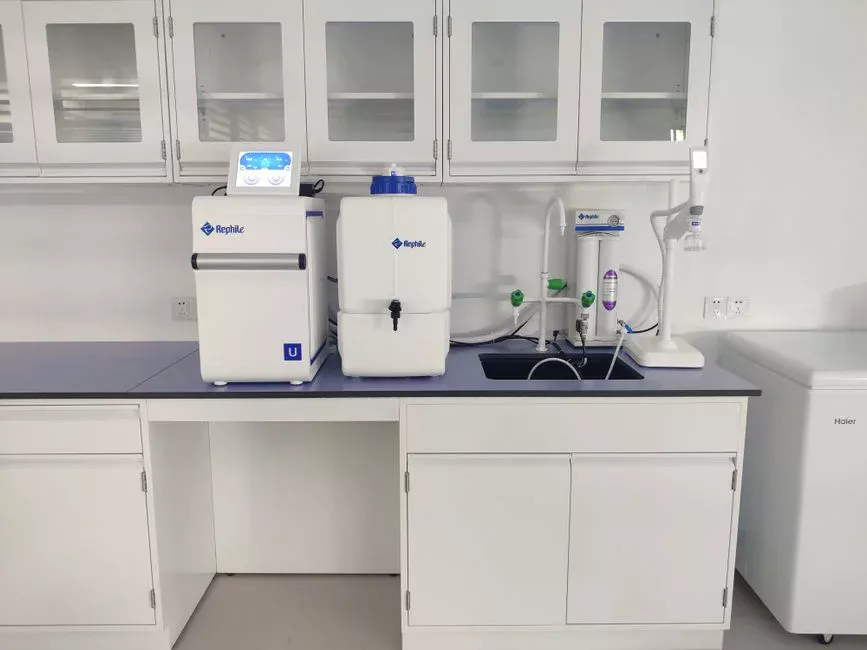
Budget numbers for 2026 Kuching hospital WWTP projects cluster in three bed-count bands, with CAPEX covering equipment, civil works, installation, and commissioning but excluding land cost. A 50-bed clinic typically installs a packaged 5–10 m³/day system, with a compact hospital wastewater treatment system for small Sarawak clinics priced at MYR 220,000–380,000 and OPEX of MYR 1.10–2.20/m³. A 100-bed district hospital sits at MYR 480,000–950,000 CAPEX, OPEX MYR 0.95–2.10/m³, with a 30–60 m³/day MBR or SBR plus full sludge handling — the most common bid envelope for Sarawak Health Department district projects. A 200-bed regional hospital runs MYR 1,100,000–2,200,000 CAPEX, OPEX MYR 0.85–1.80/m³, requiring an 80–150 m³/day MBR with plate-and-frame sludge dewatering, ASMA telemetry, and standby power integration.
For hospital management justification, the relevant comparison is hauling untreated effluent to the Kuching Indahpura KIWHS facility at MYR 18–35/m³, which makes the payback for on-site treatment 4–6 years at 50 m³/day throughput, 3.5–5 years at 100 m³/day, and 3–4 years at 150 m³/day. OPEX breaks down as: aeration energy 45%, ClO2 chemicals 18%, sludge disposal (SW205 manifests) 20%, membrane CIP and preventive maintenance 12%, and labor 5%. A 100-bed facility can expect MYR 22,000–38,000 of annual membrane CIP and MYR 18,000–30,000 of ClO2 sodium chlorite precursor cost at current Kuching chemical pricing.
| Bed Count | Capacity (m³/day) | CAPEX (MYR) | OPEX (MYR/m³) | Payback vs. Hauling |
|---|---|---|---|---|
| 50 | 5–10 | 220,000–380,000 | 1.10–2.20 | 5–7 years |
| 100 | 30–60 | 480,000–950,000 | 0.95–2.10 | 4–6 years |
| 200 | 80–150 | 1,100,000–2,200,000 | 0.85–1.80 | 3–4 years |
Selecting a Kuching Hospital WWTP Supplier: 8-Point Checklist
Translating the technical envelope above into a defensible procurement decision for a Kuching hospital board requires eight checkpoints. First, verify ISO 9001:2015, ISO 14001:2015, and CE/UL electrical certification, and ask for at least two Sarawak or Borneo island project references in the past 36 months. Second, confirm on-site installation lead time of 6–10 weeks for packaged MBR and 14–18 weeks for custom SBR, with shipping from China Port Klang to Kuching port typically 10–14 days. Third, demand full Factory Acceptance Test documentation including membrane bubble-point integrity test results for each module. Fourth, require a 12-month defect liability period plus a 24-month comprehensive warranty on blowers, pumps, and membrane modules.
Fifth, confirm the supplier prepares the DOE Sarawak ASMA submission dossier and attends the commissioning sign-off inspection in person. Sixth, verify local service coverage: a 24-hour emergency response in Kuching and on-call coverage for Bintulu, Miri, and Sibu is the minimum acceptable. Seventh, compare biosolids handling options — the supplier should offer plate-and-frame sludge dewatering to reduce SW205 tonnage and disposal cost, since Indahpura incinerator tipping fees rose to MYR 480/tonne in 2025. Eighth, ensure the control panel ships with a remote monitoring gateway for ASMA telemetry compliance — the same engineering scope used in the comparable hospital wastewater treatment in Penang and the broader hospital wastewater engineering guide for tropical climates.
Frequently Asked Questions
What are the DOE Sarawak effluent limits for hospitals in 2026?
Standard B under P.U.(A) 432/2009 applies: BOD5 ≤20 mg/L, COD ≤80 mg/L, TSS ≤50 mg/L, NH3-N ≤5 mg/L, oil & grease ≤10 mg/L, fecal coliform <100 CFU/100 mL. Receiving waters classified as sensitive trigger Standard A (BOD5 ≤10, COD ≤50).
How much does a 100-bed hospital WWTP cost in Kuching?
Installed CAPEX ranges MYR 480,000–950,000 for 30–60 m³/day, with OPEX of MYR 0.95–2.10/m³. Payback against off-site hauling is 4–6 years at current Indahpura tipping fees.
MBR or SBR — which is better for a Sarawak hospital?
MBR for urban Kuching ≥100 beds where footprint is constrained; SBR for rural Sarawak district hospitals with intermittent power, since SBR tolerates aeration pauses and costs 30–40% less in CAPEX.
Why is chlorine dioxide preferred over chlorine for hospital disinfection?
ClO2 at 1.5–3.0 mg/L with 30-minute contact achieves 99.9% E. coli kill and 99% antibiotic-resistant Pseudomonas kill without forming trihalomethanes, and remains biocidal at pH 6–9 where free chlorine loses efficacy.
Is hospital sludge classified as scheduled waste in Sarawak?
Yes — hospital WWTP sludge is SW205 under the DOE Sarawak scheduled waste list and must be consigned to a licensed incinerator (Kuching Indahpura) with a waste manifest per consignment.