Why FGD Wastewater COD Is the 2026 Compliance Bottleneck
Wet limestone flue gas desulfurization generates a side-stream that has quietly become the most expensive wastewater compliance problem on a coal-fired plant site. Typical streams carry total suspended solids of 5,000–15,000 mg/L, sulfate of 1,500–4,000 mg/L, chloride of 4,000–20,000 mg/L, and COD of 150–600 mg/L — values synthesized from the 2020 ScienceDirect correlation study on WFGD operation and incomplete coal combustion. The chemistry that scrubs SO₂ (CaCO₃ + SO₂ + ½H₂O → CaSO₃·½H₂O + CO₂) also generates a residual COD load dominated by sulfite, thiosulfate, short-chain organic acids, and humic substances leached from limestone reagent and entrained fly ash. None of that is readily biodegradable, which is why biological treatment alone is no longer a defensible answer in 2026.
Regulatory pressure is what pushed the issue to the top of the capex list. Phase 2 of the US Clean Air Act Amendments, implemented from 2005 onward, was the original driver, but the discharge envelope tightened again with the 2015 ELG revisions that were further updated through 2024. In China, GB 8978-1996 sets the baseline integrated wastewater discharge standard, while GB/T 21534-2008 specifically governs power-plant wastewater; both are now enforced in parallel with the GB/T 31962 surface-water quality update. EU operators face IED 2010/75/EU and its BAT-AEL conclusions for wastewater from combustion plants, which set COD at the outlet below 30 mg/L in best-available-technology scenarios. Plants that do nothing absorb the cost as absorber scaling, re-circulation pump fouling, and — for new builds in Inner Mongolia and Shanxi — failure to clear the zero-liquid-discharge permitting track.
Influent Characteristics and the Chemistry That Drives Treatment Design
Design starts with a correlation matrix of the wastewater quality parameters: COD plotted against TDS, chloride, sulfate, pH, and the heavy-metal suite. That matrix, summarized in the table below, is the diagnostic tool that maps how each unit operation will behave. The 2020 WFGD correlation study confirms that the dominant COD contribution at a limestone-scrubbed plant is sulfite-bound oxygen demand plus a smaller fraction of dissolved organics from limestone and fly-ash carryover.
| Parameter | Typical WFGD Influent Range | Driver of Unit-Operation Selection |
|---|---|---|
| COD | 150–600 mg/L | Sizes Fenton/AOP, biological, and RO stages |
| BOD₅ | 20–80 mg/L (BOD/COD ≈ 0.1) | Confirms refractory character; biological stage is polishing, not load reduction |
| TSS | 5,000–15,000 mg/L | Drives clarifier/DAF sizing and sludge handling |
| Sulfate (SO₄²⁻) | 1,500–4,000 mg/L | Scaling potential in RO and evaporators |
| Chloride (Cl⁻) | 4,000–20,000 mg/L | Sets metallurgy: 2205/2507 duplex, titanium |
| Fluoride (F⁻) | 10–50 mg/L | Precipitation with Ca²⁺; downstream of gypsum dewatering |
| TDS | 15,000–45,000 mg/L | Drives RO osmotic pressure and evaporator specific energy |
| pH | 4.5–6.5 (absorber blowdown) | Must be re-aligned before Fenton (3–4) and biological (6.5–8.0) |
| Temperature | 40–55 °C | Cooling required upstream of biological and RO stages |
| Mercury (Hg) | 0.05–1.0 mg/L | NaHS precipitation; sulfide residual monitoring required |
| Selenium (Se) | 0.5–5 mg/L | Co-precipitation with iron or RO rejection |
| Arsenic (As) | 0.1–3 mg/L | Ferric coagulation or sulfide precipitation |
Chloride is the parameter that ties influent chemistry directly to materials-of-construction decisions. Coal chlorine content for Chinese thermal coals typically runs 0.05–0.30 wt% on a dry basis, and that chloride reports quantitatively to the scrubber liquor. At 8,000 mg/L Cl⁻ and 60 °C, 304 stainless pits within months; 2205 duplex survives; above 12,000 mg/L Cl⁻, only 2507 super duplex or titanium is reliable. The same chloride figure also drives RO concentrate disposal and evaporator metallurgy, so it should be measured during the project feasibility study, not during commissioning.
The 2026 FGD Wastewater Treatment Process Train
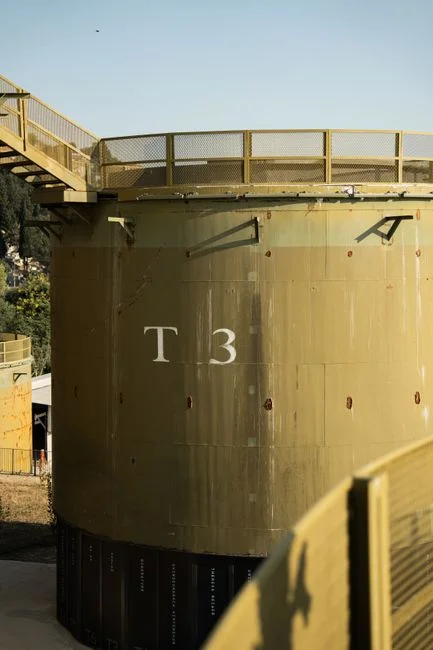
A defensible 2026 process train for removing refractory COD from wet limestone FGD wastewater runs in six stages, each solving a specific failure mode of the stage before it.
Step 1 — Equalization and pH adjustment. The absorber blowdown enters a corrosion-lined equalization tank sized for 30–60 min HRT, typically built in 2205 duplex or HDPE-lined concrete. pH is adjusted to 5.5–6.5 with NaOH or lime; the slight acidity keeps sulfite in solution for the next stage while preventing uncontrolled H₂S release.
Step 2 — Two-stage chemical precipitation. Mercury, arsenic, and the bulk of heavy metals are precipitated with NaHS dosing (2–4× stoichiometric) at controlled ORP. Sulfite is then oxidized to sulfate with NaOCl (active chlorine 8–12% on sulfite mass) or aeration; this protects downstream membranes from scaling. Clarification is performed in a DAF clarification unit with polymer dosing at 2–5 mg/L; DAF is preferred over a gravity clarifier because the high TDS and fine gypsum particles do not settle cleanly.
Step 3 — Fenton or ozone-based advanced oxidation. Fenton oxidation runs at pH 3–4 with H₂O₂:Fe²⁺ mass ratio of 10:1 to 20:1 and H₂O₂:COD mass ratio of 1.5–2.5:1; reaction time of 60–90 min converts 50–70% of the refractory COD to biodegradable intermediates. For sites with chloride-induced pitting risk on the Fenton reactor, ozone-based AOP at 2–4 g O₃/g COD is the alternative. Design math is covered in the Advanced Oxidation Process design guide.
Step 4 — Biological polishing. An SBR or MBBR downstream of the AOP takes residual BOD, with mixed-liquor suspended solids of 6,000–10,000 mg/L, HRT of 18–30 h, and F/M of 0.08–0.15 kg BOD/kg MLSS·d. Where footprint is constrained, an MBR biological stage with PVDF hollow-fibre membranes at 0.03–0.05 µm replaces the clarifier; the result is a tighter effluent TSS and a smaller biological tank.
Step 5 — Polishing and membrane concentration. A sand filter (10–20 µm) followed by a 5 µm cartridge filter protects a brackish-water RO concentrator operating at 75–80% recovery. RO feed should be ≤150 mg/L COD; meeting that target extends membrane life by 2–3× and reduces CIP frequency from monthly to quarterly.
Step 6 — Evaporation and salt handling. The RO concentrate is processed in a forced-circulation evaporator or mechanical-vapor-recompressor (MVR); NaCl is recovered as a saleable byproduct and the condensate is recycled to the FGD makeup tank. The crystallizer salt-handling line is tied into the existing gypsum dewatering line for shared reagent and polymer dosing.
| Stage | Unit Operation | Effluent Target |
|---|---|---|
| 1 | Equalization, pH 5.5–6.5 | Stable feed, pH controlled ±0.3 |
| 2 | NaHS + sulfite oxidation + DAF | Hg ≤0.05 mg/L, TSS ≤30 mg/L |
| 3 | Fenton or O₃-based AOP | COD reduction 50–70% |
| 4 | SBR / MBBR / MBR | COD ≤150 mg/L, BOD₅ ≤20 mg/L |
| 5 | Sand + 5 µm cartridge + RO | COD ≤50 mg/L, TDS ≤500 mg/L in permeate |
| 6 | Evaporator / MVR + crystallizer | Zero liquid discharge, NaCl byproduct |
Comparing the Three Disposal Paths: Surface Discharge vs Evaporation Pond vs Zero-Liquid-Discharge
Three legitimate end-of-pipe options exist for FGD wastewater. Each one trades a different combination of capex, opex, water risk, and salt management — and the right answer is site-specific.
Surface discharge after biological and tertiary treatment is the lowest-installed-cost path at $120–$220 per m³·d capacity, but it is also the most exposed to tightening regulations. China’s provincial environmental authorities are moving toward ≤50 mg/L COD at the discharge point, and EU IED BAT-AEL has effectively moved to ≤30 mg/L. Operators who pick this path need a clear multi-year compliance roadmap and a contingency budget for retrofitting AOP if limits tighten again.
Evaporation ponds are the simplest technology but the most land-hungry. Capex sits at $40–$80 per m² of pond area, and the area requirement is 0.8–1.2 m² per m³ of daily flow. The risk is selenium and mercury accumulation in the pond sediment, which creates a long-term liability if the pond is decommissioned or if a liner failure contaminates groundwater. Evaporation ponds only work in arid climates with reliable net evaporation; they fail in monsoon regions of southern China or in the humid Yangtze basin.
Zero-liquid-discharge via RO plus evaporator/crystallizer is the highest-cost option at $850–$1,400 per m³·d installed, with opex of $0.85–$1.60 per m³ treated — driven primarily by steam and electric power for the evaporator. The trade-off is zero discharge, no surface-water permit, and the best fit for water-stressed regions and new-build plants in Shanxi and Inner Mongolia. ZLD is increasingly the default for any 2 × 600 MW or larger unit commissioned after 2024. The detailed evaporator OPEX benchmark covers the MVR vs MEE trade-off.
| Decision Criterion | Surface Discharge | Evaporation Pond | ZLD (RO + Evaporator) |
|---|---|---|---|
| Capex ($/m³·d) | 120–220 | 40–80 ($/m²) | 850–1,400 |
| Opex ($/m³) | 0.30–0.55 | 0.10–0.25 | 0.85–1.60 |
| Effluent COD target | ≤50 mg/L (CN) / ≤30 mg/L (EU) | None (zero liquid) | None (zero liquid) |
| Land required | Small | Large (0.8–1.2 m² per m³·d) | Medium |
| Climate fit | All | Arid only | All |
| Salt disposal | None | Sediment accumulation | Crystallizer NaCl byproduct |
The hybrid recommendation, supported by operating data from 2024–2025 plant retrofits, is to target ≤150 mg/L COD upstream of RO with biological polishing, then let the RO and evaporator handle the concentrate. That staging extends membrane life by 2–3× and drops CIP frequency from monthly to quarterly.
Equipment Selection and Materials of Construction for High-Chloride FGD Streams
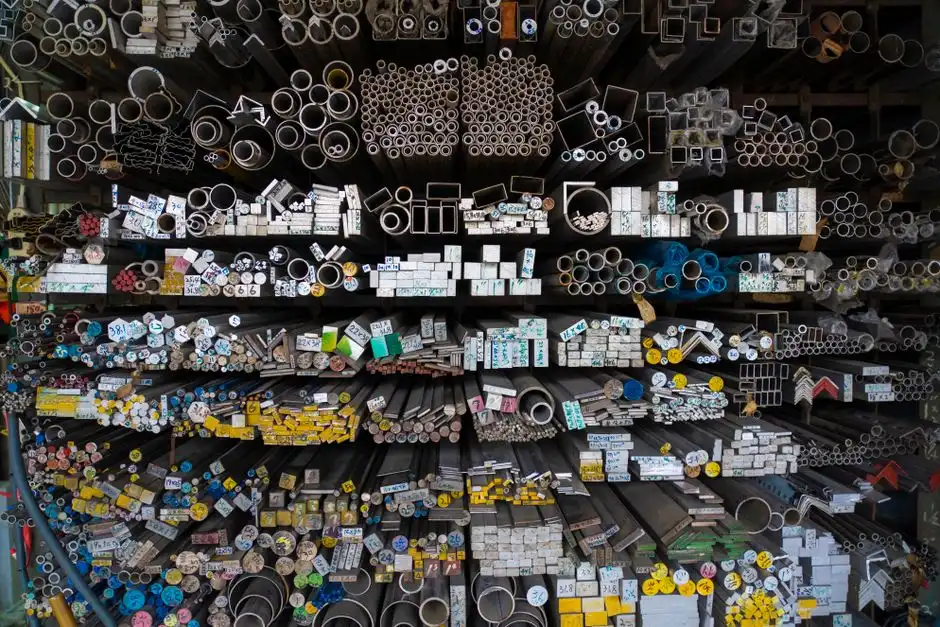
Metallurgy is the most expensive line item to get wrong on a high-chloride FGD wastewater project. Above 5,000 mg/L Cl⁻, 304 and 316 stainless steel pit within 12–24 months of service, which is the leading cause of mid-life plant retrofits. The corrected specification is 2205 duplex stainless for tanks, piping, and pump casings in the 5,000–12,000 mg/L Cl⁻ range, and 2507 super duplex or commercially pure titanium for service above 12,000 mg/L Cl⁻. The same specification applies to RO high-pressure piping and any evaporator wetted parts operating at 90–110 °C.
Chemical storage and sludge lines should be HDPE or FRP with EPDM or Viton gaskets. For the DAF reactor itself, specify stainless wetted parts on the DAF clarification unit to handle both the chloride environment and the entrained gypsum fines. In the biological stage, use EPDM fine-bubble diffuser membranes rated for chloride-rich water and oversize blowers by 25–30% to compensate for the elevated TDS alpha factor of 0.7–0.8. The MBR biological stage specified for footprint-constrained sites should use PVDF hollow-fibre membranes with a chlorine-tolerant cleaning protocol; avoid polyethersulfone in this service.
Operating Cost and CAPEX Benchmarks for a 2 × 600 MW Plant
A 2 × 600 MW coal-fired unit with limestone wet FGD generates 8–20 m³/h of wastewater under steady-state operation, peaking at 30 m³/h during absorber blowdown cycles. The biological-only treatment island to reach discharge limits benchmarks at $0.4–0.7 million for a 200 m³/d design flow. The ZLD incremental — adding RO, evaporator, and crystallizer — adds $1.6–2.8 million depending on whether MVR or multi-effect evaporation is selected and on local steam availability.
| Cost Element | Biological-Only Path | ZLD Path |
|---|---|---|
| Capex (200 m³/d) | $0.4–0.7 M | $2.0–3.5 M total |
| Opex ($/m³) | $0.30–0.55 | $0.85–1.60 |
| Power share of opex | 35–45% | 45–55% (MVR dominant) |
| Chemicals share of opex | 25–35% | 15–25% |
| Membrane replacement | 8–12% | 10–15% |
| Labor | 10–15% | 10–15% |
On the opex line, power is the single largest item, followed by chemicals — primarily NaHS, H₂O₂, polymer, and antiscalant. Membrane replacement is normally a smaller line item, but it can spike to 18–20% of opex on plants that skip the ≤150 mg/L COD target upstream of RO. Plants that adopt the remote monitoring architecture covered in the 2026 engineering guide report a 12–18% reduction in operator labor cost and a measurable improvement in CIP scheduling because membrane performance trends are visible in real time.
Frequently Asked Questions
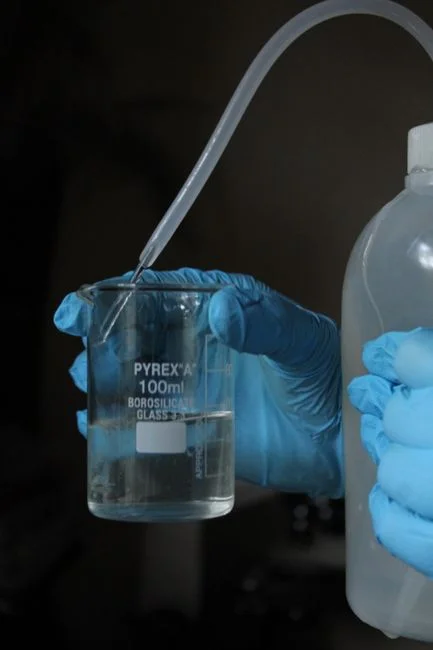
What is the typical FGD wastewater COD discharge limit in China for 2026? Provincial enforcement under GB 8978-1996 and GB/T 21534-2008 sits at ≤50 mg/L COD for most inland provinces, with ≤30 mg/L required for discharge to sensitive receiving waters. New builds in water-stressed provinces are typically required to follow a ZLD path with no surface discharge. (Source: GB 8978-1996; GB/T 21534-2008.)
Can biological treatment alone meet the 2026 FGD wastewater COD standard? No. Wet limestone FGD wastewater has a BOD/COD ratio of roughly 0.1 because the COD is dominated by sulfite, thiosulfate, and refractory organics. Biological treatment is a polishing step; the load reduction has to come from chemical precipitation and Fenton or ozone-based AOP upstream. (HydropureWater field data, 2025.)
What H₂O₂ dose is required for Fenton oxidation of FGD wastewater? The H₂O₂:COD mass ratio of 1.5–2.5:1 at pH 3–4 is the operating window for 50–70% COD conversion; the H₂O₂:Fe²⁺ mass ratio of 10:1 to 20:1 controls iron-sludge yield. Higher doses drive marginal improvement but raise opex sharply. (Per the AOP design guide, 2026.)
Why is duplex stainless required for FGD wastewater equipment? Chloride at 5,000–20,000 mg/L combined with 40–55 °C operating temperature pits 304 and 316 stainless within 12–24 months. 2205 duplex is the standard for ≤12,000 mg/L Cl⁻; 2507 super duplex or titanium is required above 12,000 mg/L Cl⁻, particularly in RO concentrate lines and evaporator wetted parts. (HydropureWater field data, 2025.)
Is ZLD always required for new coal-fired plants in China? Yes for new builds in Inner Mongolia, Shanxi, Ningxia, and Xinjiang, and effectively yes for any unit larger than 2 × 600 MW commissioned after 2024. Other provinces permit surface discharge to ≤50 mg/L COD, but the regulatory trajectory points to ZLD as the 2030 baseline. (Per GB 8978-1996 provincial enforcement notices, 2024–2025.)
What is the typical flow rate of FGD wastewater from a 2 × 600 MW unit? Steady-state flow is 8–20 m³/h, peaking at 30 m³/h during absorber blowdown cycles. Equalization should be sized to handle the peak with 30–60 minutes of HRT to smooth chloride and COD swings before downstream treatment. (HydropureWater engineering reference, 2026.)