Why 2026 Vietnam Sewage Projects Fail — and What the Right Solution Looks Like
A Binh Duong industrial-zone food processor running 1,500 m³/day on a 12-year-old septic tank + chlorination setup was issued a non-compliance notice in Q1 2026 for BOD₅ 78 mg/L and NH₄-N 38 mg/L — well above the 50 mg/L and 20 mg/L column-B thresholds in QCVN 14:2008/BTNMT. The plant had bypassed the biological stage during a peak-season FOG surge from its cooking line, biomass crashed, and re-seed took 6 weeks. That single event cost more than a retrofit A/O + WSZ underground package plant for tight IZ footprints would have in 2024. The scenario is not unusual: Vietnam's Ministry of Planning & Investment counted roughly 400 industrial zones operational or under development in 2024–2025, and a meaningful share of tenant plants still rely on septic or Imhoff tanks that cannot meet the 50 mg/L BOD₅ / 100 mg/L COD column-B envelope, let alone column A.
The "right solution" in 2026 is a three-block design sized to tropical influent and the receiving-water compliance line: headworks (rotary bar screen 5–10 mm aperture + grit chamber + DAF when FOG > 50 mg/L) → biological (A/O, SBR, MBBR, or MBR depending on footprint, reuse intent, and CAPEX ceiling) → disinfection (ClO₂ at ≥ 1 mg/L residual, or UV at 30–40 mJ/cm² for column-A reuse projects). Hydraulic retention time shrinks 20–30% versus temperate design because mixed-liquor temperature holds at 25–32 °C year-round in HCMC, Binh Duong, and Dong Nai — a fact most foreign feasibility studies still ignore. The rest of this guide gives a B2B buyer the four things they need for a tender meeting: a process choice, a QCVN compliance line, a 2026 budget envelope, and a defensible 3-supplier shortlist.
QCVN 14:2008/BTNMT Effluent Limits: Column A vs Column B for 2026
QCVN 14:2008/BTNMT is Vietnam's national technical regulation on domestic wastewater, and the column you are held to depends entirely on the receiving water body — not on the plant's age, size, or ownership. Column A applies to discharges into protected reservoirs, water-supply source protection zones, and urban drainage that feeds aquaculture or drinking-water intakes. Column B is the standard for industrial-zone and municipal discharges to common surface-water receivers. Picking the wrong column is the single most common procurement error in Vietnam tenders, because the BOD₅ limit is 40% lower in A (30 mg/L vs 50 mg/L) and total nitrogen is half (20 mg/L vs 40 mg/L).
| Parameter | Column A | Column B | Typical Vietnam raw sewage |
|---|---|---|---|
| BOD₅ | ≤ 30 mg/L | ≤ 50 mg/L | 100–250 mg/L |
| COD | ≤ 50 mg/L | ≤ 100 mg/L | 200–500 mg/L |
| TSS | ≤ 50 mg/L | ≤ 100 mg/L | 150–300 mg/L |
| Total nitrogen | ≤ 20 mg/L | ≤ 40 mg/L | 20–50 mg/L (as NH₄-N basis) |
| Total phosphorus | ≤ 4 mg/L | ≤ 6 mg/L | 3–8 mg/L |
| pH | 6–9 | 6–9 | 6.5–7.5 |
| Residual chlorine | ≥ 1 mg/L (or equivalent disinfection) | ≥ 1 mg/L | — |
| Total coliform (aquaculture receivers, per 2022 amendment) | ≤ 3,000 MPN/100 mL | ≤ 5,000 MPN/100 mL | 10⁶–10⁷ MPN/100 mL |
The 2022 amendment (QCVN 14:2008/MONRE update) added explicit total coliform ceilings and tightened industrial wastewater handling for discharges to water bodies used for aquaculture — column B coliform now ≤ 5,000 MPN/100 mL for those reaches (per QCVN 14:2008/MONRE 2022 amendment). For the buyer, the practical decision is: column A generally requires MBR or a tertiary denitrification/sand-filter polish; column B can be met by a well-run A/O or SBR with a disinfection step. If the project is a hotel, resort, or golf-course development in a coastal province, request the receiving-water classification from the local DONRE before sizing the train — it is a 4-week task that can change the CAPEX by 30–60%.
Choosing the Right Process for Vietnam's Tropical Sewage
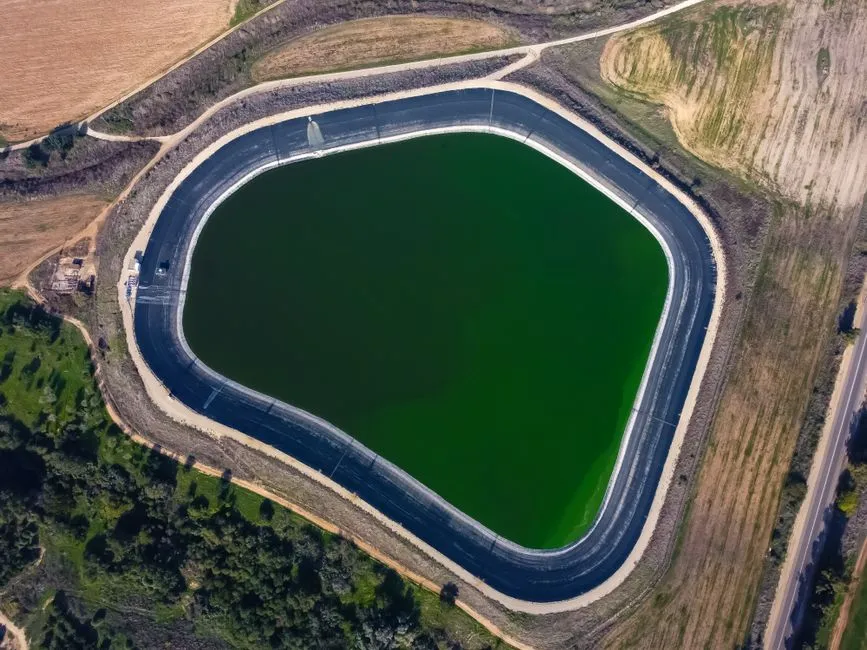
Typical Vietnam domestic/municipal sewage runs COD 200–500 mg/L, BOD₅ 100–250 mg/L, TSS 150–300 mg/L, NH₄-N 20–50 mg/L, and FOG 20–120 mg/L depending on food or seafood activity in the catchment. Year-round mixed-liquor temperature sits at 25–32 °C, which lets the designer shave biological volume 20–30% versus temperate baselines (per standard biological design texts applied to tropical conditions). The four workhorse processes for 2026 Vietnam projects, and the conditions each one wins, are compared below.
| Process | Typical HRT / SRT / MLSS | Footprint (per 1,000 m³/day) | Strengths in Vietnam context | Limits |
|---|---|---|---|---|
| A/O (anoxic + aerobic) + clarifier | HRT 8–12 h; SRT 10–20 d; MLSS 3,000–5,000 mg/L | ~250–350 m² | Lowest CAPEX, robust against load swings, good for IZ residential/mixed | Effluent TSS 20–30 mg/L; column A may need polish |
| SBR (sequencing batch reactor) | HRT 12–18 h; SRT 15–25 d; MLSS 3,500–5,500 mg/L | ~200–300 m² (single-tank) | Flexible cycle, ideal for intermittent flows (resorts, rural clusters) | Higher control/automation requirement |
| MBBR (moving-bed biofilm) | HRT 6–10 h; SRT 5–15 d (biofilm); MLSS 3,000–6,000 mg/L | ~180–250 m² | Tolerates FOG/shock loads from seafood and food plants, no sludge recirculation, retrofit-friendly | Carrier screening on downstream equipment |
| Integrated MBR system for Vietnam column-A compliance | HRT 6–9 h; SRT 20–40 d; MLSS 8,000–12,000 mg/L | ~120–180 m² (60% smaller than CAS) | Effluent TSS < 1 mg/L, column A-ready, reuse-ready | Highest CAPEX; membrane replacement budget required |
| DAF + bio (pre-treatment for FOG) | HRT 20–30 min (DAF); upstream of any bio stage | +20–40 m² | Removes FOG > 50 mg/L before bio, protects nitrification | Polymer consumption; sludge handling overhead |
A working rule of thumb for a tender meeting: small flow + reuse → MBR; mid flow + tight budget → A/O or SBR; variable FOG from food/seafood → DAF pre-treatment feeding A/O or MBBR; resort or rural cluster with intermittent load → SBR; tight footprint and column A obligation → MBR. When the influent FOG is consistently above 50 mg/L — common in Binh Duong, Dong Nai, and Can Tho food clusters — add a DAF pre-treatment stage for FOG-heavy Vietnamese food and seafood plants upstream of the bio train; otherwise oil coats the biomass and nitrification crashes within 5–10 days of peak season.
2026 CAPEX and OPEX Benchmarks for a Vietnam Package Sewage Plant
For 1,000–5,000 m³/day package plants, the 2026 lower-middle-income Asia CAPEX band (per World Bank 2023–2025 regional benchmarks, indexed to 2026) sits at $0.6M–$3.5M installed. Vietnam typically lands in the lower half of that band because Chinese containerized supply and Vietnamese civil-works EPCs compress the tank and installation line items. The breakdown by process for a 1,000 m³/day baseline is:
| Process (1,000 m³/day) | CAPEX range (USD) | OPEX ($/m³ treated) | Sludge handling | Best-fit profile |
|---|---|---|---|---|
| A/O + clarifier | $0.4M–$1.5M | $0.06–$0.18 | 5–8% of OPEX | CAPEX-constrained, column B target |
| SBR | $0.5M–$1.8M | $0.08–$0.20 | 6–9% of OPEX | Intermittent flow, single-tank site |
| MBBR | $0.6M–$2.0M | $0.10–$0.22 | 5–8% of OPEX | FOG/shock load, retrofit |
| MBR | $1.0M–$3.5M | $0.12–$0.42 | 8–12% of OPEX | Column A + reuse, tight footprint |
OPEX splits roughly as power 40–55%, chemicals 10–18%, membrane replacement (MBR only) 8–15%, labor 12–20%, and sludge handling 5–10%. Sludge disposal alone runs $40–$95 per metric ton in 2026 (per industry benchmarks on Vietnam sludge disposal) and is the line item most feasibility studies under-count by 30–50%. For a 5,000 m³/day MBR plant producing ~6–9 metric tons/day of dewatered cake at 22% dryness, sludge cost alone is $85,000–$310,000/year. A deeper 2026 CAPEX/OPEX breakdown for a 10,000 m³/day sewage plant is available for larger scopes. Power is the second-largest line item, so the buyer's RFP should always require a kWh/m³ number alongside the CAPEX table — anything above 0.55 kWh/m³ for a domestic-strength feed is a flag for oversized aeration or poor blower selection.
Supplier Landscape in 2026: How to Shortlist a Vietnam Sewage Treatment Partner
The 2026 Vietnam sewage supplier market is a five-archetype field, and the right shortlist usually pulls one from each side of the cost/quality curve. Local Vietnamese EPCs deliver the lowest installed price and the strongest civil-works execution, but most are weak on advanced membrane packages and SCADA at scale — they are a clean fit for A/O and SBR, less so for MBR above 3,000 m³/day. Chinese export suppliers run aggressive CAPEX on containerized MBR packages, ship in 8–14 weeks ex-works, and carry deep tropical-climate references across Southeast Asia; require proof of Vietnam MONRE conformity, IECEx/ATEX certification for any hazardous-zone components, and a Vietnam-based service agent. Korean suppliers price 25–60% above Chinese baselines but bring premium automation, remote monitoring, and the documentation rigor that FDI electronics and semiconductor tenants in Bac Ninh and Hai Phong expect. European suppliers sit at the top of the CAPEX band and the top of the documentation band — the right call for municipal PPPs, hospitality chains with EU/EPA-equivalent contractual compliance, or projects financed by European development banks. Indian suppliers are competitive on DAF and conventional bio, with limited MBR exposure above 2,000 m³/day; they earn a slot when the project is FOG-heavy food processing and the budget is tight.
A defensible shortlist for a 1,000–10,000 m³/day tender in 2026 is three names: one Chinese supplier for cost discipline, one Vietnamese EPC for site works and post-commissioning service, and one Korean or European supplier for technical authority and membrane/automation credibility. Require each bidder to demonstrate at least one Vietnam reference — or, at minimum, a tropical-climate reference of equivalent scale delivered within the last 24 months. A reference older than 24 months in this market is essentially a cold start.
Compliance, Reuse, and 2026 ROI: Closing the Business Case
Non-compliance in 2024–2025 carried real teeth. Administrative fines under Vietnam's Decree 45/2022/NĐ-CP on environmental protection can reach VND 1 billion (~$40,000) per violation, plus mandatory remediation and potential production suspension; for a 2,000 m³/day food plant, a 14-day forced shutdown typically exceeds the entire incremental CAPEX of doing the project right the first time. On the upside, 2026 industrial water tariffs inside Vietnam's IZs sit in the $0.45–$0.85/m³ band (Hanoi/HCMC reference points), so a 2,000 m³/day MBR plant reusing 60% of its effluent saves $200,000–$520,000/year on purchased water alone. Combined with avoided compliance fines and lower discharge fees, the simple payback on MBR reuse for 1,000–5,000 m³/day projects lands at 3–5 years — comfortably inside the 7–10-year industrial asset life. A useful cross-check before bidding is the MBR vs conventional activated sludge comparison, and a parallel DAF maintenance checklist should be attached to the operating-procedure tender appendix.
One-line tender evaluation rule: lowest CAPEX is rarely the lowest 10-year cost. Score bidders as CAPEX 40%, OPEX 25%, Vietnam reference 15%, membrane/automation package 10%, local service 10%. That weighting rewards the supplier who can actually run the plant for ten years — not just the one who can build it for ten percent less.
Frequently Asked Questions
What is the difference between QCVN 14:2008 column A and column B?
Column A is stricter and applies to discharges into protected reservoirs, water-supply source zones, and aquaculture-influenced reaches — BOD₅ ≤ 30 mg/L, COD ≤ 50 mg/L, TSS ≤ 50 mg/L, total N ≤ 20 mg/L (per QCVN 14:2008/BTNMT). Column B applies to standard industrial-zone and municipal discharges — BOD₅ ≤ 50 mg/L, COD ≤ 100 mg/L, TSS ≤ 100 mg/L, total N ≤ 40 mg/L.
How much does a 1,000 m³/day package sewage treatment plant cost in Vietnam in 2026?
For a 1,000 m³/day plant, CAPEX ranges $0.4M–$1.5M (A/O), $0.5M–$1.8M (SBR), $0.6M–$2.0M (MBBR), and $1.0M–$3.5M (MBR); OPEX runs $0.06–$0.42/m³ treated depending on process, with MBR at the upper end due to membrane replacement.
Which process is best for tropical Vietnamese sewage with high FOG?
Use DAF pre-treatment upstream of an A/O or MBBR bio train when influent FOG exceeds 50 mg/L, typical in Binh Duong and Dong Nai food and seafood clusters. The DAF pre-treatment stage for FOG-heavy Vietnamese food and seafood plants protects nitrification from oil coating on the biomass.
When is MBR justified over conventional activated sludge in Vietnam?
MBR is justified when the project is held to QCVN column A, when effluent reuse is part of the business case, or when footprint is constrained — an integrated MBR system for Vietnam column-A compliance delivers TSS < 1 mg/L, 60% smaller footprint, and reuse-ready water at $0.12–$0.42/m³ OPEX.
What does sludge disposal cost per ton in Vietnam in 2026?
Vietnam sludge disposal runs $40–$95 per metric ton in 2026 depending on dryness, haul distance, and final pathway (landfill, co-incineration, or cement-kiln co-processing). For a 2,000 m³/day plant producing ~4–6 metric tons/day of dewatered cake, that is $50,000–$210,000/year — a line item that must be carried into the OPEX table. See the full 2026 sludge disposal cost per ton breakdown for method-by-method data.