Which Packaged Treatment Plant Suits a Dakar Housing Development?
A Dakar housing development should normally begin with a buried WSZ A/O packaged sewage treatment plant when conventional biological treatment is acceptable and the available flow falls within its quoted 1–80 m³/hour range. A packaged MBR membrane bioreactor becomes the stronger candidate when effluent quality, reuse, footprint, or staged expansion is more important than process simplicity. Final selection must use the development’s peak wastewater flow, infiltration, sewer arrangement, receiving point, and site constraints—not population alone.
Three routes remain credible. The first is the buried WSZ A/O packaged sewage treatment plant, which combines anoxic and aerobic biological contact oxidation, sedimentation, and disinfection in one underground unit. The second is a packaged MBR membrane bioreactor, combining activated sludge with submerged PVDF membrane filtration. The third is decentralized gravity-fed sanitation, but the supplied Diamniadio study does not establish that septic or infiltration systems are suitable for a particular Dakar site.
The initial rule is therefore conditional: use WSZ A/O for conventional community-scale treatment within its stated capacity; investigate MBR when higher-quality effluent, reuse, tighter siting, or expansion justifies the added process complexity. No supplied source establishes a universal current Dakar discharge limit or confirms that a particular packaged model is acceptable to the regulator. The design file must identify connected population, water demand, peak factors, groundwater infiltration, rainfall separation, wastewater characteristics, receiving point, reuse objectives, footprint, and expansion horizon.
Build the Wastewater Design Basis Before Comparing Models
The Diamniadio study separates average wastewater flow from the peak, infiltration, and equipment flows used to size pumping stations, so an equipment quotation should be tested against the same logic. Its planning assumptions are regional benchmarks, not automatic inputs for a specific estate; the project engineer must confirm them against the development program and site conditions.
The study assigns 80 L per inhabitant per day to economical and medium-standard housing, 100 L to luxury accommodation, and 40 L per external student per day. It applies a wastewater rejection coefficient of 80%. These figures come from Ndiouga Camara, Alioune Ly, Babacar Diouf, and Séni Tamba’s 2024 paper, “Perspective of the Wastewater Evacuation Network and the Treatment Plant of the Diamniadio Urban Pole.” Use the coefficient only if the project engineer confirms that it still represents the estate’s wastewater-generation conditions.
The same 2024 paper calculates peak flow separately and includes infiltration and equipment allowances in the pumping-station design flow. It selected a separate sewer because combined drainage exposes treatment infrastructure to higher stormwater flows. It also identifies groundwater outcroppings in local depressions and adds infiltration to its hydraulic calculations. A site-specific inflow and groundwater survey is therefore necessary; do not treat a separate sewer as proof that infiltration is zero.
- Establish the connected population and applicable water-demand basis.
- Convert demand into average daily and average hourly wastewater flow using confirmed generation assumptions.
- Calculate the relevant peak flow from the project’s occupancy and consumption pattern.
- Add site-justified groundwater infiltration and equipment allowances.
- State separately which flow governs the treatment train, pump station, storage, and collection network.
| Design-basis item | Evidence available | Action for the development |
|---|---|---|
| Domestic water demand | 80 L/inhabitant/day for economical and medium-standard housing; 100 L for luxury accommodation; 40 L/external student/day | Apply only to the occupied housing mix actually served |
| Wastewater rejection | 80% coefficient in the 2024 Diamniadio study | Confirm as a current project assumption |
| Rainwater | The 2024 study selected a separate sewer | Confirm no stormwater connections and survey illicit or cross connections |
| Groundwater infiltration | The 2024 study notes outcroppings and includes infiltration in hydraulic calculations | Measure site conditions and justify the allowance |
| Plant capacity quotation | WSZ literature states 1–80 m³/hour but does not distinguish average, peak, or design capacity | Require the bidder to define the capacity basis in writing |
Finally, ask each bidder whether its quoted treatment capacity is average, peak, or equipment-design flow. Without that definition, a nominal m³/hour comparison is not technically comparable.
Compare WSZ A/O and MBR Packaged Treatment
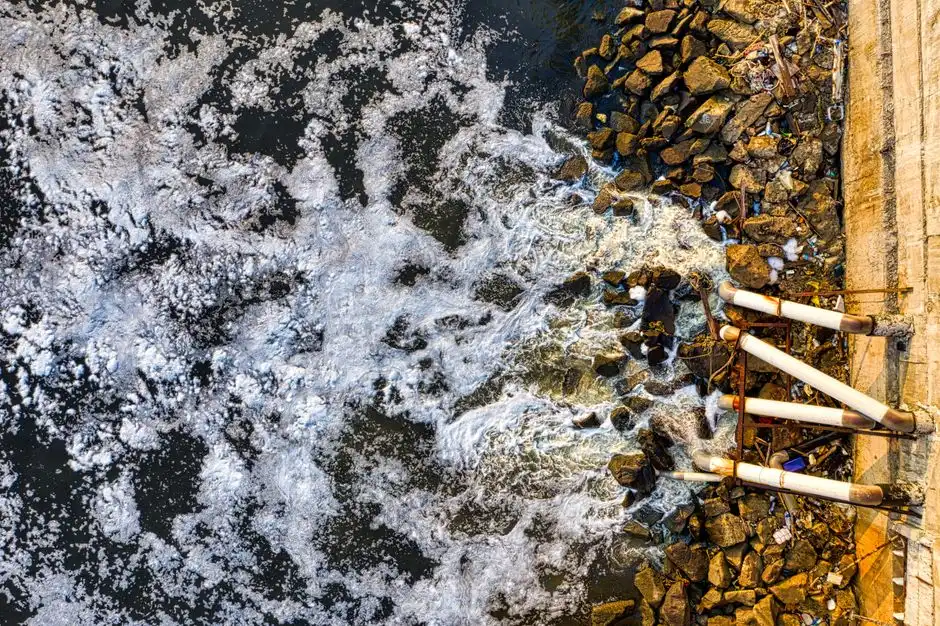
WSZ A/O is the simpler starting point for conventional community treatment, while MBR is the process to examine when the effluent objective or site constraint requires additional separation. The choice should follow from guaranteed performance, not from the shortest process description.
According to the supplied product description, the WSZ architecture integrates anoxic/aerobic biological contact oxidation, sedimentation, and disinfection in one underground package, with automatic operation and no routine operator required. Its stated capacity is 1–80 m³/hour for residential communities and other decentralized applications. Below-grade installation leaves the surface available for landscaping, while trailer mounting supports mobile deployment.
The MBR combines activated sludge with submerged PVDF membrane filtration. Its supplied specification gives a capacity range of 10–2,000 m³/day and effluent below 1 μm filtration. The product literature claims a footprint 60% smaller than conventional systems; this remains a manufacturer claim requiring confirmation against the proposed civil layout and the complete treatment train.
| Decision criterion | WSZ A/O package | Packaged MBR |
|---|---|---|
| Process | Anoxic/aerobic contact oxidation, sedimentation, and disinfection | Activated sludge with submerged PVDF membrane filtration |
| Stated capacity | 1–80 m³/hour | 10–2,000 m³/day |
| Best provisional fit | Conventional community-scale treatment where the required effluent quality is achievable | Higher-quality effluent, reuse, tighter footprint, or staged expansion |
| Principal RFQ risks | Effluent guarantees, disinfection, odor control, buried-unit access, and commissioning | Membrane replacement, fouling control, power demand, skilled support, and plant availability |
| Evidence limit | Capacity basis and residual-sludge method are not stated in the supplied evidence | The footprint reduction is a manufacturer claim requiring layout confirmation |
For WSZ A/O, require explicit guarantees for process performance, disinfection, odor control, commissioning, and the treatment of the agreed peak flow. For MBR, require the supplier to define membrane life, anti-fouling strategy, cleaning chemicals, replacement conditions, operator skill, and remote or local fault response. Neither option should proceed on process name alone.
Match the Plant to Dakar Site and Environmental Conditions
A buried package does not remove the need for flood, groundwater, access, and discharge investigations. The 2024 Diamniadio study states that the Diamniadio-Sébikotane area has no permanent watercourse, while temporary backwaters, plateau runoff, three lakes, and flooding affect the area. A discharge route must therefore be assessed as part of site selection, not assumed from the absence of a permanent river.
Establish the sewer inlet invert, seasonal groundwater level, flood level, receiving-system connection, and required discharge head before accepting a gravity solution. Burial can preserve the surface, but it can also make inspection, lifting, and replacement dependent on designed access arrangements. A separate 2017 UCL dissertation on periodic flooding in low-income suburbs of Dakar describes recurrent seasonal flooding and permanent waterlogging, reinforcing the need to verify exposure at the actual estate rather than infer it from regional conditions.
Access should be planned for tanker trucks, sludge removal, maintenance personnel, and replacement equipment. Confirm how inspections occur without dismantling the package, how lifting is provided, and whether heavy equipment can reach the site during wet periods. Also settle odor, noise, landscaping, security, and enclosure interfaces before the civil layout is fixed.
Where commercial or industrial users discharge into the shared system, preserve the separation principle stated in the 2024 Diamniadio study: industrial wastewater must receive appropriate in-situ pretreatment before entering the shared collection and treatment system. The manufacturer should define accepted inlet characteristics rather than relying on a generic “sewage” label.
Finally, require corrosion-resistant materials and construction details appropriate to the project’s groundwater, salinity, soil, and flood exposure. The supplied research does not establish a universal material standard for Dakar packaged plants, so the designer must specify the required exposure basis. Mechanical access and inlet protection can be addressed separately through mechanical wastewater prescreening equipment where upstream debris requires controlled removal.
Plan Collection, Pretreatment, Pumping, and Effluent Disposal
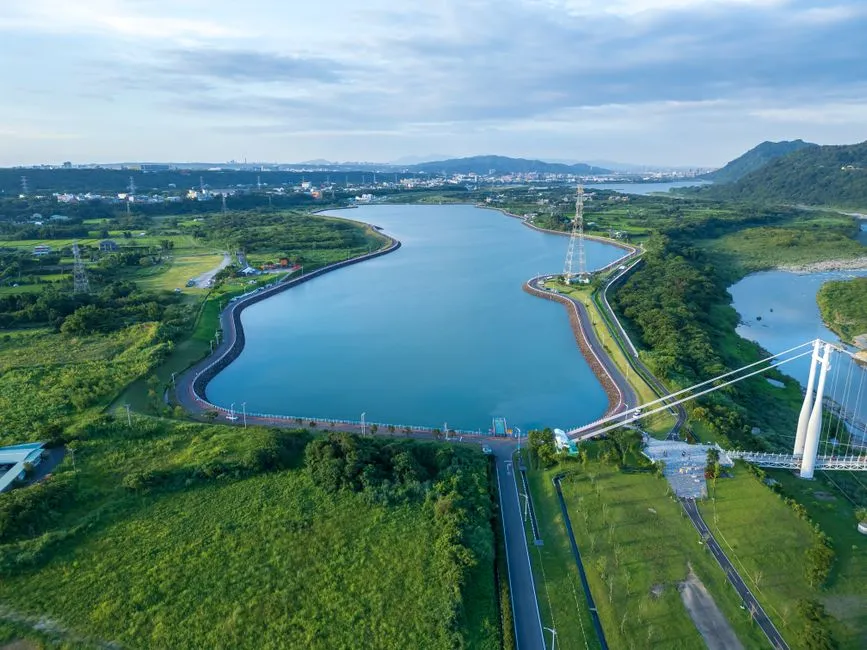
Packaged treatment is one element in the flow path, and the civil interfaces often determine whether it works reliably. Map the developer sewer through inspection and load-break manholes, any lifting stations, inlet works, the packaged treatment unit, disinfection, and the authorized receiving point. The Diamniadio study lists primary, secondary, and tertiary networks, pressure pipes, lifting stations, load-break and inspection manholes, and treatment stations as coordinated works rather than isolated assets.
Issue the supplier an influent envelope covering flow, domestic wastewater characteristics, industrial contributions, grit, rags, plastics, fats and oils, and any known seasonal changes. The WSZ A/O unit is described as a sewage treatment package, not an unrestricted industrial pretreatment system. Aggressive industrial wastewater should not be admitted without a justified treatment train.
Use mechanical wastewater prescreening equipment where rags, plastics, or fibrous debris could overload pumps or downstream biological stages. The GX series is described as continuous-duty screening equipment for municipal and industrial wastewater. Its inclusion depends on the incoming waste characterization and the selected treatment process.
Treat sludge as a separate design workstream. The 2024 Diamniadio study describes municipal treatment and sludge-handling systems, while the WSZ product evidence does not state how residual sludge is removed. Require a waste characterization, removal frequency, storage provision, haul route, and disposal destination. If a plate-frame filter press is considered, establish whether its duty matches the expected sludge volume and dewatering requirement rather than treating it as an automatic accessory.
Use separate sanitation as the planning baseline where feasible, and obtain local-authority confirmation for the proposed discharge route and connection works. The commissioning plan should cover incoming flow, retained solids, biological startup, disinfection, stable effluent, operator training, and performance testing against agreed conditions.
Compare Three Deployment Models for the Development
The deployment decision is broader than choosing between two package types: it includes whether the estate should own treatment at all. Each route shifts civil, regulatory, operating, and expansion risks to different parties.
| Deployment model | Choose when | Key qualification |
|---|---|---|
| Dedicated WSZ A/O package | The estate has a treatment boundary, expected flow is within 1–80 m³/hour, surface area is constrained, and conventional biological treatment is acceptable | Confirm whether the quoted flow is average, peak, or design capacity |
| Dedicated MBR package | Higher-quality effluent, reuse, a smaller footprint, or staged expansion is required and flow falls within 10–2,000 m³/day | Price and guarantee membrane, fouling, power, maintenance, and replacement obligations |
| Approved central-system connection | ONAS or the relevant authority owns collection and treatment capacity and network capacity is available | Verify connection conditions, downstream capacity, ownership, tariffs, and interface works |
| Gravity-fed decentralized sanitation | Site-specific soil, groundwater, flood, and receiving-water assessment shows it is feasible | The supplied evidence does not establish universal suitability in Dakar |
Use the Diamniadio STEP as a planning reference, not as a template for a housing package. The 2024 study reports a 3 m² screen, 4.5 m² desander, 190.71 m² degreaser, 4,768 m³ primary decanter, 101,002 m³ aeration basin, and 4,768 m³ clarifier. It also reports a total municipal flow of 99,071.62 m³/day. That urban-pole flow must not be transferred to an individual estate; calculate the development’s own design flow.
Before selecting a dedicated package, obtain confirmation that the central alternative is genuinely unavailable or unsuitable. A central connection may avoid duplicated treatment assets, but it does not remove the need to establish downstream capacity, connection obligations, and the responsible operating party.
Build an RFQ That Makes Supplier Responses Comparable
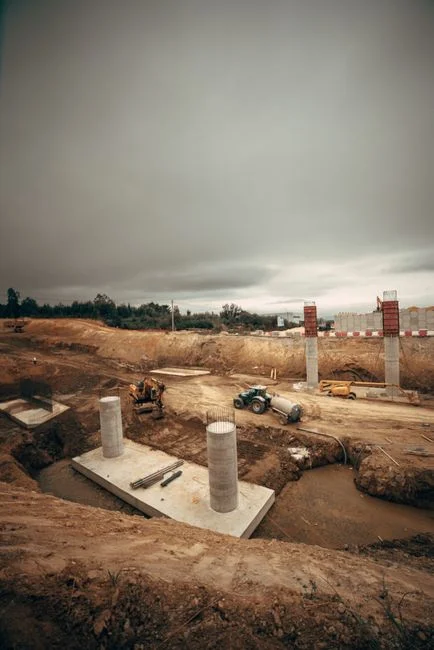
A comparable RFQ begins with one written design basis and requires every bidder to answer against it. Headline capacity and package price are not comparable unless hydraulic definitions, treatment guarantees, civil scope, utilities, commissioning, and local obligations are aligned.
Issue a common appendix covering average and peak flow, wastewater characteristics, groundwater and flood conditions, receiving point, required effluent parameters, available footprint, power availability, and expansion target. Require bidders to identify the flow basis for their capacity, describe the process train, provide civil drawings and utility loads, and state whether their offer includes pretreatment, collection-network interfaces, pumping, sludge handling, controls, installation, and commissioning.
Ask for performance guarantees tied to the agreed influent envelope and discharge conditions. A statement such as “capacity available” is insufficient without defining the operating basis, sampling points, test methods, stabilization period, and remedy for non-compliance. Also request a complete bill of quantities separating the vessel or modules, civil works, collection network, pumping, pretreatment, sludge handling, electrical, controls, installation, commissioning, training, warranty, and spares.
Lifecycle documentation should cover membrane or media replacement frequency, chemical use, sludge production and removal frequency, energy demand, operator hours, consumable prices, and service response time. The supplied research contains no verified Dakar project price or operation-and-maintenance benchmark, so every cost and consumption entry must be project-specific and supported by the bidder’s quotation.
Verify import, customs, lifting, local installation, commissioning, warranty, and spare-parts arrangements before award. Technical capacity does not establish delivery readiness. Local support should identify the responsible entity, response route, and site-service capability rather than simply listing a contact.
For a broader benchmarking method, compare this tender with packaged sewage treatment selection for a housing development and the regional packaged sewage plant selection guide. Use those comparisons to check question coverage, not to import unsupported Dakar conditions.
Frequently Asked Questions
How much wastewater should a Dakar housing development plant be sized to handle?
Start with the project’s connected population and water-demand basis, apply confirmed wastewater-generation and rejection assumptions, then add justified peak, infiltration, and equipment allowances. The 2024 Diamniadio study used an 80% rejection coefficient, but the project engineer must confirm it for current site conditions before using it in the tender.
Should we choose WSZ A/O or MBR for a Dakar housing estate?
Choose WSZ A/O as the starting candidate for conventional treatment when design flow is within its quoted 1–80 m³/hour range. Move to MBR when effluent quality, reuse, footprint, or expansion is decisive and the flow falls within the quoted 10–2,000 m³/day range. The decisive check is the bid guarantee at the project’s actual peak flow and agreed influent conditions.
What should we ask a packaged-plant supplier before ordering?
Require the common design basis, a defined capacity basis, process-performance guarantees, civil-interface drawings, utility requirements, commissioning scope, training, warranty, spares, local service arrangements, and a complete commercial breakdown. Do not accept a price that excludes collection works, pumping, pretreatment, sludge handling, installation, or performance testing.
What is the main compliance risk for a packaged sewage plant in Senegal?
The central risk is obtaining written confirmation of the acceptable discharge route and required effluent conditions from the relevant Senegalese authority. The 2024 Diamniadio study references Senegal’s Water Code and Environmental Code, but the supplied research does not provide a current packaged-plant discharge limit. Treat regulatory acceptance and connection conditions as award prerequisites, not post-award assumptions.
Can a buried package be installed on a flooded or high-groundwater site in greater Dakar?
Only after verified flood levels, groundwater conditions, geotechnical basis, access, pumping needs, and discharge routing are established. The 2017 UCL Dakar flood dissertation documents recurrent seasonal flooding and permanent waterlogging in some low-income suburbs, while the 2024 Diamniadio study identifies flooding and groundwater outcroppings in the wider development area. A packaged treatment unit does not remove those civil constraints.