What Actually Drives Ion Exchange Maintenance Cost
Industrial ion exchange maintenance cost typically runs $0.08–$0.35 per cubic meter of treated water in 2026. Mid-scale 50 m³/h systems usually spend $45,000–$120,000 per year once resin lifecycle, regenerant, rinse, disposal, labor, and downtime are included. Resin life of 3–8 years and co-current versus counter-current design set the range.
Residential softener baselines cited by consumer sources — roughly $600 per year for salt, occasional service, and minor parts (per Quality Water Treatment, 2026-07) — only mark the low end of the curve. Industrial IX is different: Trionetics published system specs show operating flows from 5 to 500 gpm (≈1 to 115 m³/h). OPEX scales with flow, influent loading, and regeneration frequency, not tank size alone. A pharmaceutical plant running 24/7 sees chemical and disposal costs 100–500× higher than a residential softener on the same resin chemistry.
The iceberg effect is where most procurement budgets fail. Visible line items — brine pellets, scheduled service visits, the occasional valve — typically account for only 25–40% of true annual IX OPEX. The remaining 60–75% sits below the surface: resin attrition that forces early replacement, brine haul-off fees that vary by region and waste class, capacity loss that drives extra regenerations, and production downtime while a single-vessel unit sits idle for backwash, regeneration, and rinse. A capital request that funds only the visible layer usually breaks at the 18-month mark.
Two regeneration regimes set the cost ceiling and floor. Co-current regeneration — brine flowing downward with service flow — uses simpler hardware but consumes 20–35% more salt and 30–50% more rinse water per cycle than counter-current. Counter-current regeneration needs higher CAPEX for nozzled vessels and flow controls, yet its OPEX advantage compounds across every cycle over a 10-year asset life. Local salt price, water cost, and disposal fees decide the choice — not vendor preference. Softening skids such as the Industrial Water Softener System (KJ-WT Series) follow the same OPEX drivers once resin volume and regeneration frequency are fixed.
What Is a Water Treatment Plant Cost Breakdown for IX?
A water treatment plant cost breakdown for ion exchange always starts with the same six OPEX lines, and each line can move by 2–5× with feedwater quality, regeneration design, and regional disposal economics. The table below aggregates 2026 industrial-typical ranges; calibrate against vendor quotes and one year of metered operating data before locking a budget.
| Cost Line | 2026 Industrial Range | Primary Driver |
|---|---|---|
| Resin replacement (amortized) | $0.02–$0.08 / m³ treated | Resin grade, feedwater chlorine, regeneration frequency |
| Regenerant chemicals (NaCl, HCl, NaOH) | $0.03–$0.12 / m³ treated | Dose, stoichiometric excess, chemical unit price |
| Rinse water | $0.005–$0.02 / m³ treated | Co-current vs counter-current; local water cost |
| Brine / waste disposal | $0.01–$0.06 / m³ treated | Regional hauling rates, classification, ZLD mandate |
| Labor & service contracts | $8,000–$30,000 / yr | Skid complexity, automation level, vendor SLA |
| Downtime / lost production | Site-specific | Duplex vs single-vessel; throughput value of treated water |
Resin replacement. Per Samco's published resin price data, strong-acid cation (SAC) and weak-acid cation (WAC) resins run $40–$200 per cubic foot, while strong-base anion (SBA) and weak-base anion (WBA) grades run $130–$200 per cubic foot. Service life matters more than sticker price: well-managed industrial resin lasts 5–8 years; resin exposed to free chlorine, iron breakthrough, or excessive regeneration cycles can fail in 3 years. At 3-year replacement on a 50 ft³ anion unit, annualized resin cost alone is roughly $2,200–$3,300 — a figure most spreadsheets miss when they apply the 7-year vendor default.
Regenerant dosing. For sodium-cycle softening, expect 0.15–0.30 kg of NaCl consumed per kg of hardness removed under typical co-current operation. For two-bed demineralizers running acid and caustic regeneration, stoichiometric excess of 100–200% above theoretical is standard because complete regeneration of every functional group needs a chemical penalty. Dose optimization is the lever: running 150% excess where 120% would achieve the same service run wastes 20% of the chemical budget for no quality gain.
Rinse water and brine disposal are coupled. Co-current units use 3–8% of treated throughput as rinse; counter-current cuts that to 2–4%. Every liter of rinse becomes a liter of brine that must be discharged. Off-site hauling in 2026 runs $0.02–$0.08 per liter depending on TDS, chloride content, and the hauler's local options — sites near inland evaporation ponds or zero-liquid-discharge (ZLD) infrastructure pay the low end; coastal sites with deep-well injection alternatives see the high end. ZLD removes the hauling line but adds evaporation or crystallization CAPEX that must be amortized into the same OPEX model.
Labor. A well-tuned skid needs 4–12 hours per month of operator attention: brine tank refill, instrument calibration, occasional valve work. Annual vendor service visits on mid-scale equipment run $1,500–$6,000 per visit depending on scope. The hidden labor cost is regeneration tuning — wrong dose, flow, or contact time costs more in chemicals than the service contract saves.
Downtime. Duplex softeners regenerate one vessel while the other stays in service — production loss is zero except during brief switchover. Single-vessel systems are out of service for 1–4 hours per regeneration cycle on simple softeners, and 12–48 hours on full demineralizer trains. For a plant producing $5,000/m³ product, four regeneration cycles per week at 4 hours each is a six-figure annual exposure the maintenance budget must surface explicitly. Plant-wide context for how IX sits inside broader OPEX is covered in the sibling guide on maintenance cost for waste water treatment plants.
How much does ion exchange resin regeneration cost?
Ion exchange resin regeneration cost is driven by salt or acid/caustic dose, rinse volume, and how often the bed cycles — not by vessel diameter alone. On sodium-cycle softeners, regenerant chemical spend often lands inside the $0.03–$0.12 / m³ treated band once stoichiometric excess and unit chemical price are included. Two-bed demineralizers pay more because HCl and NaOH at 100–200% excess dominate every cycle, and each rinse liter becomes a disposal liter.
Most plants we size for mid-hardness boiler feed run regenerations at the lower end of the dose window once conductivity triggers replace timers. Timer-based cycles that fire with unused capacity left on the bed waste 10–20% of regenerant with no conductivity gain. Quality-triggered regeneration plus an automatic chemical dosing skid is the usual fix when chemical invoices climb without a feedwater change.
What Is the TCO for Ion Exchange Water Treatment?
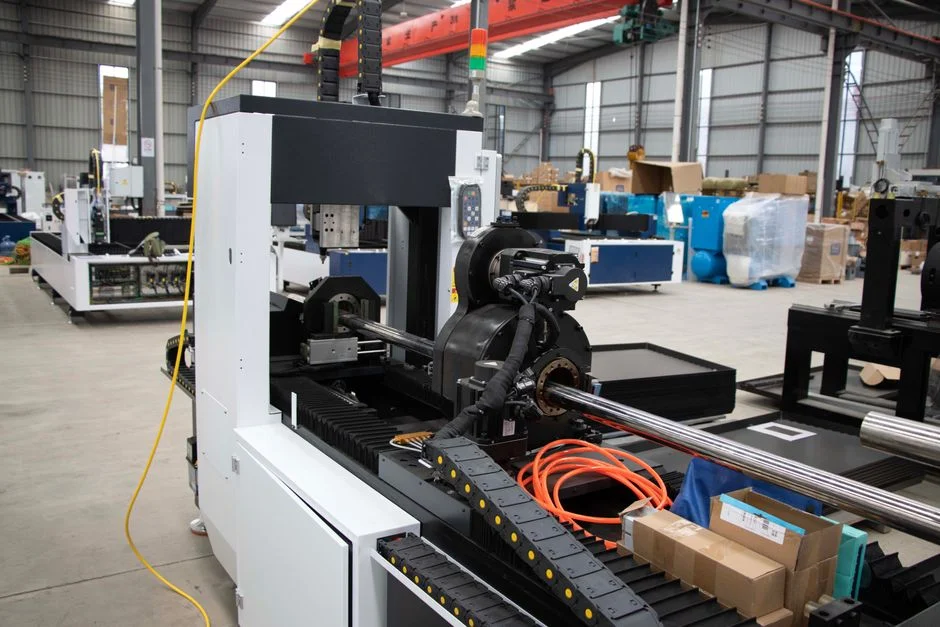
Total cost of ownership for ion exchange water treatment is the sum of year-1 commissioning OPEX, steady-state years, and the first resin event — not the purchase price alone. Take a 50 m³/h two-bed demineralizer followed by a mixed-bed polisher — a configuration common in pharma, food & beverage, and medium-pressure boiler-feed service. Assume feed TDS of 250 mg/L, 90% runtime, and counter-current regeneration on both cation and anion stages.
Year 1 runs 15–25% above steady-state OPEX. Commissioning resin loading, the first three to six months of regeneration tuning, and disposal-stream characterization all hit the books in year one. Budget $90,000–$110,000 for this year on a 50 m³/h system.
Years 2–4 stabilize. With the regeneration recipe dialed in, expect annual OPEX in the $70,000–$95,000 range. Dominant lines are regenerant chemicals (HCl and NaOH at industrial-volume pricing), rinse water plus discharge, and labor. Mixed-bed polisher resin in this window is still inside its first half-life and contributes only an amortized $5,000–$8,000 per year.
Year 5–6 brings the first major resin event. Strong-base anion resin in the two-bed train typically reaches 50–60% of its original capacity by year 5, and operators choose full anion train replacement or a partial top-up with 30–50% new resin blended into the vessel. At Samco-cited pricing of $130–$200/ft³ for SBA resin, a 50% top-up on a 40 ft³ anion bed is $2,600–$4,000 in resin plus 8–16 hours of labor and one extended outage. Mixed-bed polisher resin in this window is usually still serviceable until year 7–8 unless the feed has organics or silica breakthrough.
Over a 10-year horizon, lifecycle OPEX for an industrial IX system typically runs 2–3× the initial CAPEX (industry heuristic, not site-specific). A unit purchased at $150,000 will consume $300,000–$450,000 in operating cost before retirement — which is why procurement teams that evaluate only purchase price consistently underestimate total cost of ownership by a factor of three.
Ion Exchange vs RO vs EDI: OPEX per Cubic Meter
Ion exchange is not always the right demineralization path; three rules of thumb cover about 80% of industrial cases. IX wins for low-TDS polishing, condensate polishing, and high-purity final stages where feed TDS is below 500 mg/L and target conductivity is below 1 µS/cm. RO wins for bulk demineralization at feed TDS above 500 mg/L and throughputs above 20 m³/h, because the absence of chemical regenerant offsets membrane replacement and energy cost. EDI sits between: it uses roughly 90% less chemical than IX but needs RO pretreatment to bring feed TDS below 50 mg/L, which limits it to polishing duty on RO permeate.
| Technology | 2026 OPEX Range | Feed TDS Window | Chemical Use |
|---|---|---|---|
| Ion Exchange (IX) | $0.08–$0.35 / m³ | < 500 mg/L (polishing); any TDS (softening) | High — NaCl, HCl, NaOH |
| Reverse Osmosis (RO) | $0.04–$0.15 / m³ | 500–10,000 mg/L | Minimal — antiscalant, clean-in-place |
| Electrodeionization (EDI) | $0.10–$0.25 / m³ | < 50 mg/L (post-RO) | Very low — no chemical regeneration |
The crossover point where RO OPEX drops below IX OPEX is site-specific but generally falls between 200 and 500 mg/L feed TDS. For a deeper look at how RO stages stack up in an industrial train, the industrial RO process and stage design walkthrough covers the unit operations. Sites currently running IX on feedwater above 500 mg/L should model a 5-year RO+IX hybrid scenario: RO handles 90–95% of the dissolved load, IX polishes the permeate, and IX OPEX collapses because regeneration frequency drops by an order of magnitude. An industrial RO system sized to match the IX feed flow is the typical retrofit path.
Where the Real Savings Come From: 7 Cost-Lever Practices
- Pretreat with multimedia filtration. A multi-media pretreatment filter ahead of the IX train cuts SDI to below 3 and removes iron and manganese that would otherwise foul resin. Sites that add this step typically extend resin life 30–60% and stretch regeneration intervals proportionally.
- Switch co-current to counter-current regeneration. The 20–35% salt reduction and 30–50% rinse-water reduction are real and persist for the full asset life. The CAPEX premium pays back in 2–4 years on any system running more than one regeneration per day.
- Install online conductivity meters tied to regeneration triggers. Timer-based regeneration wastes chemical on cycles where the bed still has capacity. Quality-triggered regeneration with dosing automation and SCADA logic cuts regenerant use 10–20%.
- Specify premium resin for high-purity polishers. Purolite, Dowex, and Amberlite uniform-particle grades cost 30–80% more per cubic foot but deliver 2–4× the cycle count on polishers. Cost-per-cycle math usually favors premium resin despite the higher upfront.
- Lock brine disposal rates with a multi-year hauling contract. Spot-market disposal rates have moved 15–25% year-over-year in 2024–2026 (HydropureWater field data, 2026). A 3-year fixed-rate contract with one hauler removes that volatility from the OPEX model.
- Track resin attrition annually with a small-scale column test. Pulling a 1-liter sample and running a laboratory capacity test against new resin of the same grade tells you exactly when replacement is due — not when a sales visit suggests it.
- Consider an RO + IX hybrid retrofit. When IX OPEX on a high-TDS feed crosses $0.25/m³, the 5-year lifecycle case for adding a membrane stage upstream becomes compelling. The RO membrane troubleshooting guide covers the operational side of that transition, and broader plant economics are detailed in the pharma plant OPEX breakdown for sites that need a cross-technology benchmark.
For how pH adjustment and chemical dosing integrate with IX regeneration cycles, the pH adjustment system maintenance guide walks through the dosing and instrumentation side of the same OPEX stack.
When to Replace, When to Regenerate, When to Retire the System
Three decision rules cover the resin-lifecycle question every maintenance planner faces. Regenerate when throughput between regenerations drops 10–15% from baseline — the bed still has capacity, but you are entering the diminishing-returns zone. Replace resin when operating capacity falls below 70% of the new-resin rating, or when breakthrough (target ion leakage above spec) occurs before 80% of the expected service cycle. Retire the entire IX system when membrane alternatives — RO, EDI, or RO+EDI — deliver a lower 5-year lifecycle cost on the same feed and product spec; use the OPEX comparison table above for the per-m³ math.
Resin fouling indicators should drive replacement before capacity loss does. Iron fouling shows up as rust-colored beads and a gradual pressure-drop rise; cleanup with a reducing agent (sodium hydrosulfite or HCl) can recover 80–90% of capacity if caught early. Organic fouling looks like a dark, oily surface film and shortened service runs; a brine-and-NaOH soak is the standard cleanup. Silica fouling on anion resin is the worst case — it is rarely reversible, and replacement is the only fix. Running a fouling diagnostic before approving a full resin replacement frequently saves 30–50% of the planned spend.
Selection checklist before you lock an IX OPEX budget:
- Confirm feed TDS, hardness, chlorine, iron, organics, and silica with recent lab data.
- Choose co-current vs counter-current against local salt, water, and disposal prices.
- Model duplex vs single-vessel downtime at your product value per m³.
- Amortize resin at the realistic 3–8 year life, not the brochure default.
- Price brine haul-off or ZLD with a multi-year quote, not a spot rate.
- Compare 5-year IX-only OPEX against RO+IX when feed TDS exceeds about 500 mg/L.
- Require annual column-test capacity tracking in the service contract.
Who This Is For / Next Step
This breakdown is for plant engineers, EPC contractors, and procurement managers sizing or renewing industrial softeners and demineralizers. Look elsewhere if you only need a residential softener budget or a municipal secondary-treatment sludge plan. If you have feed analysis and a target conductivity, request a site-specific OPEX model through our request a quote form and we will map resin volume, regeneration regime, and disposal against your flow.
Frequently Asked Questions
What is the typical annual maintenance cost for an industrial ion exchange system in 2026?
For a 50 m³/h softening or demineralization system, expect $45,000–$120,000 per year once resin lifecycle, regenerant, water, disposal, and labor are included. That range usually translates to $0.08–$0.35 per cubic meter of treated water under industrial duty. Exact spend tracks regeneration frequency, brine haul-off rates, and whether the train is single-vessel or duplex.
How often does ion exchange resin need to be replaced?
Industrial ion exchange resin typically needs replacement every 3–8 years depending on feedwater quality, chlorine exposure, iron or organics loading, and regeneration frequency. Premium resins on well-pretreated feeds reach the 7–8 year mark. Fouled or over-regenerated beds can fail in about 3 years, so annual capacity testing beats calendar defaults.
What is the biggest hidden cost in IX maintenance?
Brine or rinse-water disposal is usually the biggest hidden IX maintenance cost because it scales with regeneration frequency and regional hauling rates. It frequently equals 20–40% of total OPEX on industrial trains. Capital requests that budget only salt and service visits almost always underestimate this line until the first full operating year closes.
Is ion exchange cheaper than reverse osmosis?
For feed TDS below 500 mg/L and polishing duty, ion exchange often has lower CAPEX and competitive OPEX versus reverse osmosis. Above 500 mg/L or at high throughputs, RO OPEX of $0.04–$0.15 per cubic meter typically drops below IX OPEX because there is no chemical regenerant. Many high-TDS sites then run RO for bulk removal and keep IX only as a polisher.
What is the single most effective way to reduce IX OPEX?
Adding a multimedia filter ahead of the IX train is usually the single most effective OPEX cut available to existing plants. The 30–60% extension in resin life, plus the proportional drop in regeneration frequency, typically trims total IX OPEX by 15–25%. Counter-current conversion and conductivity-triggered regeneration are the next levers once pretreatment is already in place.
Related Equipment
- twin-tank industrial water softeners — The OPEX table assumes salt and resin; size a matching twin-tank unit.