Why Fine Chemical Wastewater Needs a Fenton Oxidation System
Fine chemical effluent from pesticide intermediate, dye, and pharmaceutical API plants typically arrives at the treatment train with COD between 5,000 and 50,000 mg/L, BOD/COD ratios below 0.2, color above 500 Pt-Co units, salinity of 5–50 g/L from chloride and sulfate process salts, and residual biocides or aromatic intermediates (anilines, phenols, naphthalene derivatives) that conventional activated sludge cannot metabolize. Discharge is intermittent — batch reactor washouts, campaign changeovers, and mother-liquor transfers hit the equalization basin in slug loads that push MLVSS from 3,500 mg/L to under 1,000 mg/L within hours. Under those conditions, conventional biological treatment loses 40–60% of its rated removal efficiency and can collapse entirely on a single toxic pulse (HydropureWater field data, 2025–2026).
Fenton oxidation sits upstream of the biological step as a chemical pretreatment. At pH 2.5–3.5, Fe2+ catalyzes H2O2 decomposition to generate hydroxyl radicals (•OH) with a standard reduction potential of +2.80 V — strong enough to cleave aromatic rings, dechlorinate halogenated intermediates, and convert non-biodegradable COD into short-chain organic acids. The effluent leaves the Fenton reactor with BOD/COD typically lifted from <0.2 to 0.3–0.4 and acute toxicity stripped, so a downstream MBR or activated sludge can finish polishing without shock-loading failure. The role of Fenton as a refractory organics treatment step for this duty is the working definition used in the MDPI Water 2026 Special Issue on advanced oxidation processes, and the underlying •OH generation has been confirmed experimentally by DEPMPO spin-trap EPR detection in H2O2/UV systems (Research on Chemical Intermediates, Springer 2024).
Fenton Reaction Chemistry and the Role of Fe2+/Fe3+ Cycling
The classical Fenton chain is a two-step redox cycle. The initiation step, Fe2+ + H2O2 → Fe3+ + •OH + OH−, proceeds with a rate constant of 63–76 M⁻¹s⁻¹ and is fast. The propagation step, Fe3+ + H2O2 → Fe2+ + •OOH + H+, is roughly four orders of magnitude slower at 0.001–0.01 M⁻¹s⁻¹ and is the kinetic bottleneck of the entire system. Without a mechanism to regenerate Fe2+, the reaction stalls within minutes and COD removal flatlines.
That regeneration problem is exactly what heterogeneous and bimetallic catalyst research is trying to solve. The Cu/Fe@zeolite study demonstrated that Cu(I) loaded onto a zeolite support accelerates the Fe(II)/Fe(III) cycle by acting as an electron shuttle, boosting bisphenol A degradation through enhanced •O2− and •OH generation (ScienceDirect, 2024). Nano-MoO2 at 0.05 g/L activates 4.0 mmol/L peroxymonosulfate through Mo(IV)→Mo(VI) redox cycling, producing SO4•−, •OH, O2•−, and ¹O2 simultaneously for PAH derivative degradation (ScienceDirect, 2024). These are scientifically interesting but remain pre-commercial; classical homogeneous Fenton is still what gets specified on industrial RFQs in 2026.
Scavenging is the other side of the chemistry that engineers under-account for. Excess H2O2 quenches •OH back to O2 and H2O; excess Fe2+ forms unreactive Fe-OOH complexes; bicarbonate, carbonate, and chloride at the 5–50 g/L salinity typical of fine chemical streams scavenge radicals faster than they can attack the target. The practical consequence is that laboratory jar tests on a single substrate routinely hit 90% COD removal, while the same dose on a real plant stream with 20 g/L NaCl and 500 mg/L bicarbonate barely cracks 50%. Always pilot on plant effluent, never on a synthetic.
Key Design Parameters: pH, H2O2:Fe2+ Ratio, HRT and Dose
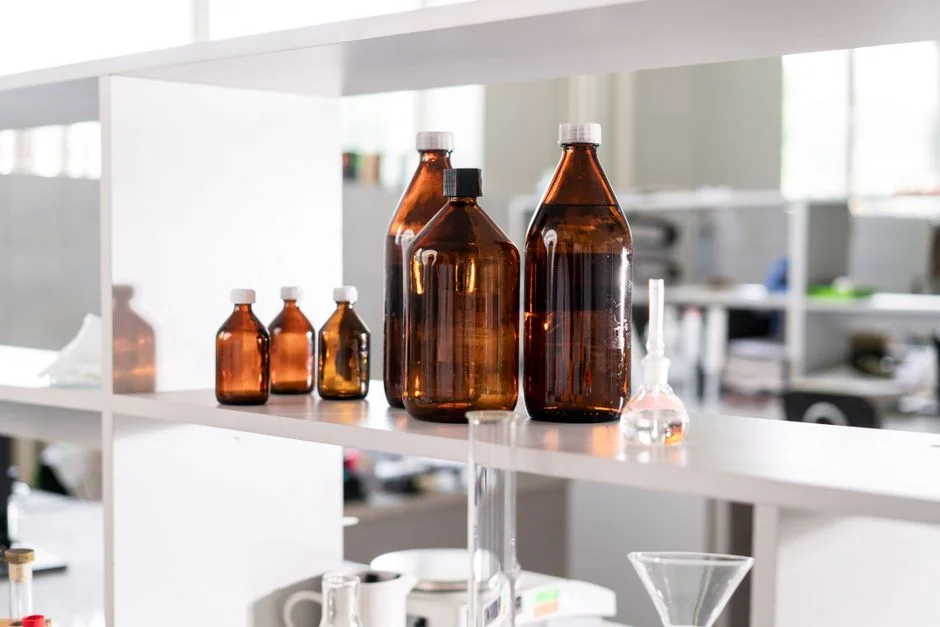
Fenton reactor sizing collapses to four numbers: pH window, H2O2:Fe2+ molar ratio, H2O2:COD mass ratio, and hydraulic residence time. Get those right and the skid works; get any one wrong and you dump iron and peroxide for nothing.
| Parameter | Operating Range | Engineering Comment |
|---|---|---|
| Reaction pH | 2.5–3.5 | Below 2.0, •OH yield collapses; above 4.0, Fe3+ precipitates as ferric oxyhydroxide and H2O2 decomposes to O2 |
| H2O2:Fe2+ molar ratio | 10–20:1 | Ratios below 5:1 waste Fe as sludge; ratios above 30:1 leave H2O2 unreacted, raising downstream BOD and cost |
| H2O2:COD mass ratio | 1.0–2.5 | Start jar tests at 1.5; bracketed 1.0–2.5 covers most pesticide intermediate and dye streams (HydropureWater field data, 2026) |
| HRT (CSTR or 2-stage PFR) | 30–120 min | 30–45 min for the radical reaction; add 30–60 min for neutralization and floc maturation |
| Temperature | 25–40 °C | No heating required for most ambient fine chemical discharges; >45 °C accelerates H2O2 decomposition to O2 |
| Reagent grade | 30–50% H2O2; FeSO4·7H2O | Ferrous sulfate heptahydrate is the standard Fe2+ source; avoid FeCl3, which adds chloride load |
| TSS after Fenton | 1,500–4,000 mg/L | Ferric hydroxide floc; requires lamella clarification or sedimentation before biological polishing |
| COD removal | 50–80% | Classical Fenton without catalyst; the nano-MoO2/PMS benchmark at 0.05 g/L catalyst and 4.0 mmol/L PMS represents the modernized upper bound for catalyst-assisted AOPs on similar refractory substrates (ScienceDirect, 2024) |
The table is the working datasheet. Engineers should pin all eight parameters into the P&ID and the PLC logic before they sign off on a reactor volume. Reactor volume is then V = Q × HRT, where Q is the design flow and HRT is taken from the table above. For a 20 m³/h stream at 60 min HRT, that is a 20 m³ working-volume CSTR, not the 50 m³ vessel that some vendors quote — always clarify whether HRT is based on working volume or total volume.
Fenton vs. Photo-Fenton, Electro-Fenton, Ozone and Persulfate: 2026 Comparison
Classical Fenton is the lowest-CAPEX AOP and the easiest to skid, but it is not always the right answer. Photo-Fenton, electro-Fenton, ozone, and persulfate each have a specific application window where they outperform. The table below lets a process engineer pick the variant that matches their influent rather than defaulting to the chemistry they already have on site.
| AOP Variant | COD Removal | Sludge Yield | CAPEX Index | OPEX Index | Best-Fit Application |
|---|---|---|---|---|---|
| Classical Fenton (Fe2+/H2O2) | 50–80% | 1.5–3.0 kg/kg H2O2 | Low | Low–Medium | COD pretreatment upstream of MBR; tolerant of high-COD batch releases |
| Photo-Fenton (UV/H2O2/Fe2+) | 80–95% | 0.3–0.8 kg/kg H2O2 | Medium | Medium–High | Low-color streams targeting TOC <50 mg/L; UV transmissivity >60% |
| Electro-Fenton (cathodic H2O2) | 70–90% | 0.1–0.3 kg/kg H2O2 | High | High (electricity) | Low-flow, low-salinity streams; on-site H2O2 generation; minimal sludge |
| Ozonation (O3 / O3-H2O2) | 40–70% | None | Medium–High | Medium | Decolorization and saturated aromatic ring cleavage; high O3 off-gas management burden |
| Persulfate (PMS/PDS, optionally nano-MoO2-activated) | 70–95% | Minimal | Medium | Medium | Halogenated aromatics, chloride-rich streams where •OH is scavenged; sulfate residual complicates downstream biology |
Decision rule for the engineer writing the RFQ: choose classical Fenton for high-COD pretreatment when iron sludge can be dewatered and landfilled or recycled; choose photo-Fenton or electro-Fenton when the discharge consent demands TOC below 50 mg/L and the stream is low in color and UV-absorbing species; choose persulfate (with PMS activation chemistry such as the 0.05 g/L nano-MoO2 system on PAH derivatives) when chloride above 10 g/L suppresses •OH yields. Hybrid trains — Fenton for COD, ozone or photo-Fenton for residual color — are common at sites where the consent sets both a COD and a color limit.
Reactor Configuration, Materials and Skid Integration
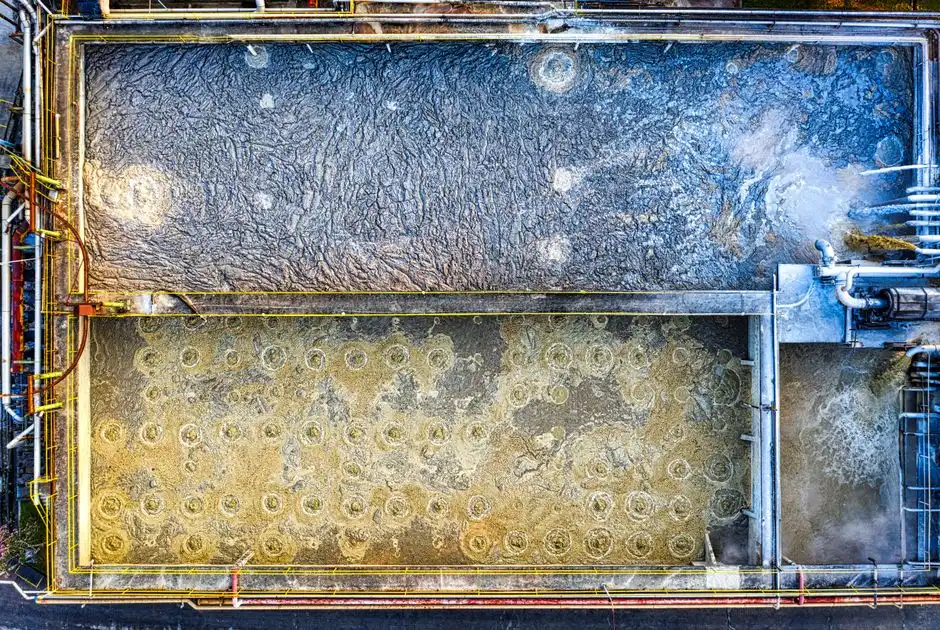
Industrial Fenton reactors are typically CSTRs in 316L stainless steel for flows up to 30 m³/h, and FRP- or HDPE-lined carbon steel above that to keep CAPEX in check. Internal baffles and slow-speed mixers (G-values of 50–200 s⁻¹) are needed to keep H2O2 distributed without stripping the dissolved oxygen that scavenges •OH. Two-stage pH adjustment is the standard configuration: pH down to 2.5–3.5 with 98% sulfuric acid for the reaction, then pH up to 7.0–8.0 with 30% NaOH or lime slurry to precipitate Fe(OH)3 before clarification.
Instrumentation is the part most often under-specified. Inline ORP control on the reaction tank, targeting +350 to +500 mV versus Ag/AgCl, gives a real-time read on the Fe2+/Fe3+ balance and lets the PLC trim H2O2 feed before COD removal drifts. pH control on both the acid-side and base-side dosing loops is mandatory; a single pH probe with no redundancy is the single most common cause of failed Fenton performance in audit findings. Automatic chemical dosing skids for H2O2 and Fe2+ feed with redundant pH and ORP probes are the standard skid-builder approach, and the neutralization tank is typically followed by a high-efficiency lamella clarifier for Fe(OH)3 separation. A complete skid package — reaction tank, neutralization tank, lamella, dosing skids, PLC — is what the engineer should be asking for in the RFQ, not loose components from four vendors.
Sludge Management and Downstream Polishing
Iron sludge is the operational headache that nobody budgets correctly. Yield is 1.5–3.0 kg of Fe(OH)3 per kg of H2O2 dosed, so a 20 m³/h plant running at 200 mg/L H2O2 produces roughly 480–960 kg/day of wet ferric sludge. After a lamella thickener, that sludge sits at 92–96% moisture; a plate-and-frame filter press for Fenton iron sludge typically dewaters it to 35–45% dry solids, which is landfillable in most jurisdictions or recyclable back to a ferrous regeneration tank at large sites.
Downstream polishing is almost always an MBR rather than a conventional activated sludge basin. MBR handles the residual H2O2 that bleeds through the neutralization step and tolerates the TSS variability that a Fenton clarifier discharge produces. MBR polishing downstream of the Fenton reactor also tightens the final effluent to BOD <5 mg/L and TSS <1 mg/L, which is what most pesticide and pharma discharge consents require. MBR polishing specs for Fenton-treated streams are covered in the linked reference, and online COD analyzers for Fenton dose optimization are worth specifying if the Fenton reactor handles variable batch loads.
2026 CAPEX and OPEX Band, and Vendor Selection Checklist
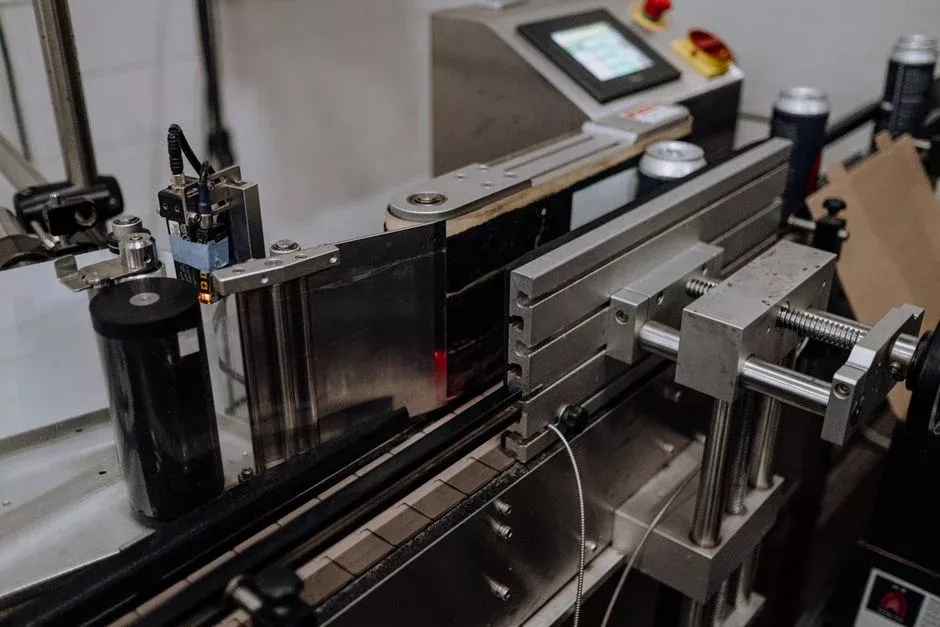
Fenton skid CAPEX for a 5–50 m³/h system typically runs $40,000–$150,000 turnkey in 2026, depending on materials of construction, instrumentation, and whether the skid includes the clarifier and chemical dosing packages. OPEX is dominated by H2O2 at $0.30–$0.80 per kg, with sludge disposal and NaOH/H2SO4 neutralization chemicals adding another 20–30%. On a per-cubic-meter-treated basis, classical Fenton lands at $0.80–$2.50/m³, photo-Fenton at $1.50–$4.00/m³, and electro-Fenton at $2.00–$5.00/m³ for typical 2026 industrial operating envelopes.
| Cost Component | Classical Fenton | Photo-Fenton | Electro-Fenton |
|---|---|---|---|
| Skid CAPEX (5–50 m³/h) | $40,000–$150,000 | $80,000–$250,000 | $150,000–$500,000 |
| OPEX per m³ treated | $0.80–$2.50 | $1.50–$4.00 | $2.00–$5.00 |
| Dominant OPEX driver | H2O2 + sludge disposal | UV lamps + H2O2 | Electricity + electrode replacement |
| Sludge produced | High (1.5–3.0 kg/kg H2O2) | Low (0.3–0.8 kg/kg H2O2) | Minimal (0.1–0.3 kg/kg H2O2) |
Vendor selection should filter on five criteria: jar-test pilot data on the actual plant effluent (not a synthetic), in-house ORP and redundant pH instrumentation, PLC/SCADA integration that exposes the Fenton reactor to the plant DCS, FRP or 316L construction appropriate to the chloride exposure, and at least three proven fine chemical references in the past 24 months. Fine chemical wastewater plant pricing benchmarks are a useful sanity check against any quote that comes in below $40,000 for a 20 m³/h skid — at that number, something is missing from the scope.
Frequently Asked Questions
What pH does a Fenton oxidation system for fine chemical wastewater operate at?
Reaction pH must be held between 2.5 and 3.5; outside that band, iron precipitates as ferric oxyhydroxide and H2O2 decomposes to O2 instead of hydroxyl radicals (HydropureWater field data, 2026).
What H2O2:Fe2+ molar ratio should I specify for a pesticide intermediate stream?
Start at 15:1 for jar tests and bracket 10–20:1; below 10:1, iron sludge dominates the OPEX, and above 20:1, residual H2O2 bleeds into the biological step.
How much COD removal can classical Fenton deliver on dye or pharmaceutical API wastewater?
50–80% COD removal is the realistic operating band for a properly tuned classical Fenton reactor at H2O2:COD ratios of 1.0–2.5 and 30–120 min HRT.
When should I prefer persulfate over classical Fenton for fine chemical wastewater?
Use persulfate (PMS or PDS, optionally nano-MoO2-activated at 0.05 g/L catalyst and 4.0 mmol/L PMS) when chloride above 10 g/L scavenges hydroxyl radicals and sulfate residual is acceptable in the downstream biology (ScienceDirect, 2024).
What is the typical iron sludge yield from a Fenton oxidation system?
1.5–3.0 kg of Fe(OH)3 per kg of H2O2 dosed, dewaterable to 35–45% dry solids on a plate-and-frame filter press.
What is the 2026 CAPEX range for a 20 m³/h Fenton skid?
Turnkey skid CAPEX for a 5–50 m³/h system sits at $40,000–$150,000 depending on materials, instrumentation, and whether the clarifier and dosing packages are included in the scope.