Why Vitamin Manufacturing Wastewater Is Its Own Engineering Problem
Vitamin manufacturing wastewater behaves nothing like the municipal or food-processing streams that dominate commodity package-plant listings on Made-in-China, where baseline units run US$5,800–$13,000. Fermentation vitamins (B2, B12, B7) generate effluent with mycelium, ammonia at 200–800 mg/L, and sulfate at 1,500–4,000 mg/L from the发酵 medium, while chemically synthesized vitamins (VC, VE, VA) carry residual methanol, isopropanol, and acetone at 0.1–2% with pH swings between 1 and 13 across batch campaigns. A typical raw influent envelope across both routes runs COD 8,000–25,000 mg/L, BOD₅/COD ratio 0.35–0.55 (moderately biodegradable), TSS 2,000–6,000 mg/L, and total nitrogen 400–1,200 mg/L (HydropureWater field data, 2026).
That envelope is why generic package plants fail at vitamin sites. They ship with undersized equalization basins (typically 4–6 h HRT versus the 8–24 h needed to damp batch fermentation peaks), no anaerobic stage for high-COD destruction, and no solvent stripping or FOG removal ahead of the biological train. A 1.5× peaking factor from batch fermentation and CIP wash cycles is normal, and any hydraulic design that ignores it will see biomass washout within weeks of startup. The 5× price spread between a US$5,800 municipal unit and a properly engineered vitamin plant is not markup — it is the cost of a completely different process train.
The 4-Stage Process Train Behind Every 2026 Quote
Every defensible 2026 quote for a vitamin plant resolves to the same four-stage train: pretreatment, anaerobic, aerobic/MBR, and RO polish. The exact equipment list varies by flow and influent, but the chain of unit operations does not. This is the flow you should be able to sketch on a whiteboard before any vendor walks into your office, because the moment you can name the equipment, you can audit the price.
Stage 1 — Pretreatment handles the suspended and emulsified load. A rotary bar screen at 1–3 mm aperture protects downstream pumps, followed by an equalization basin sized for 8–24 h HRT to absorb batch swings. pH adjustment to 6.5–7.5 is mandatory before any biological stage, and a DAF system is added whenever FOG exceeds 300 mg/L. Stage 2 — Anaerobic digestion is the workhorse for COD reduction. A UASB reactor is the right choice for 50–500 m³/day; an IC (internal circulation) reactor takes over above 500 m³/day because of its higher loading rate and smaller footprint. Both run at HRT 24–48 h, achieve 70–85% COD removal, and yield 0.30–0.45 m³ of biogas per kg of COD removed (HydropureWater field data, 2026) — a credit that belongs in your OPEX model, not the vendor's pocket.
Stage 3 — Aerobic + MBR polishes the anaerobic effluent. Activated sludge operates at F/M 0.15–0.25 kg BOD/kg MLSS·d, followed by a submerged PVDF MBR membrane bioreactor with 0.1 μm pore size and flux of 12–18 LMH. Effluent from this stage lands at COD <50 mg/L and SS <5 mg/L, which is the minimum bar for any direct-discharge permit. Stage 4 — RO polish is added when the site targets water reuse at 60–75% recovery or when total dissolved solids limits in China GB 21904-2008 (TDS <2,000 mg/L for indirect discharge) cannot otherwise be met. The COD chain across the train reads 8,000–25,000 → 1,200–3,750 → 50–150 → <50 mg/L, with BOD tracking 3,500–10,000 → 350–900 → <10 mg/L.
Waste-activated sludge is thickened via gravity belt or DAF, then dewatered with a plate-and-frame filter press to 22–28% dry solids — the minimum consistency for off-site incineration or landfill.
| Stage | Key Equipment | Design Parameter | Effluent Target |
|---|---|---|---|
| 1. Pretreatment | Rotary bar screen + equalization + pH adjustment (+ DAF if FOG >300 mg/L) | Screen 1–3 mm; EQ 8–24 h HRT | TSS removal 40–60%; pH 6.5–7.5 |
| 2. Anaerobic | UASB (50–500 m³/d) or IC (>500 m³/d) | HRT 24–48 h; COD removal 70–85% | COD 1,200–3,750 mg/L; biogas 0.30–0.45 m³/kg COD |
| 3. Aerobic + MBR | Activated sludge + submerged PVDF MBR (0.1 μm) | F/M 0.15–0.25; flux 12–18 LMH | COD <50 mg/L; SS <5 mg/L; BOD <10 mg/L |
| 4. RO Polish | Two-pass RO (optional, for reuse or TDS compliance) | Recovery 60–75% | TDS <2,000 mg/L (GB 21904-2008); reuse-grade conductivity |
Vitamin Manufacturing Wastewater Treatment Plant Price: 2026 CAPEX by Flow Rate
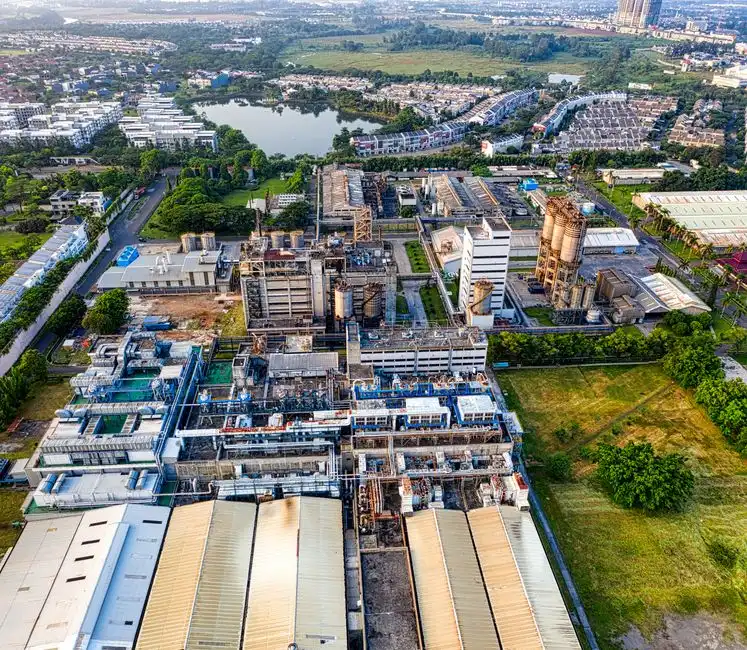
CAPEX for a vitamin manufacturing wastewater treatment plant in 2026 spans $280,000 to $4.5 million+ depending on flow, and the spread inside each band is roughly 5× because the same flow can be processed with very different levels of process intensity. The table below covers equipment + installation + commissioning and excludes land, buildings, and grid connection — add 25–35% for civil works, 12–18% for electrical and instrumentation, and 8–12% for engineering and commissioning if your vendor quote does not already carry those line items.
| Design Flow | CAPEX Band (2026) | Typical Anaerobic Choice | MBR Configuration | RO Stage |
|---|---|---|---|---|
| 50 m³/day | $280,000 – $420,000 | UASB | Single skid, 1 train | Optional |
| 200 m³/day | $580,000 – $850,000 | UASB or small IC | 2 trains | Optional |
| 500 m³/day | $1.1M – $1.6M | IC reactor | 2–3 trains, automated CIP | Common for reuse |
| 1,000 m³/day | $1.9M – $2.4M | IC reactor (multi-module) | 3–4 trains, redundant | Standard for reuse |
| 2,000 m³/day | $3.2M – $4.0M | Multi-module IC + sludge digester | 4+ trains, full SCADA | Standard, two-pass |
| 5,000+ m³/day | $4.5M+ | Multi-module IC + biogas utilization | Multiple parallel lines | Standard, two-pass + EDI |
The 5× price spread inside each band is driven by four variables: influent strength (a 25,000 mg/L COD stream needs roughly 2× the anaerobic volume of a 10,000 mg/L stream), discharge target (direct surface discharge versus indirect to sewer changes the MBR and RO scope), material of construction (SS304 versus SS316 versus PP/FRP), and automation level (manual valves versus full SCADA with remote diagnostics). A Made-in-China US$5,800–$13,000 package unit is not comparable to any row above: those handle municipal-grade BOD/COD with no solvent load and no biological stage beyond extended aeration, and they will not meet 25,000 mg/L pharma COD with methanol and acetone spikes. For UF cost data that often sits beside the RO polish in a reuse train, see the UF cost data breakdown.
What Actually Drives Operating Cost in 2026
Total OPEX for a properly designed vitamin plant runs $0.18–$0.95 per m³ treated, with a typical mid-range 1,000 m³/day facility landing near $0.42/m³ (HydropureWater field data, 2026). Energy is the single largest line at 45–55% of OPEX — aeration blowers, MBR permeate pumps, and RO high-pressure pumps together. Blower energy alone can reach $0.12–$0.20/m³ at current industrial electricity tariffs, which is why high-efficiency turbo blowers and dissolved-oxygen feedback control pay back inside 18 months at any flow above 500 m³/day.
Sludge handling accounts for 20–30% of OPEX, dominated by transport, disposal, and dewatering consumables. Filter cloth on a plate-and-frame filter press typically needs replacement every 800–1,200 operating hours, and polymer conditioning for the press runs another $0.02–$0.06 per m³ of feed. Chemicals (pH adjusters, RO antiscalant, CIP agents) sit at 10–15%; antiscalant alone is $0.015–$0.04 per m³ of RO permeate, and an RO polish stage with two-pass operation doubles that line. Labor and maintenance together run 10–15%; an automated 1,000+ m³/day plant typically staffs 2–3 operators per shift.
| OPEX Line Item | Share of OPEX | Typical Cost Driver | 2026 Range |
|---|---|---|---|
| Energy (blowers, MBR + RO pumps) | 45–55% | Industrial tariff, blower efficiency, RO recovery | $0.12–$0.42/m³ |
| Sludge handling + disposal | 20–30% | Filter cloth life, polymer dose, transport distance | $0.05–$0.22/m³ |
| Chemicals (pH, antiscalant, CIP) | 10–15% | Influent variability, RO recovery, CIP frequency | $0.03–$0.12/m³ |
| Labor + maintenance | 10–15% | Automation level, regional wage, contract terms | $0.03–$0.14/m³ |
Compliance Targets Your Plant Must Hit in 2026
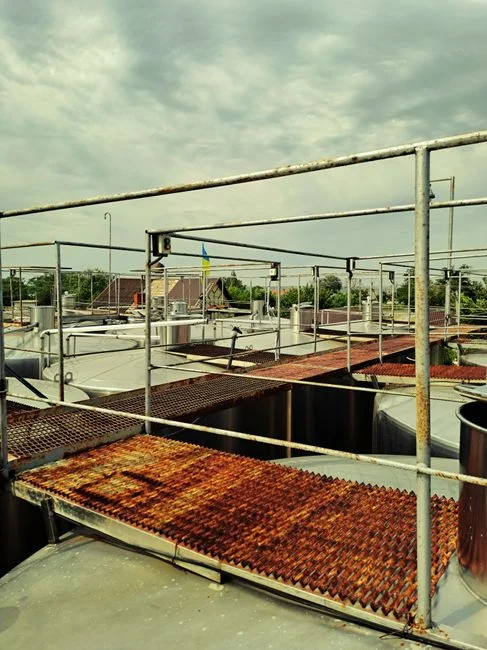
China GB 21904-2008 sets the floor for any vitamin plant discharging to surface water: COD <50 mg/L, BOD <10 mg/L, ammonia N <10 mg/L, total N <30 mg/L, SS <10 mg/L, and TDS <2,000 mg/L for indirect discharge. An MBR-only train clears the COD, BOD, ammonia, and SS bars but cannot meet TDS or total N without a downstream RO or breakpoint chlorination step. The EU BAT-AEL under Directive 2010/75/EU is tighter: COD 20–80 mg/L, TOC 10–35 mg/L, and total N 5–25 mg/L, which is why most vitamin exporters shipping into the EU run MBR + RO and often add a polishing step to land inside the lower BAT-AEL band.
Indirect discharge to a municipal sewer relaxes the effluent numbers but adds a surcharge — typical municipal tariff runs $0.15–$0.40/m³ above baseline at 5× BOD load, which can equal or exceed the cost of the additional treatment. Water reuse to USP or AAMI non-critical pharma grade requires RO + EDI polish and adds 18–25% to CAPEX, but cuts freshwater intake 60–75% at a typical avoided cost of $0.40–$1.20/m³.
7-Question Vendor Qualification Checklist Before You Sign
- Does the vendor run a pilot on your actual effluent, or only offer a desktop study? Pilot data is non-negotiable for influents above 1,000 mg/L COD or with any solvent load.
- Is the MBR membrane bioreactor module field-replaceable without draining the tank? Membrane life runs 5–8 years, and replacement downtime is 24–48 hours for a cassette design versus 2+ weeks for a rack that requires tank dewatering.
- What is the guaranteed net specific energy consumption in kWh/m³, and is the figure bonded? A vendor willing to put a number on the line is a vendor worth talking to.
- Does the SCADA integrate with your DCS over Modbus TCP, Profinet, or OPC UA? Islands of automation cost you data and operators.
- Are reference installations handling vitamin or generic food effluent? Request a site visit at a comparable facility, not a brochure PDF.
- What is the after-sales response time in your region, in hours, written into the contract? Verbal promises do not survive a Sunday-night membrane failure.
- Is the sludge dewatering skid sized to your peak wasted biological solids load, or your average? Sizing to the average guarantees a bottleneck at every batch changeover.
For broader context on biogas economics and nutrient recovery economics across industrial wastewater, the resource recovery outlook and the screw press pricing reference are useful adjacent reads once you are ready to model the second-order economics.
Frequently Asked Questions
How much does a 500 m³/day vitamin manufacturing wastewater treatment plant cost in 2026? CAPEX runs $1.1M–$1.6M for a 4-stage train of UASB or IC, MBR, and optional RO, with OPEX around $0.38–$0.55/m³ at the mid-range. Civil, electrical, and engineering add another 45–65% if the vendor quote is equipment-only.
Can anaerobic + MBR alone take vitamin wastewater from 8,000–25,000 mg/L COD to below 50 mg/L? Yes, in most cases. A well-sized IC reactor removes 70–85% of COD, and the downstream MBR polishes the rest to <50 mg/L — provided the anaerobic stage is not overloaded and the MBR operates inside its design flux of 12–18 LMH.
What drives the 5× price spread between competing quotes? Four variables: influent strength (drives anaerobic volume), discharge target (direct versus indirect, reuse versus not), material of construction (SS304 versus SS316 versus PP/FRP), and automation level (manual versus full SCADA). A vendor who quotes low is usually quoting light on at least one of these.
Is MBR enough to meet GB 21904-2008? MBR alone meets the COD, BOD, ammonia, and SS limits but does not address TDS <2,000 mg/L for indirect discharge. RO is required for TDS compliance and for any meaningful water reuse.
What is the typical payback for adding an RO reuse stage? 3–5 years at freshwater avoided cost of $0.40–$1.20/m³ and 60–75% recovery, assuming the influent is already pretreated to <50 mg/L COD and SDI <3 before the RO feed.