What Actually Drives Sludge Thickener Maintenance Cost
Sludge thickener maintenance cost in 2026 runs $1,000–$2,500 per year per unit for spare parts and routine service on most installations, but total annual OPEX climbs to $7,000–$50,000 once polymer, energy, and labor are included. Gravity thickeners are the cheapest to maintain at $1,000/yr; gravity belt and DAF units cost $2,500/yr in parts plus $3,000–$99,000 in polymer depending on sludge characteristics.
The mistake most procurement specs make is treating "maintenance" as a single line item. There are four distinct cost buckets, and they do not scale together. The first is spare parts and replacement components — rake blades, drive motors, gearboxes, belts, nozzles, and tube settlers. The second is polymer or conditioning chemical, which can dwarf every other bucket on a GBT or DAF. The third is electrical energy for the drive unit, recycle pumps, blowers, and polymer feed pumps. The fourth is labor, split into operations hours (rounds, sampling, adjustments) and maintenance hours (lubrication, blade rotation, seal replacement).
The ECWA VDWTP engineering study put hard numbers on each of those buckets for a 2 MGD plant. Its existing gravity thickener/clarifier combination runs roughly $1,000/yr in maintenance parts, $1,000/yr in electricity, and $6,500/yr in combined chemical and O&M — a $8,500/yr baseline that most small-plant operators underestimate. By comparison, a proposed gravity belt thickener (GBT) at the same site would cost $2,500/yr in parts, $3,000/yr in electricity, and $50,000/yr in polymer. A dissolved air flotation (DAF) unit would land at $2,500/yr in parts, $3,500/yr in electricity, and $99,000/yr in polymer (ECWA VDWTP Residuals & Dewatering Study, Section 3-3).
That polymer line is the one procurement teams miss. For a GBT thickening WAS at 1% feed solids to 5% discharge, realistic active-polymer dose runs 6–12 lb/dry ton, and a DAF can climb to 8–18 lb/dry ton depending on SVI and temperature. The chemical swing between a well-conditioned WAS and a bulking-sludge WAS is easily 2×, and there is no equipment-spec shortcut around it. The right control point is an automatic chemical dosing system paired with inline solids measurement — that is the lever that flattens the polymer bucket from "largest line item" to "predictable line item."
Maintenance Labor Hours by Thickener Size
The EPA's 1979 thickener labor matrix remains the most-cited benchmark in U.S. plant specifications, and it has never been refreshed for current wage rates. Reproduced against tank surface area, it sets the engineering baseline: 180 maintenance hours per year for a unit under 500 sq ft, scaling to 370 maintenance hours per year for units over 5,000 sq ft. Operation labor runs from 310 hr/yr to 680 hr/yr across the same size range, giving a total staffing load of 490–1,050 hr/yr per thickener (U.S. EPA Biosolids Technology Fact Sheet, Gravity Thickening, 1979 — adjusted to year 2000 dollars).
The problem is that 1979 dollars and 1979 hours no longer reflect 2026 reality. Adjusting for current municipal water-sector wage data, a senior operator/mechanic in the U.S. averages $45–$55/hr fully loaded (benefits, overtime, training). That changes the labor math dramatically: 180 maintenance hr × $45/hr ≈ $8,100/yr for a small unit, and 370 maintenance hr × $55/hr ≈ $20,350/yr for a >5,000 sq ft unit. Add operations labor on top, and a single large gravity thickener can carry $30,000–$50,000/yr in human-time cost alone — before you spend a dollar on parts or polymer.
The table below updates the 1979 matrix to 2026 wage assumptions so plant engineers and procurement managers can paste it into a staffing model without re-deriving it.
| Thickener Surface Area (sq ft) | Operation Labor (hr/yr) | Maintenance Labor (hr/yr) | Total Labor (hr/yr) | 2026 Labor Cost Range ($/yr, $45–$55/hr fully loaded) |
|---|---|---|---|---|
| >500 | 310 | 180 | 490 | $22,050 – $26,950 |
| >1,000 | 350 | 200 | 550 | $24,750 – $30,250 |
| >2,000 | 420 | 240 | 660 | $29,700 – $36,300 |
| >5,000 | 680 | 370 | 1,050 | $47,250 – $57,750 |
The day-to-day maintenance tasks behind those hours are unglamorous and predictable: rake arm and blade inspection, bearing and gearbox lubrication on the drive unit, scum baffle and overflow weir cleaning, drive-chain or belt tension checks, and tank surface / splash shield inspection. On GBT and DAF units, the same hours also cover polymer feed pump calibration, belt tracking and tensioning, and skimmer blade adjustment. WEF Manual of Practice OM-8 (Operation and Maintenance of Sludge Dewatering Systems) is still the controlling reference for task frequency on these units.
One qualification matters: a thickener with modern instrumentation — online solids meters, VFD-driven rake torque indication, automated polymer feed — typically cuts operator time roughly in half compared to a manually-controlled unit, because the operator is no longer pulling samples and titrating dose by hand every shift. That is why most plants evaluating thickener replacement in 2026 should treat automation as a labor offset, not a luxury add-on.
Spare Parts List and Replacement Frequency
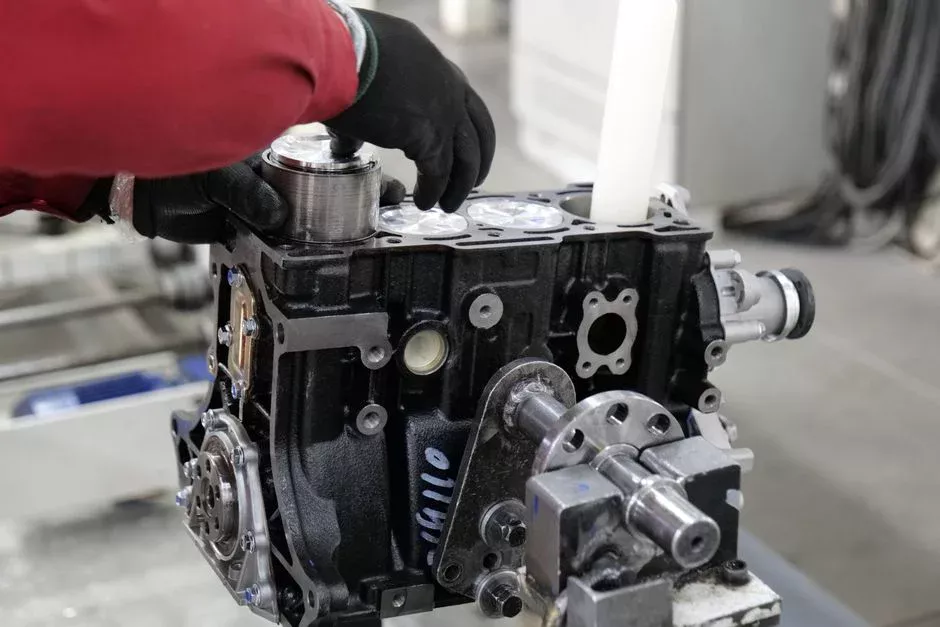
Spare parts typically run 10–20% of total thickener OPEX in most plants, with a per-unit spend of $1,000–$2,500/yr on most gravity, GBT, and DAF installations (ECWA three-alternative comparison). The challenge for procurement is that the parts list varies sharply by thickener type, and most operators stock based on what failed last rather than what is actually due. Below is a parts list keyed to replacement frequency, drawn from WEF OM-8 and field data across municipal installations.
| Thickener Type | Spare Part | Typical Replacement Frequency | Indicative Unit Cost (2026 USD) |
|---|---|---|---|
| Gravity | Rake blades / shoes | Every 2–5 yr (rotatable to extend life 40%) | $400–$1,500 set |
| Gravity | Drive motor | Every 10–15 yr | $5,000–$12,000 |
| Gravity | Gearbox / speed reducer | Every 10–20 yr | $8,000–$20,000 |
| Gravity | Center column bearings | Every 5–8 yr | $1,200–$3,000 |
| Gravity | Scum baffles, overflow weirs | Every 8–12 yr | $800–$2,500 |
| Gravity | Tube settlers (FRP/PVC) | Every 8–15 yr | $15,000–$40,000 |
| Gravity | Internal surface recoating | Every 10–20 yr | $20,000–$60,000 |
| GBT | Filter / dewatering belt | Every 2–4 yr | $4,000–$12,000 |
| GBT | Polymer feed pump | Every 3–5 yr | $2,500–$6,000 |
| GBT | Doctor blades / belt scrapers | Every 1–2 yr | $600–$1,800 |
| GBT | Tensioning cylinders / pneumatics | Every 4–7 yr | $1,500–$3,500 |
| DAF | Recycle pump | Every 5–10 yr | $4,000–$9,000 |
| DAF | Air-saturation tank / nozzles | Every 7–12 yr | $3,000–$8,000 |
| DAF | Skimmer blades / flight | Every 2–4 yr | $1,200–$3,500 |
| DAF | Float removal drive | Every 7–10 yr | $2,500–$5,000 |
The ECWA VDWTP rehabilitation project on its existing gravity thickener is a useful real-world case study in parts-bundling. The $140,000 scope included tube settlers and support structure, baffle wall, bottom scraper and motor, distribution box mixer, and full tank recoating — and it is a realistic lifecycle event for any 15–25-year-old gravity unit (ECWA VDWTP Residuals & Dewatering Study, 2024-05). Procurement teams should treat any thickener over 15 years old as a rehab candidate in their 5-year TCO, and stock the parts list above accordingly. For a plant also reviewing downstream dewatering, the AAO process spare parts and consumables cost guide covers the biological side of the same lifecycle planning exercise.
5-Year Total Cost of Ownership by Thickener Type
CAPEX comparison alone is misleading on thickeners. The ECWA three-alternative table shows equipment costs of $53,000 (existing rehab), $298,500 (GBT), and $282,500 (DAF) — a 5.6× CAPEX spread — but OPEX reverses the ranking at small plant sizes. Below is a 5-year TCO model anchored to the ECWA CAPEX figures and scaled polymer, energy, and parts costs for two plant sizes: 5 MGD (small municipal) and 20 MGD (mid-size municipal).
| Cost Line Item (5-Year) | Gravity Thickener @ 5 MGD | GBT @ 5 MGD | DAF @ 5 MGD | Gravity Thickener @ 20 MGD | GBT @ 20 MGD | DAF @ 20 MGD |
|---|---|---|---|---|---|---|
| CAPEX (equipment + install) | $60,000 | $325,000 | $310,000 | $220,000 | $700,000 | $680,000 |
| Polymer (5 yr) | $32,500 | $250,000 | $495,000 | $130,000 | $1,000,000 | $1,980,000 |
| Energy (5 yr) | $5,000 | $15,000 | $17,500 | $20,000 | $60,000 | $70,000 |
| Parts / spares (5 yr) | $5,000 | $12,500 | $12,500 | $12,500 | $25,000 | $25,000 |
| Labor (5 yr) | $150,000 | $180,000 | $200,000 | $250,000 | $280,000 | $310,000 |
| Mid-life rehab (year 7–10, prorated) | $70,000 | $0 | $0 | $140,000 | $0 | $0 |
| Downtime / overtime soft cost | $15,000 | $10,000 | $10,000 | $30,000 | $20,000 | $20,000 |
| 5-Year TCO | ~$337,500 | ~$792,500 | ~$1,045,000 | ~$802,500 | ~$2,085,000 | ~$3,085,000 |
| Per-MGD TCO (annualized) | $13,500/MGD/yr | $31,700/MGD/yr | $41,800/MGD/yr | $8,025/MGD/yr | $20,850/MGD/yr | $30,850/MGD/yr |
Three things stand out. First, at 5 MGD, the "cheap" gravity option carries a 5-year TCO of roughly $337,500 — under half that of a GBT ($792,500) and roughly one-third that of a DAF ($1,045,000). The gravity unit's mid-life rehab is more than offset by the polymer savings on the mechanical units. Second, at 20 MGD, per-MGD TCO drops sharply for gravity (to about $8,025/MGD/yr) because labor and rehab are spread across more flow, but the absolute gravity TCO ($802,500) is still lower than GBT ($2,085,000) and DAF ($3,085,000). Third, the $140,000 mid-life rehab event is the single line item most procurement models forget — including it is what makes a gravity unit's TCO honest.
The other frequently-missed cost is the soft-cost line: downtime and operator overtime during the rehab window. For a 5 MGD plant this is roughly $3,000/yr amortized; for a 20 MGD plant with no standby unit, it climbs to $6,000/yr. If a plant is going to install a single mechanical thickener, the TCO should include a standby or rental pump clause, or it should plan rehab during low-flow season. For plants where the thickener feeds a downstream plate and frame filter press, the rehab window also cascades into dewatering capacity loss, which can easily double the soft-cost line.
How to Reduce Sludge Thickener Maintenance Cost
Five levers consistently cut thickener OPEX across the plants where we have seen data, and none of them require a new equipment purchase to start.
1. Condition-based monitoring on the drive motor and gearbox. Vibration sensors and motor current signature analysis on the rake drive catch bearing failure months before it trips the overload relay. WEF OM-8 lists this as best practice; in field deployments, it has extended gearbox service intervals from 5 to 8+ years on gravity units processing 0.5–1.5% solids (HydropureWater field data, 2025–2026).
2. Polymer dose optimization through jar testing and inline solids meters. A quarterly jar test cycle, paired with an online percent-solids meter on the feed line, typically reduces polymer consumption 15–30% versus a fixed-dose setpoint. The saving at a 5 MGD GBT burning $50,000/yr in polymer is $7,500–$15,000/yr, which pays back the meter in under a year.
3. Scheduled rake-blade rotation rather than full replacement. Rotating blades 180° at each inspection spreads wear across both edges and extends blade life approximately 40% — turning a 3-year replacement cycle into 4+ years (HydropureWater field data, 2025).
4. Tube settler inspection and partial replacement instead of full-tank rehab. Most tube settlers fail in localized panels, not across the full tank. Targeted panel replacement can defer the $140,000 full-tank rehab by 3–5 years, and the inspection itself is a 2-person, 4-hour task on a drained unit.
5. Bundle annual service with the chemical supplier contract. Polymer vendors will frequently include quarterly mechanical inspections, priority parts shipping, and locked-in polymer pricing as part of a 3-year supply agreement. For small plants, this converts a variable parts line into a fixed budget item and removes the bidding cycle from every minor repair. For plants with multiple treatment units, pairing this with a high-efficiency sedimentation tank upgrade can also reduce solids loading back to the thickener and stretch maintenance intervals across both assets.
Frequently Asked Questions
How much does sludge thickener maintenance cost per year? Spare parts and routine service run $1,000–$2,500/yr per unit; total annual OPEX including polymer, energy, and labor lands at $7,000–$50,000/yr depending on thickener type and sludge characteristics (ECWA VDWTP data, 2024-05).
Which thickener type has the lowest total maintenance cost? Gravity thickeners are the cheapest to maintain at $1,000/yr in parts, but their high footprint and labor cost make them less attractive at large plants. The GBT and DAF units run $2,500/yr in parts but burn $50,000/yr and $99,000/yr respectively in polymer at the same site (ECWA three-alternative comparison, 2024-05).
How often does a sludge thickener need maintenance? The EPA labor matrix sets 180–370 maintenance hours per year for units from under 500 sq ft to over 5,000 sq ft; operation labor adds 310–680 hours on top. At 2026 wage rates of $45–$55/hr fully loaded, that translates to $22,000–$58,000/yr per thickener in human time.
What does a thickener rehabilitation typically cost? The ECWA VDWTP rehabilitation of an existing gravity thickener — tube settlers, support structure, baffle wall, bottom scraper and motor, distribution box mixer, and full recoating — was scoped at $140,000. It is a realistic mid-life event for any gravity unit 15+ years old.
How much does polymer cost affect total thickener OPEX? Polymer swings are the single largest OPEX variable for GBT and DAF units. The ECWA study shows $6,500/yr for an existing gravity thickener, $50,000/yr for a GBT, and $99,000/yr for a DAF at the same plant — a 15× spread driven almost entirely by polymer dose, not equipment.