Why 'Chemical Waste in Sewage' Is a Multi-Class Problem
The term "chemical waste in sewage" hides four operationally distinct streams that a single process cannot treat. pH-shifting industrial discharges (acids from metal finishing, alkalis from cleaning operations) arrive in slug loads that push reactors out of their working range. Heavy metals — copper, nickel, zinc, lead, chromium — bind to biomass, accumulate in biosolids, and disqualify that biosolids from agricultural reuse if not precipitated upstream. Oxidisable organics, including phenols, cyanides, solvents, and an expanding list of pharmaceutical and personal-care residues, demand an oxidant dose proportional to their electron demand. Nutrients, principally nitrogen and phosphorus, drive eutrophication and algae blooms in receiving waters (LibreTexts, 2026).
Sewage composition explains why the chemical layer is non-optional. Municipal collection systems receive household greywater and blackwater as well as liquid waste from industry and commerce, which is why the receiving plant has no control over influent speciation (LibreTexts, 2026). Under-treating any of the four classes has a different consequence: nutrient overshoot collapses receiving-water ecology (LibreTexts, 2026), while residual metals or organics create a reuse risk that blocks direct or indirect potable reuse (LibreTexts, 2026). This article maps each contaminant class to a unit operation within the chemical-treatment layer.
Where Chemical Treatment Fits in the Sewage Treatment Process
The standard model divides sewage treatment into three phases: primary (solid removal via settling and skimming), secondary (bacterial decomposition), and tertiary (effluent polishing before sensitive discharge) (LibreTexts, 2026). Chemicals are deployed most heavily during the primary and tertiary stages, with the secondary stage dominated by biological processes (watercarechem.com, 2026).
The distinction between biological and chemical treatment defines the operational workflow. Biological processes consume organic matter using microbes and air; chemical processes consume a purchased commodity, delivered by truck, stored on site, and metered into the water every hour (waterandwastewater.com, 2026). That difference defines the operating-cost profile: chemical dosing requires procurement contracts, day-tank volume, secondary containment, calibrated metering pumps, and consumption tracking. Tertiary treatment sits as the chemical polishing layer where discharge is into a sensitive ecosystem and the residual contaminant load from primary and secondary stages is no longer acceptable (LibreTexts, 2026). For a deeper process-level walkthrough of where the metering layer lives in this hierarchy, the 2026 auto-dosing engineering guide covers the control-loop detail.
The Six Chemical Unit Operations Sewer Plants Use
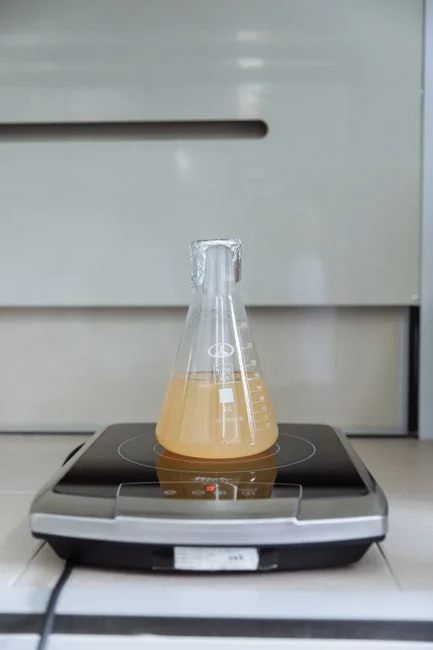
Every chemical-treatment train a sewer plant runs can be reduced to six unit operations. You can diagnose any plant's chemistry from a process flow diagram by identifying these six steps.
pH adjustment. Acid or alkali is dosed to bring influent into a typical neutral range of pH 6.5–8.5 (waterandwastewater.com, 2026). pH correction sits at the front of the chemical train because nearly every downstream reagent only works inside its effective pH window; outside that window the dose either fails to react or produces a different, often undesirable, species.
Coagulation and flocculation. Polyaluminium chloride and aluminium sulfate (alum) neutralise the surface charge on fine particles so they agglomerate into settleable flocs (watercarechem.com, 2026). This step targets turbidity, colloidal organics, and suspended solids that escape primary settling.
Chemical precipitation. Ferric chloride and other iron or aluminium salts convert dissolved phosphorus and heavy metals into insoluble hydroxides that settle or float. Ferric chloride's effective pH band of roughly 5.0 to 8.5 makes it the workhorse for chemical phosphorus removal across a wide influent range (waterandwastewater.com, 2026). The downside is corrosivity and staining, which forces specific materials selection in feed piping and storage.
Oxidation and disinfection. Sodium hypochlorite, calcium hypochlorite, chlorine dioxide, ozone, and hydrogen peroxide destroy pathogens and oxidise organics (watercarechem.com, 2026). Chlorine dioxide is notable because it does not produce harmful disinfection byproducts, unlike chlorine (watercarechem.com, 2026). The selection of oxidant drives both capital cost and the residuals story at the discharge weir.
Adsorption. Activated carbon binds residual organics and inorganic metal ions to its surface (LibreTexts, 2026). It is used for polishing residual colour, taste, and trace organics that survive biological and oxidative steps.
Membrane separation. Reverse osmosis uses a semipermeable membrane with applied pressure to move water from the higher-concentration side to the lower-concentration side, leaving solutes behind (LibreTexts, 2026). It is the final polishing step before reuse or sensitive discharge. In many plants, a dissolved air flotation system sits upstream of membranes to reduce the solids loading the membranes must handle.
Matching Contaminant Class to Reagent: A 2026 Reference Table
Six unit operations, four contaminant classes, and a small set of reagent families account for the majority of chemical tonnage purchased by municipal plants (waterandwastewater.com, 2026). The table below ties the two together. Values are drawn from the cited sources; where a numeric range is not provided, the qualitative condition is given.
| Contaminant class | Preferred reagent family | Effective pH window | Key side effect / trade-off |
|---|---|---|---|
| Phosphorus | Ferric chloride (iron salt) | Roughly 5.0–8.5 | Corrosivity and staining force materials selection in feed and storage (waterandwastewater.com, 2026) |
| Phosphorus / turbidity (alternative) | Aluminium sulfate (alum) | Roughly 5.5–7.5 | Alkalinity consumption ~0.5 mg/L as CaCO₃ per mg/L dosed; poor cold-water performance pushes winter plants toward polyaluminium chloride (waterandwastewater.com, 2026) |
| Heavy metals | Ferric chloride, lime | Set by metal solubility curve; ferric chloride valid across roughly 5.0–8.5 | Lime slurry systems require continuous agitation and generate scale, making lime the most maintenance-intensive chemical in common municipal use despite being among the cheapest to buy (waterandwastewater.com, 2026) |
| Suspended solids / colloids | Polyaluminium chloride, alum | Alum: roughly 5.5–7.5 | Cold-water floc formation weaker for alum (waterandwastewater.com, 2026) |
| Pathogens (broad) | Sodium hypochlorite, calcium hypochlorite | Neutral pH range | Sodium hypochlorite is corrosive and hazardous to handle (watercarechem.com, 2026) |
| Pathogens (no DBP requirement) | Chlorine dioxide | Neutral pH range | No harmful disinfection byproducts versus chlorine (watercarechem.com, 2026) |
| Refractory organics | Ozone, hydrogen peroxide | Neutral pH range | Strong oxidiser; no residual for downstream protection |
| Residual chlorine before discharge | Sodium bisulfite (dechlorination) | Neutral pH range | Stoichiometric consumption of the oxidant (waterandwastewater.com, 2026) |
| Residual organics / trace metal ions (polish) | Activated carbon | Neutral pH range | Surface adsorption; capacity finite, media replacement required (LibreTexts, 2026) |
This table serves as a working tool for procurement conversations and design reviews. A 2026 COD removal technology comparison adds the parallel view on oxidant-side selection if chemical oxygen demand is the binding effluent limit.
Dosing Arithmetic: How Plants Calculate Chemical Demand

Chemical dosing is arithmetic before it is anything else, and the same short calculation covers nearly every reagent (waterandwastewater.com, 2026). The universal formula is:
Dose (mg/L) × Flow (m³/day) ÷ 1,000 = kg/day of active chemical (waterandwastewater.com, 2026)
The worked example published by the source uses a plant treating 20,000 m³/day with influent total phosphorus of 6 mg/L and an effluent limit of 0.5 mg/L; chemical phosphorus removal at the back end of the plant is not free, and the dose required follows from the mass balance between those two numbers (waterandwastewater.com, 2026). Inputs a buyer must obtain before sizing chemical storage or feed pumps include: the design daily flow, the influent concentration of the target contaminant at the point of dosing, the regulatory effluent limit, the stoichiometric ratio of the chosen reagent to the contaminant, and the expected number of days of on-site storage.
Two operational points follow. Dosing systems fail in a small number of recognisable ways, and most of those failures are visible in chemical consumption records long before they show in effluent quality (waterandwastewater.com, 2026). Because chemical dosing is the only treatment category where the operator is continuously buying the treatment, metering accuracy and storage containment are first-class design constraints (waterandwastewater.com, 2026); the PLC-controlled chemical dosing skid is the hardware layer that converts the formula above into a controlled feed rate.
Standards, Codes, and Safety Constraints for Chemical Treatment
Two documents govern chemical-treatment design at most U.S. municipal plants. The Recommended Standards for Water Works and Recommended Standards for Wastewater Facilities, commonly known as the Ten States Standards, set the criteria for chemical application, storage, containment, and redundancy (waterandwastewater.com, 2026). The WEF Manual of Practice (MOP) sits beside it as the design-practice companion (waterandwastewater.com, 2026). Any procurement specification that does not reconcile to both will create compliance risk at the next review.
The safety layer is non-negotiable. Sodium hypochlorite is corrosive and hazardous to handle (watercarechem.com, 2026); lime slurry systems demand continuous agitation and generate scale throughout the feed path, which is why lime remains the most maintenance-intensive chemical in common municipal use even though it is among the cheapest to buy (waterandwastewater.com, 2026). Future chemical treatment will likely feature deeper integration with biological and physical processes, and AI-driven dosing models are under development (waterandwastewater.com, 2026); currently, the operator must manage procurement, storage, and containment in line with the standards above.
Frequently Asked Questions
What chemicals are most commonly used to treat chemical waste in sewage?
The high-tonnage catalogue groups cleanly by function. Coagulants: polyaluminium chloride, aluminium sulfate (alum), and ferric chloride. Disinfectants and oxidants: sodium hypochlorite, calcium hypochlorite, chlorine dioxide, ozone, and hydrogen peroxide. pH and metals: lime. Dechlorination: sodium bisulfite. Polishing: activated carbon (watercarechem.com, 2026; waterandwastewater.com, 2026).
How does pH adjustment work in wastewater treatment and what range is targeted?
Acid or alkali is dosed to bring wastewater into a typical neutral range of pH 6.5–8.5 (waterandwastewater.com, 2026). The target is set by the downstream reagent's effective pH window; outside that window, coagulants and precipitants either fail to react or generate a different, often undesirable, species.
Which chemical is best for removing phosphorus and heavy metals from sewage?
Ferric chloride is the workhorse, with an effective pH band of roughly 5.0–8.5 that covers most municipal influents (waterandwastewater.com, 2026). Alum is the alternative with a narrower window of roughly 5.5–7.5 and alkalinity consumption of about 0.5 mg/L as CaCO₃ per mg/L dosed (waterandwastewater.com, 2026). Inputs to request from a supplier before committing include: the reagent's iron or aluminium fraction (active percent), the demonstrated pH band under your raw-water temperature, and the expected stoichiometric ratio against the target phosphorus or metal concentration.
What is the formula for calculating daily chemical dose at a sewage plant?
Dose (mg/