Why Anaerobic Digester Spare Parts and Consumables Cost Is a Hidden OPEX Line
A mid-size industrial anaerobic digester running on food-processing wastewater will burn $15,000–$80,000 per year in 2026 on spare parts and consumables alone — and most procurement managers don't see that line until the second budget cycle, when the mixers, membranes, and H2S media all start failing in the same quarter. The widely cited US EPA AgSTAR farm-digester band of $25,000–$300,000 per year is a useful sanity check, but that figure bundles labor, energy, lubrication, insurance, and major overhauls — it is not an isolated spare-parts number, and it does not reflect a CSTR or UASB treating brewery or food-processing effluent under 2026 stainless-steel and polymer pricing.
As a defensible 2026 rule of thumb, budget 3–8% of the original CAPEX annually for spare parts and consumables on an industrial digester. A $4.4M AgSTAR digester with boiler (per EPA funding guidance) therefore carries $130,000–$350,000 per year in recurring replacement and consumable spend over a 20-year life, of which the wearable-parts and consumable subset is the predictable slice. The remainder of this article itemizes that subset across four cost buckets: mechanical wear, biogas handling, instrumentation, and process chemicals — so a buyer can map each line to an OEM quote, a stocking tier, and a service interval. Note that the academic cost functions in Cowley & Brorsen (2018, ScienceDirect) pre-date 2022 stainless-steel and polymer increases; inflate their component costs 18–28% before applying to a 2026 budget.
Mechanical Spare Parts: Mixers, Pumps, Diffusers, and Gas-Holder Membranes
Mechanical wear parts typically consume 40–55% of the annual digester spare-parts budget in 2026, and a single gas-holder membrane replacement can exceed the total of every other mechanical line combined. Submersible digester mixers in the 5–15 kW range run $8,000–$18,000 per unit, with mechanical seal replacement every 2–3 years at $1,200–$2,400 per seal; stocking 1 spare mixer per 4 active units is the standard 2026 OEM recommendation. Feed and recirculation pumps (centrifugal, 10–50 m³/h) cost $4,500–$12,000 each, with gland packing or mechanical seal service every 12–18 months at $400–$900 and impeller replacement every 3–5 years. EPDM/HDPE gas-holder membranes and double-membrane roofs run $15,000–$45,000 per digester with an 8–12 year service life — the single largest spare-part line item on most plants. Fine-bubble diffuser grids in sludge holding or post-digestion zones cost $2,000–$6,000 per bank with 5–8 year life, and PU diffuser media typically outlast EPDM by 18–24 months when H2S in the gas space stays above 200 ppm. Downstream dewatering consumables (polymer, filter cloth) sit outside this bucket but should be flagged; for digestate dewatering scope, see the Plate and Frame Filter Press for digestate dewatering unit operations breakdown.
| Mechanical Item | Unit Cost (USD 2026) | Service Life | Annual Spend per Digester | Stocking Tier |
|---|---|---|---|---|
| Submersible mixer (5–15 kW) | $8,000–$18,000 | 8–12 years | $1,500–$4,000 (seal-driven) | A — 1 spare per 4 active |
| Feed/recirc pump (10–50 m³/h) | $4,500–$12,000 | 7–10 years | $1,200–$3,500 | A — 1 spare per 6 active |
| Gas-holder membrane (EPDM/HDPE) | $15,000–$45,000 | 8–12 years | $1,800–$5,500 (amortized) | A — pre-order 6 mo. ahead |
| Fine-bubble diffuser grid | $2,000–$6,000/bank | 5–8 years | $400–$1,200 | B — 2-week vendor call |
| Mechanical seal kit (mixer/pump) | $400–$2,400 | 2–3 years | $800–$3,000 | A — on shelf |
Biogas Handling Consumables: H2S Media, Carbon, Desiccant, and Analyzer Gases
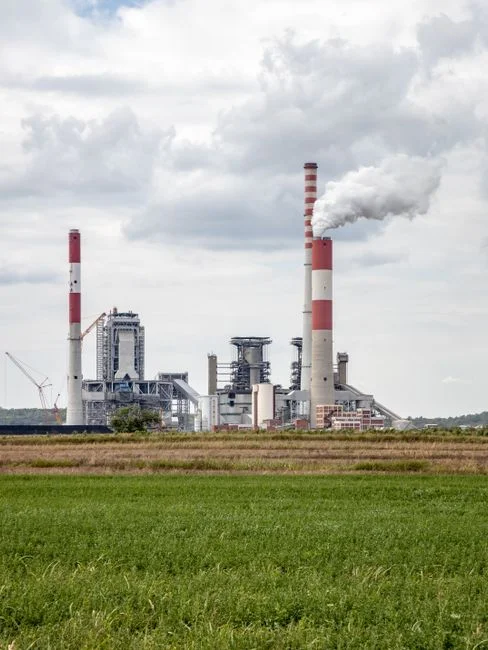
Biogas-side consumables are the line item most operators forget until H2S corrodes a CHP engine bearing or siloxane fouls a booster cooler. Iron-oxide H2S scavenging media (SulfaTreat, PSR+, or equivalent iron-oxide-based products) cost $1.50–$3.20/kg, with a typical dose of 0.05–0.20 kg per 1,000 m³ of biogas treated; a 2,000 m³/day industrial digester will spend $2,500–$6,000 per year on media replacement in 2026. Activated carbon polishing beds for siloxane and residual H2S run $8–$14/kg, with media swap every 12–24 months at $1,800–$4,500 per vessel. Silica gel or molecular sieve desiccant for chilled-water biogas dryers costs $3,200–$7,500 annually for regeneration or replacement, higher in humid tropical sites where inlet moisture regularly exceeds 80% relative humidity. Biogas analyzer calibration gases — CH4, H2S, and O2 standard cylinders — run $450–$900 per cylinder, and a plant with three analyzers will consume 4–8 cylinders per year. US EPA biogas composition data shows 50–75% CH4, with H2S commonly in the 1,000–4,000 ppm range for protein- or sulfate-rich industrial feedstocks; controlling H2S below 200 ppm is non-optional, because sustained operation above that threshold has been shown to halve CHP engine overhaul intervals.
| Biogas Consumable | Unit Cost (USD 2026) | Service Interval | Annual Spend (2,000 m³/day plant) | Stocking Tier |
|---|---|---|---|---|
| Iron-oxide H2S media | $1.50–$3.20/kg | 3–6 months per vessel | $2,500–$6,000 | A — bulk on site |
| Activated carbon (siloxane/H2S) | $8–$14/kg | 12–24 months | $1,800–$4,500 | B — vendor-managed |
| Desiccant (silica/molecular sieve) | $3,200–$7,500/yr service | Annual regen or 3-yr replace | $3,200–$7,500 | B — service contract |
| Calibration gas cylinders | $450–$900 each | 6–12 months | $1,800–$5,400 | A — 2 cylinders on shelf |
| H2S / O2 sensor elements | $600–$1,800 each | 12–24 months | $1,200–$3,600 | A — 1 spare per analyzer |
Process Consumables: Polymer, Antifoam, Caustic, and Micronutrient Mix
Process consumables scale with feedstock loading rather than equipment count, and they swing dramatically when a plant switches from mono-digesting biosolids to co-digesting fats, oils, and grease (FOG), cheese whey, or food waste. Cationic or emulsion polymer for digestate dewatering runs $3.50–$7.20 per kg of active polymer, with a typical dose of 8–18 kg per ton of dry solids — a mid-size industrial plant will spend $4,000–$22,000 per year on polymer alone. Silicone or fatty-alcohol antifoam costs $8–$15/L, dosed at 5–50 mL per m³ of reactor volume; under co-digestion with FOG or dairy wastes, the dose typically rises 2–4× (per US EPA co-digestion guidance), and antifoam spend can overtake polymer spend on a food-waste-fed CSTR. Sodium hydroxide or hydrated lime for pH correction after ammonia spikes runs $180–$320 per ton, with 5–25 kg/day typical at high-N feedstocks such as rendering or poultry processing wastewater. Trace-metal micronutrient blends (Fe, Ni, Co, Mo, Se) — required for stable methanogenesis on sulfate- or ammonia-rich industrial streams — cost $12–$30/kg of blend at 0.5–2 kg/day, adding $2,200–$22,000 per year. Co-digestion of FOG, food waste, or cheese whey typically lifts total antifoam and polymer OPEX 30–60% versus a municipal biosolids baseline, so any 2026 budget that ignores feedstock variability will understate reality by the same margin.
Instrumentation, Valves, and Control Spare Parts
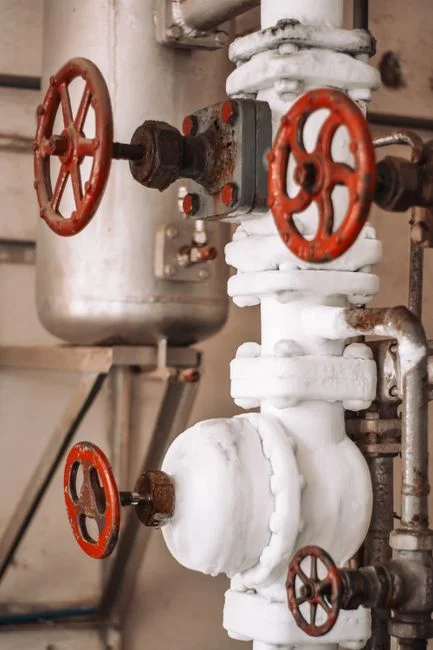
Instrumentation and valves are the smallest line item by total spend, but they fail unpredictably and a single dead pH probe can take a digester offline within 24 hours if no spare is on the shelf. pH, ORP, and conductivity probes run $250–$650 each, with replacement every 6–18 months in high-solids digestate; stocking one spare per six active probes is the 2026 OEM stocking norm. Thermal mass or ultrasonic biogas flow meters cost $3,800–$9,500 each, with a 5-year calibration interval at $600–$1,200 per calibration. Actuated knife-gate and ball valves on sludge lines run $900–$3,400 each, with seat and seal kits replaced every 2–3 years at $180–$450. Pressure, temperature, and level transmitters cost $400–$1,800 each, and a 20-instrument plant should expect 1–2 unexpected transmitter replacements per year. Bundling these items with the biogas analyzer consumables under a single supplier framework — see the cost-control playbook below — typically yields 8–14% volume pricing on the calibration gas and sensor side.
2026 OPEX Summary Table and Cost per m³ Benchmarks
The summary table below rolls up all four categories into a single budget-ready view. For a working industrial digester in 2026, the typical all-in spare-parts and consumables spend lands at $0.012–$0.080 per m³ of digester working volume per day, depending on feedstock and co-digestion load. That range is well below the $0.10–$0.28/m³ SBR benchmark published in the 2026 hotel wastewater treatment guide, reflecting the inherently lower mechanical and chemical intensity of anaerobic biology versus aerobic activated sludge.
| Category | Typical Annual Cost (USD 2026) | % of Total OPEX (parts + consumables) | Service Interval | Stocking Level |
|---|---|---|---|---|
| Mechanical wear (mixers, pumps, membranes, diffusers, seals) | $9,000–$28,000 | 45–55% | 2–12 years per item | A: 1 spare mixer per 4 active; 1 spare pump per 6 |
| Biogas handling (H2S media, carbon, desiccant, cal gases, sensors) | $9,500–$26,000 | 20–30% | 3–24 months | A: media + cal gas on site; B: carbon on call |
| Process consumables (polymer, antifoam, caustic, micronutrients) | $8,000–$30,000 | 25–40% | Continuous dosing | B: 30–60 day bulk stock |
| Instrumentation & valves (probes, meters, valves, transmitters) | $3,500–$9,500 | 8–12% | 6 months–5 years | A: 1 spare per 6 probes; B: valves on call |
| Total (2,000 m³/day industrial CSTR baseline) | $30,000–$93,500 | 100% | — | — |
Worked example A: a 2,000 m³/day CSTR on food-processing wastewater with FOG co-digestion — $42,000 per year in spare parts and consumables, with antifoam and polymer together consuming roughly 38% of the total. Worked example B: a 500 m³/day UASB on brewery effluent — $18,000 per year, dominated by mechanical seals and biogas media because the brewery stream carries lower TSS and lower FOG. Both totals sit well inside the US EPA AgSTAR $25,000–$300,000/year farm-digester sanity-check band, and both scale roughly linearly with digester working volume between 500 m³ and 10,000 m³.
5-Step Cost-Control Playbook for Anaerobic Digester OPEX
The five moves below typically cut anaerobic digestion OPEX on spare parts and consumables by 10–25% within a single budget year, without sacrificing uptime or biogas yield.
- Run a 12-month rolling failure log per subsystem. Replace by MTBF, not by calendar. A 15 kW submersible mixer with an actual MTBF of 9 years does not need a seal kit every 24 months just because the OEM manual says so.
- Negotiate 3-year OEM framework agreements on membranes, mixers, and analyzers. Lock 2026 pricing against stainless-steel and EPDM polymer inflation, which has averaged 6–9% per year since 2022.
- Tier the spare-parts stock: A items (mixers, membranes, cal gases) on shelf, B items (probes, valves, carbon) on 2-week vendor call, C items (large actuators, spare gearboxes) on order against PO. A-tier stock should not exceed 8% of annual mechanical spend.
- Use online BOD/TOC and gas-quality monitoring to catch toxicant upsets early. A single ammonia or sulfate shock can wipe out a micronutrient budget in a week; the BOD online monitoring system engineering guide walks through sensor selection and alarm setpoints for 2026 deployments.
- Bundle biogas-side consumables with a single supplier for volume pricing, and review antifoam dose quarterly under variable FOG loading. Many plants discover they are overdosing antifoam by 30–50% during low-FOG months once they instrument the foam probe.
Frequently Asked Questions
What is a realistic 2026 annual spare-parts and consumables budget for a 2,000 m³/day industrial anaerobic digester? Plan on $30,000–$95,000 per year, with a $42,000 midpoint for a food-processing CSTR with moderate FOG co-digestion. Mechanical wear and biogas consumables together drive about 70% of that figure (HydropureWater field data, 2026).
How often does a digester gas-holder membrane need replacement? EPDM and HDPE double-membrane roofs last 8–12 years depending on UV exposure, gas temperature, and H2S level; budget $15,000–$45,000 per replacement in 2026, which is the single largest mechanical line item on most plants.
How much H2S scrubber media does an industrial digester consume per year? A 2,000 m³/day digester at 1,000–3,000 ppm inlet H2S will consume 1,500–4,000 kg/year of iron-oxide media, costing $2,500–$6,000 in 2026 at $1.50–$3.20/kg delivered.
What is the cost difference between mono-digestion and FOG co-digestion on consumables? Antifoam spend typically rises 2–4× and total polymer plus antifoam OPEX rises 30–60% when switching from municipal biosolids to FOG, food waste, or cheese whey co-digestion, per US EPA co-digestion guidance.
How does digester spare-parts OPEX compare to an AAO activated-sludge plant of similar capacity? An AAO train of the same BOD load typically runs 15–25% higher on consumables but 30–40% lower on mechanical spares, because there are no mixers, membranes, or biogas-treating consumables. See the AAO process spare parts and consumables cost 2026 guide for the side-by-side numbers, and the biogas from wastewater market drivers 2026 outlook for the revenue side that offsets digester OPEX.
Related Equipment
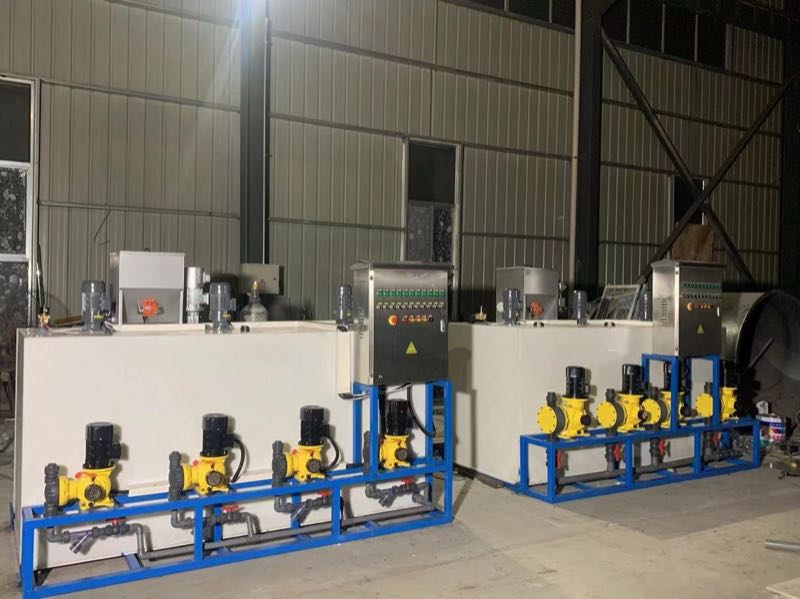
- automatic chemical dosing for antifoam, caustic, and micronutrients — specifications, capacity range, and technical data