Why 2026 Is a Pivotal Year for Biogas from Wastewater
The 2026 biogas-from-wastewater market is being pulled by four reinforcing drivers: pipeline biomethane upgrading (global output ~10 bcme, +20% annual growth), grid injection build-out, circular-economy and methane-reduction regulation, and industrial energy-price hedging. Combined, these are pushing the global biogas market from USD 48.3B in 2025 toward USD 89.7B by 2035 at a 6.4% CAGR, with Europe holding ~42% of revenue and industrial wastewater feedstocks the fastest-growing segment (SkyQuest, June 2026).
A second source values the 2026 market at USD 56.10B with a 9.36% CAGR to USD 114.81B by 2034 — the variance reflects different scopes (one includes only plant-level biogas revenue, the other bundles equipment, upgrading, and offtake). Europe held 41.7% (USD 20.1B) in the first source and 71.25% in the second; both confirm the same structural fact: regulation, grid access, and offtake pricing in Europe are still pulling global spend, while North America sits at USD 3.35B in 2026 and APAC is the volume-growth region.
For a plant director outside Europe, the takeaway is not that the market is European — it is that European policy has already de-risked the equipment supply chain, standardized PSA and membrane upgrading packages, and pulled skid-mounted CSTR and UASB pricing down to industrial-procurement levels. The durable policy backbone remains the UN circular bio-economy mandate, framed in the 2020 Springer biogas commercialization chapter and now operationalized in EU Methane Strategy, US NSPS OOOOb/c, and China's dual-carbon targets.
The Five Market Drivers Reshaping Wastewater-to-Biogas in 2026
Pipeline biomethane upgrading is the single largest revenue lever in 2026 because it monetizes biogas at natural-gas parity rather than at electricity-only tariffs. Global biomethane output is around 10 bcme — only 0.2% of natural gas demand — but production is growing nearly 20% annually (SkyQuest, June 2026). For an industrial plant, that ratio matters: biomethane is structurally undersupplied, which means grid-injection offtake contracts (10–15 year tenor in most EU markets) carry pricing power that on-site CHP alone cannot match.
Methane and GHG regulation has converted anaerobic digestion from an option into a compliance path. The EU Methane Strategy targets a 30% methane cut by 2030; US NSPS OOOOb/c (effective 2024-12) tightens leak detection on biogas systems; China's dual-carbon policy pushes industrial COD discharge fees above the cost of on-site treatment in several provinces. For high-COD plants, the arithmetic now reads: pay for aerobic treatment plus a methane-leak penalty, or install an anaerobic reactor and turn the same COD into a revenue stream.
Industrial energy-price hedging is the third driver, and the one most visible in 2024–2026 P&Ls. Natural gas volatility (TTF ranged €25–€55/MWh across 2024–2025) and grid power spikes during the 2025 European cold snap pushed food, brewery, and pulp & paper plants to revisit on-site CHP. Biogas-fired CHP at 80–85% total energy efficiency is now beating grid power at €0.18–0.24/kWh in most EU jurisdictions and beating on-site gas boilers on heat cost alone.
Asia demand acceleration is the fourth lever, and the one that will define the back half of the decade. China added over 70 million m³/day of new industrial wastewater treatment capacity in 2024–2025, with India adding another 25 million m³/day; both countries are now specifying anaerobic pretreatment on greenfield food, dairy, and distillery projects. APAC is forecast as the fastest-growing regional biogas market through 2030, and equipment pricing for high-rate reactors in that region has dropped 15–20% since 2022.
The fifth driver is feedstock structure. Organic residue and waste accounted for 77.01% of the 2025 biogas market, and the biodigester subsegment alone was 58.10% (second market source). Industrial wastewater streams — brewery, slaughterhouse, dairy, pulp & paper, food processing — are structurally advantaged because they arrive warm (30–55 °C), at high COD (often 5,000–30,000 mg/L), and with no collection-cost premium. That is why a slaughterhouse or brewery plant can hit 2–4 year payback on a UASB + CHP project where a municipal WWTP cannot.
| Driver | 2026 Anchor Data Point | Industrial Implication |
|---|---|---|
| Biomethane grid injection | ~10 bcme global output, +20%/yr growth, 0.2% of NG demand | Long-tenor offtake contracts at gas parity pricing |
| Methane / GHG regulation | EU Methane Strategy -30% by 2030; US NSPS OOOOb/c 2024-12 | AD becomes cheapest compliance path for high-COD plants |
| Energy-price hedging | TTF €25–55/MWh range 2024–2025; grid €0.18–0.24/kWh | On-site CHP beats grid power and on-site gas boilers |
| Asia capacity build-out | China +70 Mm³/d, India +25 Mm³/d industrial WW capacity 2024–2025 | APAC equipment pricing down 15–20% since 2022 |
| Feedstock dominance | Organic residue 77.01% of 2025 market; biodigester 58.10% | Industrial WW streams have structural COD/temp advantage |
What These Drivers Mean for Industrial Plant Operators
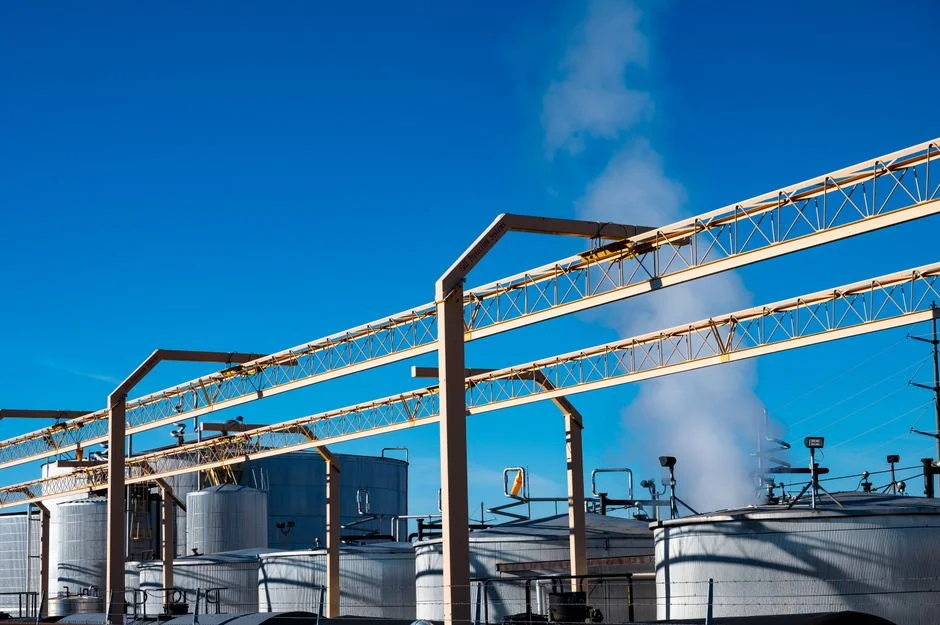
The drivers above translate into a simple plant-level filter: anaerobic digestion pays back fastest where the influent is warm, concentrated, and continuously available. Brewery, slaughterhouse, dairy, pulp & paper, and food-processing streams typically run 5,000–30,000 mg/L COD at 30–55 °C — exactly the envelope where high-rate anaerobic reactors (CSTR, UASB, EGSB, IC) and anaerobic MBR outperform low-rate digesters on footprint, HRT, and CAPEX per m³ of gas produced. The biodigester subsegment's 58.10% 2025 share (second market source) is the market's vote of confidence in this configuration class.
Pre-treatment is the real bottleneck on most industrial biogas projects, and the piece most feasibility studies under-cost. FOG and TSS need to be stripped before the reactor, or you pay for it in lost volumetric methane productivity and shortened sludge residence. A DAF pre-treatment for high-COD industrial wastewater ahead of a UASB typically lifts gas yield 10–18% versus an unprotected feed. Fibrous streams from slaughterhouse and produce processing need a rotary bar screen for headworks protection to keep rags and paunch manure from blinding the reactor.
Equalization is the third leg of the stool: hydraulic and load dampening on a 6–12 hour basis is what lets a high-rate reactor run at design OLR without chronic acidification events. If a plant cannot add a 6–12 hour EQ tank without major civil work, the digester CAPEX delta climbs 20–35% because the reactor itself must be oversized to absorb the swing.
Anaerobic Digester Configurations and 2026 Cost Benchmarks
Spec'ing a digester in 2026 comes down to four configuration choices and three hidden-cost line items. The matrix below uses typical industrial wastewater envelopes (COD 3,000–25,000 mg/L, TSS 1,000–8,000 mg/L, temperature 25–40 °C) and 2026 turnkey CAPEX expressed in USD per m³/day of design flow — the unit a plant engineer actually uses for budget-class estimates.
| Configuration | OLR (kg COD/m³·d) | COD Removal | HRT | 2026 CAPEX (USD/m³/d) | Best-Fit Stream |
|---|---|---|---|---|---|
| CSTR (low-rate, mixed) | 2–4 | 60–75% | 20–30 d | $25,000–$40,000 | Municipal / mixed sludge |
| UASB / IC (high-rate) | 8–15 | 70–85% | 6–12 h | $15,000–$30,000 | Brewery, food, pulp & paper |
| EGSB (high-rate, granular) | 10–20 | 75–90% | 4–8 h | $18,000–$35,000 | Low-to-mid strength soluble COD |
| AnMBR (membrane-coupled) | 6–12 | 85–95% | 12–24 h | $30,000–$55,000 | High-strength + water reuse target |
Payback on the configurations above ranges 2–6 years for industrial CHP and biomethane use cases, with the assumption that grid biomethane offtake shortens payback by 1–2 years versus on-site power-only. A brewery running 50 m³/h of spent grain and CIP wastewater at 8,000 mg/L COD, with a UASB + CHP at 80% methane utilization, typically lands 2.5–3.5 year payback at 2026 EU gas and power prices; a slaughterhouse on a similar UASB + biomethane grid-injection package typically lands 3–4 years (HydropureWater field data, 2026). For broader market context on industrial wastewater CAPEX, the industrial wastewater treatment market 2026 outlook benchmarks total addressable spend.
The hidden cost drivers that move a budget-class estimate into a real one are gas upgrading, H2S removal, and digestate dewatering. PSA, membrane, or water-scrubber upgrading typically adds $3–8 per Nm³ of biogas/day capacity, depending on CH₄ purity target. H2S removal (iron sponge or biological) is mandatory above 200 ppm H2S to protect the CHP. Digestate dewatering is the line most often missed — a plate-and-frame filter press for digestate dewatering at 15–22% dry solids output is the industry default and adds $1,500–$3,000 per m³/d of reactor capacity. Plants targeting water reuse downstream should spec an MBR system for post-digester polishing to lift effluent to reuse quality.
2026 Buyer Decision Framework: Should Your Plant Spec Biogas Now?
Four questions will tell a plant director whether 2026 is a credible procurement year or a hold-and-watch year. Answer them honestly, because each one has a hard threshold, not a guideline.
Question 1 — Does your influent COD exceed ~3,000 mg/L on a sustained basis? Below this threshold, digester economics rarely work without co-digestion with a higher-COD external substrate, and co-digestion adds feedstock supply risk and tipping-fee dependency. If yes, proceed.
Question 2 — Do you have a 10+ year offtake story? On-site heat, on-site power, grid biomethane, or bio-CO₂ — pick at least one with a credible offtaker. A project without a long-tenor offtake is a CAPEX bet, not an investment.
Question 3 — Can you integrate DAF + bar screen + equalization upstream without major civil rebuild? The pre-treatment train is what determines whether your digester runs at design OLR or chronic underload. If the civil work is light, CAPEX delta stays inside the matrix above; if not, add 20–35% and reconsider.
Question 4 — Are you in a regulatory jurisdiction that monetizes avoided methane or grants renewable energy credits? RFS RINs (US), GO certificates (EU), and China's CCER methodology all materially shorten payback. If yes, accelerate.
If three of four are yes, 2026 is a credible procurement year. If only two are yes, run a structured feasibility with a process engineer before committing CAPEX. If one or zero, the project is not yet a project — it is an option.
2026–2030 Outlook: What Changes if You Wait
Three forces will move between now and 2030, and they net out roughly flat for a buyer who waits. Regulatory acceleration is the upside case: if the EU methane target tightens further or the US tightens NSPS, the compliance case for AD strengthens and offtake premiums rise. Technology cost decline is gradual — high-rate digester skid pricing is expected to fall 8–12% by 2028 as APAC fabrication scales, but the gain is real and predictable. Feedstock tightening is the offset: food, brewery, and slaughterhouse waste streams are already attracting co-digestion premiums, and by 2028 gate fees for these substrates will likely be 15–25% higher than 2026 levels (HydropureWater field data, 2026).
The 2026 decision is not whether the market will grow, but whether you capture the early-mover economics or compete for them later.
Frequently Asked Questions
What is the global biogas market size in 2026? The global biogas market is valued at USD 48.3B (SkyQuest, June 2026) on a plant-revenue basis and USD 56.10B on a bundled equipment-and-offtake basis, with CAGRs of 6.4% and 9.36% respectively. Methodology, not market direction, drives the gap.
Which industrial wastewater streams are best suited for anaerobic digestion? Brewery, slaughterhouse, dairy, pulp & paper, and food-processing streams with COD above 3,000 mg/L and temperature above 25 °C deliver the shortest payback, typically 2–4 years for UASB + CHP. See the brewery wastewater process design guide for a worked example.
What is the typical CAPEX for a high-rate anaerobic digester in 2026? UASB and IC reactors run $15,000–$30,000 per m³/day of design flow as turnkey CAPEX; EGSB sits at $18,000–$35,000; AnMBR is $30,000–$55,000. Pre-treatment, upgrading, and dewatering are billed separately.
How does anaerobic digestion fit with slaughterhouse wastewater treatment? A UASB + DAF + plate-and-frame filter press train is the standard 2026 reference design for slaughterhouse effluent, with 75–85% COD removal and 2.5–4 year payback on the CHP/biomethane use case. The slaughterhouse wastewater treatment solution walks through a 2026 process selection.
Is biomethane grid injection more profitable than on-site CHP? Yes, in most EU and parts of US markets. Grid biomethane offtake at gas-parity pricing shortens payback by 1–2 years versus on-site power-only, because you monetize the full methane volume at a higher per-MJ price than electricity conversion.