Thailand's Current Zinc Discharge Limit (2026)
Thailand's industrial zinc discharge limit is 5.0 mg/L total zinc under the Pollution Control Department (PCD) effluent standards applied to most factories, with stricter sub-limits written into site-specific consent letters for galvanizing, metal finishing, and electronics manufacturers. The parent instruments are the Notification of the Ministry of Industry on Industrial Effluent Quality Standards issued under the Enhancement and Conservation of National Environmental Quality Act B.E. 2535 (1992) and the Factory Act B.E. 2535 (1992), with the Department of Industrial Works (DIW) operating the site-licence regime that issues the consent conditions every plant must comply with.
The standard treatment train to hit 5 mg/L combines pH adjustment to 9.0–9.5, hydroxide precipitation, and lamella clarification; ion exchange or sulfide precipitation is added where the consent letter is tighter or the influent fluctuates. 2026 has not brought a formal reduction to the 5 mg/L zinc value, but enforcement and monitoring frequency have increased for metal-finishing clusters in Rayong, Samut Prakan, and Chonburi, and unannounced PCD spot checks are now routine (per Thai PCD enforcement reporting 2025-12). For a side-by-side look at how this stacks against other jurisdictions, see the global industrial discharge limit comparison.
Which Industries Get Which Limit
Thailand's PCD framework is a stack of industry- and receiving-water-specific notifications that tighten or relax the 5 mg/L baseline depending on the factory's activity and discharge location. A compliance officer reading their consent letter must identify their specific sub-category to establish a defensible internal target.
| Sector | Typical Thai influent Zn (mg/L) | Standard PCD limit | Tighter limit routinely enforced |
|---|---|---|---|
| Hot-dip galvanizing | 50–200 | 5.0 mg/L | ≤2.0 mg/L (site consent) |
| Electroplating / surface finishing | 20–150 | 5.0 mg/L | ≤2.0 mg/L (site consent) |
| Electronics / PCB manufacturing | 5–50 | 5.0 mg/L | 5.0 mg/L (rarely tighter unless near Class 2 water) |
| Battery manufacturing (alkaline / Zn-air lines) | 10–80 | 5.0 mg/L | Receiving-water quality dependent |
| Steel pickling / zinc-coated service centers | 10–100 | 5.0 mg/L | 5.0 mg/L standard |
| Discharge to Class 2 receiving water | — | 5.0 mg/L | ≤2.0 mg/L by consent |
Galvanizing, electroplating, and any facility discharging to a Class 2 receiving stream should design for ≤2.0 mg/L, as this is the standard requirement in such consent letters. Electronics plants with low-Zn influent (5–50 mg/L) usually meet the 5 mg/L baseline but should verify against their actual consent text. For a process-level view of one of the toughest sectors on this list, see the PCB and electronics wastewater treatment process guide.
Chemistry of Zinc Removal: Why pH 9.0–9.5 Matters
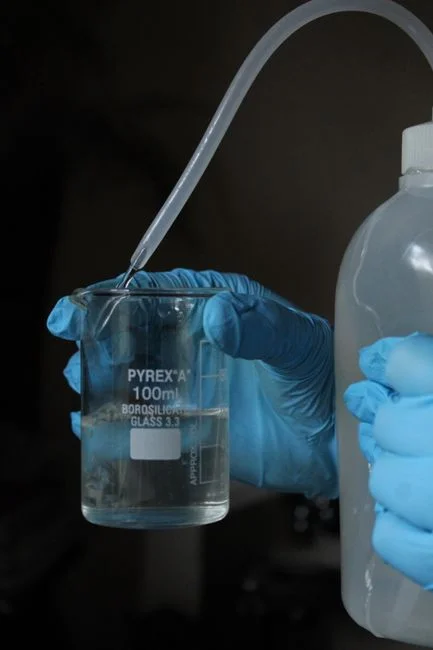
Zinc hydroxide (Zn(OH)₂) reaches minimum aqueous solubility — roughly 0.1 mg/L theoretical at 25°C — between pH 9.0 and 10.0, which is the engineering target for every Thai plant. Below pH 8.5, residual Zn²⁺ stays in solution and effluent climbs rapidly; above pH 10.5, zincate ion (Zn(OH)₄²⁻) forms and re-dissolves the precipitate, creating a "high pH, high zinc" failure mode that is harder to diagnose than a low-pH miss (HydropureWater field data, 2026).
The most common pitfall in Thai factories is dosing NaOH until the tank-side pH meter reads high while local pockets in the reaction zone remain under-dosed — a properly designed lamella clarifier for zinc hydroxide settling with a mixing residence time of 5–10 minutes eliminates this gradient. Temperature shifts the curve: colder monsoon-season wastewater (25–28°C) pushes the optimum slightly higher (pH 9.3–9.6) compared to dry-season conditions (32–35°C, optimum closer to 9.0–9.3), so plants that set a fixed setpoint in November often over-shoot in April (per standard Zn(OH)₂ solubility curves).
Polymer flocculant aids accelerate settling — typically 0.5–2 mg/L of anionic polyacrylamide is dosed at the clarifier inlet, raising settling rate from roughly 1–2 m/h to 4–6 m/h and pushing overflow clarity below 5 NTU, which is necessary to avoid fouling downstream polishing equipment. Skipping the polymer is a false economy: the clarifier works without it, but the operator pays for it in polymer-resistant sludge that settles unevenly.
Treatment Train Options to Meet the 5 mg/L Limit
Four treatment trains cover the common Thai metal-finishing scenarios, with the optimal choice depending on influent concentration, consent-letter tightness, and water reuse requirements.
| Option | Process sequence | Typical influent | Achievable effluent Zn | Best-fit scenario |
|---|---|---|---|---|
| A — Hydroxide precipitation | pH adjust → mix → lamella clarify | 50–200 mg/L | 1–5 mg/L | Most Thai galvanizing shops; lowest CAPEX |
| B — Hydroxide + sulfide | pH adjust → NaHS or FeS dose → lamella | 20–200 mg/L with chelated Zn | <1 mg/L | Consent ≤2 mg/L or chelated/cyanide-complexed streams |
| C — Hydroxide + ion exchange | pH adjust → lamella → cation resin | 5–50 mg/L post-precipitation | <0.5 mg/L | Discharge to Class 2 water or zero-discharge loop |
| D — Hydroxide + UF + RO | pH adjust → DAF → MMF → RO | 5–50 mg/L | <0.1 mg/L permeate; reuse-grade | Electronics with rinsing-water recovery goal |
For Option A, a DAF pre-treatment for plating line wastewater is useful when oil/grease from the galvanizing line exceeds 50 mg/L, as oil coats the hydroxide floc and prevents settling. Sludge handling differs by option: hydroxide sludge dewaters to 25–35% dry solids in a filter press for zinc-bearing hydroxide sludge (3–5% feed solids, typical cycle 60–90 min), while sulfide sludge is more stable in landfill but releases H₂S if acidified — operator training and ventilation are critical on that train (HydropureWater field data, 2026).
Matching Equipment to Typical Thai Factory Flow Rates
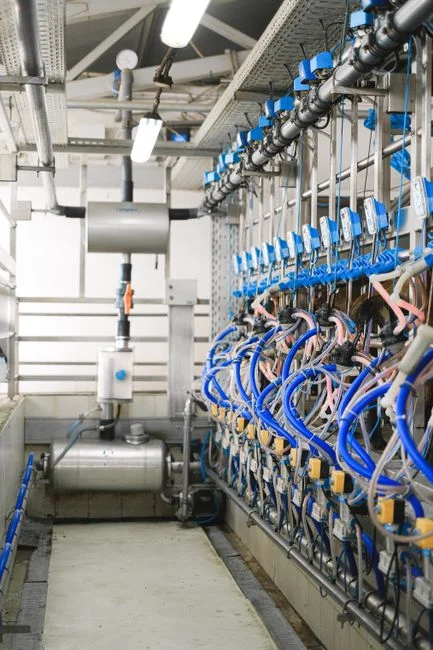
Flow rate dictates equipment sizing, as a 500 m³/day plant and a 20 m³/day plant require different clarifier geometries. A small galvanizing shop discharging 5–20 m³/day in batches is served by a packaged chemical dosing skid feeding a lamella clarifier with a 2–4 m² footprint. Mid-tier electroplating lines at 50–200 m³/day need continuous DAF pre-treatment for plating line wastewater ahead of pH adjustment and lamella clarification to strip oils and surfactants before the hydroxide step.
Industrial-estate clusters in the 500–2,000 m³/day range, such as those in Hemaraj Chonburi and the Eastern Seaboard, run central precipitation with a dedicated sludge press and reserve ion exchange polishing for tenants whose consent letters require ≤2 mg/L. Electronics plants targeting rinse-water reuse at 100–500 m³/day add a multi-media filter ahead of RO, with RO concentrate sent to a heavy-metal recovery cell. Across all flow bands, the single biggest driver of hitting 5 mg/L consistently is dosing accuracy — manual NaOH dosing is the most common reason Thai plants fail PCD audits, and a PLC-controlled chemical dosing system for pH adjustment with closed-loop pH control typically cuts effluent variance by 60–80% (HydropureWater field data, 2026). Real-time online monitoring for compliant zinc discharge is now standard on 2026 installations.
Frequently Asked Questions
Q1: What is the exact zinc discharge limit in Thailand for 2026?
5.0 mg/L total zinc under PCD industrial effluent standards, with site-specific consent letters from DIW routinely imposing ≤2.0 mg/L for galvanizing, electroplating, and any facility discharging to a Class 2 receiving water.
Q2: Can a factory discharge 5 mg/L zinc to a canal or river in Thailand?
Yes, if the receiving water is Class 3 or lower and the consent letter allows it; Class 1–2 receiving waters usually require ≤2.0 mg/L and may demand continuous online monitoring rather than quarterly composite sampling.
Q3: What pH is required to precipitate zinc in wastewater?
pH 9.0–9.5 gives minimum Zn(OH)₂ solubility (~0.1 mg/L theoretical at 25°C); operation above pH 10.5 must be avoided because zincate (Zn(OH)₄²⁻) re-dissolves the precipitate and effluent quality drops.
Q4: Do I need ion exchange to meet the Thai zinc limit?
Only if the consent letter is tighter than 5 mg/L, the receiving water is Class 1 or 2, or the hydroxide stage cannot reliably hold 5 mg/L on a fluctuating influent — otherwise hydroxide precipitation plus lamella clarification is sufficient for most Thai plants.
Q5: How often does PCD test industrial effluent for zinc?
Permitted discharges are typically sampled quarterly by the factory and verified by PCD; unannounced spot checks have risen sharply across metal-finishing clusters in 2025–2026, particularly in Rayong, Samut Prakan, and Chonburi.