Why 2026 Marks a Shift in Data Center Water Reuse Treatment
Data center water reuse treatment in 2026 pairs closed-loop or hybrid cooling with multi-media filtration, RO at 75–95% recovery, and IX or EDI polishing, cutting water OPEX 60–80% while holding WUE below 1.0 L/kWh at permitting-sensitive sites that face withdrawal scrutiny.
Data center reuse trends in 2026 center on closed-loop and hybrid cooling that keep WUE below 1.0 L/kWh at permitting-sensitive sites. U.S. data centers consumed 17.4 billion gallons in 2023, and EPA projects 38–73 billion gallons by 2028. AI and HPC racks at 100–200 kW push operators toward liquid cooling and recycled makeup water.
That 2.2× to 4.2× jump is forcing a structural redesign of cooling infrastructure rather than marginal efficiency programs (U.S. EPA, 2025). Single-pass evaporative cooling becomes thermally unviable at those rack densities, so direct-to-chip liquid cooling is often the only credible heat-rejection path (semiconductor industry 2026 analysis). The U.S. hosts more than 4,000 facilities as of April 2026, or roughly 37% of the global total. Wikipedia's synthesis adds a corroboration point: "The U.S. hosted 5,381 data centers in March 2024, the highest number of any country worldwide, accounting for 40% of the global market in 2023."
The newest builds cluster in water-stressed counties around Phoenix, Northern Virginia, and Santiago (Data Center Map, April 2026; MOST Policy Initiative, 2026). Wikipedia records the same siting drift: "since 2022, more than two-thirds of new data centers have been built in water-stressed areas." Scale is also visible per site — a single 100-MW hall "can use up to 2,000,000 litres (530,000 US gal) of water per day" at 2,400 MWh/day (Wikipedia). An LBNL 2024 estimate cited in the same record puts hyperscale facilities alone at 16–33 billion gallons per year by 2028.
In those jurisdictions, reuse has moved from an ESG talking point to a permitting gate. A facility that cannot demonstrate a closed-loop or hybrid design below 1.0 L/kWh WUE will struggle to secure an interconnection agreement. Engineers specifying equipment this year should treat 2026 as the year the financial, regulatory, and thermodynamic lines crossed together.
Data Center Reuse Trends Across Three Cooling Architectures
Every 2026 reuse specification traces back to one of three cooling archetypes, which dictates the cost-quality decision tree. Evaporative, open-loop systems remain the energy-efficient default in cold, water-rich climates, but they consume 80–95% of the water they withdraw. Equinix reported an 85% consumption ratio across its 268 global sites in 2024 (Equinix 2025a/2025b).
Closed-loop chilled water systems recirculate coolant with makeup water under 5% of loop volume per cycle. That architecture sits behind the new Arizona and Wisconsin facilities commissioned in 2026 that each save an estimated 125 million liters per year (Privette, 2026). Waterless two-phase and direct-to-chip liquid cooling carry no evaporative loss, but they demand makeup water at semiconductor-grade purity: conductivity below 2 µS/cm, silica below 0.5 mg/L, TOC below 1 mg/L.
The 2026 pattern is hybrid siting. Operators match technology to local water stress and grid carbon intensity rather than imposing one design globally (DataBank, 2026-02). For engineers weighing biological pretreatment against physical-chemical trains for cooling-tower blowdown, compare an MBR Membrane Bioreactor Wastewater Treatment System with the hybrid designs covered in this organic wastewater treatment system guide.
| Architecture | Water Consumption | Makeup Quality Needed | Best-Fit Climate / Siting |
|---|---|---|---|
| Evaporative / open-loop | 80–95% of withdrawal | TDS <500 mg/L; minimal polishing | Cold, water-rich regions; grid-carbon-light |
| Closed-loop chilled water | <5% makeup of loop volume | Conductivity <10 µS/cm; silica <2 mg/L | Water-stressed US Southwest, EU |
| Direct-to-chip / two-phase | Near-zero evaporative loss | Conductivity <2 µS/cm; silica <0.5 mg/L; TOC <1 mg/L | Hyperscale AI halls at 100–200 kW/rack |
Anatomy of a 2026 Data Center Water Reuse Treatment Train
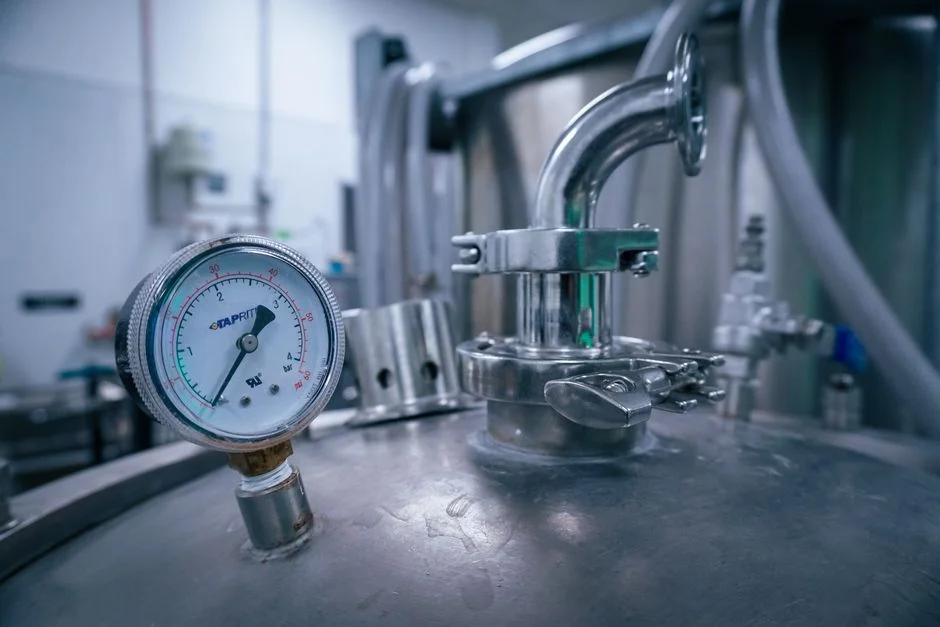
The reuse train a 2026 hyperscale EPC will accept follows a distinct multi-stage process. Source water is typically municipal reclaim, harvested rainwater, or internal cooling-tower blowdown at 200–500 mg/L TDS, 5–30 mg/L TSS, and TOC of 5–15 mg/L. Most plants we size for Southwest campuses start at the lower end of that TDS band when municipal reclaim is stable.
A multi-media pretreatment filter knocks SDI below 3 ahead of the membranes, followed by a PLC-controlled chemical dosing skid holding pH at 7.0–7.5 with continuous antiscalant injection.
The primary purification step is an industrial RO system running at 75–95% recovery; permeate exits at conductivity under 10 µS/cm and TOC under 1 mg/L.
Polishing to direct-to-chip grade is done with mixed-bed ion exchange or electrodeionization (EDI), targeting 0.5–2 µS/cm, with a separate silica polisher to push residual silica below 0.5 mg/L. Disinfection closes the loop: an on-site ClO₂ generator or UV bank holds a 99.9% Legionella kill benchmark in the cooling-tower makeup. Loop-side monitoring ties online conductivity, ORP, TOC, and silica analyzers into the facility BMS, with automatic blowdown control when cycles of concentration exceed 4–6 in the cooling loop.
The same sensor stack is increasingly paired with edge computing for wastewater monitoring, so real-time discharge compliance can be reported without manual sampling rounds. Contaminants such as PFAS, silica, and trace TOC now sit on the same reuse budget line, and pretreatment intensification is usually the cheapest way to protect RO recovery. Blowdown TSS above 30 mg/L is the first thing to fix when recovery targets slip on reclaim-fed trains.
| Stage | Unit Process | Key Parameter / Target |
|---|---|---|
| Source | Municipal reclaim, rainwater, cooling-tower blowdown | TDS 200–500 mg/L; TSS 5–30 mg/L; TOC 5–15 mg/L |
| Pretreatment | Multi-media filtration + chemical dosing | SDI <3; pH 7.0–7.5; antiscalant dose 1–5 mg/L |
| Primary purification | Industrial RO at 75–95% recovery | Permeate conductivity <10 µS/cm; TOC <1 mg/L |
| Polishing | Mixed-bed IX or EDI + silica polisher | Conductivity 0.5–2 µS/cm; silica <0.5 mg/L |
| Disinfection | ClO₂ or UV at makeup | 99.9% Legionella kill; ORP 650–750 mV |
| Loop monitoring | Online conductivity, ORP, TOC, silica to BMS | Cycles of concentration 4–6; auto-blowdown |
What High-Purity Water Systems Suit Data Center Cooling?
High-purity water systems for data center cooling pair industrial RO with mixed-bed IX or EDI polishing to hit semiconductor-grade makeup limits. Closed-loop chilled-water halls typically accept permeate below 10 µS/cm after RO, then polish to 0.5–2 µS/cm before the cold plate or CDU loop. Direct-to-chip and two-phase designs tighten further to conductivity below 2 µS/cm, silica below 0.5 mg/L, and TOC below 1 mg/L.
Recovery on the RO stage usually sits at 75–95% when feed TDS is 200–500 mg/L and antiscalant dose is held at 1–5 mg/L. Silica polishers after EDI are non-negotiable on AI halls; residual silica above 0.5 mg/L fouls microchannels faster than conductivity alone predicts. If blowdown also carries metals that need precipitation before membrane duty, review heavy-metal precipitation specs and EPA 2024 benchmarks for upstream solids control.
Semiconductor-Grade Makeup Water Conductivity Specifications
Semiconductor-grade makeup water conductivity specifications for direct-to-chip loops run below 2 µS/cm, with silica below 0.5 mg/L and TOC below 1 mg/L. Closed-loop chilled-water halls accept a looser 10 µS/cm permeate limit before polishing. The RO stage delivers that permeate at 75–95% recovery when feed TDS sits at 200–500 mg/L. Mixed-bed IX or EDI then closes the final orders of magnitude of conductivity before the CDU loop.
Which UV Disinfection Technologies Meet Class A Reuse Needs?
UV disinfection technologies that meet Class A reuse needs in data center makeup trains are typically UV banks installed after RO/EDI, often paired with an on-site ClO₂ generator. In 2026 reuse designs, that terminal barrier targets a 99.9% Legionella kill in cooling-tower makeup, with ClO₂ loops held at ORP 650–750 mV when oxidant residual is the control variable. Most plants we commission run UV as the continuous barrier and keep ClO₂ as the backup or complementary oxidant rather than as the sole disinfectant.
Class A–oriented reuse specifications still require the upstream membrane train to deliver low turbidity and low TOC before UV, because fouled sleeves cut dose delivery. Keep SDI below 3 after multi-media filtration and TOC under 1 mg/L after RO so the UV reactor can hold its validated kill without frequent sleeve cleaning.
CAPEX and OPEX: What Closed-Loop Reuse Actually Costs in 2026
The capital premium for a closed-loop or hybrid reuse design over an evaporative baseline runs 8–18%. Finance teams focus on the offset: 60–80% lower water OPEX once blowdown is recycled and potable makeup is displaced (HydropureWater field data, 2026). Reuse treatment train OPEX benchmarks settle at $0.08–$0.22 per cubic meter of reclaimed water, dominated by RO membrane replacement at 15–20% of operating cost and energy use of 0.4–0.7 kWh/m³ across the train.
On a water-stress site, the amortized payback window is 2.5–4.5 years when reuse displaces potable purchases priced above $2.50/m³. That window compresses further when WRI Aqueduct risk premiums are priced into a project's cost of capital. The 125-million-liter-per-year savings posted by each of the new 2026 Arizona and Wisconsin facilities remains the board-level benchmark. For a deeper recovery-cost split on the blowdown loop alone, see cooling tower blowdown recovery system capex opex cost data center alongside the full-train figures below.
| Cost Lever | Closed-Loop Reuse (2026) | Evaporative Baseline |
|---|---|---|
| CAPEX premium vs. baseline | +8 to +18% | Reference (0%) |
| Water OPEX | 60–80% lower | Reference |
| Treatment OPEX | $0.08–$0.22 per m³ reclaimed | $0.02–$0.05 per m³ (less treatment) |
| RO membrane replacement | 15–20% of OPEX | Not applicable |
| Energy use | 0.4–0.7 kWh/m³ | 0.1–0.2 kWh/m³ (no membranes) |
| Payback (water-stress site) | 2.5–4.5 years at >$2.50/m³ potable | n/a |
Standards, Disclosure and Compliance Driving Reuse Adoption
Three frameworks now shape board-level water decisions at hyperscale operators, and engineering specifications must satisfy all three. ASHRAE WST (Water Source Temperature) and the Water Use Effectiveness metric under the ISO/IEC 30134 series are the technical floor, and ISO 30134 has been formally referenced in EU CRPD water-disclosure reporting since the 2026 reporting year. Check the part number when citing: "PUE was published in 2016 as a global standard under ISO/IEC 30134-2:2016" (Wikipedia), so WUE — "a sustainability metric created by The Green Grid in 2011" — sits in a different part of the 30134 series. Permits that cite the wrong part invite avoidable review comments.
WUE Benchmark for Hyperscale Data Center Permitting
The WUE benchmark that governs hyperscale data center permitting in 2026 is 1.0 L/kWh or lower at withdrawal-sensitive sites. Virginia's experience explains the scrutiny: data centers in the state "consumed about 2.1 billion gallons of water in 2023, an 86% increase since 2019" (Wikipedia). In the U.S., Virginia, Arizona, and Texas require WUE disclosure for any facility above 100 MW IT load, with permitting consequences for non-compliance. Uptime Institute Tier IV expectations now extend to water-side resilience in hyperscale builds, with N+N redundancy on the reuse train's high-pressure pumps and EDI units as the de facto 2026 standard.
On the disclosure side, the EU Corporate Sustainability Reporting Directive (CSRD) water-disclosure metrics are effective for fiscal year 2026, requiring sustainability officers to report withdrawal, consumption, and reuse intensity with third-party assurance. Process engineers should map blowdown quality against local nitrogen and metals limits before locking the concentrate handling scheme. These data center reuse trends only hold if the discharge side of the train stays permit-ready under the same disclosure regime that tracks WUE.
| Framework | Scope | 2026 Status / Threshold |
|---|---|---|
| ASHRAE WST | Cooling source temperature limits | Design baseline for all new builds |
| ISO/IEC 30134-2 WUE | Water use effectiveness metric | Referenced in EU CRPD reporting |
| Uptime Tier IV | Water-side resilience, N+N redundancy | De facto for hyperscale 2026 builds |
| EU CSRD water disclosure | Withdrawal, consumption, reuse intensity | Effective for FY2026 reporting |
| US state rules (VA, AZ, TX) | WUE disclosure above 100 MW IT load | Permitting-gate for 2026 builds |
Selection Checklist and Next Step
Who this is for: EPC process leads, owner engineers, and procurement managers sizing closed-loop or hybrid reuse for AI/HPC halls in water-stressed counties. Who should look elsewhere: campuses that can meet WUE with once-through or seasonal free cooling and have no permitting pressure on withdrawal.
This guide tracks data center water reuse treatment 2026 specifications end to end: source water, pretreatment, membranes, polishing, disinfection, and discharge. Before you freeze the P&ID, check these items:
- Target WUE below 1.0 L/kWh if the site is permitting-gated
- Match architecture to climate: evaporative, closed-loop, or direct-to-chip
- Set makeup limits: conductivity, silica, and TOC for the chosen loop
- Size RO at 75–95% recovery with SDI <3 pretreatment
- Specify UV and/or ClO₂ for 99.9% Legionella kill on makeup
- Budget CAPEX premium of 8–18% and OPEX of $0.08–$0.22/m³
- Confirm N+N redundancy on high-pressure pumps and EDI for Tier IV halls
If your heat load, source-water analysis, and WUE target are ready, request a reuse-train sizing quote with flow, TDS, and silica data attached.
Frequently Asked Questions
What water savings do 2026 closed-loop data centers report?
Closed-loop facilities commissioned in 2026, including the Arizona and Wisconsin sites, save roughly 125 million liters per year each. That is about a 95% reduction versus equivalent-capacity single-pass evaporative designs (Privette, 2026). The savings assume recycled blowdown displaces potable makeup under closed-loop chilled-water duty.
What water quality does direct-to-chip liquid cooling require?
Direct-to-chip loops at 100–200 kW rack density need makeup water at conductivity below 2 µS/cm, silica below 0.5 mg/L, and TOC below 1 mg/L. That is why polishing with mixed-bed IX or EDI follows the RO stage in the reuse train. Without silica control, microchannel fouling shows up long before conductivity alarms trip.
How much does a closed-loop reuse system cost in 2026?
CAPEX runs 8–18% above an evaporative baseline, with OPEX of $0.08–$0.22 per cubic meter of reclaimed water. Amortized payback is 2.5–4.5 years on water-stress sites where potable water exceeds $2.50/m³ (HydropureWater field data, 2026). Membrane replacement usually accounts for 15–20% of treatment OPEX.
Which standards govern data center water reuse in 2026?
ASHRAE WST and the ISO/IEC 30134-series WUE metric define the technical floor, while Uptime Tier IV drives N+N water-side redundancy on hyperscale builds. EU CSRD water-disclosure metrics apply for FY2026 reporting, and Virginia, Arizona, and Texas require WUE disclosure above 100 MW IT load. Specs that ignore disclosure thresholds often fail permitting even when thermal design is sound.
Do UV systems replace chlorine dioxide in reuse makeup?
UV banks do not always replace ClO₂; many 2026 trains use both. UV provides continuous disinfection after RO/EDI, while ClO₂ holds ORP at 650–750 mV when an oxidant residual is required for cooling-tower makeup. The shared performance target in these designs remains a 99.9% Legionella kill at the makeup point.
How does UV disinfection deliver Legionella control in cooling tower reuse?
UV disinfection delivers Legionella control in cooling tower reuse by holding a validated 99.9% kill at the makeup point, with ClO₂ loops at ORP 650–750 mV as backup where oxidant residual is required. UV works continuously after RO/EDI while ClO₂ covers distribution legs the UV dose cannot reach. Fouled sleeves cut dose delivery, so keep SDI below 3 and TOC under 1 mg/L upstream. Most 2026 trains we commission run both barriers rather than either alone.