Why Winery Wastewater Is Hard to Treat Biologically
Winery effluent routinely spikes to 3,000–25,000 mg/L COD during crush, carries raw pH values of 3.5–4.5 from tartaric acid and fermenting must, and swings 5–10× in flow between harvest and off-season months — a combination that washes biomass out of conventional activated sludge basins and trips clarifiers within hours. STS Water Treatment frames winery wastewater as a stream "containing high levels of organic and inorganic compounds" that benefits from biological stabilization followed by reuse for irrigation (STS Water Treatment, 2022-10). A 2024 Science Direct aerobic MBBR kinetic study confirmed the substrate is biodegradable but emphasized that nutrient balance and shock-load management — not raw biology — are the limiting design factors. The bench-scale Cal Poly work supports the same conclusion: biofilm carriers tolerate what suspended-growth systems cannot. Comparable biological packages, like those detailed in this MBBR for dairy wastewater cost guide, solve a similar shock-load problem in a different food-processing sector.
| Parameter | Crush season (peak) | Off-season (low) | Biological risk if uncontrolled |
|---|---|---|---|
| COD (mg/L) | 3,000–25,000 | 300–2,500 | Biomass washout, O₂ deficit |
| pH | 3.5–4.5 | 6.0–7.5 | Biofilm inhibition below pH 5.0 |
| Total suspended solids (mg/L) | 1,500–6,000 | 150–800 | Diffuser clogging, scum buildup |
| Daily flow (m³/day, mid-size) | 40–80 | 5–15 | 5–10× hydraulic swing |
| Peak-to-average load ratio | 3–5× | 0.2–0.4× | Equalization basin mandatory |
How an MBBR Treats Winery Wastewater
An MBBR is a continuously stirred aeration tank filled with free-floating PE or PP carrier media — typically 500–1,200 m²/m³ specific surface area — on which heterotrophic and autotrophic biofilms grow at concentrations of 3–6 g/L as attached biomass, well above the 1.5–3 g/L achievable in suspended-growth systems. For winery effluent, the working layout is a two-zone reactor: a 1–2 hour anoxic pre-zone for denitrification and easily degradable carbon polishing, followed by an aerobic MBBR zone where coarse-bubble diffusers hold dissolved oxygen at 2–4 mg/L. The 2024 Science Direct paper found that nitrate addition to an aerobic MBBR increased biodegradation capacity for winery wastewater, directly supporting the anoxic + aerobic two-zone split (Science Direct, 2024-02). Biofilm's defining advantage in a winery context is retention: attached biomass does not wash out during off-season low-flow months, and it recovers from pH or load shocks within 24–48 hours rather than the 1–2 weeks suspended-growth sludge needs. Routine pH correction is handled upstream using an industrial pH adjustment system to keep the biofilm in its productive range.
MBBR Design Parameters for Winery Applications
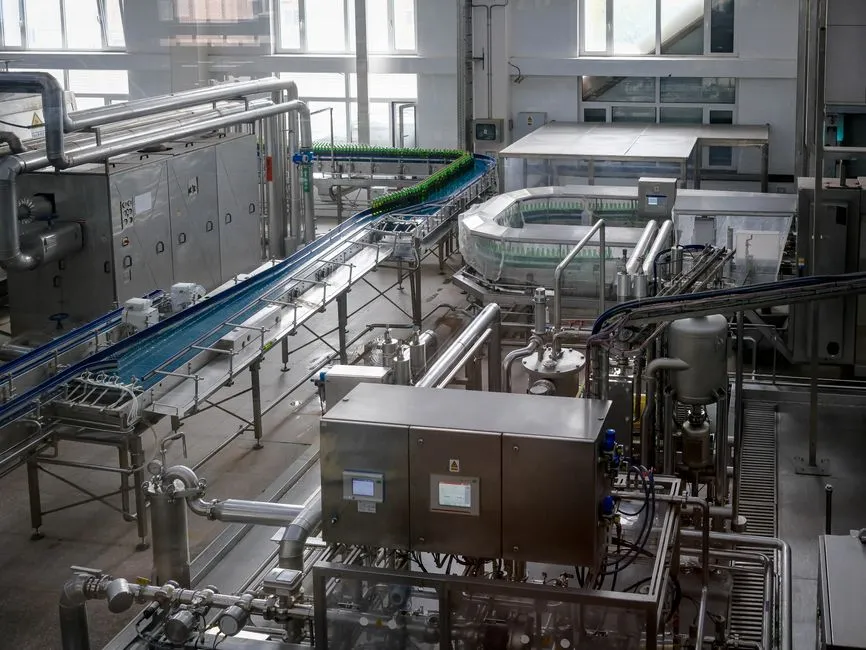
Winery MBBR design diverges from municipal MBBR in three load-bearing choices: higher carrier filling (30–60% vs. 10–25%), shorter aerobic HRT (6–10 hours vs. 18–24 hours), and mandatory nutrient dosing to a 100:5:1 COD:N:P ratio. These parameters are not optional — the Cal Poly bench-scale MBBR study measured a 16% drop in BOD removal from nitrogen limitation and a 3% drop from phosphorus limitation when nutrients were not supplemented, with an annualized need of roughly 27 kg N/year and 5.2 kg P/year for a small prototype system. Aeration is sized for 1.5–2.0× peak BOD oxygen demand using coarse-bubble diffusers; the Cal Poly prototype used a 9-inch EPDM diffuser as a small-scale precedent. Operating temperature range is 10–30°C, and biofilm activity drops 30–50% below 10°C, which means cold-climate wineries must winterize the bioreactor or accept winter effluent that does not meet reuse targets. The table below is the parameter set to hand to a process engineer for preliminary sizing.
| Design parameter | Winery MBBR value | Municipal MBBR (for comparison) | Source / rationale |
|---|---|---|---|
| Carrier filling ratio | 30–60% | 10–25% | High OLR demands more biomass |
| Aerobic HRT | 6–10 h | 18–24 h | Biofilm kinetics; shock absorption |
| Anoxic HRT (pre-zone) | 1–2 h | Optional | Denitrification polishing |
| Organic loading rate | 4–8 kg COD/m³·d | 1–3 kg COD/m³·d | Winery peak loads |
| Dissolved oxygen (aerobic) | 2–4 mg/L | 2–3 mg/L | Peak BOD demand |
| Aeration factor | 1.5–2.0× BOD | 1.2–1.5× BOD | Reserve for harvest spikes |
| COD:N:P dosing ratio | 100:5:1 | 100:5:1 | Cal Poly bench-scale, 2018 |
| 16% | — | Cal Poly, no N added | |
| P-limitation BOD drop | 3% | — | Cal Poly, no P added |
| Operating temperature | 10–30°C | 8–25°C | Winterization below 10°C |
| Reactor pH | 6.5–7.5 | 6.5–8.0 | Equalize from 3.5–4.5 raw |
| Expected COD removal | 85–95% | 70–85% | Full-scale, 2026 |
Pretreatment and Equalization: Protecting the MBBR
The upstream train — not the bioreactor — is what makes or breaks a winery MBBR installation. Raw crush effluent carries skins, stems, seeds, and label fragments that foul diffusers within days if not screened, and a 3–5× peak-to-average load ratio is normal between harvest and bottling days. The minimum pretreatment train is: (1) rotary or step screens at 0.5–1.0 mm aperture to remove coarse solids; (2) a 24–48 hour equalization basin sized for the full daily harvest discharge, which is the single most important piece for absorbing winery seasonality; (3) pH correction using NaOH or Na₂CO₃ dosed into the equalization basin — not the bioreactor — to lift pH from 3.5–4.5 to 6.5–7.5; and (4) a DAF unit ahead of the MBBR if the site also handles distillery, olive oil, or food waste streams that introduce FOG. Equalization also gives the operator a place to blend and cool hot fermenter washwater before it reaches the biofilm. A properly sized DAF unit ahead of the MBBR removes 60–90% of residual suspended solids and protects the carrier media from blinding.
MBBR vs MBR vs SBR for Wineries: Side-by-Side Comparison
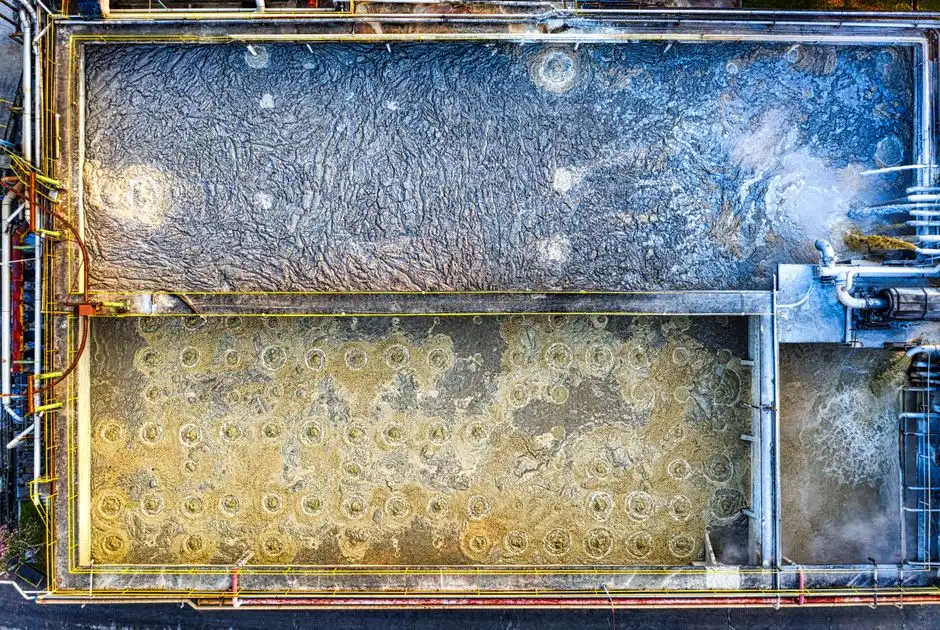
The decision between MBBR, MBR, and SBR comes down to three questions: does the winery need reuse-quality water, how tight is the discharge limit, and what is the harvest-to-off-season load swing. MBBR is the default for wineries that need to absorb spikes cheaply and discharge to sewer or land with moderate BOD limits; it delivers 85–95% COD removal at the lowest CAPEX and has no membranes to clean. MBR is the right answer when irrigation reuse or process-water reuse is mandatory and discharge limits are tight, because the membrane cassette pushes COD removal to 95–99% and produces near-reuse-quality effluent — at a 40–60% higher CAPEX and a membrane replacement cycle of 5–8 years. SBR (sequencing batch reactor) offers 90–95% COD removal with operational flexibility but a larger footprint and complex cycle timing, and it is less common in new 2026 winery builds. An integrated MBR alternative is worth quoting when the owner has a reuse mandate.
| Criterion | MBBR | MBR | SBR |
|---|---|---|---|
| COD removal | 85–95% | 95–99% | 90–95% |
| BOD₅ removal | 90–96% | 97–99% | 92–97% |
| Effluent TSS | 30–80 mg/L | <5 mg/L | 20–50 mg/L |
| Relative CAPEX | 1.0× (baseline) | 1.4–1.6× | 1.1–1.3× |
| Relative footprint | Smallest | Small–medium | Largest |
| Operator skill | Moderate | High (membrane care) | High (cycle tuning) |
| Seasonal shock handling | Excellent (biofilm retained) | Good (membranes fouling risk) | Fair (batch cycle disruption) |
| Membrane replacement | None | Every 5–8 years | None |
| Best fit for winery | Default; sewer/land discharge | Mandatory reuse; tight limits | Rare; legacy systems |
2026 Cost Data: CAPEX, OPEX, and Lifecycle for Winery MBBR
For a 2026 budget memo, CAPEX for a winery MBBR runs $120–$420 per m³/day of design capacity, which puts a mid-size winery (50 m³/day) at $6,000–$21,000 in tankage and carrier media plus $15,000–$40,000 in blowers, diffusers, and control panels. OPEX is $0.10–$0.35 per m³ treated, dominated by aeration energy at 0.3–0.6 kWh/m³ and nutrient dosing (urea and phosphoric acid) per the 100:5:1 ratio. An MBR of the same capacity runs 40–60% higher in CAPEX because of membrane skids and cassette costs. Sludge yield is 0.3–0.5 kg DS per kg COD removed, comparable to other high-rate biofilm systems, and a plate-and-frame filter press dewatered to 18–25% DS is the standard end-of-line volume reduction. Cal Poly's economic framing is still the right one: MBBR feasibility must be evaluated against the winery's current waste transport and disposal cost, which in many regions runs $0.05–$0.20 per liter hauled off-site — a number that makes on-site biological treatment pay back inside 3–5 years for any winery producing more than 20 m³/day of crush effluent. An automatic nutrient and pH dosing skid typically adds $5,000–$12,000 to the package but pays for itself in stable removal rates.
| Cost line item | 2026 range | Notes |
|---|---|---|
| CAPEX — tankage + carrier media | $120–$420 per m³/day | Mid-size winery (50 m³/d): $6k–$21k |
| CAPEX — blowers, diffusers, controls | $15,000–$40,000 | Per 50 m³/d system |
| CAPEX — chemical dosing skid | $5,000–$12,000 | Per system |
| OPEX — total | $0.10–$0.35 per m³ | Aeration + nutrients dominate |
| Aeration energy | 0.3–0.6 kWh/m³ | Coarse-bubble, VFD-controlled |
| Nutrient dosing (N + P) | $0.02–$0.06 per m³ | Urea + phosphoric acid |
| Sludge yield | 0.3–0.5 kg DS/kg COD | Dewater with filter press to 18–25% DS |
| Off-site haul cost (alternative) | $0.05–$0.20 per liter | Why on-site treatment pays back fast |
Frequently Asked Questions
What COD removal can a winery MBBR realistically achieve in 2026?
Full-scale winery MBBR systems running 6–10 hour HRT with 30–60% carrier filling achieve 85–95% COD removal at peak harvest loads, per current MBBR design practice and the 2024 Science Direct aerobic MBBR kinetics study for winery wastewater (Science Direct, 2024-02).
Why choose MBBR over MBR for a small-to-mid winery?
MBR delivers 95–99% COD removal and near-reuse effluent, but CAPEX runs 40–60% higher than MBBR and membranes require replacement every 5–8 years. For wineries discharging to sewer or land under moderate BOD limits, MBBR is the lower-cost, lower-maintenance default.
What nutrient ratio is required to keep winery MBBR biofilm productive?
The Cal Poly bench-scale MBBR study recommends a COD:N:P dosing ratio of 100:5:1. Without nutrient supplementation, nitrogen limitation drops BOD removal by 16% and phosphorus limitation drops it by 3%, requiring roughly 27 kg N/year and 5.2 kg P/year for a small system.
How does an MBBR handle the 5–10× flow swing between harvest and off-season?
The attached biofilm is not washed out during low-flow months the way suspended-growth sludge is, and it recovers from pH or load shocks within 24–48 hours. A 24–48 hour equalization basin upstream is still required to absorb the 3–5× peak-to-average load ratio.
What is the 2026 CAPEX range for a winery MBBR?
CAPEX runs $120–$420 per m³/day of design capacity — a 50 m³/day winery budgets $6,000–$21,000 for tankage and media plus $15,000–$40,000 for blowers, diffusers, and controls, with MBR costing 40–60% more for the same capacity.
Related Equipment
- DAF unit ahead of the MBBR — specifications, capacity range, and technical data
- integrated MBR alternative — specifications, capacity range, and technical data
- plate-and-frame filter press — specifications, capacity range, and technical data