
Why Lamella Clarifiers Use Less Energy Than Conventional Tanks
A lamella clarifier improves energy efficiency in industrial wastewater treatment mainly by replacing deep, slow sedimentation tanks with a stack of inclined plates at 55–60° spaced 50–80 mm apart, raising surface loading to 10–25 m³/h·m² and cutting plan area by up to 95% versus a horizontal-flow clarifier (ScienceDirect, Lamella Clarifiers overview). Because there is no aeration and the sludge mass pumped is small, hydraulic and pumping energy drop sharply. Full-scale CEPT plants that couple lamella settlers with coagulation report 64–91% TSS removal and 55–80% BOD removal, and at El Salto, Mexico the CEPT route cost US$3.1 per m³ versus US$5.4 per m³ for a CAS plant with conventional primary treatment (ScienceDirect S0360128518300273).
The geometry of the plate pack, not the chemistry, is what does most of the work. The ScienceDirect lamella overview reports that for the same throughput, plan area can be cut by up to 95% versus a horizontal-flow clarifier. Surface loading on the plan area rises to 10–25 m³/h·m², well above the roughly 2 m³/h·m² ceiling of a sludge-blanket clarifier (ScienceDirect, Lamella Clarifiers overview, §7.17). A smaller footprint means a smaller volume of mixed liquor to move, shorter sludge suction lines, and lower pumping head, which together cut the clarifier's own kWh/m³. The larger energy win, however, comes from not needing an aeration basin downstream when CEPT is used (ScienceDirect S0360128518300273).
Plate hydraulics must stay laminar for that efficiency to show up at the meter. The overview flags Re<200 in the plates (target <50), Froude >10⁻⁵, plate velocity <10 m/h, plate HRT <20 min, and a tank surface loading on plan area <7.5 m³/h·m². Operating outside that window forces the operator into higher coagulant and polymer doses, which is where the energy saving is most often lost in the field. Pilot MBBR + Lamella data on hospital wastewater reached 53% TSS, 56% BOD, and 34% COD reduction in a 24 h HRT with effluent pH 7.3–7.6 (Universitas Gadjah Mada, Technosains), confirming lamella settlers can deliver consistent clarification without an energy-intensive secondary polishing stage behind them.
Design Parameters That Control kWh per Cubic Metre
Plate inclination of 55–60° to horizontal is the standard range across the ScienceDirect lamella overview and the Moga et al. (2018) and Liu et al. (2020) textile and stormwater studies cited there; shallower angles let solids accumulate on the underside of the plate and force higher chemical dosing to compensate. The overview sets plate spacing at 50–80 mm, plate width at 1.25–1.5 m, plate length at 2.5–3.25 m, and plate thickness at about 0.7 mm for stainless steel, with the upper 125 mm projecting above water level and the bottom 1.5 m reserved for sludge collection (ScienceDirect, Lamella Clarifiers overview).
The hydraulic envelope the overview flags is the most important procurement boundary: Re<200 in the plates with a target of <50, Froude >10⁻⁵, plate velocity <10 m/h, plate HRT <20 min, surface loading on tank plan area <7.5 m³/h·m², and clarified-water draw-off ≤15 m³/h per metre of launder. The Hazen settling velocity target is 0.8–1.5 m/h, with clarified-water turbidity of 1–2 NTU. Clear water depth above the plates must stay above 300 mm, and the tank should be enclosed to prevent algal fouling that would otherwise force higher polymer doses (ScienceDirect, Lamella Clarifiers overview).
Sludge withdrawal design — chain-and-flight scraper, reciprocating scraper, or hoppers — directly affects underflow solids concentration. A thinner underflow means more water recycled back to the head of the plant, raising both pumping and chemical kWh/m³. Schiller's transition length formula, Lₜ = 0.0288·Re·D, must be deducted from the plate length to find the actual settling zone, and at least one-third of the tank length should remain plate-free (ScienceDirect, Lamella Clarifiers overview, §7.17).
| Parameter | Design range (ScienceDirect overview) | Why it moves kWh/m³ |
|---|---|---|
| Plate angle | 55–60° to horizontal | Shallower angles hold sludge on plates and force higher coagulant dose |
| Plate spacing | 50–80 mm | Wider spacing reduces effective settling area per plan area |
| Plate length (in water) | 2.5–3.25 m | Longer plates after transition length raise Hazen capture |
| Plate width | 1.25–1.5 m | Sets module width and number of parallel channels |
| Plate HRT | <20 min | Longer HRT lets floc break up and forces re-dosing |
| Reynolds number in plates | <200, target <50 | Turbulent flow resuspends settled floc and adds polymer demand |
| Surface loading on plan area | <7.5 m³/h·m² | Exceeding this raises carryover and post-clarifier polishing load |
| Launder draw-off | ≤15 m³/h per m | Higher draw-offs pull floc into the clarified stream |
| Hazen velocity | 0.8–1.5 m/h | Below 0.8 m/h, plate count grows without effluent quality gain |
| Clarified turbidity | 1–2 NTU | Above 2 NTU, downstream filters and chemicals pick up the load |
CEPT with Lamella Plates: The Energy Picture at Full Scale
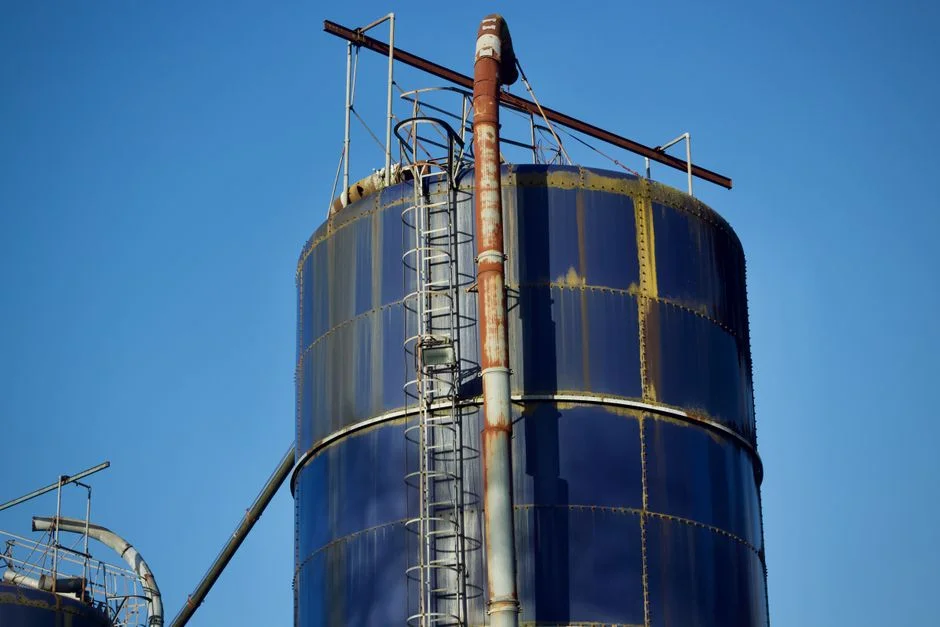
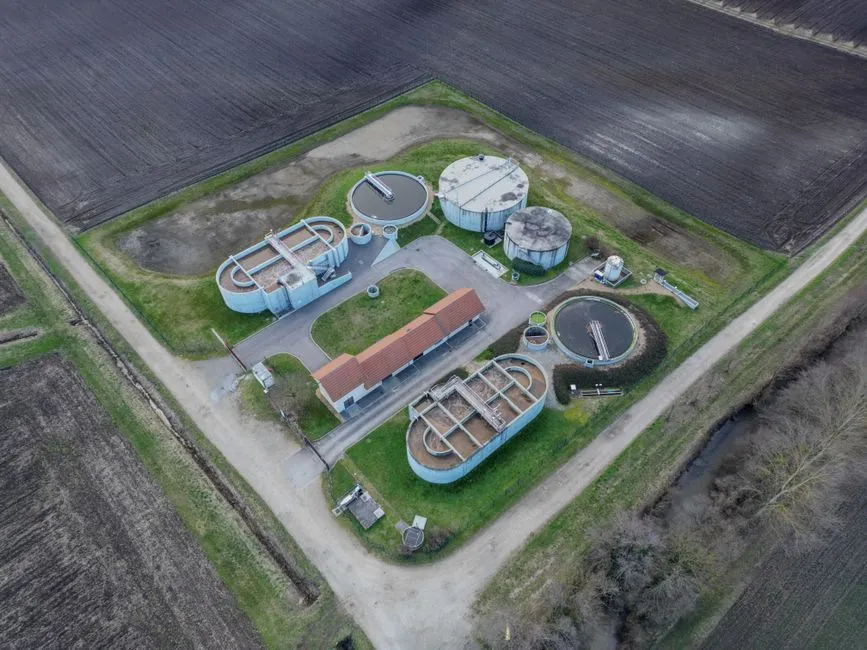
CEPT + lamella full-scale plants in Hong Kong, California, and the USA report 64–91% TSS and 55–80% BOD removal, with the first Hong Kong multilevel sedimentation plant at 40 m³/s delivering 70% TSS and 55% BOD minimum (ScienceDirect S0360128518300273). Coupling CEPT and lamella clarifiers presents the advantages of a high overflow rate and efficient coagulation, and removal efficiencies match the multilevel configuration at around 70–90% TSS and 50–80% BOD.
Norway operated 28 WWTPs in the 1990s with CEPT only and no biological stage. These reached 82% BOD and 87% TSS removal, illustrating that a lamella-led CEPT line can meet secondary-equivalent load reduction with primary-only energy input (ScienceDirect S0360128518300273). Meili and Soletti (2019, cited in the ScienceDirect textile overview) combined Fenton oxidation with a lamella clarifier to degrade iron sludge, showing lamella settlers can also be positioned as the energy-efficient final separation step in advanced oxidation trains.
The El Salto, Mexico feasibility study (15 m³/s, 1995) compared CEPT with conventional primary + activated sludge: CEPT OPEX was US$4M/year versus US$7M/year for CAS, equal to US$3.1/m³ versus US$5.4/m³, and CEPT CAPEX was 1.85× lower than CAS with conventional primary (ScienceDirect S0360128518300273). Coagulant doses in the surveyed CEPT plants ranged 10–50 mg/L FeCl₃, with 14–20 mg/L typical in US plants and 100–250 mg/L in cold-climate Norwegian sites; polymer dose was 0–1 mg/L. Chemical selection here sets the kWh-equivalent of the energy saved by avoiding aeration (ScienceDirect S0360128518300273; De Feo et al. cited therein).
| Plant | Capacity | FeCl₃ (mg/L) | Polymer (mg/L) | TSS removal | BOD removal |
|---|---|---|---|---|---|
| Hong Kong (first CEPT, multilevel) | 40 m³/s | 10 | 0.15 | 91% | 80% |
| California | n.d. | <25 | <0.2 | 85% | >55% |
| USA (Buffalo NY, Benton Harbor MI, Cleveland OH) | n.d. | 14–20 | 0.3–0.5 | 64–80% | n.d. |
| Norway (28 WWTPs, 1990s, CEPT only) | various | 100–250 | n.d. | 87% | 82% |
| CEPT + lamella, general (France/Canada) | various | 10–50 | 0–1 | 70–90% | 50–80% |
Lamella vs Conventional Clarifier: 2026 Selection Framework
Rule of thumb from the ScienceDirect overview: pick a lamella unit when surface loading above roughly 5 m³/h·m² is needed or when plan area is constrained; conventional horizontal-flow clarifiers remain appropriate for very large municipal flows where land is cheap and feedwater TSS is low (ScienceDirect, Lamella Clarifiers overview, §7.17). A sludge-blanket tank caps at about 2 m³/h·m² and at most 5 m³/h·m² with polyelectrolytes, which is the band a lamella pack operates several times above.
Energy band per the El Salto data: a CEPT plant with lamella settlers reached US$3.1/m³ OPEX at 15 m³/s versus US$5.4/m³ for a CAS plant with conventional primary, a 1.74× OPEX gap that scales with aeration duty rather than with clarifier size. The CAPEX gap of 1.85× lower for CEPT versus CAS with conventional primary comes from avoiding the aeration basin and its blowers (ScienceDirect S0360128518300273). The exact 2026 kWh/m³ at any given site depends on feedwater TSS, chemistry, and downstream aeration duty, which is the input a buyer must obtain from the supplier before committing to a figure.
Footprint band: lamella settlers can deliver up to 95% plan-area reduction versus horizontal-flow clarifiers at the same throughput, which translates directly into shorter interconnecting pipework and lower pumping kWh (ScienceDirect, Lamella Clarifiers overview). For 2026 retrofits in food, metal finishing, textile, and hospital effluent, MBBR + Lamella hybrid pilots (UGM/Technosains) show 53% TSS / 56% BOD / 34% COD removal at 24 h HRT, supporting lamella as a compact primary or post-biofilm polishing stage rather than a standalone tertiary unit. Specifying engineers should request plate material, plate count, hydraulic transition length per Schiller (Lₜ = 0.0288·Re·D), and Hazen velocity from the supplier; absence of these numbers on a 2026 datasheet is a strong indicator that the unit will under-perform and force higher chemical doses. For a deeper side-by-side including footprint and 2026 cost band, see the lamella vs conventional clarifier cost and footprint comparison for 2026.
How to Specify an Energy-Efficient Lamella Clarifier in 2026
Require Hazen velocity 0.8–1.5 m/h, plate spacing 50–80 mm, plate angle 55–60°, and clarified-water turbidity ≤2 NTU on the datasheet; these are the four numbers most directly tied to energy and chemical consumption (ScienceDirect, Lamella Clarifiers overview). Insist on flow distribution that feeds each plate channel individually via the slotted side-channel design in the ScienceDirect overview, so uneven inflow does not force local over-dosing; this is the single most common cause of energy-efficient lamella units running inefficient in the field.
Specify sludge withdrawal to a target underflow solids concentration rather than to a flow rate, and require an enclosed tank to keep algae off the plates, since algal fouling is the dominant cause of long-term chemical and pumping cost creep. Ask suppliers for 2026 reference plants with measured kWh/m³ and chemical kg/m³, not just removal efficiencies; absence of those two KPIs is the clearest signal that a "high-efficiency" claim is marketing rather than engineering. For a more detailed parameter checklist, see the Lamella Clarifier Engineering Specifications Guide 2026. The HydropureWater High-Efficiency Sedimentation Tank (Lamella Clarifier) combines sludge recirculation, flocculation, and inclined-plate separation in a single compact structure and is paired with a HydropureWater automatic chemical dosing system to hold the coagulant and polymer KPIs on target.
Frequently Asked Questions
How does a lamella clarifier save energy in practice?
The plate pack raises effective surface loading to 10–25 m³/h·m² versus roughly 2 m³/h·m² for a sludge-blanket clarifier, and the unit itself runs at a Hazen velocity of 0.8–1.5 m/h (ScienceDirect, Lamella Clarifiers overview). There is no aeration inside the plates, and the footprint drops by up to 95%, so pumping head and the volume of mixed liquor that has to be moved both fall.
What is the actual kWh/m³ and cost saving for a CEPT line with lamella plates?
The El Salto, Mexico 1995 feasibility study reported CEPT at US$3.1/m³ OPEX versus US$5.4/m³ for CAS with conventional primary, a 1.74× OPEX gap, with CAPEX 1.85× lower for CEPT (ScienceDirect S0360128518300273). For a 2026 project, exact kWh/m³ depends on feedwater TSS, chemistry, and downstream aeration duty; request a site-specific kWh/m³ from suppliers, since the published El Salto number is the only full-scale benchmark in the supplied research and cannot be assumed for a different influent.
What design parameters must be on a 2026 lamella clarifier datasheet?
Plate angle 55–60°, plate spacing 50–80 mm, plate length 2.5–3.25 m, plate thickness ~0.7 mm stainless steel, Re<200 in plates (target <50), plate HRT <20 min, clarified turbidity 1–2 NTU, clear water depth above plates >300 mm, and an enclosed tank (ScienceDirect, Lamella Clarifiers overview).
How do I evaluate lamella clarifier suppliers for a 2026 retrofit?
Ask each supplier for measured kWh/m³ and chemical kg/m³ at a reference plant with a similar feedwater TSS band, the plate material and plate count, the hydraulic transition length per Schiller, and the Hazen velocity. The suppliers that answer all four are the ones who have actually engineered a unit, not just relabelled a tube settler; the suppliers who quote only removal percentages without those four numbers cannot be benchmarked against the ScienceDirect overview's design envelope. Also confirm that the chemical dosing skid, such as a HydropureWater automatic chemical dosing system, can hold the 10–50 mg/L FeCl₃ and 0–1 mg/L polymer band the CEPT literature reports (ScienceDirect S0360128518300273).