What Does a Sugar Mill Wastewater Treatment Plant Actually Cost in 2026?
A sugar mill wastewater treatment plant priced in 2026 typically runs $250–$1,800 per m³ of daily capacity in CAPEX, or $150,000–$900,000 for a 500 m³/day plant and $300,000–$1,800,000 for a 1,000 m³/day plant, with OPEX of $0.10–$0.45 per m³ treated. The containerized MBR units advertised at $2,999–$9,990 on Made-in-China cover only 5–20 m³/day mobile skids — they are not representative of full-scale mill ETP cost (Made-in-China, 2026 product listing).
The price band is wide for three engineering reasons. First, influent COD: sugar mills run 2,000–6,000 mg/L versus 250–500 mg/L for municipal sewage, so biological reactors must be 4–8× larger. Second, discharge target: irrigation reuse can accept 100 mg/L BOD, while surface-water discharge or boiler-feed reuse requires <10 mg/L BOD and <5 mg/L TSS, which forces membrane stages. Third, process choice: a UASB+MBR hybrid sits at $250–$600/m³, while a full Zero Liquid Discharge train for distillery spent wash hits $1,200–$1,800/m³.
OPEX is dominated by electricity at 40–55% of the total (blowers, recirculation pumps, MBR permeate pumps), followed by chemical dosing at 15–25%, sludge handling at 10–20%, and operator labor at 10–15%. Regional supply matters: Indian and Southeast Asian fabricators price at the low end of the band, while EU- or NA-engineered systems with CE/UL-listed components and higher automation typically run 1.5–2.5× the same flow (HydropureWater field data, 2026).
Sugar Mill Effluent Characteristics: The Design Basis That Drives the Price
Sugar mill wastewater is 4–8× stronger than municipal sewage in COD and runs 10–15°C hotter, which dictates reactor sizing and membrane selection before any quote is meaningful. A supplier who quotes without confirming the design basis is quoting blind.
The table below summarizes the parameters a 2026 sugar mill ETP must be designed against. Confirm any vendor's design basis report against these numbers before signing a PO.
| Parameter | Cane/beet mill effluent | Distillery spent wash (co-located) |
|---|---|---|
| COD | 2,000–6,000 mg/L | 80,000–150,000 mg/L |
| BOD | 800–2,500 mg/L | 40,000–60,000 mg/L |
| TSS | 500–2,000 mg/L | 10,000–30,000 mg/L |
| pH | 4.5–7.0 | 3.5–4.5 |
| Temperature | 30–45°C | 70–95°C (post-evaporator) |
| Oil & grease | 50–200 mg/L | Not applicable |
| Total nitrogen | 20–60 mg/L | 500–1,500 mg/L |
| Total phosphorus | 5–15 mg/L | 100–400 mg/L |
Three distinct streams enter the ETP: imbibition water and condenser cooling bleed, mill-house washwater carrying bagasse fines, and (where distillery is co-located) spent wash. A 2,500 TCD mill typically generates 200–600 m³/day of process wastewater, with seasonal peaks during crushing — October to March in India, May to November in Brazil — which can push hydraulic load 30–50% above the annual average (per CPCB G/S 110001 sugar industry standards).
High temperature is a double-edged design parameter: it accelerates anaerobic digestion kinetics in the UASB but reduces MBR membrane flux by 20–40% compared to municipal duty, which must be factored into membrane area sizing. Discharge standards to map against are India CPCB G/S 110001, Brazil CONAMA 430/2011, and EU BAT-AEL for food and beverage — these set whether the treated stream can go to irrigation, surface water, or must go to ZLD.
Process Options Compared: UASB+MBR vs SBR vs Full MBR vs ZLD
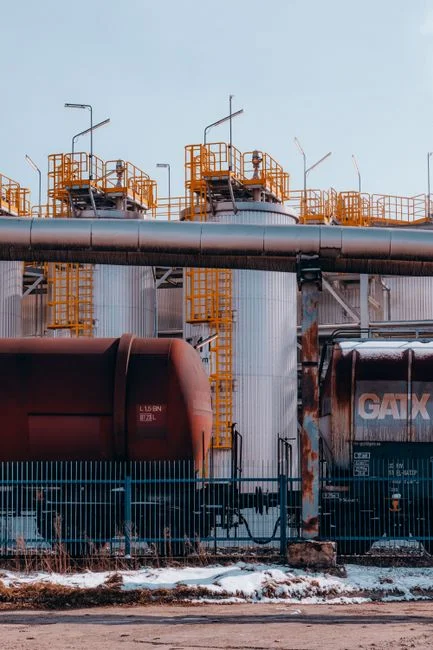
Process selection is the single biggest cost lever — a UASB+MBR hybrid at $250–$600/m³ CAPEX can deliver reuse-quality effluent at one-third the price of a ZLD train, but ZLD becomes mandatory where discharge is banned or freshwater is scarce. The four routes below cover 95% of sugar mill ETP enquiries in 2026.
For pre-treatment of bagasse-fibre-laden streams, a dissolved air flotation system sized to 4–300 m³/h is the standard DAF stage ahead of any biological step, removing 60–80% of TSS and oil & grease before the bioreactor.
| Process option | CAPEX (USD/m³/day) | OPEX (USD/m³) | Effluent TSS | Reuse-ready? | Best fit |
|---|---|---|---|---|---|
| UASB + aerobic MBR | $250–$600 | $0.10–$0.22 | <5 mg/L | Yes (boiler/cooling) | Cane/beet sugar mill, default 2026 choice |
| Pure SBR (no membranes) | $200–$450 | $0.12–$0.28 | 10–30 mg/L | Irrigation only | Smaller mills, low CAPEX priority |
| Full MBR (no anaerobic) | $400–$900 | $0.18–$0.35 | <2 mg/L | Yes (highest reuse) | Space-constrained sites, strict reuse |
| ZLD (evaporator + crystallizer) | $1,200–$1,800 | $0.35–$0.45 | Zero liquid discharge | Mandatory where banned | Distillery spent wash, water-scarce regions |
UASB + aerobic MBR is the 2026 default for cane and beet mills: the UASB removes 70–85% of COD and produces biogas that offsets $0.02–$0.06/m³ of OPEX. A typical implementation pairs a HydropureWater MBR integrated wastewater treatment system with submerged PVDF membranes at <1 μm pore size. Footprint is 40% smaller than the equivalent SBR train.
Pure SBR is simpler — no membranes, no CIP chemicals — and is the right answer when the discharge target is irrigation, where 10–30 mg/L TSS is acceptable. Full MBR without anaerobic pre-treatment is justified only when space is severely constrained or the reuse target is the strictest; cost is roughly 60% higher than the UASB+MBR hybrid (HydropureWater MBR product data, 2026).
ZLD applies to distillery spent wash where the influent COD hits 80,000–150,000 mg/L — anaerobic alone cannot reach discharge limits, and evaporators with crystallizers are the only route. CAPEX jumps to $1,200–$1,800/m³ and OPEX to $0.35–$0.45/m³, but the alternative is regulatory shutdown. A side opportunity: bagasse-fired boiler condensate can be polished with activated carbon plus RO and coupled to the ETP, recovering another 30–50 m³/day per 1,000 TCD for boiler feed.
Inside the 2026 CAPEX and OPEX Breakdown
A 1,000 m³/day UASB+MBR plant in 2026 breaks down into $550,000 of CAPEX and $0.18/m³ of OPEX — the line items below are where those numbers come from and where cost overruns typically hide. Freight, duties, civil foundations, and grid power upgrades are the items buyers consistently underestimate.
| Cost line | Share of CAPEX | Share of OPEX | Notes |
|---|---|---|---|
| Civil works & tanks | 25–35% | — | $40,000–$90,000 foundation civil for 500 m³/day plant |
| Bioreactor & blowers | 20–30% | — | UASB reactor + aerobic tank + aeration system |
| MBR membrane modules | 15–25% | — | Replacement every 5–8 years, capitalized |
| Automation & PLC | 8–12% | — | Siemens/Allen-Bradley/Schneider expected |
| Piping & valves | 8–10% | — | SS304/SS316 for aggressive streams |
| Installation & commissioning | 10–15% | — | Often billed separately by Chinese suppliers |
| Electricity | — | 40–55% | Blowers + recirculation pumps dominate |
| Chemical dosing | — | 15–25% | Coagulant, polymer, antifoam, MBR CIP chemicals |
| Sludge dewatering & disposal | — | 10–20% | Plate and frame filter press standard |
| Operator labor | — | 10–15% | Cut by 50% with full SCADA |
Hidden CAPEX items that repeatedly blow budgets: ocean freight from China at 5–10% of equipment value, import duties of 0–25% depending on destination country, and grid power upgrades if the mill is rural. An automatic chemical dosing system plus full PLC/SCADA adds $25,000–$60,000 to CAPEX but typically halves labor OPEX and stabilizes effluent during the seasonal crushing peak (HydropureWater field data, 2026).
Worked example: 1,000 m³/day UASB+MBR at $550,000 CAPEX and $0.18/m³ OPEX treats 330,000 m³/year. Annual OPEX is $59,400. Against a water-reuse credit of $0.30–$0.50/m³ for fresh water offset plus a biogas credit, payback lands in the 3–5 year band — defensible for any board paper.
7-Point Supplier Vetting Checklist Before You Sign a PO
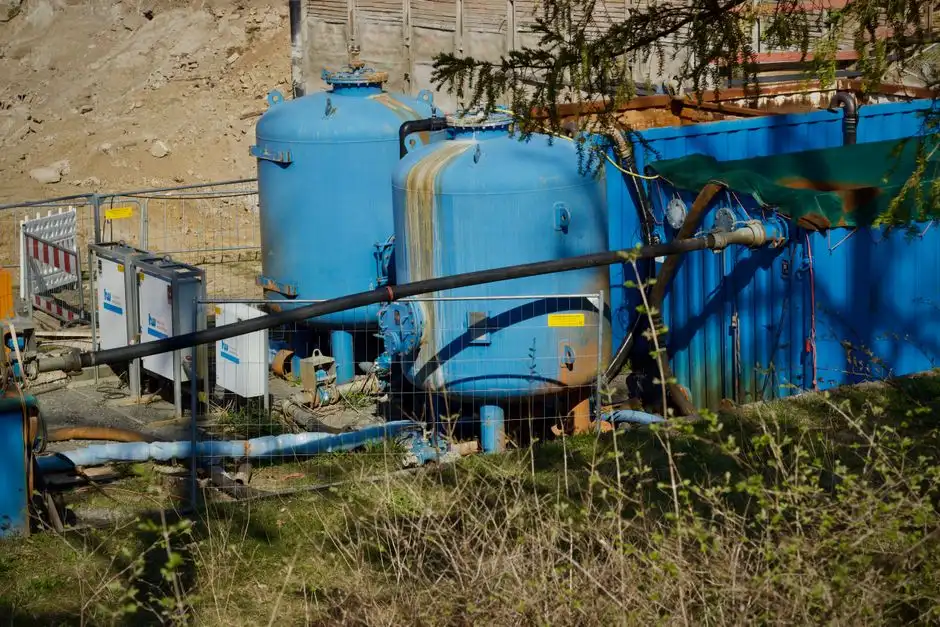
Run this checklist against any Chinese, Indian, or local quote before releasing the LC. Each item disqualifies a different class of bad bid; the $2,999 Alibaba unit price fails the first test alone.
- Demand a flow-based quote ($/m³ daily capacity) with a P&ID. A per-piece unit price like the $2,999 Made-in-China mobile MBR covers only 5–20 m³/day and tells you nothing about a 500–5,000 m³/day mill plant.
- Verify sugar or distillery references specifically. Municipal or textile wastewater references do not transfer — the COD, temperature, and seasonal hydraulics are fundamentally different.
- Specify the membrane brand and warranty in writing. Submerged PVDF with a 5-year pro-rata membrane warranty is the 2026 industry standard; reject hollow fiber or cheaper PAN membranes for sugar mill duty.
- Confirm automation scope. PLC brand (Siemens, Allen-Bradley, or Schneider), HMI, SCADA, and remote telemetry must be itemized — and commissioning must be included, not billed separately as a "service."
- Check after-sales infrastructure. Local service partner, spares inventory within 500 km of site, 24/7 technical hotline, and a written response-time SLA.
- Require the compliance documentation pack. Design basis report, equipment datasheets, electrical drawings, O&M manual in English, and a performance test protocol with measurable COD, BOD, and TSS guarantees tied to liquidated damages.
- Insist on staged payment terms. Reject 100% advance. The standard is 30% TT against PO, 70% against B/L copy for equipment, with 5–10% retention released after 12 months of stable operation.
Frequently Asked Questions
How much does a sugar mill ETP cost in 2026? A complete sugar mill effluent treatment plant costs $250–$1,800 per m³ of daily capacity in CAPEX, or $150,000–$900,000 for a 500 m³/day plant. The final figure depends on influent COD (2,000–6,000 mg/L for sugar versus 250–500 mg/L for municipal sewage) and the discharge target — irrigation reuse at the low end, ZLD at the high end.
Is MBR worth it for sugar mill effluent? Yes, when reuse-quality effluent is required. MBR delivers TSS below 5 mg/L and BOD below 10 mg/L consistently, which a conventional SBR cannot match — but CAPEX is 40–60% higher than a UASB+MBR hybrid. For most 2026 cane and beet mills, the UASB+MBR combination is the cost-optimized default.
Can sugar mill wastewater be reused for irrigation? Yes, after biological treatment to meet India CPCB G/S 110001 or equivalent standards. With SBR alone, effluent at 10–30 mg/L TSS and <100 mg/L BOD is typically acceptable for restricted irrigation; for unrestricted irrigation or boiler feed, MBR or RO polishing is required. The reuse credit of $0.30–$0.50 per m³ typically delivers a 3–5 year payback on the ETP investment.