Why Fabricated Metals Wastewater Is a DAF Problem, Not a Settling Problem
Fabricated metals plants — stamping cells, CNC machining centers, parts washers, and plating or chromate-conversion lines — generate wastewater that combines free oils, emulsified cutting fluids, tramp oils, low-density metal hydroxide floc from pH neutralization, and fine grinding swarf. Stamping lubricant carryover and spent machining coolant blowdown are the most common FOG sources, while the metal-finishing side adds dissolved metals that precipitate as hydroxide floc when the stream is neutralized upstream. The mixture is layered: a free-oil film on top, a milky emulsified mid-layer, and a swarf or grit bottom — and gravity alone addresses only the bottom layer.
Emulsified oils and hydroxide floc are the primary problems. Conventional or lamella settling clarifiers work on Stokes' law, so they remove settleable particles and leave anything with a low settling velocity in suspension. Hydroxide floc has a density close to water, and emulsified oil droplets are typically too small to settle in a reasonable residence time, so a settling tank leaves an oil sheen and a hazy supernatant. DAF works by attaching 30–50 µm micro-bubbles to floc and oil droplets so the combined particle floats; DAF Corporation's circular FC Maximizer is rated at 92–98% total suspended solids removal and the rectangular RC UniMax at 85–90% TSS removal, on a shallow-tank "zero velocity" design.
For a Highland plant with mixed oily and aqueous streams, the practical signal is visual: free oil at the surface, an emulsified mid-layer, and settleable swarf at the bottom. A single settling tank only addresses the bottom layer, which is why a generic "buy a clarifier" recommendation fails for metalworking streams.
DAF vs Lamella Clarifier: What Each Technology Actually Does
A lamella (inclined-plate) clarifier is a gravity-settling device. Wastewater flows upward between inclined plates, and settleable particles slide down the plate face into a hopper. It is compact, has no moving parts in the separation zone, and is excellent for grit, sand, and dense floc. A DAF clarifier works on a different physics: a side-stream is saturated with air under pressure, the pressurized stream is let down through a valve, and the released air forms a cloud of micro-bubbles (typically 30–50 µm) that attach to floc and oil and float the combined particle to the surface, where paddle skimmers remove the float layer.
For oily streams, only the DAF mechanism captures emulsified oil. Lamella plates do not break oil emulsions, and an inclined-plate surface skimmer is not part of the standard design — any oil in the feed stays in the clarified water and shows up as a sheen downstream. A well-run DAF can drop filterable TSS below 20 ppm and produce a float-layer sludge at 2–4% solids (DAF Corporation), which is a downstream-handling advantage for both disposal cost and decanter sizing.
The role of the lamella clarifier in a Highland metalworking plant is narrower than generic vendor pages suggest. It is a legitimate pre-thickener for heavy swarf ahead of DAF, and a legitimate polishing clarifier downstream of DAF for the carry-over of dense solids before discharge or water reuse. It is not a stand-alone FOG solution. Most fabricated-metals streams need DAF as the primary unit, with the lamella as either a pre-thickener or polisher rather than a replacement.
Side-by-Side Comparison: DAF vs Lamella Clarifier for Highland Metals Plants
The matrix below is built from the documented flow ranges, removal ratings, footprint data, and materials of construction in the supporting research. Run your plant numbers down each column to arrive at a defensible preliminary pick before talking to a vendor.
| Parameter | DAF (dissolved air flotation) | Lamella / inclined-plate clarifier |
|---|---|---|
| Flow range (single unit) | 48–66 GPM pilot skids; modular two-skid systems above 66 GPM (SigmaDAF Compact DAF); 150 / 300 / 450 GPM modular aeration skids (VanAire); 10–11,000 GPM full FC Maximizer systems (DAF Corp) | Single integrated units typical for small-to-medium flow; plate-pack designs are scaled by plate area rather than skid size |
| TSS removal | 92–98% on circular FC Maximizer, 85–90% on rectangular RC UniMax; filterable TSS to below 20 ppm (DAF Corp) | Removes settleable solids efficiently; weak on colloidal particles and low-density hydroxide floc |
| FOG and emulsified oil | Purpose-built — micro-bubbles attach to oil and float it; skimmers remove the float layer as a concentrated sludge | Does not capture emulsified oil; oil sheen typically visible on the surface of a settling clarifier |
| Footprint / headroom | Shallow circular or rectangular tank; VanAire modular aeration skid is approximately 6 ft × 4 ft × 6 ft for 150–450 GPM (Source: vanaireinc.com) | Tall because of inclined plates; trades height for footprint, which can be a problem in low-headroom plant rooms |
| Sludge consistency | 2–4% solids float layer (DAF Corp) — easier to handle downstream | Typically 1–2% underflow — usually needs a separate thickening step |
| Materials of construction | Standard 304SS; 316SS or polypropylene available for corrosive metal-finishing baths (SigmaDAF) | Plates typically PP or PVC; tanks often coated carbon steel or FRP |
| Chemical conditioning | Required upstream (coagulant + flocculant in serpentine mix tubes or a floc mix tank) to hit the 92–98% number (SigmaDAF) | Often run without coagulant, which limits performance on colloidal streams |
If FOG or hydroxide floc dominates the stream, DAF is the only technology in this matrix that addresses the load. A fabricated metals DAF system is also the only one with a documented sub-20 ppm filterable TSS number and a 2–4% float sludge that downstream dewatering equipment can handle.
Sizing a DAF for a Fabricated Metals Plant in 2026
Average and peak flow in GPM (or m³/h), influent TSS, FOG, pH, temperature, and target effluent limits are the essential inputs for sizing. For US metal finishing, the categorical standards are 40 CFR Part 433 (metal finishing) and the fabricated-metals point-source category under 40 CFR Part 437, and any local Highland POTW surcharges will set the practical discharge targets on oil and grease, TSS, and heavy metals. Without the local surcharge schedule, a vendor cannot guarantee compliance against the right number.
Hydraulic loading is the starting point. DAF Corporation's FC Maximizer is pre-sized in skid packages from 48 GPM at a 6 ft tank diameter up to 450 GPM at a 15 ft diameter, and custom circular tanks go to 11,000 GPM at 70 ft diameter; rectangular RC UniMax units run 10–1,000 GPM. The SigmaDAF Compact DAF is a single skid at 66 GPM and below, with a modular two-skid configuration above that. For mid-size Highland plants, the 150 / 300 / 450 GPM VanAire modular aeration skid — approximately 6 ft × 4 ft × 6 ft — is the typical pre-engineered package.
The air-to-solids ratio is the design lever. VanAire's MicroAire aeration with a breakout valve is engineered to control the micro-bubble cloud for consistent float formation across the 150 / 300 / 450 GPM skid range. DAF Corporation's Micro Bubbler Generator is rated for "consistent 20–40 micron sized bubbles with no coarse air bubbles, 24/7, 365 days a year." For oily streams, plan a chemical conditioning skid upstream — coagulant plus flocculant injection in serpentine mix tubes or a floc mix tank is what lets the DAF hit its 92–98% TSS number. A PLC-controlled coagulant and flocculant dosing skid keeps polymer usage consistent and floc size matched to the micro-bubbles. The 2026 US metals pretreatment compliance guide covers the categorical standards and typical 2026 surcharge triggers, and the 2026 auto-dosing engineering guide covers the polymer side.
Decision Framework: When to Pick DAF, Lamella, or Both
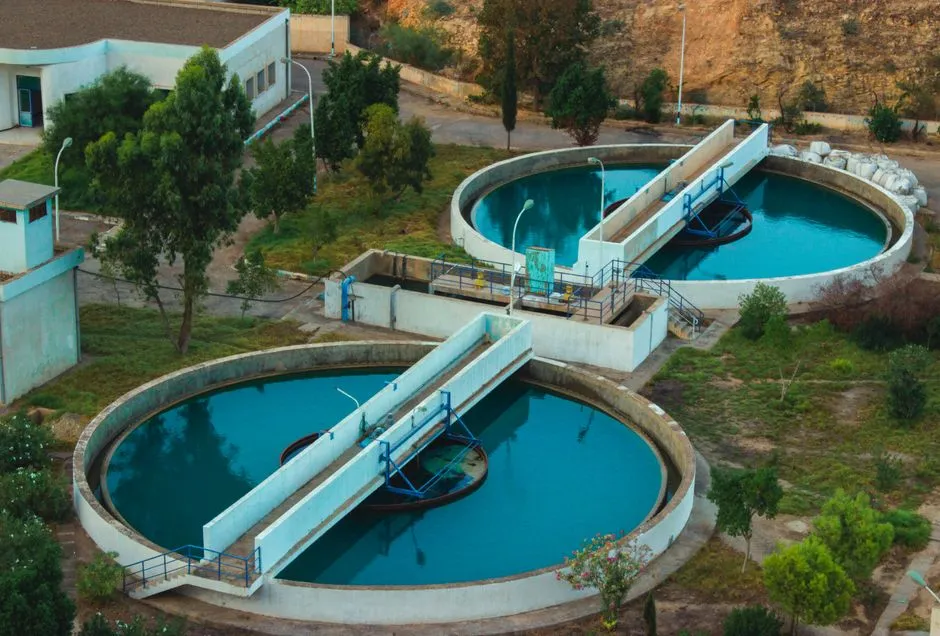
Pick DAF when the stream carries emulsified oil, tramp oil, or metal-hydroxide floc, or when FOG is a surcharge line item at the receiving POTW. DAF is also the right call when the discharge target is sub-20 ppm filterable TSS, which a settling clarifier cannot reliably hit on a colloidal or oily feed.
Pick a lamella clarifier when the stream is mainly heavy swarf and settleable grit with negligible oil, and the goal is bulk-solids reduction ahead of a downstream DAF polish or direct discharge under a less stringent limit. The lamella clarifier is the lower-cost option for that specific case, but it does not replace DAF on the oil chemistry.
Run DAF and lamella in series for the worst Highland streams: DAF first to strip oil and light floc, then a lamella as a polishing clarifier for carry-over solids before discharge or reuse. The same logic applies in reverse — a lamella pre-thickener ahead of DAF when swarf loads would otherwise overload the float zone.
Confirm vendor scope before signing. Aeration skid, controls, chemical dosing interface, and warranty terms all belong in the technical scope. VanAire specifies a 2-year warranty versus the 1-year industry norm (Source: vanaireinc.com), which is a useful risk lever in 2026 capex reviews. For a more direct comparison on a related metals stream, the Blacksburg metals DAF vs clarifier 2026 guide walks through a similar decision on a mining/metals feed. Request line-item quotes for the fabricated metals DAF system, the lamella, the chemical dosing skid, and the installation scope, and benchmark them against your own site data.
Frequently Asked Questions
What 2026 budget inputs do I need before I can compare DAF and lamella clarifier quotes for a Highland fabricated metals plant?
The research does not provide fabricated-metals-specific CAPEX figures, so a defensible 2026 budget cannot be built from a generic price range. Request itemized quotes covering the DAF skid or tank, the aeration package, the chemical dosing skid, controls, and installation, and treat each line as the input you compare vendor-to-vendor.
How do I size a DAF for an oily metalworking stream, and what flow range should I be looking at?
Start with average and peak GPM, influent TSS, FOG, pH, and temperature, plus your discharge targets. From the research, DAF skid packages cover 48–66 GPM pilot units (SigmaDAF), 150 / 300 / 450 GPM modular aeration skids (VanAire), and 10–11,000 GPM full FC Maximizer systems (DAF Corp). Most mid-size Highland plants land in the 150–450 GPM modular range with a 6 ft × 4 ft × 6 ft aeration skid footprint.
What regulatory limits drive the technology choice for fabricated metals in 2026?
US metal finishing discharges are governed by 40 CFR Part 433 categorical standards and the fabricated-metals point-source category under 40 CFR Part 437, with any local Highland POTW surcharges layered on top for oil and grease, TSS, and heavy