
Why Seafood Processing Wastewater Challenges Conventional Biology
Seafood processing wastewater routinely arrives at the biological stage with 6,000–13,000 mg/L COD, 4,000–7,000 mg/L BOD, 5,000–20,000 mg/L TSS, and 300–700 mg/L FOG — a profile that overwhelms suspended-growth systems within hours of a campaign peak (Clean Water Technology, Manta, Ecuador case). Shrimp peeling, surimi wash, and fish-filleting lines run in batches tied to landings and shift schedules, producing 3–5× diurnal COD swings and intermittent slugs of blood, scales, and brine that push activated-sludge clarifiers past their solids flux limit. The standard ocean-discharge envelope most plants must hit — TSS <100, FOG <50, COD <500, BOD <250 mg/L — leaves no room for a clarifier that bulks or floats.
Three failure modes recur in conventional activated sludge on these streams. First, FOG coats flocs and forms scums that ride over the weir, leaving 200–400 mg/L FOG in the effluent. Second, high TSS and unbound FOG clog the secondary clarifier, forcing the operator to waste at high rates and lose nitrifiers. Third, the influent C:N ratio routinely exceeds 20:1, so heterotrophs outcompete the slow-growing nitrifiers and ammonia slips past the aeration tank at 30–60 mg/L. Tropical plants running 28–32 °C sidestep the rate problem, but cold-water surimi plants at 8–14 °C see nitrification efficiency collapse by 30–50% before biology stabilizes.
An MBBR is a compact aerobic reactor filled with free-floating HDPE carriers (typically 40–60% volumetric fill) on which biofilm grows, while coarse-bubble aeration keeps the bed continuously mixed at 500–800 m²/m³ protected surface area. The biomass is attached, not suspended, which is what makes the difference on this wastewater.
How an MBBR Treatment Train for Seafood Plants Is Built
The full process flow runs rotary bar screen → grit chamber → DAF → equalization basin → pH/temperature adjustment → 1- or 2-stage MBBR → lamella clarifier → chlorination or UV → outfall. Each step has a specific job: the GX-series rotary mechanical bar screen protects downstream pumps from shells and fins, the DAF strips the bulk FOG and TSS, equalization dampens campaign swings, the MBBR does the biological COD and ammonia work, and the lamella clarifier polishes the biofilm slough-off before disinfection.
DAF is the load-shedding step that determines whether the MBBR succeeds. A dissolved air flotation system sized at 4–300 m³/h typically removes 85–95% of FOG and 70–90% of TSS, cutting the MBBR feed to 1,000–2,500 mg/L COD and <50 mg/L FOG. Without that front-end cut, the biofilm starves for oxygen and sloughs in sheets. Equalization follows at 8–12 h HRT — long enough to flatten the 3–5× swings from a single shift's shrimp line — with submerged mixers sized at 5–10 W/m³ to keep FOG emulsified rather than floating.
Most ocean-discharge plants run a single aerobic MBBR stage at 6–8 h HRT and hit their targets. If the permit includes a total nitrogen limit below 40 mg/L, a small anoxic MBBR zone (20–25% of aerobic volume) goes upstream with a methanol or effluent-COD carbon source. The clarifier is a high-rate lamella at 20–40 m/h surface loading — roughly one-third the footprint of a conventional clarifier — which matters when the plant sits on a half-hectare on a coastal road. Disinfection is typically sodium hypochlorite at 5–10 mg/L residual for 30 min contact, or UV at 30–40 mJ/cm² for plants that want to avoid chlorinated effluent.
Carrier Media, Fill Ratio, and Aeration Design
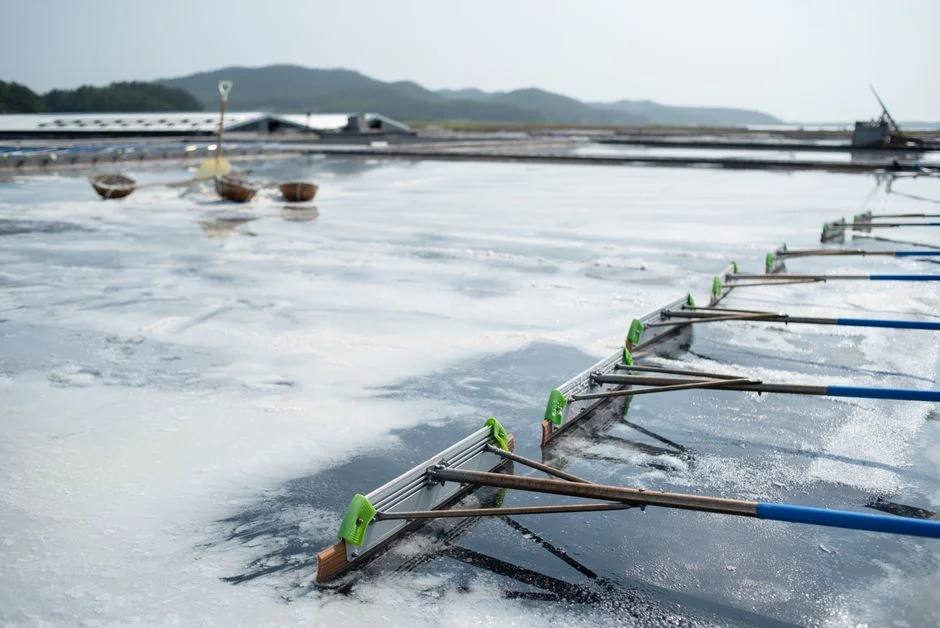
Carrier selection is the single biggest lever an engineer has on MBBR performance, and the choice between K3, K5, and engineered biofilm chips maps directly to the loading stage. Kaldnes K3 is a 12 mm cylinder with roughly 500 m²/m³ of protected surface, and it is the workhorse for high-load first stages on seafood lines — the IAHR 2014 study ran K3 at 4 kg COD/m³·d and 8 h HRT, achieving 95.9% COD and 89.6% NH₄⁺-N removal. Kaldnes K5 is a 25 mm cylinder with about 800 m²/m³; the larger protected volume and thicker biofilm make it the better choice for a polishing stage or a low-load second stage where nitrification is the rate-limiting step. Engineered biofilm chips such as Mutag BioChip offer higher specific area per liter but are less common in seafood service because the porous matrix traps FOG and is sensitive to salinity swings above 3% NaCl, and per-unit cost runs 3–5× HDPE carriers.
| Carrier | Size / shape | Specific surface | Typical role | Fill ratio (vol.) | Air demand (Nm³/kg COD) |
|---|---|---|---|---|---|
| Kaldnes K3 | 12 mm cylinder | ~500 m²/m³ | High-load first stage, COD removal | 40% | 0.8–1.0 |
| Kaldnes K5 | 25 mm cylinder | ~800 m²/m³ | Polishing / nitrification stage | 50–60% | 0.6–0.8 |
| Mutag BioChip | Porous chip | ~3,000 m²/m³ | Low-FOG, low-salinity polishing | 15–25% | 0.5–0.7 |
Fill ratio is the second lever. The 40% first-stage / 60% polishing split balances mass transfer against mixing energy — above 60% the bed stratification increases and carrier carryover into the clarifier rises. Aeration is supplied by coarse-bubble diffusers rated at 0.6–1.0 Nm³ air per kg COD removed, sized to hold dissolved oxygen at 2–3 mg/L in the aerobic cells and below 0.5 mg/L in any anoxic zone. Net specific airflow on a seafood plant after DAF typically lands at 50–80 Nm³ air per m³ reactor volume per hour.
Design Parameters and Expected Removal Rates
The design envelope that has held up across both lab and full-scale seafood installations is an organic loading rate of 3.5–4.0 kg COD/m³·d after DAF, at 6–10 h HRT, with temperature compensation built in. The IAHR 2014 study screened six OLRs from 1 to 5 kg COD/m³·d and identified 4 kg COD/m³·d as the optimum; above 4.5 kg COD/m³·d, DO crashes below 1.5 mg/L and COD removal falls off by 8–12 percentage points. The 8 h HRT used in that work is a defensible default for a single aerobic stage, and it is short enough to fit two MBBR cells in series inside a 30 m × 6 m footprint for a 500 m³/d plant.
Temperature is the second-most-sensitive parameter. Mesophilic operation at 25–35 °C — typical of tropical shrimp and surimi plants — gives the full 89–96% removal band. Below 15 °C, nitrifier specific growth rate halves roughly every 7 °C, so a 12 °C filleting plant needs either a longer HRT (12–16 h) or a heated aerobic cell to stay below 10 mg/L NH₄⁺-N. Salinity tolerance is broad: biofilm holds full nitrification from 0.5% to 3.5% NaCl, which covers most seafood brines; above 4% NaCl, free ammonia inhibition rises and nitrifier washout is observed within 5–7 days. pH control to 6.8–7.5 with NaOH or lime dosing upstream is standard. Nutrient balance should target 100:5:1 (COD:N:P) for combined carbon oxidation and nitrification; most seafood streams are P-limited and need 5–15 mg/L P as H₃PO₄ dosed into the equalization basin.
| Parameter | Design range | Lab-validated (IAHR 2014) | Full-scale expected (year 1) |
|---|---|---|---|
| OLR (post-DAF) | 3.5–4.0 kg COD/m³·d | 4.0 kg COD/m³·d | 3.0–3.8 kg COD/m³·d |
| HRT | 6–10 h | 8 h | 8–10 h |
| Temperature | 25–35 °C (tropical), 12–18 °C (cold) | Ambient ~28 °C | Site-specific |
| Salinity | 0.5–3.5% NaCl | ~1.5% | 1–3% |
| DO (aerobic) | 2.0–3.0 mg/L | >2 mg/L | 2–3 mg/L |
| pH | 6.8–7.5 | 7.0–7.2 | 6.8–7.5 |
| COD removal | 85–96% | 95.9% | 85–92% |
| NH₄⁺-N removal | 80–92% | 89.6% | 75–85% |
| TKN removal | 70–80% | 76.5% | 65–75% |
| TP removal | 60–70% | 66.8% | 55–65% |
Full-scale results on seafood lines typically run 5–10 percentage points below the lab numbers in the first year of commissioning, primarily because of influent temperature excursions and FOG breakthrough when the upstream DAF is undersized. By month 12, mature biofilm narrows that gap to 2–4 percentage points.
MBBR vs SBR vs MBBR+MBR for Seafood Plants
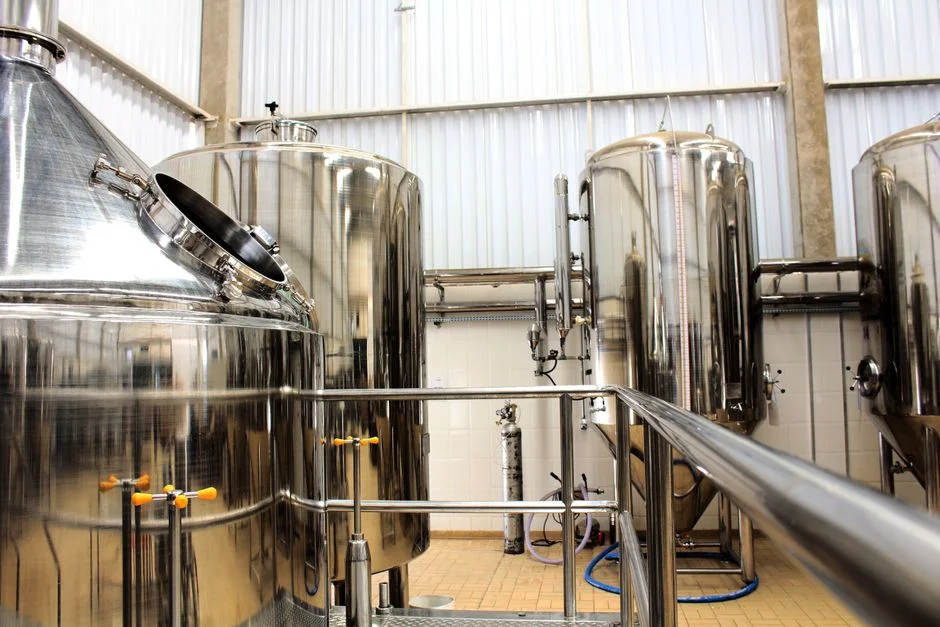
The choice between MBBR, sequencing batch reactor (SBR), and an MBBR+MBR hybrid comes down to footprint, FOG tolerance, and the reuse-versus-discharge endpoint. MBBR wins outright on footprint — typically 40–60% smaller than an SBR of equal throughput — and on FOG tolerance, because attached biofilm is not lost when a slug of oil hits the tank. SBR wins on total nitrogen flexibility because the anoxic fill phase can drive TN below 20 mg/L without a separate anoxic cell. The MBBR+MBR combination, where a submerged PVDF integrated MBR membrane bioreactor follows the MBBR, is the right answer when the plant wants reuse water for washdown, boiler feed, or plant cleanup at turbidity below 1 NTU and BOD below 5 mg/L.
| Criterion | MBBR | SBR | MBBR + MBR |
|---|---|---|---|
| Relative footprint (equal capacity) | 1.0× (baseline) | 1.6–2.0× | 1.2–1.4× |
| FOG tolerance | High (attached biomass) | Low–moderate (floc damage) | High (membrane protects biomass) |
| Surge / 3–5× COD swing | Tolerates well | Cycle disruption | Tolerates well |
| TN removal to <20 mg/L | Requires anoxic cell | Built-in via cycle | Requires anoxic cell |
| Effluent reuse quality | Not suitable | Not suitable | Suitable (turbidity <1 NTU) |
| OPEX (USD/m³, 2026) | $0.06–0.18 | $0.10–0.22 | $0.18–0.32 |
Decision rule: ocean discharge with no TN limit → MBBR alone; sewer discharge with TN below 40 mg/L → MBBR with an anoxic cell; reuse for washdown or boiler feed → MBBR+MBR. Plants evaluating an SBR for aquaculture streams should also review the SBR for aquaculture wastewater guide for the batch-process trade-offs.
Compliance, Discharge Limits, and a Real-World Case
The Manta, Ecuador seafood plant run by Clean Water Technology is the most-cited full-scale MBBR polishing case in the SERP, and it remains a defensible benchmark in 2026. Influent TSS of 20,000 mg/L, FOG of 700 mg/L, COD of 13,000 mg/L, and BOD of 6,000 mg/L were reduced to TSS below 100 mg/L, FOG below 50 mg/L, COD below 500 mg/L, and BOD below 250 mg/L — the Pacific Ocean discharge limits the plant had to meet — inside a footprint too small for a conventional secondary clarifier. The train was DAF followed by MBBR polishing, and the carrier fill was sized for the FOG-spike profile typical of an Ecuadorian shrimp campaign.
For plants in Vietnam and other Asian markets, the comparable permit is QCVN 11:2008/BTNMT Column B for aquatic-products processing, and the IAHR 2014 lab study confirmed that an MBBR operated at 4 kg COD/m³·d and 8 h HRT with K3 carriers meets that column. The generic 2026 ocean-discharge envelope used across most seafood-plant permits is TSS <100, FOG <50, COD <500, BOD <250 mg/L — the same four-parameter set the Manta plant was designed against. Plants discharging to a municipal sewer should check the local pretreatment ordinance; the most common envelope is pH 6–9, FOG <100 mg/L, COD <1,000 mg/L, and TSS <300 mg/L, which an MBBR after DAF clears with margin.
Operating Cost and Lifecycle Considerations in 2026
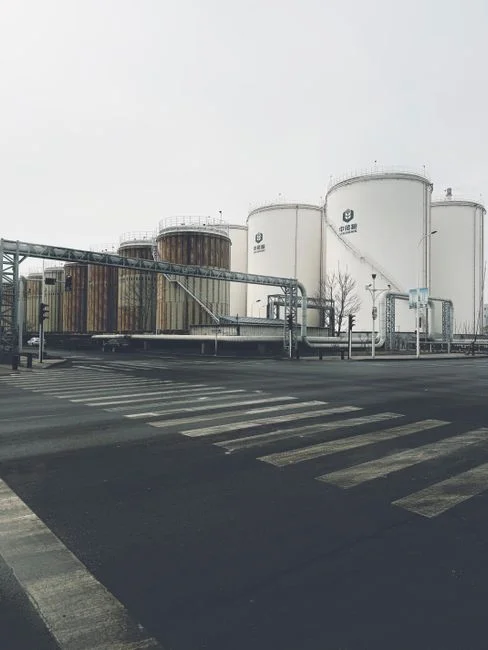
A seafood-plant MBBR operating in 2026 lands at $0.06–$0.18 per cubic meter treated, dominated by aeration energy at 60–70% of OPEX and carrier replacement reserve at 5–10%. A DAF upstream reduces MBBR OPEX by roughly 25% by cutting organic load and avoiding FOG-related fouling that would otherwise force higher air rates and more frequent carrier cleaning. Carriers themselves are rated for 10–15 years in HDPE K3/K5 service under typical seafood conditions; biofilm sloughs and re-grows naturally through salinity and temperature excursions, so there is no routine carrier replacement, only a depreciation reserve.
Sludge handling closes the loop: lamella underflow combined with DAF float is thickened in a high-efficiency lamella clarifier and dewatered on a plate-and-frame filter press to a 22–28% dry-solids cake, suitable for offsite composting or landfill. Total connected power for a 500 m³/d seafood plant typically runs 80–120 kW across screen, DAF, blowers, MBBR, lamella, and disinfection. For a more detailed OPEX line-by-line build, the 2026 MBBR OPEX breakdown walks through aeration, chemical, sludge, and labor cost lines.
Frequently Asked Questions
What COD removal can an MBBR achieve on seafood processing wastewater?
An MBBR with Kaldnes K3 carriers at 4 kg COD/m³·d and 8 h HRT achieved 95.9% COD removal in the IAHR 2014 lab study, and full-scale seafood plants typically run 85–92% in year one, improving to 90–95% as biofilm matures (per the Manta, Ecuador case).
What is the typical MBBR footprint for a seafood plant?
An MBBR after DAF takes 40–60% less floor space than an equivalent SBR, and a 500 m³/d shrimp or surimi plant fits in two aerobic cells roughly 30 m × 6 m combined, including the lamella clarifier and disinfection channel.
Which carrier media should I specify for a high-FOG seafood stream?
Kaldnes K3 at 40% volumetric fill is the default for a high-load first stage; K5 at 50–60% is preferred for a polishing or nitrification stage where thicker biofilm improves ammonia removal at the cost of slightly higher air demand.
Does salinity affect MBBR performance on seafood brine streams?
Biofilm holds full nitrification from 0.5% to 3.5% NaCl, covering most seafood brines; above 4% NaCl, nitrifier washout occurs within 5–7 days and the feed should be blended with low-salinity streams or the design HRT increased by 30–50%.
What OPEX should I budget for a seafood MBBR in 2026?
Plan $0.06–$0.18 per cubic meter treated, with aeration at 60–70% of OPEX; a properly sized DAF upstream cuts MBBR OPEX by about 25% and protects the biofilm from FOG slugs typical of shrimp campaigns.
Can an MBBR alone meet ocean-discharge limits for a seafood plant?
Yes — an MBBR after DAF is the standard configuration for ocean discharge, with the Manta, Ecuador plant operating in this mode to meet TSS <100, FOG <50, COD <500, BOD <250 mg/L without tertiary treatment beyond a lamella clarifier and chlorination.